How to Choose an Attendance System for Malaysian SMEs
How Malaysian SMEs should choose an attendance system in 2026. A decision framework covering team size, payroll fit, compliance, and the common buyer mistakes.
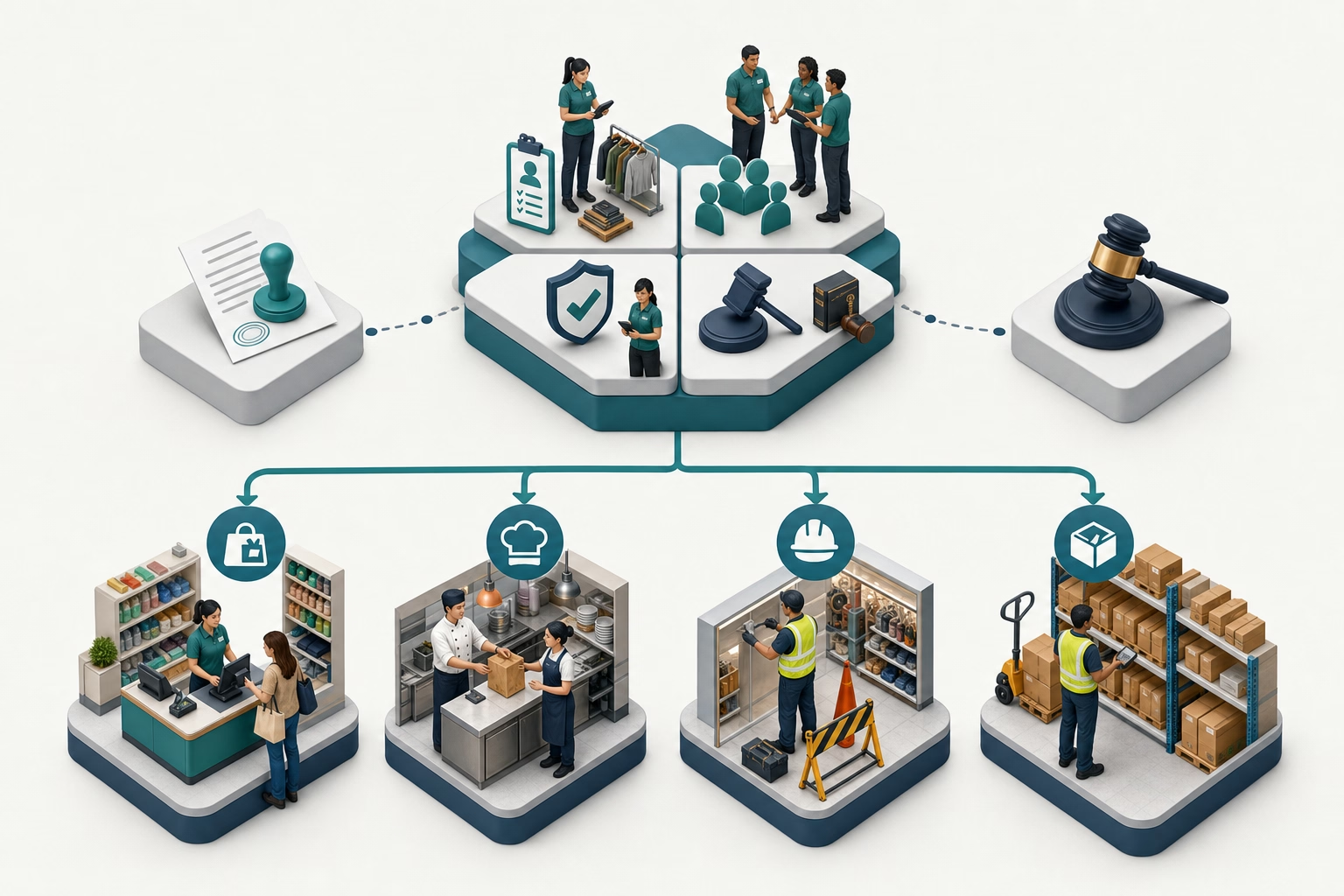
Choosing an attendance system for a Malaysian SME is not really a software shopping problem. It is a sequence of three or four decisions you make about your business, after which the tool list narrows to two or three sensible picks. 8.1 million Malaysians work for SMEs (DOSM, MSMEs Performance 2024). EA 1955 now fines RM 50,000 per offence. The cost of getting this choice wrong is higher than it was three years ago. Here is the framework most Malaysian SMEs use to narrow the choice in 2026.
Four questions that narrow the choice
Before opening a single vendor page, answer these.
1. How big is the team today, and how big in 12 months? Under 10 staff: a free stack covers you. 10 to 50: you can credibly run either a focused time tracker plus separate payroll or a consolidated Malaysian HR suite. 50+: HR suites usually win on total cost of ownership once HR time on reconciliation is counted. Sizing matters because vendors price differently across these tiers.
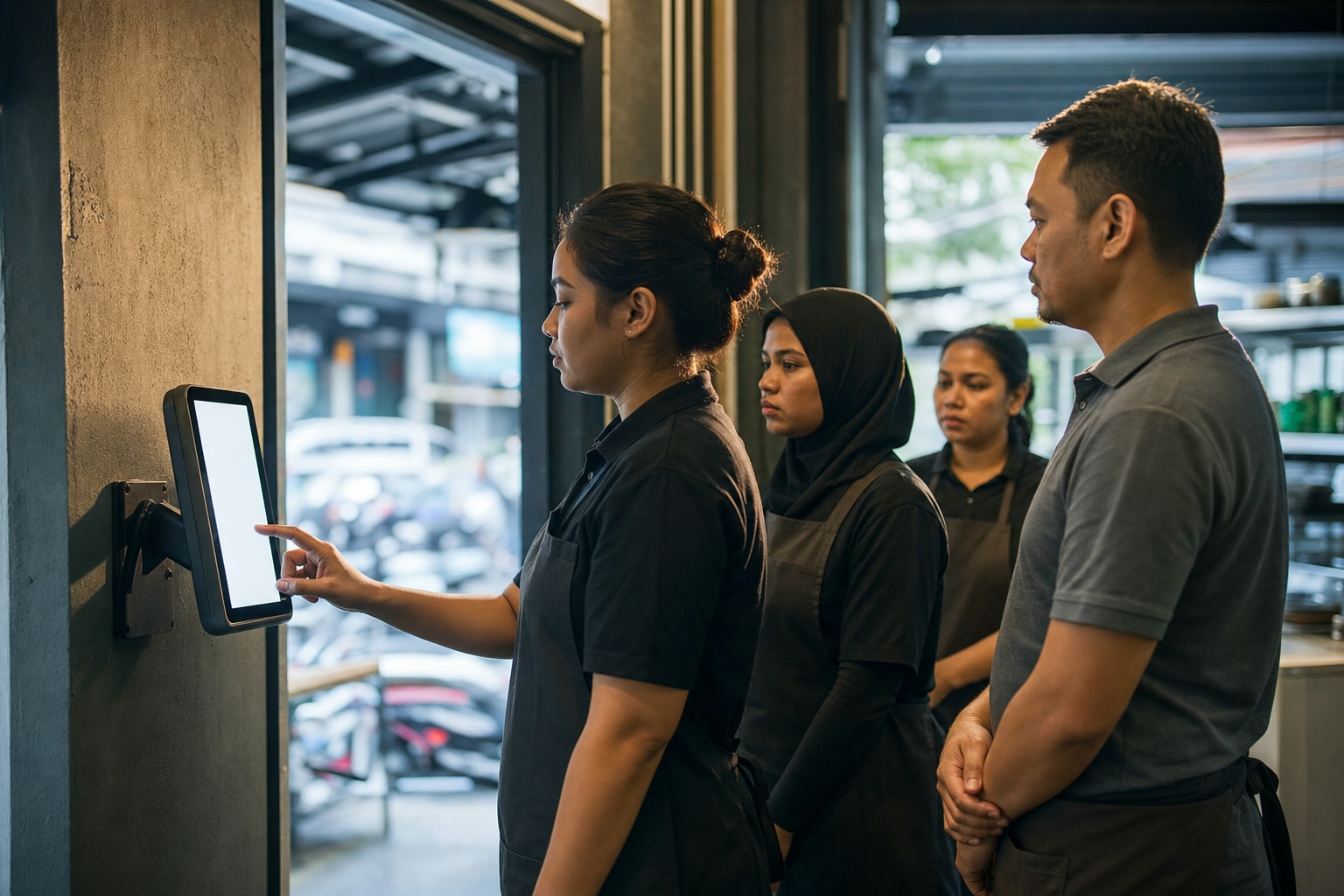
2. Is your team mostly on-site, mostly field, or hybrid? On-site office staff are well-served by kiosk mode on a shared tablet plus optional mobile. Field teams need GPS, geofencing, and offline mode as base features. Hybrid (over 70% of Malaysian companies now per MEF, 2025) needs both modes in one tool plus rule logic for whether GPS is required at home addresses.
3. Do you already run a payroll system? If yes, pick a time tracker that exports cleanly to it. Or, for Kakitangan, BrioHR, Swingvy, use the attendance module that ships with the same product. If no, this is your chance to pick the full stack at once, and consolidation onto a Malaysian HR suite usually beats specialization on cost. Time tracking software that works alongside Malaysian payroll covers the integration patterns.
4. How much HR functionality do you need beyond attendance? Just attendance and payroll: a free or focused stack covers it (Jibble + PayrollPanda, or ShiftFlow + PayrollPanda). Plus leave, claims, basic HR: Kakitangan or Swingvy fit. Plus recruitment, performance, learning: BrioHR earns its higher price floor. Building the wrong size HRIS is the most common Malaysian SME buyer mistake.
How the decision tree plays out in practice
Most Malaysian SMEs land on one of four setups depending on the answers above.
Setup A. Free stack for under 30 staff on statutory only
Jibble Free (attendance, GPS, kiosk, facial recognition, unlimited users) plus PayrollPanda Free (payroll, EPF, SOCSO, EIS, PCB, LHDN e-filing). Both Malaysian-built, both genuinely free for the relevant scope. Monthly cost: RM 0. Best fit for SMEs of 5 to 30 that want attendance and statutory payroll without paying for HR features they will not use. The catch is feature scope. Leave management is basic, no performance reviews, no recruitment module. When you outgrow this, upgrade to setup B or D. Not to a different free stack.
Setup B. Focused tracker plus separate payroll for field-heavy or shift-heavy teams
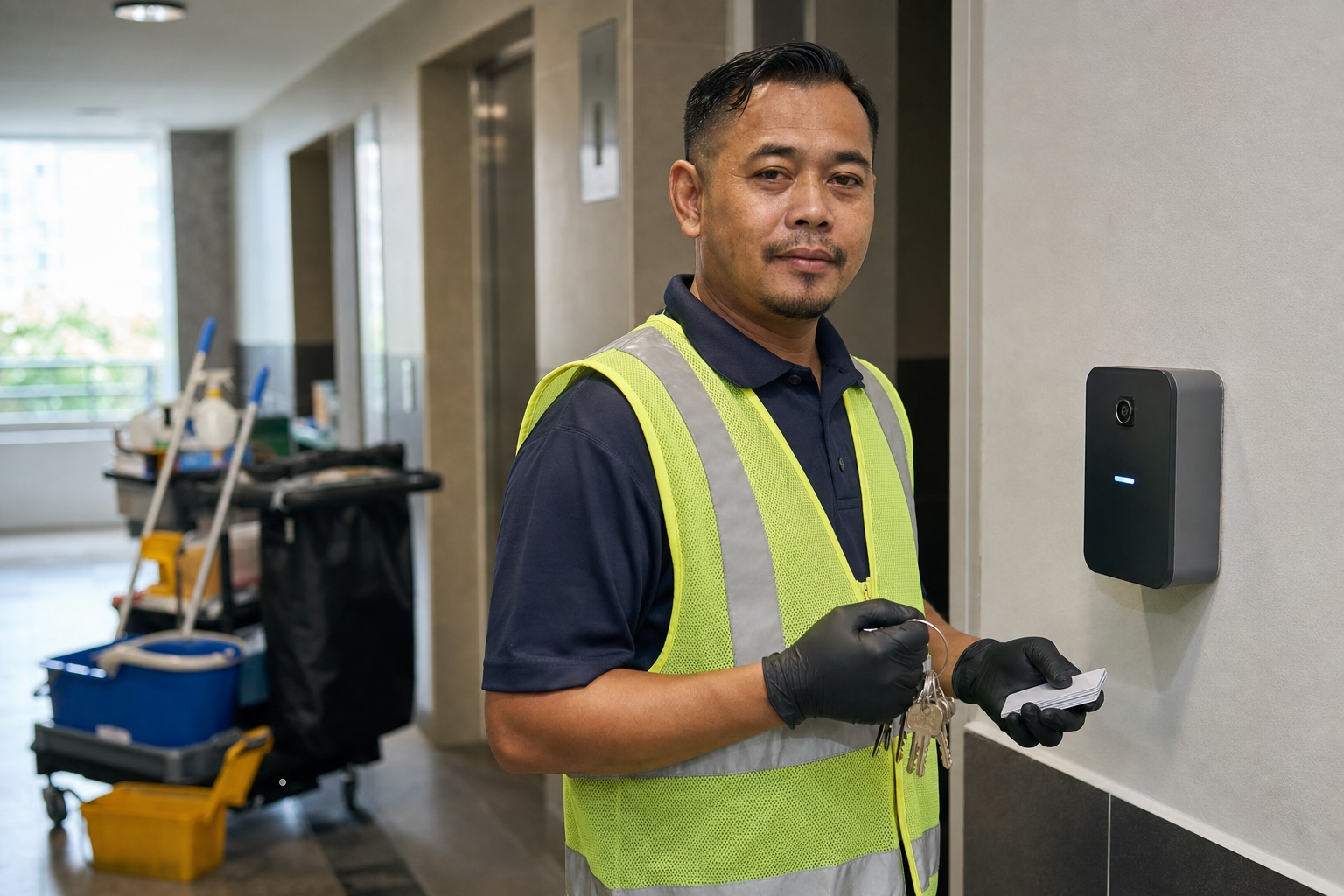
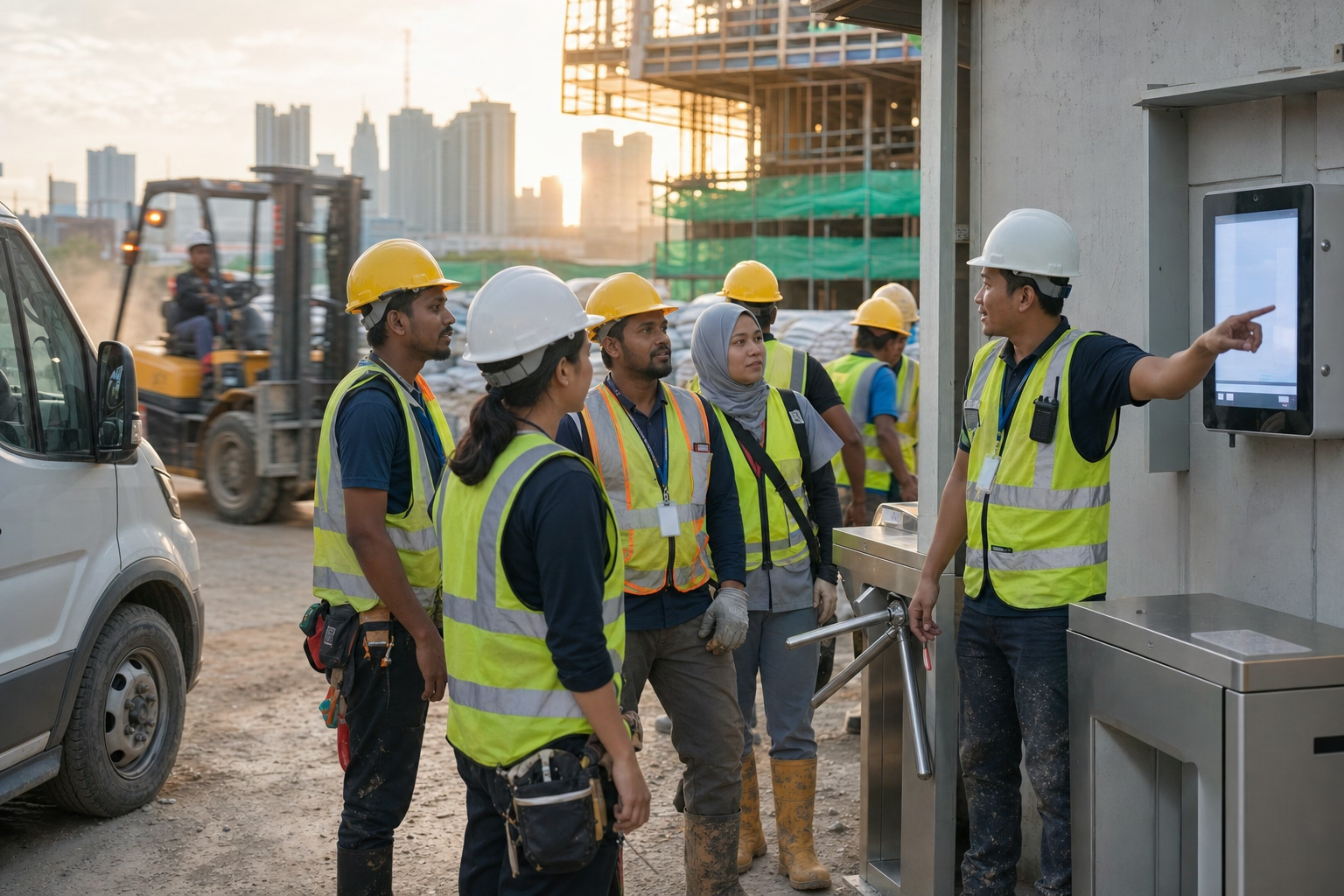
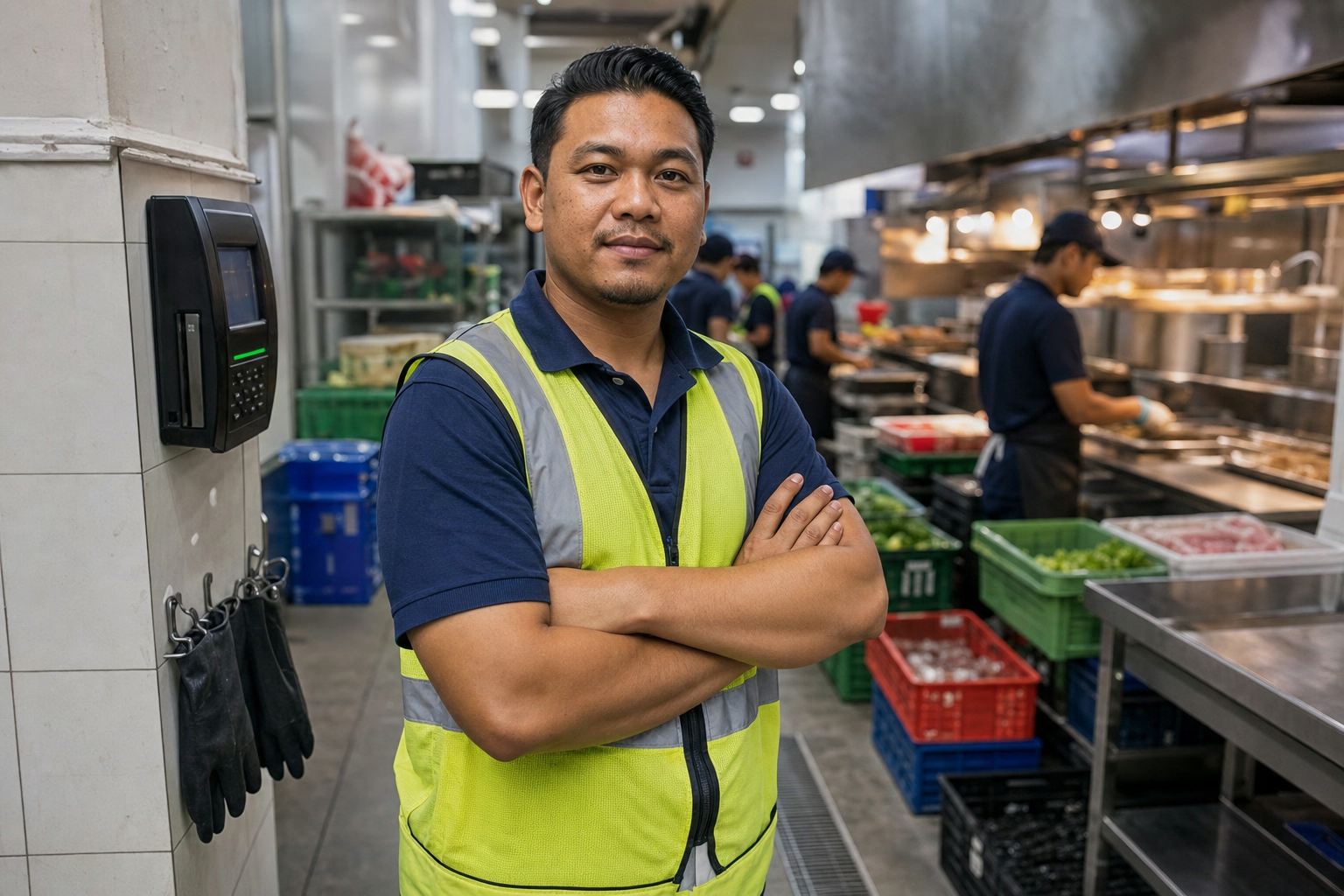
A focused time tracker like ShiftFlow at RM 14.9 per seat (single plan, GPS, kiosk, scheduling, EA 1955 OT rules, CSV export) paired with PayrollPanda Free or Kakitangan for statutory. For a 20-person field-heavy team, the total monthly bill is RM 298 for ShiftFlow plus RM 0 for PayrollPanda. Best fit for retail, F&B, construction, security, and cleaning SMEs that need stronger shift rules than the free stack and want to keep payroll where it already runs.
Setup C. Malaysian HR suite for consolidation-minded teams
One Malaysian-built HRIS (Kakitangan, BrioHR, Swingvy, altHR) handles attendance, leave, claims, payroll, EPF/SOCSO/EIS/PCB filing, and LHDN e-filing inside one product. Monthly cost typically RM 200 to RM 500 for a 20-person team depending on which modules you switch on. Best fit for SMEs that have outgrown the free or focused stack, want one vendor for HR, and have somebody on staff (HR coordinator, manager, or owner with time) who can actually run the HRIS. Attendance management for SMEs in Malaysia covers the operational discipline this requires.
Setup D. Specialized stack for compliance-heavy industries
For Malaysian SMEs in industries with elevated compliance burdens (high foreign worker counts triggering the October 2025 EPF 2%/2% rule, or sectors with industry-specific OT rules), the answer is sometimes a more specialized payroll product (SQL Payroll for accounting-firm-style detail, Info-Tech for legacy continuity) plus a modern mobile time tracker added on top. Monthly cost ranges widely. Best fit for SMEs that already have a payroll system they cannot replace and need to upgrade the attendance layer specifically.
Real-world constraints that push you toward one setup
Three constraints push most Malaysian SMEs toward a specific setup.
Budget. SMEs running on tight cash flow rarely have RM 500 a month to spare for HR tooling. Setup A (free stack) is the default in that situation, with a planned upgrade to setup B or C as headcount and revenue grow.
IT capacity. If nobody on staff can run a CSV import, schedule a parallel pay period, or write a rule for “if rest day then 2x OT,” you probably need setup C (Malaysian HR suite) where the vendor has preconfigured most of this. The monthly cost premium covers the setup work you would otherwise do yourself.
Existing payroll commitment. If you have been on SQL Payroll for a decade or Info-Tech since the early 2010s, replacing payroll is a six-month project nobody wants. Setup B or D (keep the payroll, add a modern time tracker) is the realistic path.
What to check before buying attendance software for your Malaysian business is the pre-purchase checklist that catches several constraint mismatches before you sign.

Buyer mistakes Malaysian SMEs keep making
Five patterns show up in conversations with SMEs that picked the wrong system and are now mid-cutover to a second one.
Buying a full HRIS for a 10-person team. Recruitment, performance, learning, and OKR modules go unused. The monthly bill is three times what the same team would pay on setup A or B. No incremental value.
Buying a focused time tracker without checking EA 1955 OT logic. International time trackers (Connecteam, Toggl, Clockify) often have generic OT rules that need manual configuration to match EA 1955’s 1.5x/2x split. If nobody on the team can configure it, the timesheet outputs will be off. And the EPF/SOCSO filings derived from them will be off too.
Optimizing for monthly cost only, ignoring setup time. A free stack that takes three weeks to configure costs the founder or HR coordinator three weeks of their time. At RM 5,000+ of that person’s monthly compensation, the “free” stack is not actually free. A consolidated suite that goes live in three days at RM 500 a month sometimes wins on real cost.
Ignoring foreign worker EPF rules. From October 2025, foreign workers became required to contribute to EPF at 2% employer and 2% employee. A system configured before that may not handle this. Confirm during vendor evaluation.
Skipping the parallel pay period. Every Malaysian SME we have talked to that skipped this regrets it. Two parallel cycles, side by side, worker-by-worker reconciliation. Always.
What this looks like for specific Malaysian SMEs
The framework above gets concrete fastest when you put a real team profile next to it. Five common Malaysian SME shapes and the setup that usually fits.
| SME profile | Recommended setup | Monthly bill (RM) |
|---|---|---|
| 12-person F&B chain, 2 outlets, KL | ShiftFlow (RM 14.9 / seat) + PayrollPanda Free | ≈RM 179 |
| 25-person security firm, 3 client posts, Klang Valley | ShiftFlow + PayrollPanda Free, or Jibble Premium + PayrollPanda Free | ≈RM 373 or ≈RM 450 |
| 40-person hybrid office, KL HQ + remote staff | Kakitangan or BrioHR (full HR suite, payroll inside) | ≈RM 400 to RM 600 |
| 8-person creative agency, one office, fully on-site | Jibble Free + PayrollPanda Free | RM 0 |
| 60-person construction GC with 4 active sites | Swingvy or BrioHR (mobile-first MY HR with statutory) | ≈RM 600 to RM 800 |
Each row reflects the dominant tradeoff for that SME shape. F&B picks ShiftFlow because per-seat math beats per-location penalties. Security picks the same, with Jibble Premium as a free-tier alternative if the team can stay inside the geofence cap. Hybrid offices pick a full HR suite because remote-work attendance plus leave plus payroll consolidation is worth the higher monthly bill. Small agencies pick the free stack because there is no scenario where a paid HRIS pays back for 8 people. Mid-sized construction GCs need mobile-first MY HR with full statutory, because EA 1955 enforcement at 60+ headcount is non-trivial.
Get ShiftFlow on iOS or Android
When ShiftFlow is not the answer
ShiftFlow shows up in the recommended setups above for two of the five scenarios. The other three should not be using it.
- 8-person creative agency, fully on-site, single office. Jibble Free plus PayrollPanda Free does everything you need at RM 0. Paying RM 119.20 a month for ShiftFlow is overspend.
- 40-person hybrid office wanting one vendor for HR, leave, claims, payroll filing, and attendance. Kakitangan or BrioHR is the right answer. ShiftFlow stops at attendance and CSV export.
- 60-person construction GC needing mobile-first MY HR with full statutory filing inside the product. Swingvy or BrioHR fits. ShiftFlow plus PayrollPanda works but requires more operational stitching at 60-headcount scale.
Pick the right tool for the SME shape, not the cheapest per-seat number.
How to self-test a vendor before signing
Walk through these questions before committing to any vendor for 12 months.
- Does the system enforce EA 1955’s 45-hour weekly cap and 104-hour monthly OT ceiling at the timesheet level, not after payroll has already run?
- Does it apply 1.5x for ordinary-day OT, 2x for rest-day excess, and the 30-minute break rule after 5 consecutive hours?
- Does it ship preconfigured for Malaysia (Kakitangan, BrioHR, Swingvy, altHR, PayrollPanda), or require manual rule setup (ShiftFlow, Jibble, Connecteam)?
- Does the CSV export (if applicable) match your payroll’s expected format including worker IC mapping?
- Can it support hybrid work attendance with optional GPS rules? How Malaysian companies manage hybrid work attendance covers what to look for.
- What is the parallel-pay-period plan, and who on your team owns the reconciliation?
- What does the bill look like at 1.5x your current headcount? Most Malaysian SMEs grow straight into the wrong pricing tier.
Answer all seven with the vendor and you have probably chosen well. Best time tracking software in Malaysia for SMEs runs the full comparison across nine platforms with these answers prefilled.
The decision sequence in one paragraph
For Malaysian SMEs in 2026, the simplest decision sequence is this. Size the team. Decide on-site vs field vs hybrid. Decide whether to consolidate payroll or specialize. Decide how much HR depth you actually need. That sequence produces one of four setups (free stack, focused tracker plus separate payroll, Malaysian HR suite, or specialized stack), each with one or two sensible vendor picks. The wrong answer typically costs an SME a six-month mid-course correction. The right answer pays back inside the first quarter. How to track attendance for compliance with Malaysian labour law is the underlying compliance reference for any system you choose.
Sources
- DOSM MSMEs Performance 2024 for SME employment figures
- Employment Act 1955 (Akta Kerja, PDF from MoHR) for the 45-hour weekly cap, 104-hour OT ceiling, and RM 50,000 fine
- The Star on MEF hybrid work data for the 70%+ flexible-work adoption figure
- Foundingbird guide to EPF, SOCSO, and EIS for contribution rates and the October 2025 foreign worker rules
- factoHR Top 10 HR Software in Malaysia 2026 for vendor weaknesses and ratings
- malaysia
- attendance
- sme
- time-tracking
- buyer-guide
- decision-framework
- mofu