What Is Labor Cost Percentage in 2026?
Labor cost percentage shows what portion of revenue goes to labor. Learn industry benchmarks (restaurants 25-35%, retail 10-20%), how to calculate your ratio, and why 30% of restaurants cite sales as their top challenge in 2026.
What Is Labor Cost Percentage in 2026?
Labor cost percentage (also called “labor cost ratio” or “payroll to revenue ratio”) shows what portion of your revenue goes toward labor costs. It’s one of the most important metrics for managing a service business.
The formula is simple: (Total Labor Cost ÷ Total Revenue) × 100
If you spend $30,000 on labor in a month and bring in $100,000 in revenue, your labor cost percentage is 30%. That means 30 cents of every dollar earned goes to paying employees.
Quick Answer
Labor cost percentage shows how much of your revenue goes to labor. Formula: (Labor Cost ÷ Revenue) × 100. Benchmarks vary: restaurants aim for 25-35%, retail targets 10-20%, and service businesses run 30-50% depending on their model.
How Do You Calculate Labor Cost Percentage?
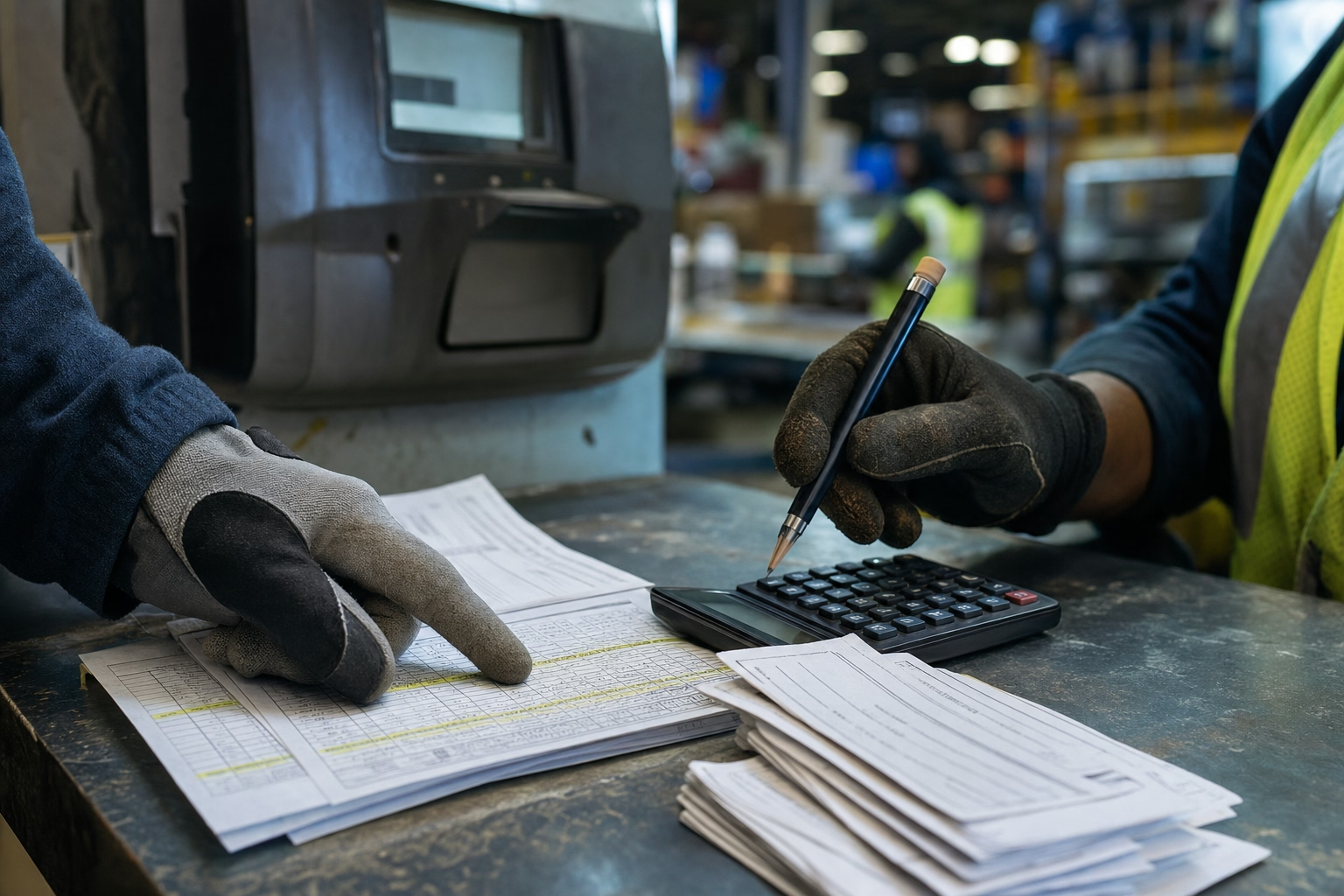
Step 1: Calculate total labor cost for the period. This includes:
- Wages and salaries (payroll)
- Overtime pay
- Payroll taxes (employer FICA, unemployment taxes)
- Benefits (health insurance, 401k matching)
- Workers’ compensation insurance
Step 2: Get total revenue for the same period (gross sales before deductions).
Step 3: Divide labor cost by revenue and multiply by 100.
Example:
- Total labor cost: $40,000
- Total revenue: $150,000
- Labor cost percentage: ($40,000 ÷ $150,000) × 100 = 26.67%
You can calculate this weekly, monthly, quarterly, or annually. Most businesses track it monthly to spot trends.
What Is a Good Labor Cost Percentage?
It depends entirely on your industry. Here are the benchmarks for 2026:
Restaurant Industry
According to Toast, restaurants typically target 25-35% of total revenue for labor costs, though the industry benchmark is around 30%.
By restaurant type:
- Fast-food/QSR: approximately 25%
- Full-service restaurants: 25-35% (trending toward 35-40% in 2026)
- Fine dining: 30-35%
The industry’s normal range is 20-35%, but many operators are seeing higher percentages in 2026 due to wage pressures and sales challenges.
2026 outlook: According to Restaurant365, sales volume emerged as the top challenge for 30% of respondents, with rising food costs close behind at 28%. Labor costs remain the second most pressing issue, ranked first by 31% of operators.
Retail Industry
According to Metrobi and Myshyft, retail labor cost percentage typically ranges from 15-30%, with a healthy range for most retailers between 20-30% of total sales.
The National Retail Federation reports the average labor cost to sales ratio in U.S. retail is around 10-15%, though this ranges from as low as 5% for high-volume, low-margin retailers to as high as 25% for specialty retailers with high-touch customer service.
Based on US Census data and PWC research, retail stores have a payroll to revenue ratio between 10-12%.
Other Industries
According to Acciyo and Sage HCM:
- Service businesses: 30-50% (professional, scientific, and technical services average 39%)
- Manufacturing: 15-30% (modern manufacturing can be as low as 12% due to automation)
- Healthcare: 40-50% (highly labor-intensive, with low 40s considered healthy)
- Hospitality: 30% (exceeding this often signals overstaffing)

What’s Different in 2026?
Restaurants face dual pressure: With sales volume cited as the top challenge by 30% of restaurant operators and labor costs ranking first for 31%, the 2026 environment forces many restaurants toward the higher end of the 25-35% range. Full-service restaurants are trending toward 35-40% as wage increases outpace menu price adjustments.
Minimum wage ripple effects: State minimum wage increases in 2026 directly impact labor cost percentages, especially for retail and quick-service restaurants. California and New York’s $16.50 minimum wage pushes labor costs up 8-12% for businesses that haven’t adjusted pricing or operations.
Overtime reporting complexity: The new Form W-2 Box 12 Code TT requirement for qualified overtime adds administrative burden but doesn’t directly change labor cost percentage. However, better overtime tracking often reveals hidden labor costs, causing some businesses to discover their true percentage is 2-5 points higher than they thought.
Automation shifts benchmarks: Industries investing in automation and AI-driven scheduling are seeing labor cost percentages drop 3-7 points compared to traditional operations. This creates a widening gap between tech-forward and traditional businesses within the same industry.
Why Does Labor Cost Percentage Matter?
Profitability indicator: If too much revenue goes to labor, there’s not enough left for other expenses and profit. If labor cost percentage creeps up, profit margins shrink.
Benchmarking tool: Compare your percentage to industry standards to see if you’re competitive. Way above industry average? You might be overstaffed or inefficient. Way below? You might be understaffed, risking service quality.
Trend tracking: Watching the percentage over time shows whether you’re improving or slipping. A rising percentage means labor costs are growing faster than revenue—a warning sign.
Decision-making guide: When labor cost percentage is too high, you know you need to reduce overtime, improve scheduling, or increase prices. When it’s healthy, you might invest in hiring or raises.
What Causes High Labor Cost Percentage?
Low revenue: Even if labor costs stay the same, if sales drop, the percentage goes up. This is why the formula uses revenue in the denominator—it adjusts for business volume.
Overstaffing: Scheduling too many people for slow periods drives up labor costs without matching revenue.
Excessive overtime: Overtime pay at 1.5x regular rate quickly inflates labor costs. Better scheduling helps reduce overtime.
Low productivity: If employees are slow or inefficient, you’re paying for more hours to generate the same revenue.
Rising wages without price increases: When minimum wage goes up or you give raises, labor costs increase. If you don’t raise prices, your percentage climbs.
Poor scheduling: Mismatched staffing to demand—too many employees during slow times, not enough during busy periods—kills efficiency.
How Can You Improve Labor Cost Percentage?
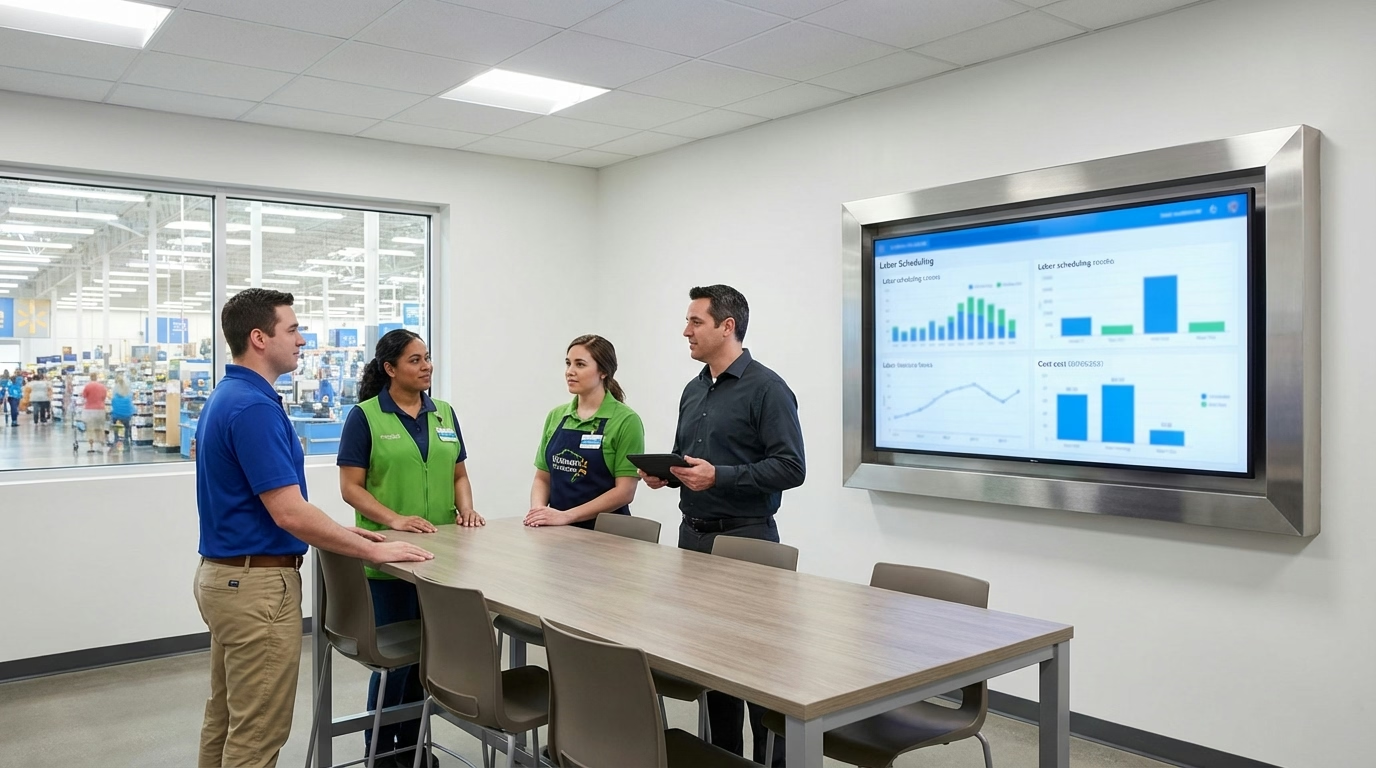
Optimize scheduling: Match staffing levels to customer demand. Use historical data to predict busy and slow periods. Workforce management tools help automate demand-based scheduling.
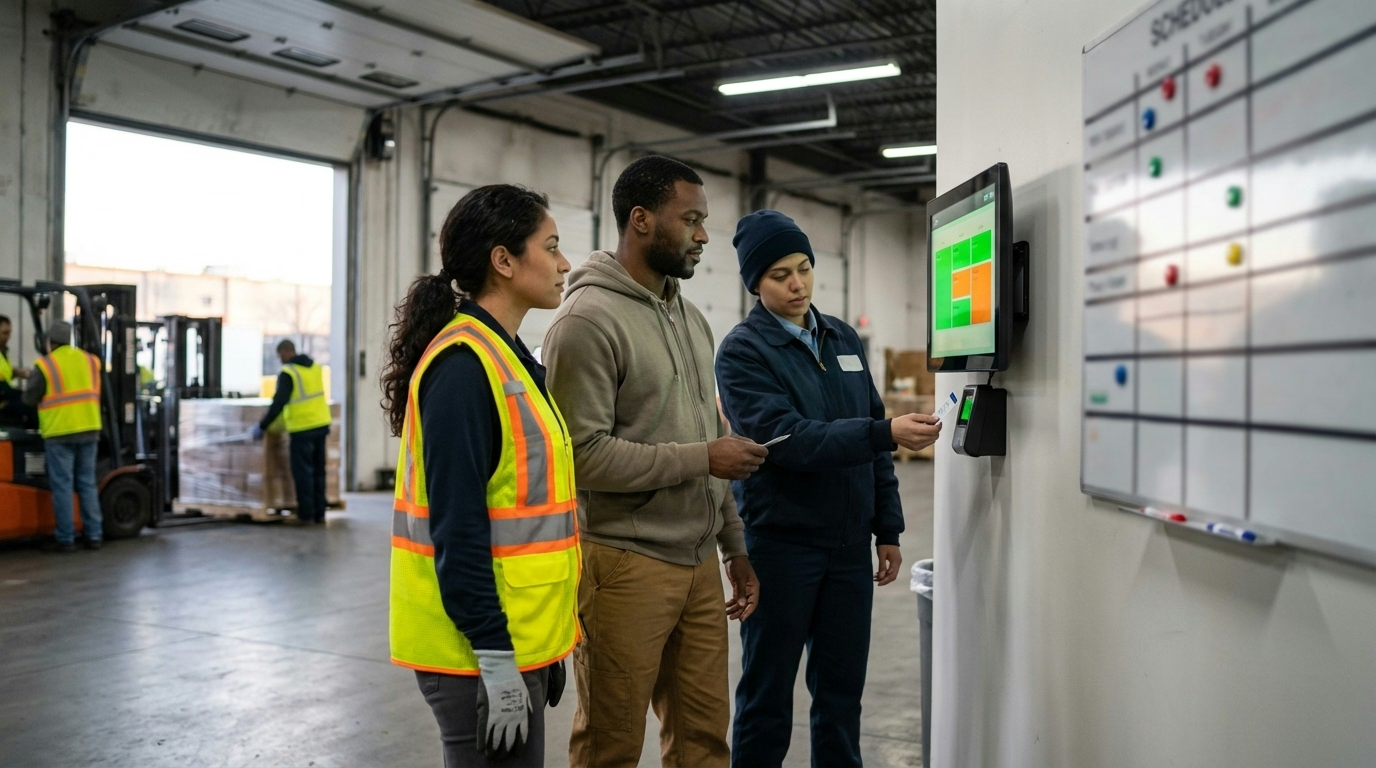
Reduce overtime: Track payroll hours in real-time and adjust schedules before employees hit 40 hours. Cross-train staff so you have coverage flexibility without overtime.
Improve productivity: Train employees to work more efficiently. Better tools, processes, and workflows mean less labor to generate the same revenue.
Control turnover: Hiring and training new employees is expensive and they’re less productive during ramp-up. Better retention improves labor efficiency.
Increase prices: If your labor percentage is high because prices are too low, raise them. A small price increase can significantly improve the ratio without cutting staff.
Track in real-time: Use time tracking software to monitor labor costs daily, not just at month-end. Spot problems early and adjust before they get expensive.
Analyze by location or department: If you have multiple locations, calculate labor cost percentage for each. Some might be efficient while others drag down the average. Fix the underperformers.

What’s the Difference Between Labor Cost and Labor Cost Percentage?
Labor cost: The dollar amount you spend on employees (e.g., $50,000/month). This is an absolute number.
Labor cost percentage: Labor cost relative to revenue (e.g., 30%). This is a ratio that adjusts for business size and volume.
Why percentage is better: A growing business might see labor costs increase from $50,000 to $75,000, which looks bad. But if revenue grows from $150,000 to $250,000, labor cost percentage actually improved from 33% to 30%.
The percentage tells you whether labor costs are growing proportionally to revenue or outpacing it.
What’s the Bottom Line?
Labor cost percentage shows how efficiently you’re using your workforce. In 2026, with sales volume topping the list of challenges for 30% of restaurant operators and labor costs still ranking as the second most pressing issue, managing this metric is critical.
Here’s what matters:
- Formula: (Total Labor Cost ÷ Total Revenue) × 100
- Restaurant benchmarks: 25-35% (20-30% most common)
- Retail benchmarks: 10-20%
- Service businesses: 30-50%
- High percentages signal overstaffing, low productivity, or excessive overtime
- Low percentages might mean understaffing or service quality risks
- Track monthly to spot trends and adjust quickly
Ready to optimize your labor cost percentage? ShiftFlow’s workforce management tools automatically track labor costs against revenue, flag budget overruns, and optimize scheduling to match demand. Explore our solutions or view pricing.
Sources
- Toast – Restaurant Payroll Percentage: A Comprehensive Guide for 2025
- Restaurant365 – 2026 Industry Survey Outlines Key Sales and Cost Trends
- Metrobi – What is the Average Labor Cost in Retail?
- Myshyft – Retail Staffing Metrics: Industry Benchmarks
- Paycor – The Biggest Cost of Doing Business: A Closer Look at Labor Costs
- Acciyo – Payroll Percentage by Industry: Benchmarks for Every Business in 2025
- Sage HCM – Labor Cost Percentage: How to Calculate + Benchmarks
Further Reading
- Labor Cost Explained – Understanding total employee expenses
- Reduce Overtime Costs – Strategies to control overtime
- Employee Scheduling Best Practices – Optimizing your schedule
Frequently Asked Questions
What is labor cost percentage?
Labor cost percentage is the portion of your revenue that goes toward labor expenses. Formula: (Total Labor Cost ÷ Total Revenue) × 100. For example, if you spend $30,000 on labor and earn $100,000 in revenue, your labor cost percentage is 30%.
What is a good labor cost percentage?
It depends on industry. Restaurants: 25-35% (with 20-30% being most common). Retail: 10-20%. Service businesses: 30-50%. Manufacturing: 20-35%. Higher percentages are acceptable for businesses with high service levels or skilled labor, lower for volume-based operations.
How do you calculate labor cost percentage?
Formula: (Total Labor Cost ÷ Total Revenue) × 100. Total labor cost includes all wages, payroll taxes, benefits, and related expenses. For example: $40,000 labor cost ÷ $150,000 revenue = 0.2667 × 100 = 26.67%.
What causes a high labor cost percentage?
Low revenue (sales drops while labor stays constant), overstaffing, excessive overtime, low productivity, rising wages without price increases, and poor scheduling that mismatches staffing to demand. All of these drive up the percentage by increasing costs or reducing revenue.
How can I lower my labor cost percentage?
Optimize scheduling to match demand, reduce overtime through better planning, improve employee productivity with training, control turnover to reduce hiring costs, increase prices if they’re too low, and use time tracking software to monitor costs in real-time.
What’s the difference between labor cost and labor cost percentage?
Labor cost is the dollar amount spent on employees (e.g., $50,000). Labor cost percentage is that cost relative to revenue (e.g., 30%). The percentage is better for tracking efficiency because it adjusts for business size and revenue fluctuations.
Should I track labor cost percentage daily, weekly, or monthly?
Most businesses track it monthly for trend analysis, but high-volume operations (restaurants, retail) benefit from weekly or even daily tracking. Workforce management tools can calculate it in real-time, letting you adjust schedules before problems escalate.
What’s a good restaurant labor cost percentage in 2026?
Most restaurants target 25-35%, with 20-30% being the most common range. About 40% of restaurants achieve 20-25%, and another 26% hit 26-30%. However, in 2026, sales volume has emerged as the top challenge for 30% of operators, and labor costs remain the second most pressing issue.
- labor-cost-percentage
- labor-ratio
- labor-metrics
- labor-budget
- restaurant-labor
- retail-labor
- labor-efficiency