What Google Business Profile Category Should a Multi-Service Contractor Choose?
Choose one Google Business Profile category for a multi-service contractor using business identity, completed jobs, team capability, and customer experience.
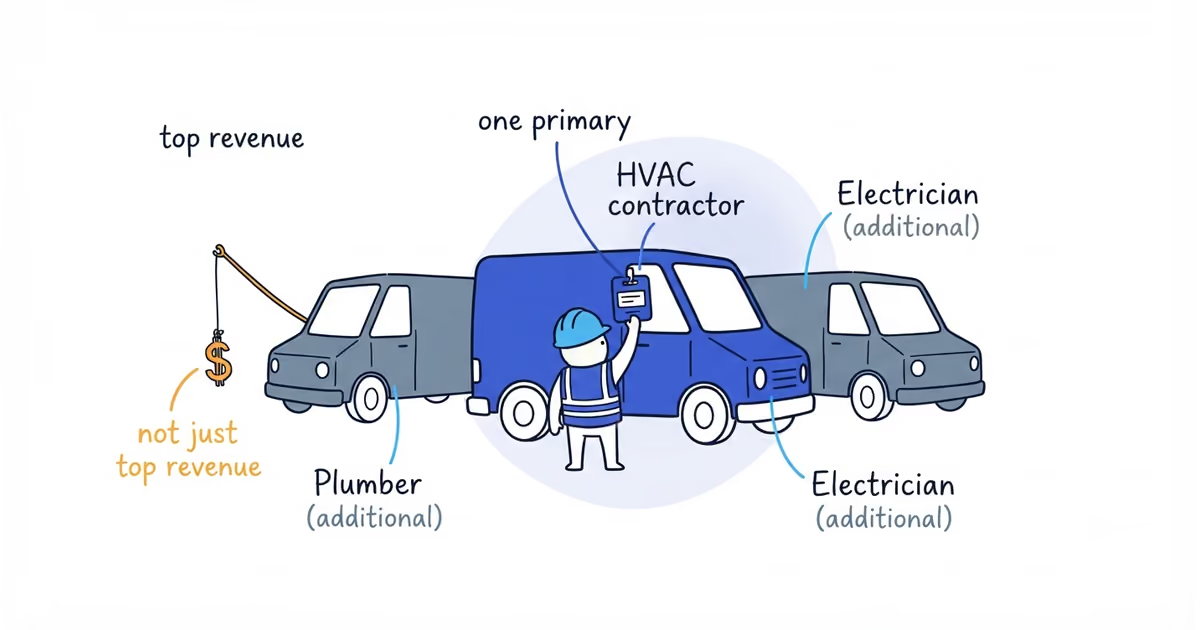
Google’s rule is to choose the primary category that best describes the business. For a multi-service contractor, that means choosing the one available label that most accurately describes the overall company customers encounter, not automatically choosing the division with the highest ticket, the most revenue this quarter, or the leads the owner wants next.
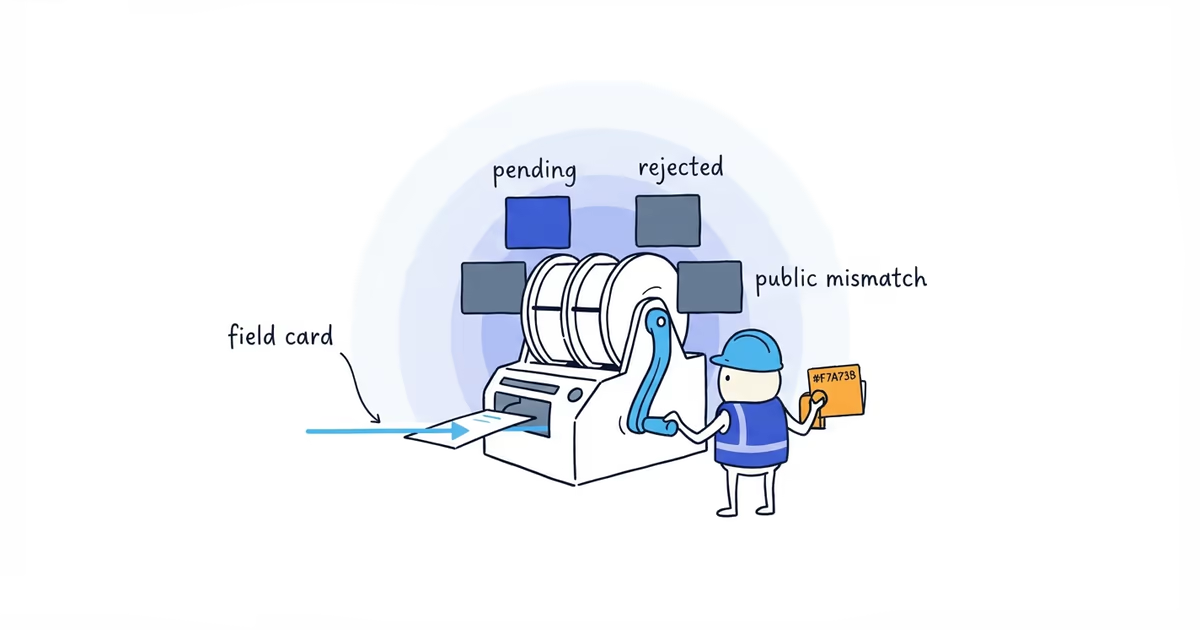
ShiftFlow recommends comparing public identity, completed jobs, team capability, equipment, licenses where applicable, website structure, intake, dispatch, and customer experience. That scorecard is an editorial decision aid, not a test published by Google. Google does not set a fixed job-share percentage or require every division to have a dedicated crew, page, or intake form.
Google guidance checked: July 21, 2026. Public US category-name cross-check: July 21, 2026. Confirm every final name in the live account selector.
How to compare Google Business Profile categories for multiple services
Create one column for each plausible business type, using the exact category name where it is known. Do not include every service inside a division.
| Evidence | Division A | Division B | Division C |
|---|---|---|---|
| Customer-facing brand identity | Strong / partial / weak, with facts | Strong / partial / weak, with facts | Strong / partial / weak, with facts |
| Share of completed jobs | Percentage and job count | Percentage and job count | Percentage and job count |
| Trained team members | Assigned people and capability | Assigned people and capability | Assigned people and capability |
| Equipment | Vehicles, tools, and systems | Vehicles, tools, and systems | Vehicles, tools, and systems |
| Licenses where applicable | Current support for delivered work | Current support for delivered work | Current support for delivered work |
| Website and navigation | Direct customer path or buried mention | Direct customer path or buried mention | Direct customer path or buried mention |
| Intake, dispatch, and estimates | How a customer enters and is served | How a customer enters and is served | How a customer enters and is served |
| Business experience | What the customer believes was hired | What the customer believes was hired | What the customer believes was hired |
| Category role | Primary / additional / Services only | Primary / additional / Services only | Primary / additional / Services only |
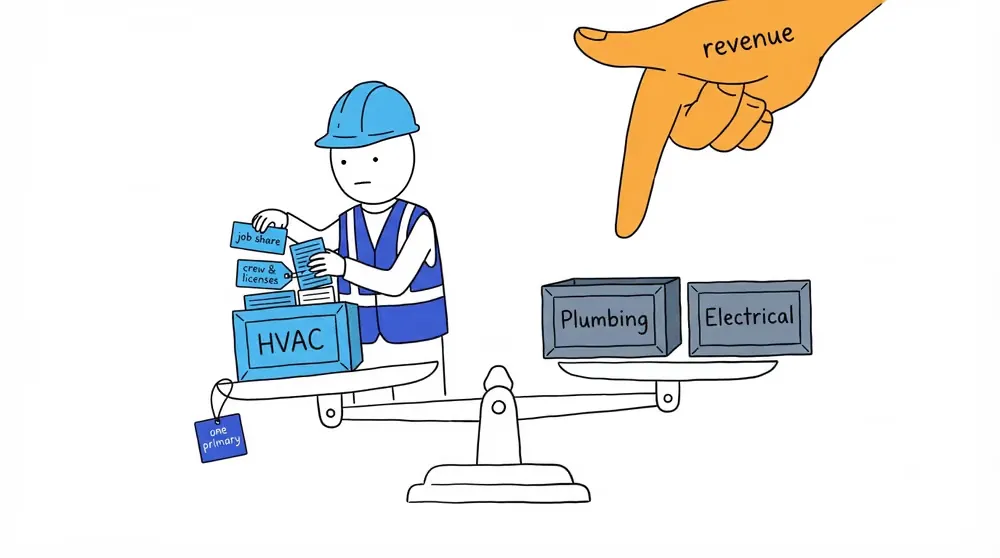
Do not total the words strong, partial, and weak as though this were an automatic calculator. No row has a Google-defined weight. The scorecard exposes contradictions; the final choice still has to complete the sentence “This business is a…” more accurately than the alternatives.
What evidence should a multi-service contractor compare?
Customer-facing identity
Look beyond the legal entity name. Check the name customers see, the homepage promise, vehicles, estimates, phone greeting, referrals, and how customers describe the company.
A neutral brand such as Northstar Home Systems does not settle the category. A trade-specific brand can be evidence, but it cannot override an operation that has materially changed.
Completed jobs and revenue
Count completed jobs over a period long enough to remove a seasonal spike. Job share shows how often customers experience each division. Revenue shows economic weight.
Use both, but do not let either decide alone. One HVAC replacement may produce more revenue than several plumbing service calls. A high-revenue division with few jobs, a small team, and a weak customer path may not describe the overall business.
Desired leads are even weaker. The category should describe the company that exists, not the company the owner hopes to build.
Team members, equipment, and licenses
Team capability, equipment, and any required licenses or permissions are useful evidence that the company can deliver what a category promises. One multi-skilled owner may operate across several trades, but that fact alone does not settle how customers experience the overall business.
Record who is scheduled, how jobs are covered when someone is absent, what vehicles and tools support the work, and whether the business can keep its promise at normal demand.
Website, intake, dispatch, and estimates
A navigation tab is only evidence when the operation behind it is real. Check whether customers can request the division directly, whether intake asks the right questions, whether dispatch assigns the right team, and whether the estimate and delivery process match the claimed identity.
The business experience
This row resolves many ties. Ask what the customer believes they hired from first search through completed work. If every division uses the same brand, location, dispatcher, management, and customer process, the company may be one multi-service business with one primary and evidence-backed additional categories.
How to choose primary and additional categories
Use the scorecard in this order:
- Remove any candidate that names a job rather than a business type.
- Remove any candidate the company cannot accurately claim or deliver.
- Compare the remaining genuine divisions across a full operating period.
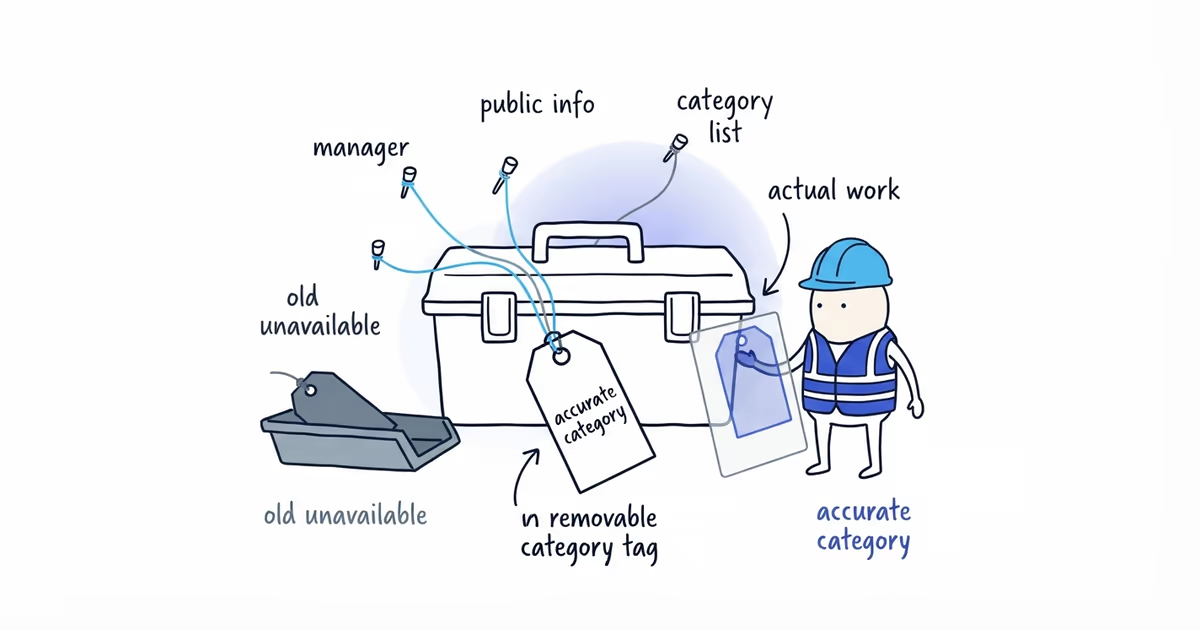
- Choose the category that most accurately describes the overall business as primary.
- Consider the other genuine divisions as additional categories only after confirming their exact labels in the live US selector.
- Put individual jobs under Services for the category or division that delivers them.
If two divisions remain close, do not break the tie with keyword volume. Ask which single answer would be least misleading to a customer who sees only the primary category.
Hypothetical category scorecard for a multi-service contractor
Northstar operates plumbing, HVAC, and electrical divisions under one brand, phone number, location, and management team.
For this fictional example, HVAC produced 46% of completed jobs, plumbing 37%, and electrical 17% over the last 12 months. Those percentages are illustrative, not selection thresholds. HVAC also produced the most revenue, but the gap widened during two replacement-heavy summer months.
Five HVAC team members handle service and installation with dedicated vehicles and equipment. Three licensed plumbers where required handle plumbing calls with their own vans. Two qualified electricians handle electrical service, panels, and installations under the applicable licenses. Each division has its own main navigation page and estimate option.
One dispatcher answers for the entire company, identifies the trade, and routes the call to the appropriate division. Estimates and field paperwork use the Northstar brand, with the relevant trade and team member clearly identified. Customers can hire any division without buying work from another one.
The completed scorecard leads to this decision:
| Category candidate | Strongest evidence | Category role |
|---|---|---|
HVAC contractor | Largest completed-job share, largest assigned team, dedicated equipment, direct website and intake path, and strongest public work history | Primary, after confirming the live account wording |
Plumber | 37% of jobs, three assigned plumbers, dedicated vans, applicable licenses, direct estimate path, and independent customer demand | Additional, after live-selector confirmation |
Electrician | Smaller share but two assigned electricians, applicable licenses, dedicated work, direct estimate path, and independent customers | Additional, after live-selector confirmation |
Northstar should not automatically add more categories for AC repair, water-heater replacement, drain cleaning, panel upgrade, or EV-charger installation. Some adjacent business-type categories do exist, but each would need its own accuracy decision. These job names can remain Services inside the three trade divisions.
HVAC contractor wins because several evidence rows agree, not simply because HVAC produced the most revenue. If plumbing later becomes the clearest overall identity, Northstar should review the scorecard again. No universal percentage automatically triggers that change.
Can each service division have its own Google Business Profile?
Several real divisions do not automatically justify several Business Profiles. Shared branding, location, management, team structure, intake, and customer experience may describe one eligible business.
Genuinely distinct eligible businesses or departments require their own real-world identity and must meet Google’s current eligibility rules. A desire to give every division a primary category is not eligibility. Do not create duplicate profiles, virtual offices, borrowed addresses, or nominal departments to gain category coverage.
When the real-world setup is unclear, resolve eligibility before creating or separating profiles. This category scorecard cannot substitute for Google’s representation rules.
If the company is one service-area operation but the owner is unsure whether a second location or department qualifies, the service-area profile guide helps check the location, staffing, and profile-count rules before anything is created.
When to change a multi-service contractor’s primary category
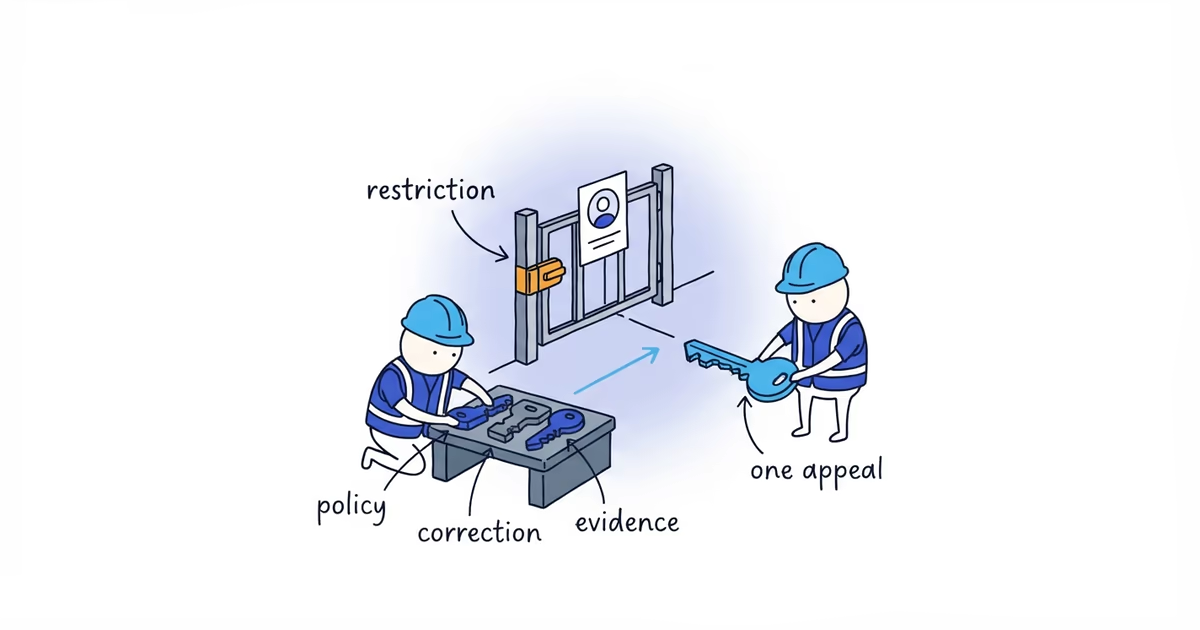
Before changing the profile:
- Save the current primary and additional categories.
- Use a representative operating period and document the evidence behind every scorecard cell.
- Confirm every proposed label in the live US selector.
- Check that additional categories describe real divisions, not jobs.
- Confirm that the website, team, equipment, licenses where applicable, intake, dispatch, estimates, and customer experience agree.
- Make only the justified change and prepare for possible reverification.
The decision is complete when one primary accurately represents the whole company, every additional category truthfully names another business type, Services carry job-level detail, and the profile structure matches the real eligible business.
If the scorecard exposes an incomplete or contradictory live profile and the owner wants implementation help, ShiftFlow’s Google Business Profile setup can apply the category, Services, and profile-structure decisions to the real account.
Google Business Profile category FAQs for multi-service contractors
Should a multi-service contractor choose its highest-revenue category?
Not automatically. Revenue can inform the review, but the primary category should best describe the overall business customers encounter across its brand, completed work, team, equipment, intake, and delivery.
What if two service divisions are equally strong?
Ask which single category would be least misleading to a customer who sees only the primary label. Do not break the tie with keyword volume, one high-ticket month, or the division the owner hopes to grow.
How many additional categories should a multi-service contractor use?
There is no useful target count. Use only a few categories that accurately describe genuine business types, and keep individual jobs inside Services.
Sources
- google-business-profile-category-for-multi-service-contractor
- multi-service-contractor-primary-category
- choose-primary-google-business-profile-category
- multiple-services-google-business-profile-categories
- additional-categories-for-contractors