What Is a Good Google Review Request Text?
A four-part review request you can send after any finished job, a message for each job type, and the one common line that quietly breaks Google’s rules.
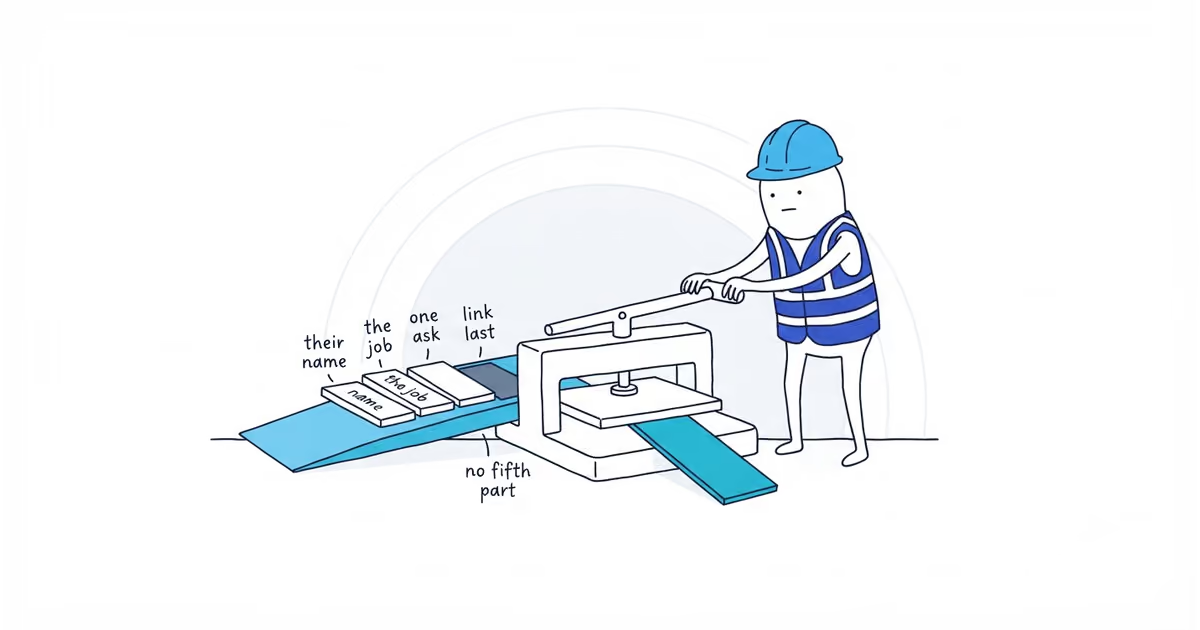
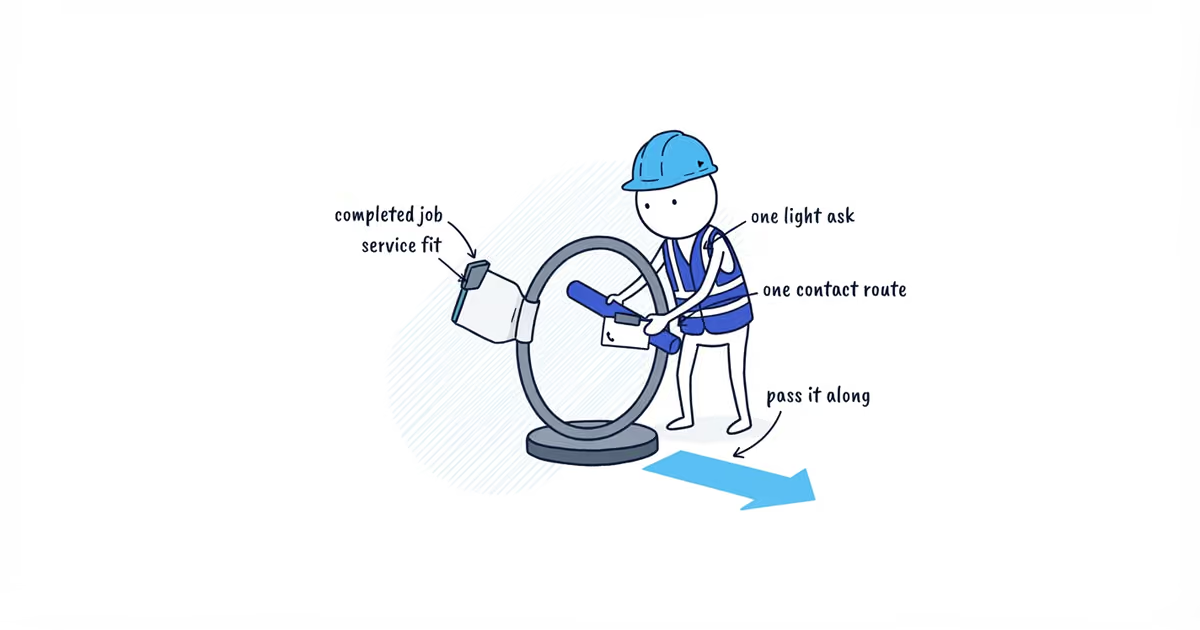
A good Google review request text has four parts, in this order: the customer’s first name, who you are and the specific job you did, one sentence asking for the review, and the link last. There is no fifth part.
Hi Dana — Miguel from Northside Plumbing. Thanks for having us out to replace the water heater in the garage. Would you leave us a Google review? https://g.page/r/…
That is the whole message. Most owners write four times that much, or they write the one line that quietly breaks Google’s rules. Both problems are below.
Google documentation checked: July 30, 2026 (United States).
How long a review request text should be
Keep it to two short sentences plus the link. A long request arrives on the customer’s phone as a wall of text, or gets split into pieces by the carrier and shows up out of order.
Put the link at the end of the message. Whatever you put after it competes with the tap you actually want — your phone number, your thanks, the second thing you meant to ask. If it matters, it goes before the link.
Send it from the number the customer already has. A message from a number they do not recognize gets ignored no matter how well it is written. If your requests go out from a system number instead, the pattern already handles it: your name and the business are in the first clause, before the customer decides whether to keep reading.
Use only a customer channel your business is permitted to message. If a system sends the request automatically, confirm the consent and opt-out rules that apply to that setup, and honor a stop request across every channel.
Review gating and the wording Google prohibits
The most copied review request on the internet is some version of this:
If you were happy with the work, would you mind leaving us a review?
Do not send it. Google’s policy prohibits selectively soliciting positive reviews from customers, and prohibits discouraging or blocking negative ones. A request conditioned on the customer having been happy is exactly that, whether the condition is in the sentence or in who you decided to send it to.
The same policy prohibits:
- Incentives. Payment, a discount, free or discounted work — including in exchange for editing or removing a review. Google removes incentivized reviews and can restrict the profile.
- Pressuring a customer to review while you are on their property. Handing over the ask is fine. Standing there waiting is not.
- Asking for specific content. No requesting a star rating, no asking the customer to name the technician, no asking them to mention a service or a city.
What Google does allow is inviting a customer to share a genuine experience, with no incentive and no attempt to steer the rating or what it says. That is a wide lane. You do not need the conditional line, and none of the messages below use it.
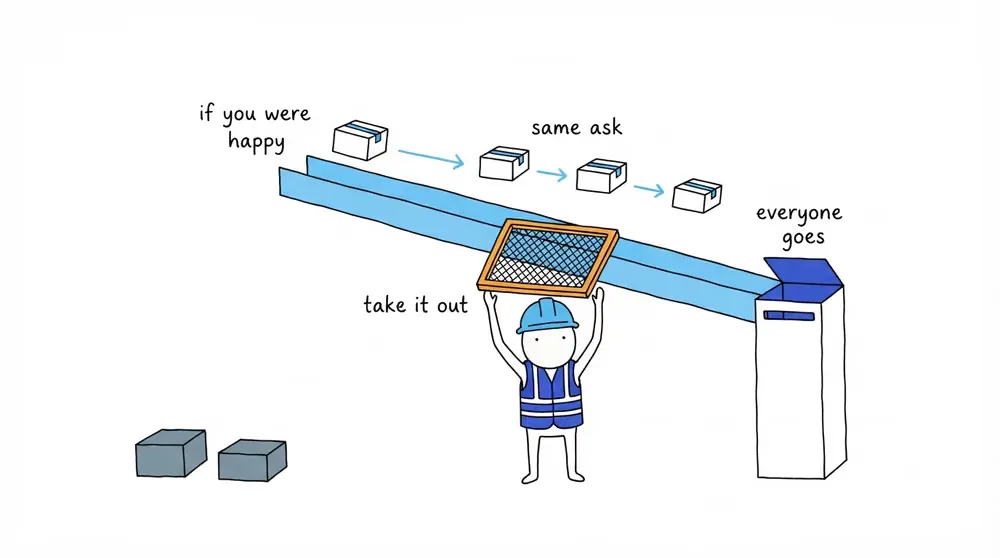
Three variations that fail the same test, because owners assume only the obvious wording counts:
- “If we earned five stars, would you leave a review?”
- Sending the request only to the customers you think liked you.
- Sending everyone to a private feedback form first, and only forwarding the happy ones to Google.
The rule you ask by has to be neutral — it cannot depend on what you expect the customer to say. Pick the rule, write it down, and apply it to everyone it covers: every completed job for one-off work, once per customer for recurring work. Which rule you choose is yours. Bending it around who you think will be kind is the part that is not.
How to ask for a review when the customer is unhappy
Fix the job. Then ask like everyone else.
Dissatisfaction changes the service call, not the review policy. If a customer is unhappy, the ask waits until the complaint is actually resolved — that is not filtering, because the ask still happens. What you cannot do is quietly drop them from the list because you are afraid of what they will write.
And if you are afraid of what a customer will write, the fix is the callback, not the filter. A customer who got a real response to a real problem writes a different review than one who got silence.
Google review request templates by job type
The job changes the message more than the trade does. A message that works after a 2 a.m. burst pipe reads wrong after a scheduled cleaning.
| After this job | Name this detail | Message |
|---|---|---|
| Emergency or after-hours call | What was failing, and that it is holding now | Hi [Name] — [Your name] from [Business]. Glad we got your [heat back on] last night. Would you leave us a Google review? [link] |
| Diagnostic or service call | The specific thing you fixed | Hi [Name], [Your name] from [Business]. Thanks for having us out to [replace the kitchen faucet] today. A Google review helps the next homeowner know what to expect: [link] |
| Large install or replacement | The equipment, once the customer has used it | Hi [Name] — [Your name] from [Business]. Now that the [new AC] has run a few days, would you leave us a Google review on how the install went? [link] |
| Recurring visit (cleaning, lawn, pest) | The length of the relationship, not one visit | Hi [Name], [Your name] from [Business]. We’ve been cleaning your place for [six months] now — would you leave us a Google review? [link] |
| Estimate only, no work done | The visit and the estimate itself | Hi [Name], [Your name] from [Business]. Thanks for having me out to look at the [roof] and walk through the estimate. A Google review about the visit helps other homeowners: [link] |
What makes each one different:
- Emergency work tends to produce your most emotional reviews, and it gives you the shortest window to ask. The customer’s relief is the review.
- A service call is the plain case. Name the repair so the message could not have been sent to anyone else.
- An install is the one job where asking at completion is too early. The customer has not lived with it yet, and a review written before first use says nothing.
- A recurring customer is the one you will over-ask without noticing. Ask once per customer, not once per visit.
- An estimate visit is a real experience with your business, so a review of it is legitimate. Just be clear the review is about the visit and the estimate, not about work that never happened.
Trade-specific versions of these are a separate article. Job type is the variable that actually changes the wording.
How to personalize a review request template
The placeholder is not the point. What you put in it is.
Template:
Hi [Customer first name] — [Your first name] from [Business name]. Thanks for having us out to [the specific job]. Would you leave us a Google review? [review link]
Sent:
Hi Dana — Miguel from Northside Plumbing. Thanks for having us out to replace the water heater in the garage. Would you leave us a Google review? https://g.page/r/…
“Replace the water heater in the garage,” not “for your recent service.” The specific detail does two things at once: it proves a person wrote the message, and it reminds the customer what they are about to review, which is most of what they will end up writing.
Never send a message with a bracket still visible in it. Read it once before it goes.
Google review request email template
Email is the fallback, not the default. Use it for customers who do not text, and as the normal channel for commercial accounts and property managers, where the person who hired you reads email all day and may not be the person who was on site.
Same shape, slightly more room:
Subject: Your water heater replacement
Hi Dana,
Thanks for having us out on Tuesday to replace the water heater in the garage.
Would you leave us a Google review? It takes a minute and helps other homeowners decide who to call.
Miguel — Northside Plumbing https://g.page/r/…
Keep the subject line factual. “Your water heater replacement” gets opened; “We’d love your feedback!” gets deleted.
How to ask for a review without being pushy
Owners worry about this and then aim at the wrong thing. Being direct is not pushy. These are:
- Asking before the work is finished. Anything before final sign-off reads as fishing.
- Asking twice in the same message. One ask. The follow-up is a separate message on a separate day.
- Explaining at length why reviews matter to your business. The customer is not responsible for your marketing.
- Making it about you instead of the next customer. “We’re trying to hit 50 reviews this month” puts your target on their to-do list.
What not to put in a review request
- A request before the job is signed off
- A second ask inside the same message
- Anything offering a discount, a credit, or free work
- A request for five stars or a specific rating
- A request to mention a particular service, city, or technician
If writing the rule down and then actually following it every week is the part that slips, our Google review management service sets the request process up and keeps it running.
Everything after this first ask is its own question. Our review reminder schedule sets out how long to wait, how many follow-ups to send, and the point where you stop for good.
Frequently asked questions
Should I ask for a Google review by text or by email?
Text, for residential work you finished the same day — it gets read in minutes and the job is still in front of the customer. Use email for commercial accounts and property managers, where the person who hired you lives in their inbox and was probably not on site, and for any customer who has told you they do not text.
Is there a Google review request template for my trade?
Job type changes the message far more than trade does. A plumber and a cleaner asking after a scheduled visit send nearly the same text; the same plumber asking after a 2 a.m. emergency sends a different one. Start from the job-type table above and put your own work in it.
Should the technician ask in person, or should the office send the text?
Whoever the customer actually dealt with should make the ask. If the text goes out from the office or a system, the first clause still has to name the person and the business, so the customer recognizes who is asking before deciding whether to keep reading.
Sources
- google-reviews
- review-request-templates
- review-request-text
- review-gating
- home-services