How Many Review Reminders Should I Send?
Two reminders, three touches, and a hard stop — with the first ask timed to the kind of job, and the numbers openly explained rather than borrowed.
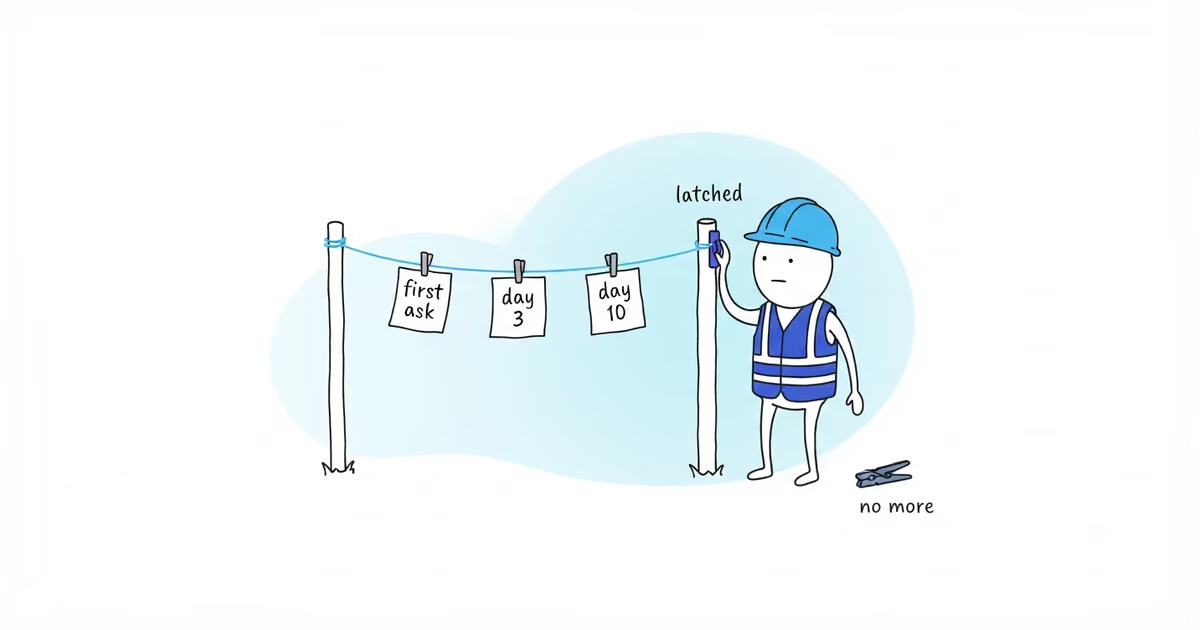
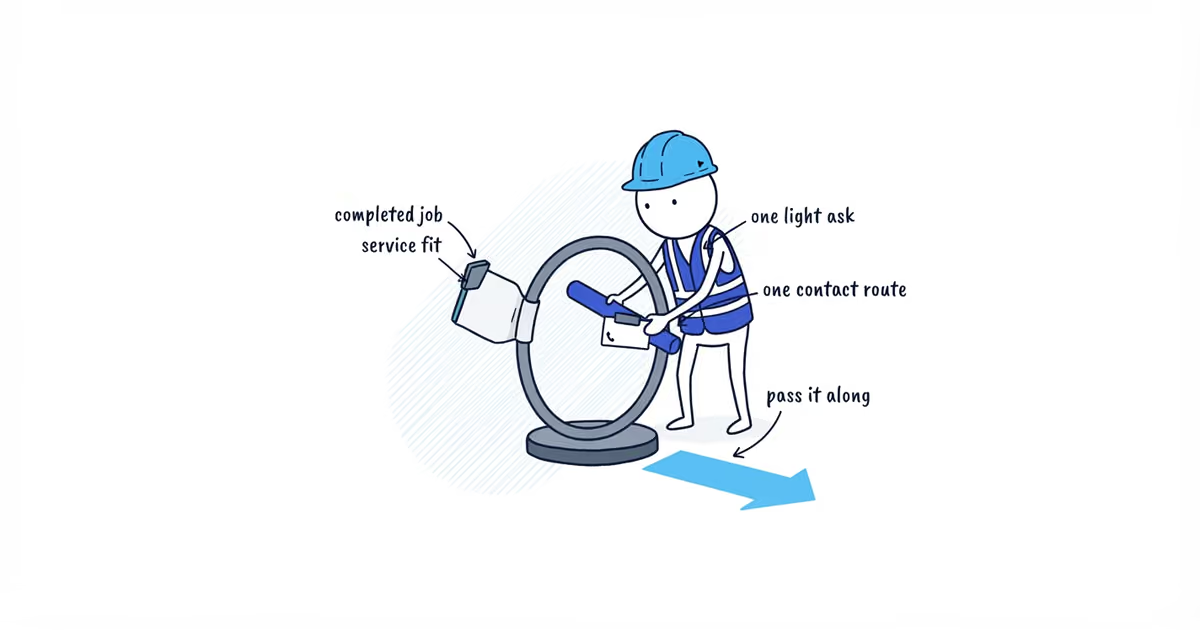
Two review reminders. Three touches total: the first ask, one reminder three days after it, and a final reminder seven days after that. Then stop.
That is the whole answer. The rest of this is where the numbers come from, when the first ask moves, and how to stop without losing the reviews you already earned.
Google documentation checked: July 30, 2026 (United States).
Why no one publishes a review reminder cadence
No platform publishes a review cadence. Google says to ask customers for reviews; it does not say how often, or when to quit. The intervals you will find in review-software blog posts are not sourced to anything, and several of them contradict each other.
So here is what this one is built from:
- When the job is genuinely finished — which for some work means after the customer has actually used the result, not the day the crew drove away.
- How long the customer can still write something specific. At three days they remember the leak and your technician’s name. At three weeks they remember “the plumber.”
- How fast an unanswered ask turns into a nag. Two unanswered asks read as a follow-up. Four read as a collections process.
Run it as written for thirty or forty jobs. Then change one thing, not three.
The review request follow-up sequence
| Touch | When | Channel | What it is for |
|---|---|---|---|
| 1 | The first-ask date for that job type — see the next table | In person if you are standing there, otherwise a text the same day | The real ask, made while the customer still has the finished work in front of them |
| 2 | 3 days after touch 1 | A different channel from touch 1 | A single short follow-up for the customer who meant to and forgot |
| 3 | 7 days after touch 2 | Whichever channel the customer actually answers on | The last one. Bounded, brief, and never mentions the first two |
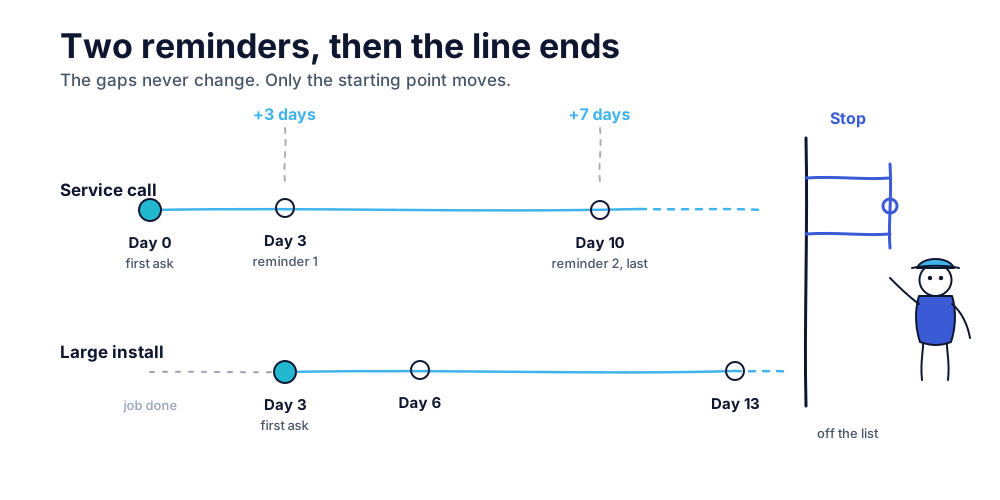
Everything counts from the first ask, not from the job. The next table decides when the first ask happens, and the rest of the sequence follows it.
For a service call the first ask is the same day, so the whole thing runs on day 0, day 3, and day 10 after the job. For a large install the first ask is three days out, so the sequence lands on day 3, day 6, and day 13. The gaps never change; only the starting point does.
Change the channel, not the volume. A customer who did not answer a text does not need a second text; they need an email, or the card the crew left, or a two-line message from a person instead of a system. Sending the same message down the same pipe three times is what makes people stop reading anything you send.
Switch only to a channel the customer already gave you for this job. Silence is not an invitation to find a new way in, and one opt-out stops every channel at once.
Touch 2 has to read differently from touch 1. One line is enough:
Hi Dana — Miguel from Northside Plumbing, following up once. If you have a minute for a Google review, the link is here: [link]
“Following up once” does real work. It tells the customer this is bounded, which is why they do not have to brace for it.
How soon after a job to ask for a review
| After this job | Make the first ask | Why then |
|---|---|---|
| Emergency or after-hours call | The same day, at a reasonable hour, once the fix is confirmed holding | Relief is the strongest review you will ever get and it fades within a day. Do not text at 3 a.m. |
| Diagnostic or service call | At sign-off, or the same day | The work is done and the result is visible. This is the plain case |
| Large install or replacement | Three days after the system is up and running | At completion there is little to review beyond the crew’s manners. The customer has to live with the system first |
| Recurring visit (cleaning, lawn, pest) | After the second or third completed visit | One visit is not the thing they would review. The relationship is |
The install row is the one owners get wrong most often, because it feels like the biggest job deserves the fastest ask. A review written before the customer has run the equipment says the crew was polite and nothing else.
What each of those first asks should actually say — the detail to name after an emergency call versus after an install — is in our review request templates.
How often to ask recurring customers for reviews
Ask once per customer, not once per visit.
A cleaning company that asks at every visit has asked the same person forty times in a year. That is the fastest way to teach a good customer to ignore you.
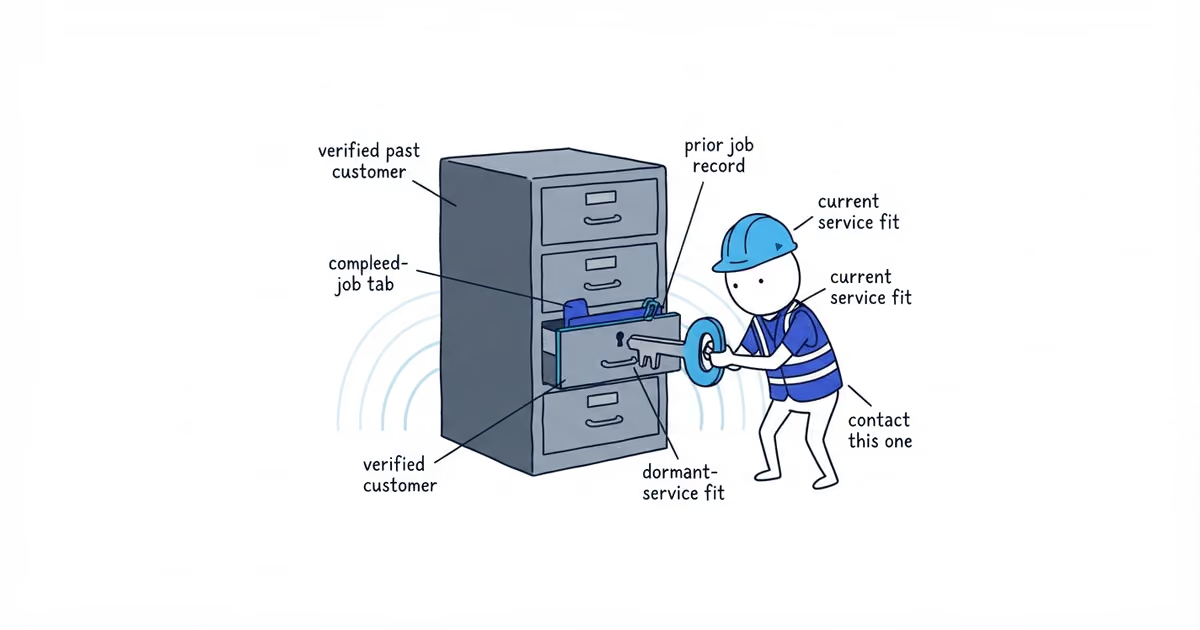
Once a customer has gone through the three touches they are done, and that is the general rule, not a rule about cleaners. The one documented way back into the sequence — for a recurring customer or anyone else — is a genuinely new experience with the business: a service they had not bought before, or a save on a real problem. Not sooner than a year, and another routine visit does not count.
Write that exception down somewhere. An exception you keep in your head turns into asking whoever you happen to remember.
When to stop sending review reminders
The stop rule. After touch 3, that customer is finished. Mark them asked. They do not get asked again on the next job, or the one after that. If they leave a review at any point, stop immediately — including mid-sequence. There is exactly one way back in, and it is the exception written down above.
Check for new reviews before you send touch 2 and again before touch 3. Reminding someone who already reviewed you is the single most damaging message in this whole sequence: it tells them you never looked.
Stopping is the part that makes the rest of it work. A cadence with no end is not a cadence, it is a habit of pestering people, and the customers it costs you are the ones who were going to call you again.
The customer who said yes in person and never posted. That verbal yes was touch 1. Do not restart the sequence and do not treat it as a promise you are owed — people mean it when they say it and then their day happens. Continue to touch 2 on schedule, and stop at touch 3 like everyone else.
Review request consent and opt-outs
Text the customer who hired you, at the number they gave you for the job, and only where your own messaging setup and the rules that apply to it allow it. That relationship is what makes the message expected rather than intrusive — it is not a substitute for checking how your own texts go out.
If anyone asks you to stop — in a reply, on the phone, or in person — stop immediately and permanently, on every channel. Not just the review sequence.
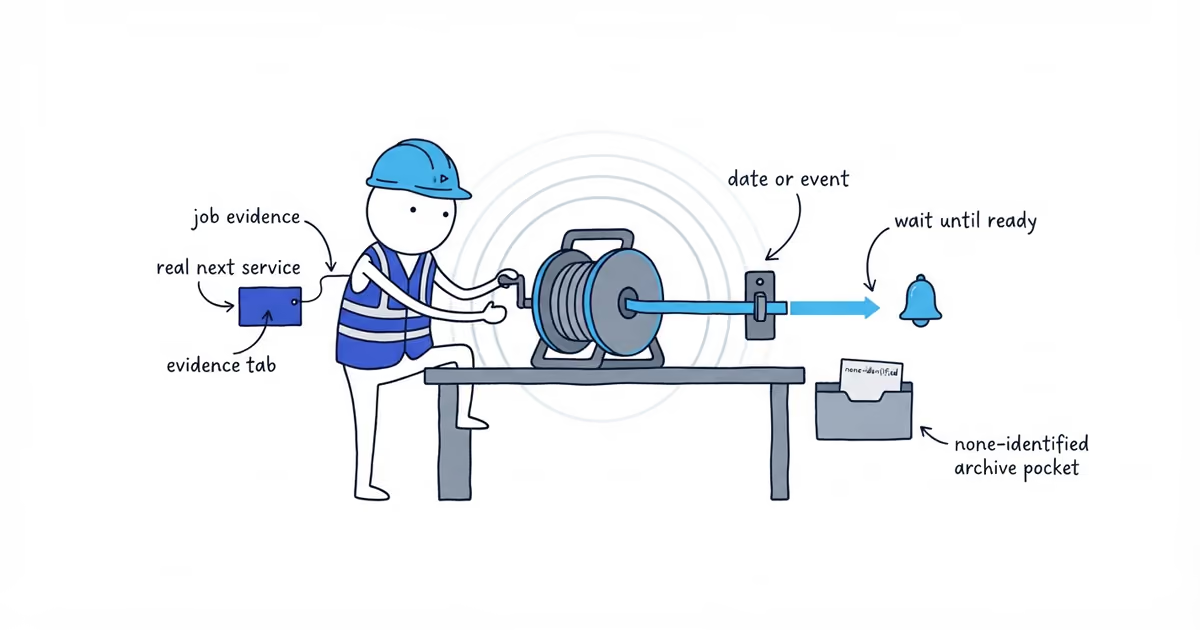
Keep a record. You need to know four things per customer: asked or not, when, reviewed or not, opted out or not. A column on the job in whatever you already use is enough. This does not require review-request software, and the sequence above is designed to be runnable by hand by one person on a Friday afternoon.
Without that record you will send touch 3 to someone who reviewed you on day 2, and ask a customer who opted out last spring.
What Google’s rules allow in a review reminder
The reminders are held to the same rules as the first ask. Google’s policy prohibits discouraging or blocking negative reviews and selectively soliciting positive ones, and it prohibits offering anything in exchange for a review.
In practice that means:
- No reminder that offers a discount, a credit, or free work for finally leaving the review.
- No sending reminders only to the customers you believe liked you. Everyone who got touch 1 gets touch 2 and 3.
- No pressure — no reminding a customer while you are standing on their property waiting.
- No asking for a rating, or for the review to mention a service, a city, or a technician.
How to measure your review request results
Count reviews received against jobs completed in the same period. You already have both numbers, and it is the ratio worth watching. Track it monthly, and read it as a direction rather than a score — reviews arrive late, and some arrive without being asked for at all.
Do not go looking for a benchmark to compare it to. There is not a trustworthy published one for a small home-service business, which is the same reason this article had to state where its own numbers came from.
The signal to shorten the sequence is not a low review count. It is opt-outs, irritated replies, and customers mentioning the texts. If those show up, cut touch 3 before you cut anything else.
When you do adjust, change one variable — the interval, the channel, or the touch count — and give it enough jobs to tell you something. Changing all three at once means you learn nothing.
What makes a review reminder feel like nagging
- The same channel, three times
- A reminder that adds no new information, just asks again
- Guilt framing: “we still haven’t heard from you”
- Reminding a customer who already left a review
- Starting over on their next job
Frequently asked questions
Do I need software to send review reminders?
Not for this sequence — three touches with a record beside them is a Friday-afternoon job for one person. Software earns its place when the volume is past what anyone will reliably remember, or when the record keeps getting lost. Buy the record-keeping, not the sending. If you would rather hand the whole thing over, our Google review management service sets up the sequence, the wording, and the record.
I forgot to ask right after the job. Is it too late?
Not immediately. Asking a week or two later still works if you name the job specifically enough that the customer pictures it — the room, the unit, the repair. Past about a month you are asking someone to review a memory, and the review you get back shows it. Start the sequence from the day you ask, not the day of the job.
Should I still ask if the customer already reviewed us somewhere else?
Yes. A review on another site is not a Google review, and asking is not a duplicate request. Do count them as asked in your own record, though, so they do not end up in the sequence twice.
Sources
- google-reviews
- review-reminders
- review-request-follow-up
- review-request-cadence
- home-services