How Can Contractors Get Customers From Local Facebook Groups Without Spamming?
Learn how contractors get customers from local Facebook Groups without spamming by checking rules, asking permission, replying usefully, and tracking inquiries.
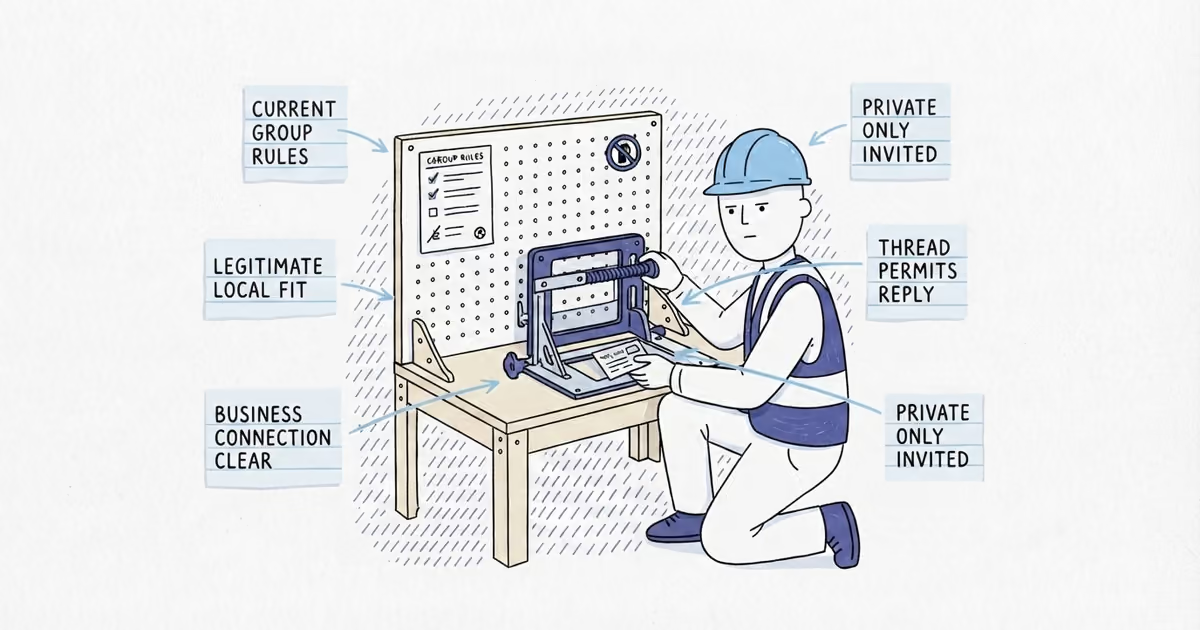
Contractors can get customers from local Facebook Groups by joining groups they legitimately fit, reading current rules, giving useful answers, identifying their business connection, and promoting only with explicit permission. Move private only with permission, then track qualified inquiries, estimates, and jobs.
Platform and policy details checked: August 27, 2026 (United States).
Which Facebook Group Rules Should Contractors Follow?
Use this order before every business-related post, comment, link, or private handoff:
- Meta’s platform rules
- The group’s current rules and announcements
- Direct instructions from a group administrator
- The specific request in the thread
A lower level may narrow an action but cannot override stricter rules. A resident cannot cancel a promotion ban, and an administrator cannot cancel a platform rule.
Facebook says administrators can establish group rules and allow profiles and Pages or profiles only. Use the permitted identity, but never hide company ownership or employment behind a personal profile.
Start with a few groups in your real service area whose membership conditions you meet and whose active local questions fit your work. Member count does not prove customer fit.
How to Check a Local Facebook Group Before Posting
Complete one card before participating. Recheck it before promotions or business replies.
| Permission card field | Record this |
|---|---|
| Group name and link | |
| Local area and service fit | |
| Membership eligibility | Why you legitimately qualify |
| Group status | Public or private |
| Page participation | Allowed, disallowed, or unclear |
| Identity allowed | Profile, Page, or unclear |
| Commercial replies | Allowed, prohibited, or unclear |
| Promotion windows | Named day, thread, event, or none |
| Links, proof, and contact details | What the rules permit |
| Direct-message expectations | Stated rule or none found |
| Administrator clarification | Decision, administrator, and date |
| Rules last checked |
Facebook distinguishes public and private groups. Record the status, but never treat private membership as permission to screenshot, republish, or add member information to a marketing list.
The Federal Trade Commission’s native advertising guidance addresses recognizable commercial content. Never disguise a business recommendation as an unaffiliated neighbor’s view. This safeguard is not a universal legal formula; verify local requirements.
When Can Contractors Promote in a Local Facebook Group?
Run this card for each thread; permission never transfers between groups or threads.
| Decision | Use it when | Action |
|---|---|---|
| GO | The need fits your service and area, your identity is allowed, and the action is expressly permitted | Give a useful, relevant reply and disclose the business connection |
| ASK | The commercial, identity, link, or private-message rule is unclear | Ask an administrator before acting |
| SKIP | The request is off-topic, outside the area, outside your legitimate membership basis, or barred by the rules | Do not turn the thread into a pitch |
| STOP | An administrator objects, content is removed, participation is restricted, a rule changes, or honest disclosure is impossible | End the disputed activity and record why |
A useful reply answers the resident’s stated need and stands on its own. Add proof, availability, contact details, or a link only when both the group and thread permit it. Past helpful comments never create a right to promote.
In a recommendation thread, confirm the service and area, disclose ownership or employment, and give only relevant, supportable context. A separate guide owns exact reply wording.
If the thread permits a business reply and you need the disclosure, proof, and handoff structure, use our recommendation reply guide to write one transparent response without posing as a customer.
How to Market in Neighborhood and Local Moms Groups
| Situation | Decision | Why and next action |
|---|---|---|
| A neighborhood group’s service-provider thread expressly allows local businesses to answer. A Raleigh painter serves the area and can use an allowed profile with clear business identification. | GO | Address the requested painting need. Include proof or contact information only within the thread rules. |
| A local moms group permits Friday business posts. A house-cleaning owner meets its parent-membership condition. | GO in the Friday thread only | Disclose the company connection and follow the format. Never use family concerns, children, emergencies, or household details as sales pressure. |
| A community group bans promotion, but a resident asks for a roofer and the rules do not say whether owners may identify their own companies. | ASK, then SKIP or STOP if not approved | Ask an administrator privately. Silence, another contractor’s reply, or a post that has not yet been removed is not permission. |
Do not claim false neighborhood residency, paste one offer across adjacent communities, or imply a parent identity you do not have. Membership conditions are not marketing obstacles to evade.
When Can Contractors Send Direct Messages From Facebook Groups?
Give the useful, permitted answer publicly. Move to direct messages only when the resident asks, expressly agrees, or the group’s process requires it.
Do not cold-message commenters, harvest names, or request addresses, access instructions, private-area photos, or other job details publicly. Once private contact is permitted, use the normal inquiry route and collect only what the next step needs.
Once the resident starts an invited inquiry, use our social media lead guide to capture the job facts, assign an owner, and move the person into the normal estimate or booking process.
How to Track Customers From Local Facebook Groups
Use the ledger for participation and customer outcomes, not surveillance.
| Thread date | Group | Thread need | Action type | Permission | Business identity disclosed | Private contact permitted | Conversation started | Minutes | Qualified inquiry | Estimate | Won job | Admin or member friction |
|---|---|---|---|---|---|---|---|---|---|---|---|---|
Ask how each lead heard about you. Separate a Group-sourced inquiry from a referral who later checked the Facebook Business Page. Reactions, comments, and visibility are diagnostics, not qualified inquiries or revenue.
Review the ledger on a schedule chosen before results arrive:
| Review decision | Use it when |
|---|---|
| Keep | Participation remains permitted, locally relevant, transparent, manageable, and tied to acceptable customer outcomes |
| Observe | Participation is permitted and useful, but customer evidence is not yet clear; cap the time and set the next review date |
| Exit business participation | Rules prohibit it, fit is poor, friction continues, replies cannot be handled, or results do not justify the recorded time |
When Should Contractors Stop Marketing in Facebook Groups?
Stop when promotion is prohibited, an administrator says no, content is removed, participation is restricted, or rules change. Also stop when credible feedback says replies feel promotional, the group is outside the service area, honest business disclosure is impossible, permitted conversations go unanswered, or a completed review shows no acceptable result for the time.
Facebook notes that the platform or a group administrator may restrict a person’s ability to participate. If content is removed or restricted, stop, reread the rule and administrator instruction, and update the ledger. Do not repost, switch identities, ask a friend or employee to disguise the promotion, or argue publicly to force it through.
Continue only while Group work is allowed, locally relevant, transparent, manageable, and tied to acceptable permission-based customer outcomes. Otherwise, ask, skip, or stop.
Frequently Asked Questions
How often should contractors post in local Facebook Groups?
There is no fixed cadence or number of groups to maintain. Participate only when current rules and a relevant member need permit it, then cap the time and review the ledger.
Should contractors use Facebook Groups or a Business Page?
Treat them as separate channel decisions. Group results do not prove a Business Page works, and Page activity does not grant permission inside a Group. Track each source separately.
Sources
- Facebook Help Centre: Add, edit or delete rules for a Facebook group
- Facebook Help Centre: Allow or don’t allow Pages to join or participate in a group
- Facebook Help Centre: Differences between public and private Facebook groups
- Facebook Help Centre: Why you can’t post, comment or participate in a Facebook group
- Federal Trade Commission: Native Advertising: A Guide for Businesses
- local-platform-decisions
- how-contractors-get-customers-from-local-facebook-groups
- how-can-contractors-get-customers-from-local-facebook-groups-without-spamming
- facebook-group-marketing-for-contractors
- neighborhood-group-marketing-without-spamming
- local-moms-group-marketing-for-contractors
- how-often-should-contractors-post-in-facebook-groups