How Do Business Categories Affect Google Maps Ranking?
Choose the most accurate Google Business Profile category, distinguish categories from services, and evaluate additional and competitor categories without obscuring the real business identity.
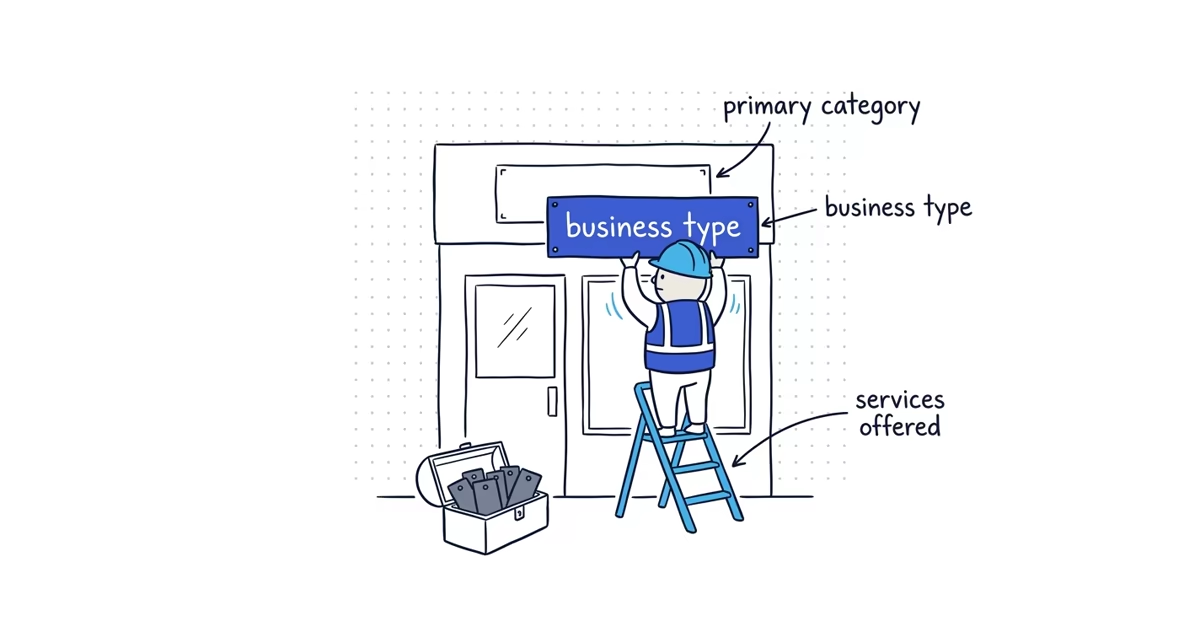
Google says the categories selected on a Business Profile affect local ranking. They help Google connect a business with people searching for its products or services.
Choose categories for accuracy, not search volume. The primary category should be the most specific option currently available that describes the overall business. It should not be the highest-ticket service, the service the owner wants more of this month, or the category used by one top-ranking competitor.
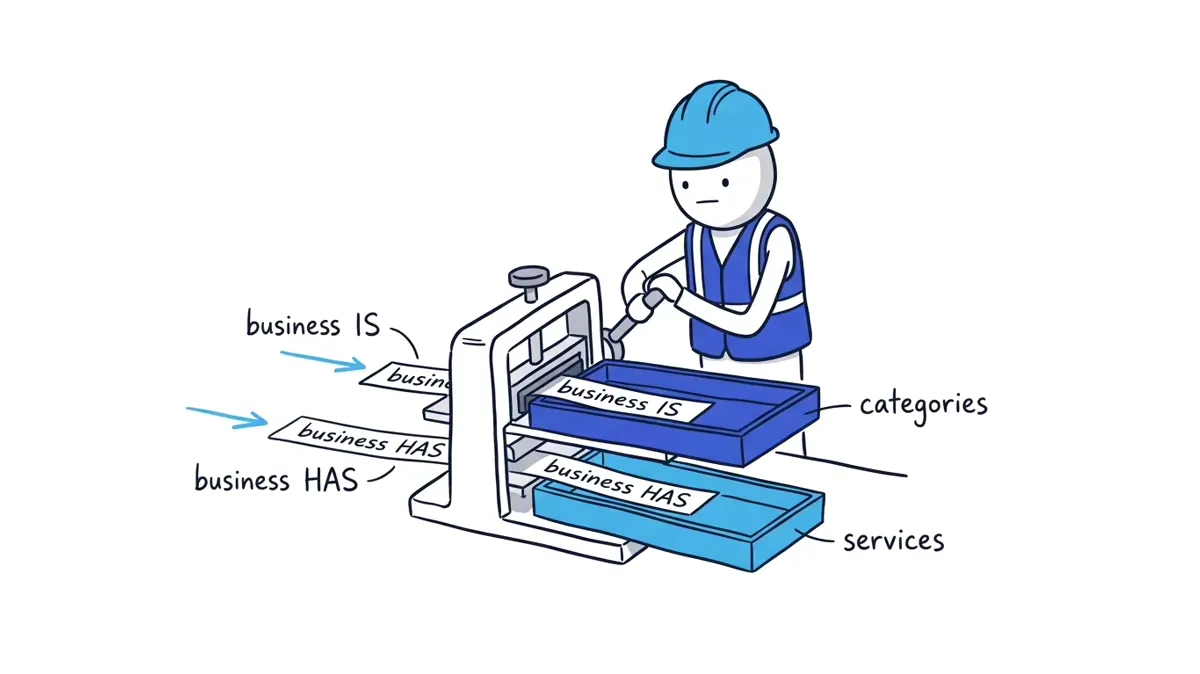
The simplest test comes from Google’s own guidance:
- Complete “This business IS a…” with a category.
- Put “This business HAS a…” items under services, products, or amenities instead.
A plumbing company is a plumber. It has drain-cleaning and water-heater services. Those services do not each need to become a category.
Google Business Profile categories vs. services
| Field | What belongs there | Decision rule |
|---|---|---|
| Primary category | The single current category that most specifically describes the overall business | If a customer asked what kind of business this is, which one answer would be most accurate? |
| Additional categories | A few other current categories that describe genuine business types or meaningful parts of the same operation | Does the business really operate as this type, or does it merely offer one related service? |
| Services | The work customers can hire the business to perform | If the phrase completes “This business has/offers…” rather than “This business is…”, it probably belongs here |
Google advises businesses to use as few categories as possible. More categories do not make the profile relevant to every service. Inaccurate categories can make the business identity less clear and create a mismatch between the profile and the operation customers actually encounter.
How to choose Google Business Profile categories
Use this worksheet with the category editor open. Category names change, new options appear, old options disappear, and availability can vary by region. The live US selector in the account is the final authority for what can be chosen today.
Complete five lines:
- What the business is in ordinary customer language:
__________ - The most specific current category that describes the whole business:
__________ - Any additional category that independently completes “This business is a…”:
__________ornone - Work the business has or offers, which belongs in Services:
__________ - Real-world evidence supporting the choice: website, team, equipment, licenses where applicable, and completed jobs
Google does not allow a custom category. If an exact option is unavailable, choose the closest accurate broader category. For every additional option, ask whether it would still be truthful with no ranking benefit. If the answer is no, leave it out.
Category example for a plumbing business
Business: Northside Plumbing
What it does: Residential plumbing repairs and installations. Common jobs include leak repair, drain cleaning, fixture replacement, and water-heater work. It also accepts emergency calls during specified hours.
Plumbing category worksheet result
- This business is a:
Plumber - Primary category:
Plumber, subject to confirmation in the current US selector before the edit - Additional categories: None based on the facts given
- Services: Drain cleaning, leak repair, fixture installation, water-heater work, and other accurate customer jobs
- Operational detail: Emergency availability belongs in the hours and customer information, not in a category chosen merely to target an “emergency plumber” search
The owner may care most about water-heater jobs because they are valuable. That does not make the whole company a different type of business. The primary category still needs to describe Northside Plumbing as customers experience it.
If the company later builds a genuinely separate line of work with dedicated equipment, trained team members, and a clear customer offer, it can reconsider an additional category. Profit alone is not enough.
Category example for a cleaning business
Business: Fresh Start Cleaning
What it does: Recurring residential cleaning, one-time deep cleaning, and move-out cleaning. Team members sometimes clean interior windows as part of a larger house-cleaning job. The company does not operate a separate carpet or window-cleaning division.
Cleaning category worksheet result
- This business is a:
House cleaning service - Primary category:
House cleaning service, subject to confirmation in the current US selector before the edit - Additional categories: None based on the facts given
- Services: Recurring cleaning, deep cleaning, move-out cleaning, and any other accurate offerings available in the Services field
- Not a separate category decision: Interior window cleaning included in a house-cleaning job
The phrase “move-out cleaning” may match a valuable search, but that does not automatically make it a business category. The company offers move-out cleaning; the company is still a residential house-cleaning business.
The answer would change if Fresh Start ran a substantial, separately presented commercial operation. The facts of the business should change the decision, not a desire to appear for more phrases.
How to research competitor categories
Competitor research is useful for discovery. It is not proof that a category is right.
Compare three to five legitimate nearby businesses with similar core work, not only the profile ranked first for one search. Note overlooked options, confirm them in the live selector, then run them through the worksheet. A competitor may be miscategorized or operate a different business model. Its category can suggest a question; it cannot answer it for your business.
What to check before changing a Google Business Profile category
A category edit can cause Google to request verification again. Before changing it, record the current categories, date, main relevant searches, and recent lead quality. Change the category to correct the business identity, not as a weekly or seasonal experiment.
Allow a justified edit to process, avoid stacking unrelated major changes, and complete reverification if Google requests it. Then compare the same relevant searches and lead quality with the baseline. Google promises no ranking improvement or deadline after a category edit.
Five-question category completion check
The category decision is complete when you can answer yes to all five questions:
- Real-world fit: The primary category describes what the business actually is.
- Specificity: It is the most specific accurate option in the current selector.
- Restraint: Every additional category describes a genuine part of the business, with as few selected as possible.
- Service separation: Individual jobs and offerings remain in Services rather than becoming categories.
- Consistent evidence: The website, team, equipment, customer work, and public identity support the choice.
If no perfect category exists, choose the closest accurate broader option and keep the services specific. Accuracy is a stronger decision rule than competitor rank, ticket size, or keyword volume.
Once the categories are correct, the Google Maps ranking guide helps you move from category fit to the remaining relevance, distance, and prominence work in a practical order. Categories improve one part of relevance; they do not guarantee a map-pack position.
Frequently asked questions
Is Plumber always the right primary category for a plumbing business?
No. It is a strong fit when plumbing is the overall business and Plumber is available in the current selector, but the primary category must match the operation customers actually encounter. Confirm the live options and choose the most specific accurate category.
How many additional Google Business Profile categories should I use?
Google advises businesses to use as few categories as possible. Add only categories that describe genuine business types or meaningful parts of the operation, not every service the business offers or every search it wants to reach.
Sources
- google-business-profile
- business-categories
- primary-category
- additional-categories
- google-maps-ranking