

How long should a contractor quote be valid?
Learn how long a contractor quote should be valid, choose a 7-30 day expiration window, and write a clear valid-through date customers can follow easily.
For most contractor quotes, 14-30 days is a practical starting range. Use a shorter 7-14 day window when supplier pricing or your schedule can change quickly. Use up to 30 days when the numbers are stable and you are comfortable holding the price that long.
That range is a business decision, not a legal rule or an official industry standard. The right expiration date is the last day you can still trust the price and timing behind the quote.
How to choose a contractor quote validity period
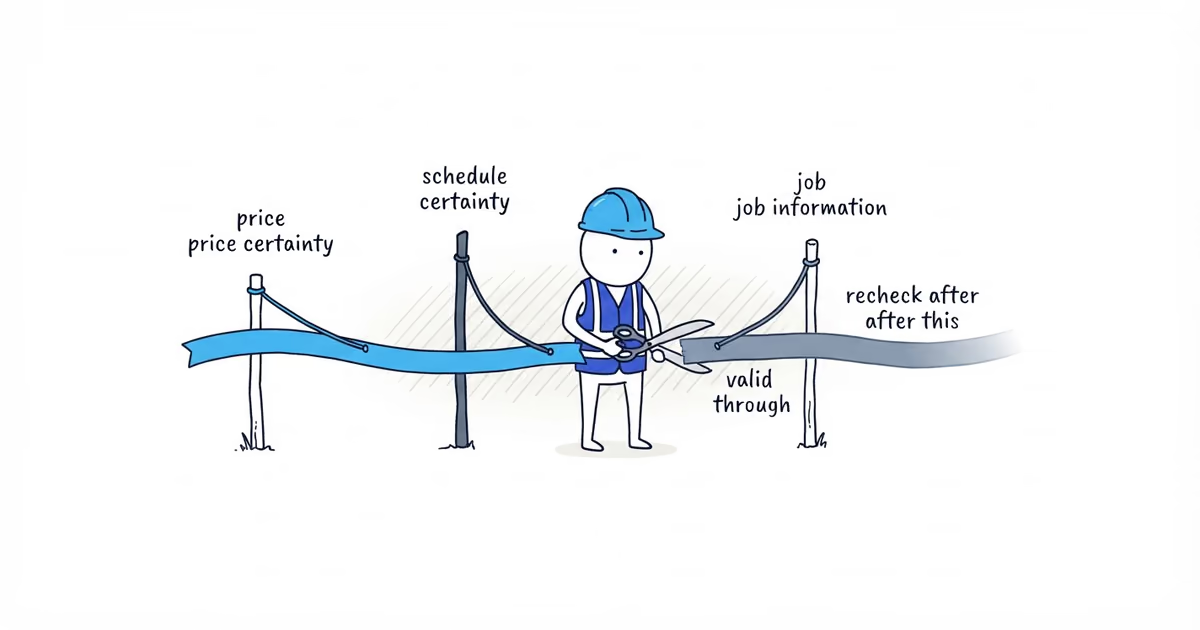
Before choosing a date, look at three things:
- Price certainty: How long can you rely on the labor, equipment, subcontractor, and supplier numbers used in the quote?
- Schedule certainty: How far ahead can you judge crew availability and the likely timing of the job?
- Recheck risk: How long can the quote sit before you would need to revisit measurements, site conditions, or the work required?
Use the shortest of those three windows as your quote validity period.
Quote validity = the shortest reliable window for price, schedule, or job information.
The common mistake is choosing 30 days because it looks standard, even though one important supplier price is available for only 10 days. The printed deadline should match the assumptions behind the number, not a default copied from an old template.
For example, suppose you prepare a quote on June 3 and a major supplier will hold its price through June 14. Even if your normal template says 30 days, make this quote valid through June 14. The customer gets a clear decision date, and you are not promising a price after one of your inputs needs to be checked again.
When should a contractor quote be valid for 7-14 days?
Choose a shorter window when delay creates real uncertainty. A 7-14 day expiration may fit when:
- A supplier price is available only briefly.
- Your next few crew openings are filling quickly.
- A subcontractor has not committed beyond a certain date.
- The site or job details are likely to need another visit if the customer waits.
- Repricing the job later would take meaningful time.
A short deadline should reflect a real operating limit. Do not use a seven-day expiration simply to manufacture urgency. Customers can tell the difference between a clear reason and a pressure tactic.
If material price changes are the main concern, the validity date is only one part of the answer. The wording used to protect a quote from later material increases belongs in a separate policy; do not try to hide that policy inside the expiration sentence.
When should a contractor quote be valid for 30 days?
A 30-day window can be reasonable when your inputs are stable, the work is straightforward, and you can absorb normal scheduling movement without rebuilding the quote.
Before offering the full 30 days, ask one blunt question: Would I still be willing to do this exact job at this exact price on day 30? If the answer is no, choose an earlier date.
Giving customers more time is useful only when the quote remains dependable. A generous deadline that forces an uncomfortable conversation later is not generous to either side.
What happens when a contractor quote expires?
An expired quote does not mean the customer can never hire you. It means you review the job before confirming the price and timing again.
When a customer returns after the deadline:
- Recheck the costs and crew availability behind the original quote.
- Confirm that the requested work is still the same.
- Update anything that is no longer current.
- Send a fresh quote with a new issue date and valid-through date.
Do not silently reactivate the old version. A fresh copy makes it clear which price and date the customer is considering.
If you prefer to update an editable file rather than rebuild the quote, use our contractor estimate template to revise the scope, total, issue date, and valid-through date in one document.
Keep one boundary clear: expiration handles time passing. If the customer asks for different or additional work, that is a scope change and needs its own review. It should not be squeezed into the old quote just because the old quote is still within its validity period.
How to write an expiration date on a contractor quote
Write the exact date instead of making the customer calculate “30 days from issue.” Put the issue date and valid-through date near the total or acceptance area where they are easy to find.
Use plain wording:
Quote issued: [Month Day, Year]
Valid through: [Month Day, Year]
This quote is valid through the date above. After that date, contact us to confirm current pricing and availability. We will send an updated quote if anything has changed.
This wording explains what the deadline does without threatening the customer or pretending the job disappears at midnight. It also gives your team a clear next action when an old quote comes back.
Contractor quote expiration checklist
Take one minute to verify the expiration date:
- Does it end before any important supplier or subcontractor price expires?
- Can you still stand behind the labor and equipment numbers on that date?
- Does the date fit how quickly your schedule is changing?
- Would the job information still be reliable, or would you need another visit?
- Is the exact valid-through date visible on the quote?
If those answers line up, send it. If one does not, shorten the window or recheck the underlying number first.
Frequently asked questions
Does a quote validity date reserve a start date?
Not by itself. The valid-through date tells the customer when you will review the quoted price and availability again. If you reserve crew time only after another step, such as written acceptance, state that separately so the customer does not mistake the expiration date for a booking hold.
Can I extend a contractor quote before it expires?
Yes, if you first confirm that the price, availability, and job information are still reliable. Send a revised copy with the new valid-through date so both you and the customer are working from the same version.
- pricing
- how-long-should-contractor-quote-be-valid
- how-long-should-a-contractor-quote-be-valid
- contractor-quote-validity-period
- quote-expiration-date
- how-long-is-an-estimate-valid
- estimate-expiration-wording



