How do I get commercial contracts for my service business?
Learn how to get commercial contracts by targeting accounts, reaching decision-makers, qualifying sites, and checking delivery costs before accepting the work.
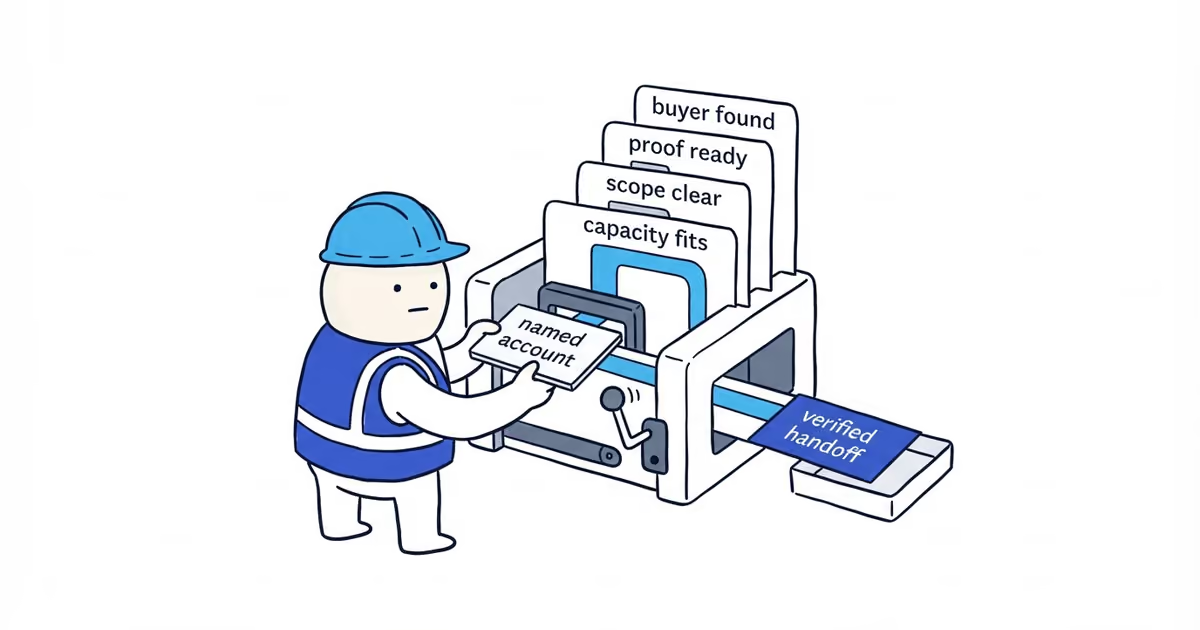
Get commercial contracts by choosing one account type you can serve, preparing for buyer scrutiny, researching named local accounts and decision-makers, earning a qualification conversation, scoping the site, submitting a clear proposal, following up with a dated next action, and accepting only work you can deliver profitably.
Here, a commercial contract means privately purchased recurring or project service work for a business, property, facility, association, builder, or general contractor. It excludes government procurement and legal contract drafting.
Keep the stages separate. A target account is not a lead. A contact is not a qualified opportunity. Vendor approval is not a work award. A proposal is not an accepted agreement. Expected proposal value is unwon work, and even accepted work does not become earned revenue until you deliver it.
How to choose commercial accounts to target
Do not start with “any business that needs us.” Choose a pattern specific enough to research and reject.
Define the service, territory, customer or facility type, likely scope, service window, account size, access needs, existing proof, and buying process. In a fictional example, a small HVAC company targets locally managed offices within 20 miles needing weekday preventive maintenance. A landscaper might choose HOA common areas on an existing route.
The SBA’s market-research guidance supports checking demand, location, saturation, alternatives, and the target customer. Apply those questions locally; no niche is universally best.
Write no-fit rules before you prospect. Test each account against:
- Route or territory
- Required service hours or response window
- Specialist work, equipment, and access conditions
- Staffing, supervision, and backup coverage
- Buyer administration and likely payment timing
- Requirements you cannot truthfully or reliably meet
An office requiring overnight emergency coverage this HVAC company cannot staff stops here. A recognizable logo does not make it deliverable.
How to prepare for commercial buyer requirements
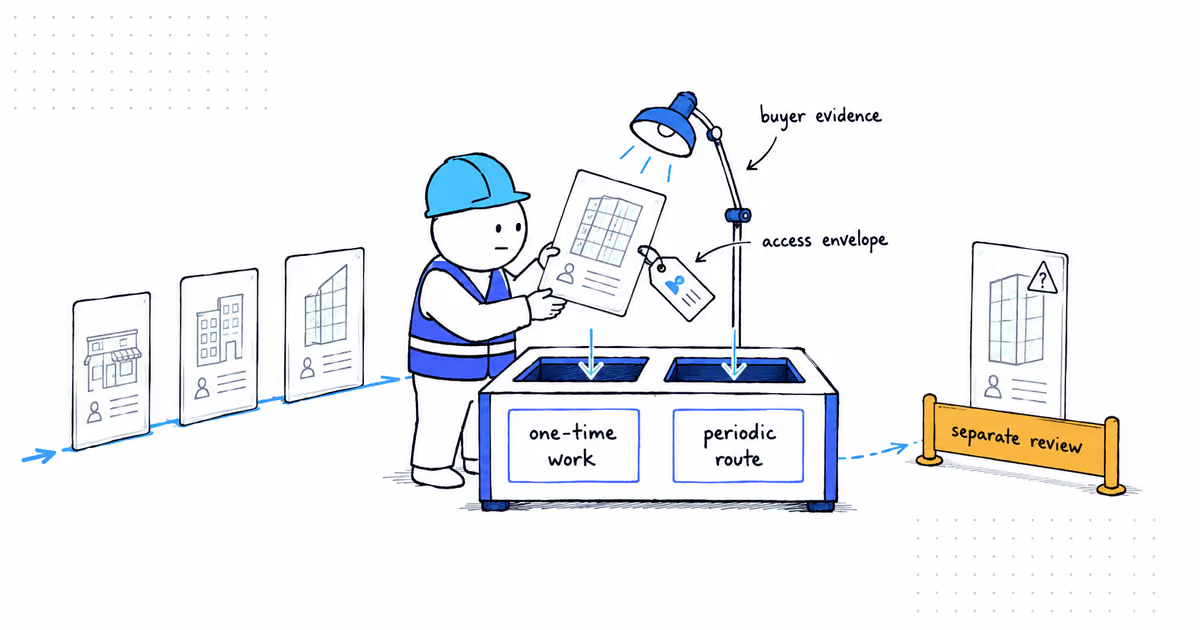
Before outreach, make sure a buyer can verify accurate business and contact information, your real commercial service and area, current relevant proof, a working inquiry path, and available capacity.
If your evidence is scattered or too broad for the buyer’s concern, use the contractor proof guide to choose a small, current set the buyer can verify.
You may also need licenses, insurance, training, registrations, or buyer-required documents. There is no universal vendor packet. The SBA notes that license and permit requirements vary by activity, location, and government rules. Check the trade, jurisdiction, service, site, and buyer involved.
A capability statement can help; use its dedicated guide for exact fields. Property-management vendor registration is separate, and list approval is not a work award. Cleaning-specific facility targeting and acquisition channels belong in the commercial cleaning contracts guide.
How to build a commercial prospect list
Do not buy a generic list and call it a pipeline. Record the organization and site, fit reason, likely need or review window, buyer role, relationship or referral path, source, last contact, and dated next action.
Do not treat “the buyer” as one person. You may encounter a property or facility manager, office or operations manager, owner, procurement contact, general contractor, builder, board or association contact, and accounts-payable contact. Identify who owns service selection, access, approval, and payment; they may be different people.
“Downtown office building” is too vague. Name the property, manager, fit reason, access contact, and next-call date.
How to contact commercial decision-makers
Start with referrals, current relationships, local connections, relevant vendor opportunities, and researched one-to-one outreach. Give a relevant reason, your real service and area, one useful question, and a low-pressure next step.
Hi Jordan, we maintain light-commercial HVAC systems for owner-managed offices in north Dayton. I saw that you manage the Mason Street property. When do you next review preventive-maintenance coverage there? I can take a 10-minute call or visit the site to confirm whether we fit.
Never invent a referral or promise response times your crew cannot meet.
Last verified: September 2, 2026 (United States).
The FTC says CAN-SPAM applies to business-to-business commercial email. Messages need accurate sender and subject information, a valid postal address, a clear opt-out method, and honored opt-outs. This is not a complete legal guide.
How to qualify a commercial contract opportunity
A reply is not yet an opportunity. Before a walkthrough or bid, confirm:
- Site and locations
- Problem, approximate scope, and frequency
- Service or response window
- Stakeholders and decision authority
- Current provider or buying trigger, if shared
- Bid process, due date, and decision date
- Vendor conditions and expected start
- Invoice path and operational fit
If the buyer wants six sites but the HVAC company serves only two, ask whether the scope can be split. If not, stop and record why before spending time on a walkthrough.
How to scope and propose commercial service work
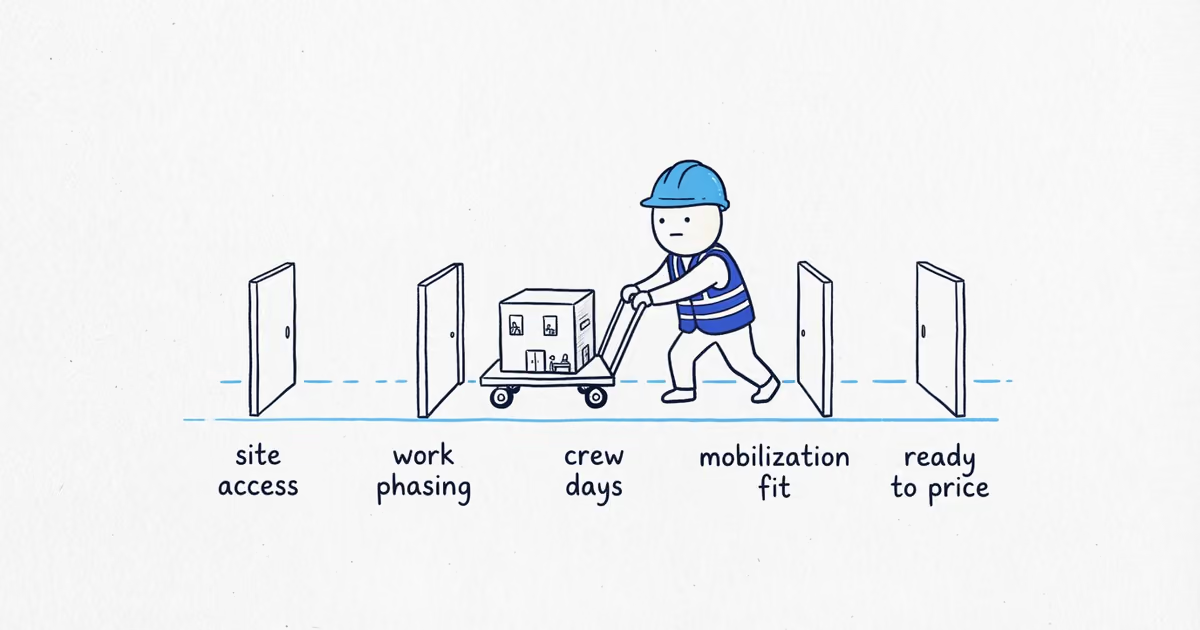
A useful site visit confirms physical scope, access, operating constraints, customer responsibilities, the completion or quality standard, optional work, and unresolved assumptions. Do not quote from a rough description when site conditions change the work.
When a cleaning opportunity reaches the walkthrough, use the commercial cleaning bid guide to turn facility facts into a task schedule, labor plan, price, and written bid.
The proposal identifies the site and customer, scope and exclusions, schedule, price and billing basis, responsibilities, issue path, validity or decision date, acceptance path, and next step. Use dedicated guides for full contractor proposals and cleaning-specific task, frequency, supply, and quality detail.
Confirm receipt and the decision process, assign an owner and dated next action, and answer questions. Stop on a decline or opt-out. Never forecast an undecided proposal as won.
How to check commercial contract costs and capacity
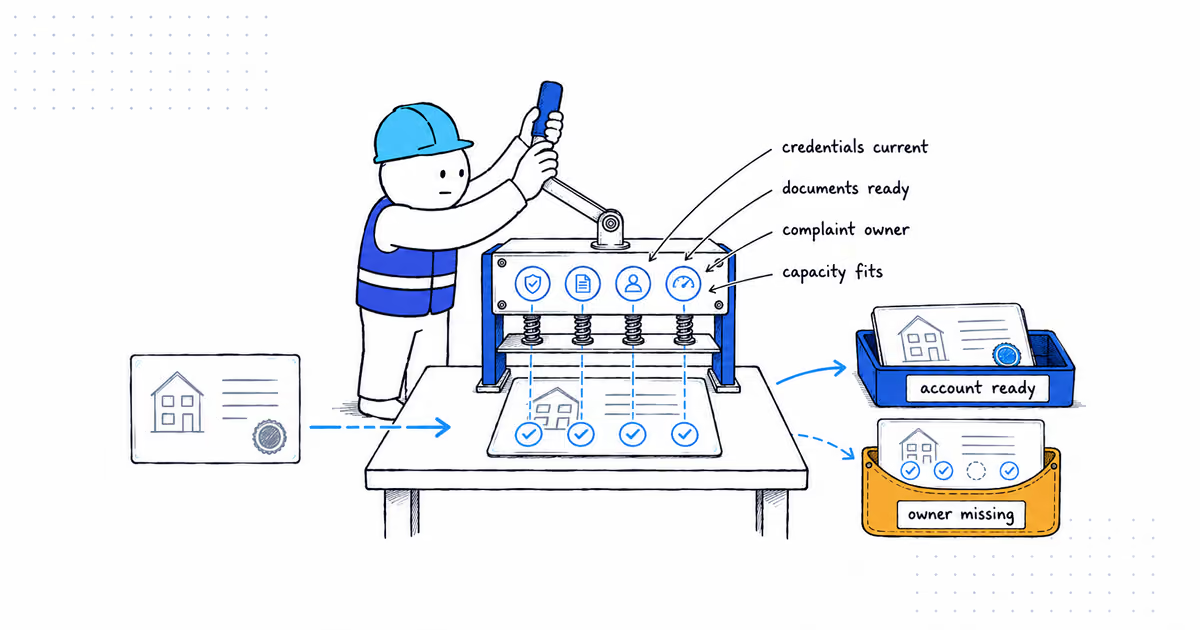
Before accepting, compare proposed revenue with direct delivery costs: labor, supervision, travel, equipment, supplies, backup coverage, service window, startup cash, payment and invoice administration, buyer conditions, and remaining capacity.
Use your records, not national benchmarks; a recurring-work pricing guide should own the calculation. If the office account fits the HVAC company’s route but its service window displaces existing commitments, revise the schedule, hold while confirming coverage, or decline. Do not bid below cost for the logo.
When the buyer accepts deliverable terms, save that version and confirm the site, contacts, scope, start trigger, access, invoice path, issue path, and internal owner. Onboarding, retention, and renewal come later.
How to get commercial contracts in eight stages
Copy this table into a spreadsheet, one row per account.
| Stage | Owner action | Record or output | Advance when | Stop or hold when |
|---|---|---|---|---|
| 1. Target-account pattern | Define service, territory, site type, window, and size. | Account/site; fit reason; current status; next action/date | It fits capability, route, and no-fit rules. | Territory, hours, work, equipment, staffing, or backup fails. |
| 2. Buyer readiness | Update details, service area, proof, inquiry path, capacity, and required documents. | Site/procurement requirements; current status; stop reason | You can meet known requirements truthfully. | A required item is missing, unsupported, or unknown. |
| 3. Named-account list | Research the site, review window, source, and relationship path. | Account/site; fit reason; buying trigger; current status; next action/date | It has evidence of fit and a route in. | Generic, scraped, outside the pattern, or unsupported. |
| 4. Decision-maker and first contact | Find selection, access, approval, and payment roles; introduce the business. | Buyer and stakeholder roles; last contact; current status; next action/date | The right person answers or redirects. | Wrong contact, opt-out, or no relevant reason. |
| 5. Opportunity qualification | Confirm need, scope, timing, authority, process, conditions, start, invoicing, and fit. | Buying trigger; service and schedule need; site/procurement requirements; current status; stop reason | The facts justify estimating work. | Scope, authority, process, or conditions fail. |
| 6. Site visit and scope | Verify work, access, constraints, responsibilities, standard, options, and assumptions. | Account/site; service and schedule need; unresolved assumptions; next action/date | Scope is clear enough to price. | Material facts remain unknown or do not fit. |
| 7. Proposal and dated follow-up | Submit decision details and control the next step. | Proposal value as unwon work; current status; proposal owner; next action/date; outcome | Buyer accepts, requests revision, or sets a decision step. | Buyer declines, opts out, or leaves a condition. |
| 8. Account-fit decision and accepted-work handoff | Check costs and capacity; decide; hand accepted work to operations. | Direct-cost and capacity check; outcome; stop reason; accepted version; site, contacts, scope, start trigger, access, invoice path, issue path, internal owner | Economics, conditions, administration, and capacity pass. | Revise or hold a gap; decline an undeliverable account. |
Across the gates, the HVAC owner: chooses locally managed offices; verifies proof and capacity; adds Mason Street as a named site; reaches its facility manager; qualifies the need and buying process; inspects access and equipment; submits the proposal; then checks cost and capacity. If a six-site scope cannot be split, stop at qualification. If the service window displaces existing work, revise by a stated date, hold for documented backup coverage, or decline and record why. Accept only when the gate passes, then schedule the start.
Frequently Asked Questions
How do I become a vendor for property management companies?
Find the company’s official vendor route and ask which current documents, service areas, work-order rules, and invoice steps apply. Submit only accurate requested information, then track the stated review process. Approval may place you on a vendor list, but it does not award work.
Should I focus on residential or commercial customers?
Choose based on the jobs your crew can deliver, route, service windows, sales effort, startup cash, payment administration, and available capacity. Test one commercial account pattern against your records instead of assuming commercial work is larger or more profitable.
- commercial-contracts
- how-to-get-commercial-contracts-for-service-business
- how-to-get-commercial-contracts-for-my-service-business
- commercial-contracts-for-service-businesses
- how-to-find-commercial-clients
- commercial-contract-opportunities
- commercial-service-contracts
- contractor