How do I get commercial painting contracts?
Learn how to get commercial painting contracts by finding private projects, verifying buyers, qualifying job sites, and checking crew and mobilization capacity.
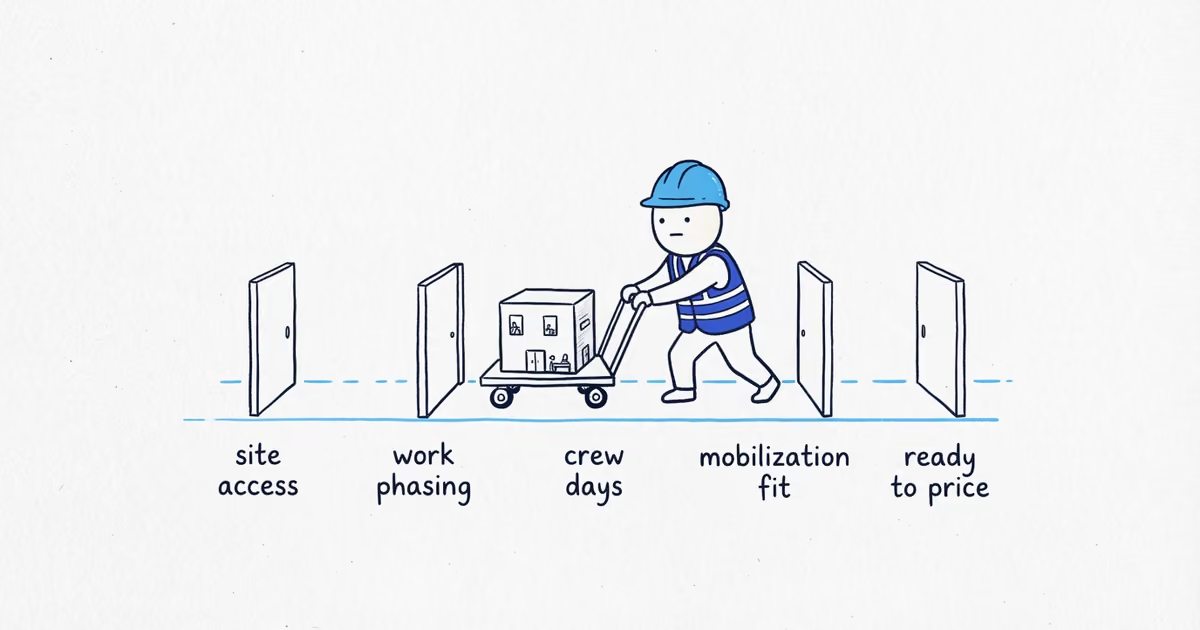
Get commercial painting contracts by targeting work you can deliver, finding named properties with a real trigger, and verifying who decides. Before bidding, confirm the buyer’s scope, site operations, proof, mobilization, and crew capacity. Send only verified opportunities into pricing.
Last verified: September 2, 2026 (United States).
Here, a commercial painting contract is a privately purchased repaint or supported coating project your company can evaluate and deliver. This article excludes government procurement, contract drafting, pricing, and painting technique.
A segment is not a property, and a property is not a qualified opportunity. A contact may not control the decision. Vendor approval, a walkthrough, or a bid invitation is not an award.
Choose a commercial painting project type you can support
Do not treat “commercial painting” as one market. Pick a property and project pattern that fits completed work, your service area, operating limits, crew, equipment, and mobilization range.
The US Small Business Administration’s market-research guidance recommends checking demand, market size, customer location, saturation, and alternatives. Apply them to your territory and records; no segment is automatically best.
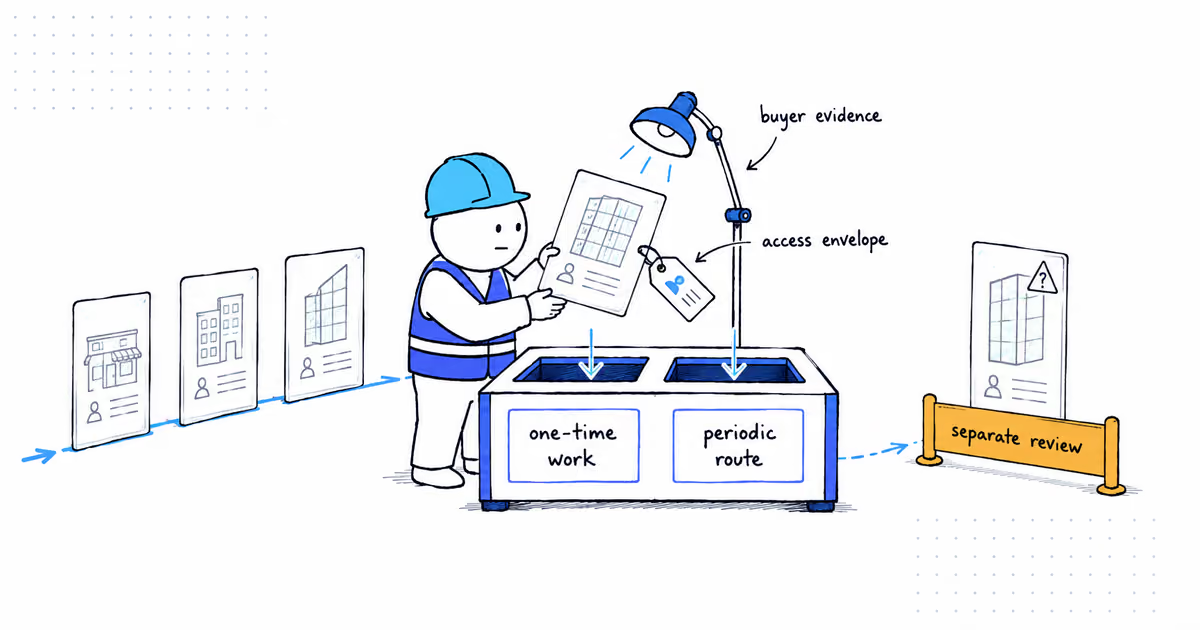
Use this map to choose account sources. Every title is a role to verify, not an assumed decision-maker.
| Account or property pattern | Buyer role to verify | Relationship or source channel | Acceptable trigger | Matching permission-cleared proof | Caution or stop signal |
|---|---|---|---|---|---|
| Locally managed occupied office repaint | Property, facility, office, or operations manager | Existing relationship, property research, or referral | Buyer confirms an active project or vendor review | Approved occupied-property example | No named site, authorized contact, or operating fit |
| Retail or hospitality property | Owner, site, property, or operations manager | Property relationship, research, or direct invitation | Stakeholder confirms a project or review | Approved proof from similar property use | Visible wear, guessed urgency, or unsupported promises |
| Multifamily common-area project | Property manager, owner, facility contact, or board representative | Existing relationship or attributable referral | Buyer confirms a named project | Approved comparable common-area example | Assumed access, coordination, or portfolio authority |
| Builder or general-contractor project | Estimator, project, or procurement contact | Existing trade relationship or private invitation | Active project, contact, and process dates | Proof from the same supported lane | Missing inputs, unsupported work, or hoped-for capacity |
A public observation or assumed repaint cycle is not a trigger. Without a dated signal from a buyer, referral, project notice, or invitation, it is a research lead, not an opportunity.
Research named commercial painting opportunities
Create one row per site. Combine a portfolio only after the buyer confirms its scope.
| Record block | Fill in before advancing |
|---|---|
| Identity | Account, site, property use, and occupied or vacant pattern |
| People | Selection, authorization, site, evaluation, completion, and invoice contacts |
| Trigger | Source, date, active status, and next event |
| Customer-described result | Buyer-named areas; included, excluded, and optional scope |
| Property operations | Occupancy, security, work windows, phasing, and shutdown coordination |
| Site logistics | Parking, loading, staging, storage, access needs, and responsibility owners |
| Buyer inputs | Scope, specification, selection status, document owner, and gaps |
| Proof | Comparable job record, factual caption, date, permission, and privacy check |
| Delivery fit | Crew-days, supervision, vehicles, equipment, mobilization, and capacity |
| Dependencies | Unresolved supplier, material, subcontractor, specialist, or regulatory facts |
| Process | Review dates, completion evidence, vendor steps, and invoice path |
| Control | Stage, assumptions, owner, dated action, and advance/hold/decline reason |
Fictional example: A small painting company evaluates an occupied-office repaint after the property manager confirms a refresh review. It records decision, access, schedule, completion, and invoice owners, then checks permission before selecting comparable proof. It assumes no dimensions, products, prices, credentials, or outcome.
Qualify commercial painting buyers and job sites
Confirm the site, project status, desired result, decision roles, review dates, work period, and buyer process. Record the operating facts listed above rather than filling gaps with assumptions.
An unknown surface, specification, access condition, or regulatory issue stays unresolved pending qualified review.
One restrained first message is enough:
Hi [name], I am contacting you about [property] because [truthful trigger and source]. We handle [supported commercial painting lane] in [actual service area], and I can share an approved example from a comparable property. Are you the person who owns the painting decision or current vendor review? If not, who should I speak with about a short qualification call?
If you use commercial email, the Federal Trade Commission’s CAN-SPAM guidance says the law has no business-to-business exception. Use accurate sender and subject information, include a valid physical postal address and a clear opt-out method, and honor opt-out requests. This is a narrow US compliance reminder, not legal advice.
Check commercial painting job and crew capacity
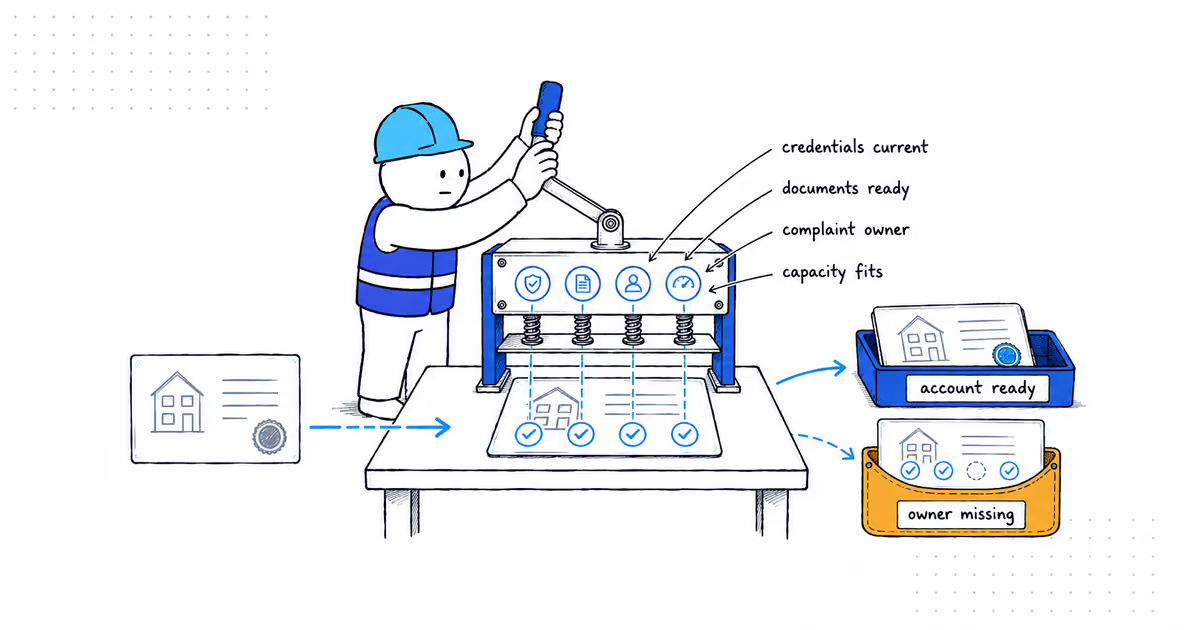
Before committing more estimating time, mark every line pass, hold, or decline and attach evidence.
| Check | Evidence needed | Decision rule |
|---|---|---|
| Geography and mobilization | Site, travel, loading, staging, storage, and lodging facts | Pass only when actual mobilization is supportable |
| Supported project lane | Buyer-described result compared with completed work | Decline unsupported work; hold specialist uncertainty |
| Property operations | Occupancy, security, shutdowns, and coordination owner | Hold until constraints and owners are clear |
| Work window and phasing | Buyer-confirmed windows, period, phases, and dependencies | Pass only when they fit committed work |
| Crew and supervision | Eligible crew-days and supervisor checkpoints from company records | Open calendar days or headcount alone do not pass |
| Vehicles and equipment | Availability and any buyer-controlled responsibility | Hold unknown capacity or responsibility |
| Inputs and dependencies | Buyer inputs, external facts, gaps, and owners | Hold any gap that could change the opportunity |
| Proof | Item, source, factual caption, permission, and privacy check | Remove anything unsubstantiated |
| Administration | Process, dates, completion contact, vendor steps, and invoice route | Pass only when the process is supportable |
| Economic and capacity fit | Direct-cost plausibility and capacity after committed work | Decline undeliverable work; send a pass to pricing |
An eligible crew-day is a usable day from a crew configured for this project lane and its confirmed constraints. Residential availability is not automatically eligible commercial capacity; track supervision separately.
The FTC’s advertising guidance says claims must be truthful, nondeceptive, and evidence-based. Delete invented experience, credentials, logos, capacity, or results. Verify licenses and permits for the activity and location; the SBA notes that requirements and fees vary.
Track each commercial painting opportunity by stage
| Stage | Completion rule | Next move |
|---|---|---|
| Researched property | Site, fit reason, and source recorded | Verify trigger and buyer |
| Buyer/trigger verification | Contact and active reason confirmed | Start qualification |
| Qualified site | Roles, scope, operations, access, and process recorded | Run the operating-fit gate |
| Operating-fit review | Every gate has evidence and a decision | Advance, hold, or decline |
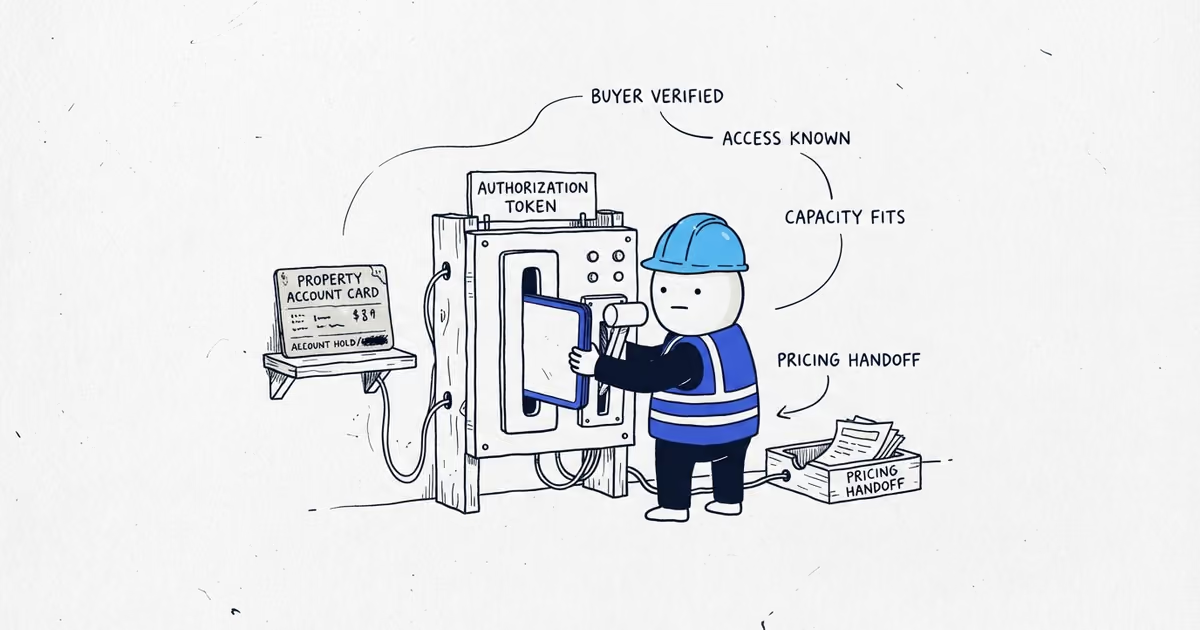
| Ready for pricing/bid | Required facts and current capacity pass | Create the pricing handoff |
| Hold | A resolvable unknown has an owner and date | Complete that action; do not price around the unknown |
| Decline | Scope or operating fit is outside the company’s supportable lane | Record the reason and close the row |
Review weekly. Remove unsourced leads, update dated actions, group holds by owner, and compare bid-ready work with capacity. Do not forecast an award from a conversation, walkthrough, or invitation.
If the buyer requests a one-page company summary before bid work begins, use the contractor capability statement guide to package current services, capacity, and relevant proof without treating the document as project approval.
Frequently asked questions about commercial painting contracts
Should I focus on residential or commercial painting?
Neither is automatically the better focus. Compare completed-job evidence, buyer access, crew and supervision fit, mobilization, and current capacity before committing to a supported commercial lane.
How do I bid a commercial painting job?
Begin bid work only after the named property, buyer roles, scope inputs, operating constraints, proof, mobilization, and capacity are verified. Then use a separate bid process for the site review, quantities, delivery plan, costs, price, and submission.
What should a commercial painting capability statement include?
Use one only when it helps the buyer’s process. Keep it factual and tailored to the supported project lane, with relevant permission-cleared proof and current company information; build it outside this opportunity board.
Sources
- SBA: Market Research and Competitive Analysis
- SBA: Apply for Licenses and Permits
- FTC: Advertising and Marketing Basics
- FTC: CAN-SPAM Act: A Compliance Guide for Business
Prepare a commercial painting bid handoff
The pricing and bid handoff should contain:
- Verified account, site, contacts, roles, and buyer-issued inputs
- Customer-described result and included, excluded, and optional scope
- Occupancy, access, work-window, phasing, and logistics facts
- Process dates, completion contact, and invoice contact
- Selected permission-cleared proof
- Mobilization, crew-day, supervision, equipment, and dependency decisions
- Unresolved assumptions, each with an owner and resolution date
- One owner and dated next action for pricing or bid work
Stop there. The handoff does not calculate price, draft an estimate or proposal, choose terms, or prescribe work methods. When a row reaches ready for pricing/bid with verified scope and delivery facts, use the painting pricing guide to turn labor, materials, overhead, and profit inputs into a job price.
For the fictional occupied-office opportunity, the buyer has not yet confirmed the phasing owner or who is responsible for the stated access-equipment need. The company also has not finished its eligible crew-day and supervisor-checkpoint review.
Decision: HOLD | Owner: Elena Ruiz, estimator | Action: obtain the buyer’s written phasing and access-responsibility answers, then complete the capacity gate | Date: September 4, 2026.
- commercial-contracts
- how-to-get-commercial-painting-contracts
- commercial-painting-opportunities
- commercial-painting-bids
- commercial-painting-capability-statement
- painting