

How to Price a Painting Job
Most painters price the paint and forget the prep, then lose the day patching and taping before a roller ever moves. Here is how to build a painting price from wall area and prep time — labor, materials, overhead, and profit — and walk away with a real number.
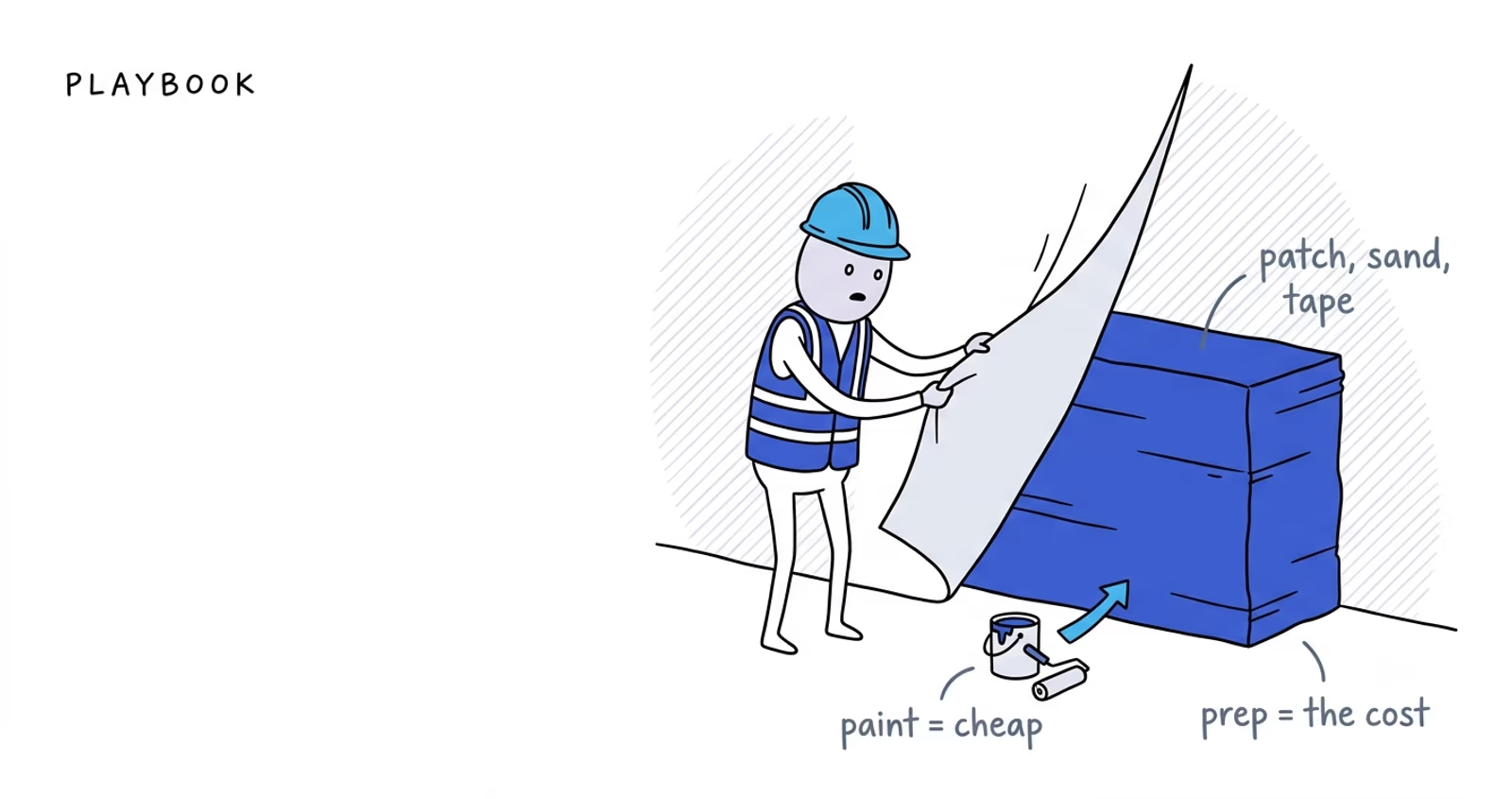
Most painters price the paint and forget the prep. They eyeball the square footage, grab a couple of gallons, and then burn the first half-day patching nail holes, sanding, taping, and cutting in before a roller ever touches the wall. Paint is the cheap part of a paint job. Prep is where the hours go, and the hours are the job.
So price the wall and the prep, not the floor and the gallon. Build the number from your costs, add your profit, and treat the market as the last check, not the starting point.
Why painting prep costs more than the paint
Labor is often the largest variable on an interior repaint, and prep can change that labor substantially. Two rooms can take the identical paint and land hours apart — one has clean walls, the other needs patching, sanding, and priming first. That’s why prep can’t disappear into a flat base rate: count the prep hours on each room and charge them, or the rough rooms get painted on your margin.
Put a loaded hourly number on your time — wage plus taxes and comp once you’re running a crew — and build every quote up from it.
How to measure a room for painting
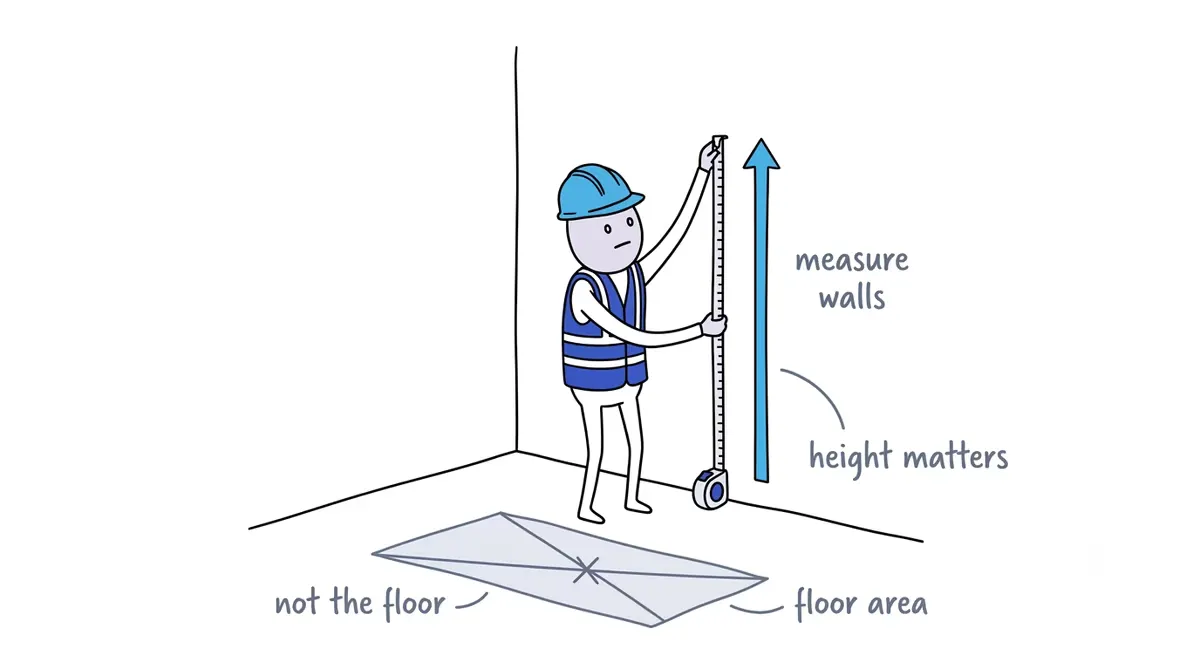
A 12×12 room isn’t 144 square feet to paint; it’s the walls around it. Measure the perimeter, multiply by the ceiling height, and take out the doors and windows. Add the ceiling and the trim as their own numbers if they’re in the job. Ceiling height is the variable owners underestimate — going from an 8-foot ceiling to a 10-foot one adds hundreds of square feet of wall across a whole house.
Then do the paint math from the selected product’s stated coverage, the surface condition, and the specified number of coats. Manufacturer coverage figures are estimates, so allow for porous surfaces, color changes, and application loss before you quote.
What goes into a painting price
- Labor — prep hours plus paint hours, at your loaded rate. This is the big one.
- Paint and materials — gallons by coverage, plus tape, plastic, rollers, and patch.
- Overhead — insurance, phone, software, marketing, as a per-job share.
That’s cost, not price. Choose a target margin and calculate the selling price from it.
Price painting per room, per square foot, or hourly
Quote a flat per-job number when you can define and measure the scope; it gives the customer a clear price and lets an efficient crew keep the gain. Per square foot can be a back-of-envelope check on a whole-house repaint, but prep and condition still belong in the final quote. Keep hourly for work you cannot scope reliably on a walkthrough. The hourly-versus-flat-rate guide covers the risk trade-off in more detail.
A simple painting price formula
Price = (Labor incl. prep + Paint & materials + Overhead) ÷ (1 − target margin)
How much to charge to paint a bedroom
Take a standard 12×12 bedroom — walls, ceiling, and trim, two coats, done solo. Nine hours of prep and paint at $45 is $405 in labor. Paint and supplies run $150, and overhead adds $50, for $605 in cost. For a 30% target margin, divide $605 by 0.70: the calculated price is about $864, which you might round to $865. Your hours, product coverage, material cost, and target margin will differ; run them the same way.
Every figure there came off your own costs and the margin you set — not a competitor’s flyer taped to the estimate.
What adds to the cost of a painting job
What blows up a paint quote isn’t square footage, it’s condition. Charge extra for ceilings and trim, for a dark-to-light change that needs a third coat, and for older homes where the prep is a job in itself. Each of those is a line added to the base room, not a favor you throw in. Define what preparation is included and use specific estimate exclusions for conditions the price does not cover.
Set a minimum painting price
A single small room still carries setup, drive, and cleanup, so set a floor from the full visit cost and your target margin. The minimum service fee calculation shows how to build that floor. Check comparable local scopes after you have your own number, but do not assume a price difference proves that either painter is wrong. Their prep scope, productivity, materials, overhead, and profit target may differ.
Good pricing fills a job, but painting sells on before-and-afters, and the first place locals see them is your Google profile, not a flyer — we set that profile up for service businesses.
Frequently asked questions
How much should I charge to paint a bedroom?
There’s no fixed rate — it depends on your costs. Built from prep and paint labor, materials, overhead, and a 30% target margin, the bedroom example works out to about $864 before rounding. Run your own numbers to get your figure.
Do I price painting by square foot or per room?
Quote a flat per-job number built from your own measurement. Per square foot is only a sanity check on a whole-house repaint, not the quote itself, because prep and condition move the price more than area does.
How do I measure a room for painting?
Measure wall surface, not floor area: perimeter times ceiling height, minus doors and windows, plus ceiling and trim if you’re painting them. Use the selected product label for coverage and the specified number of coats rather than relying on one universal gallons-per-room rule.
- pricing
- painting
- painting-business
- quoting
- small-business



