
Should I Charge a Minimum Service Fee?
Charge a minimum service fee when a small job would otherwise fail to pay for the full visit. Learn how to calculate the floor and explain it before dispatch.

Yes. Charge a minimum service fee when a small job would otherwise fail to pay for the full visit. Loading, driving, setup, payment, and closeout all consume time and money.
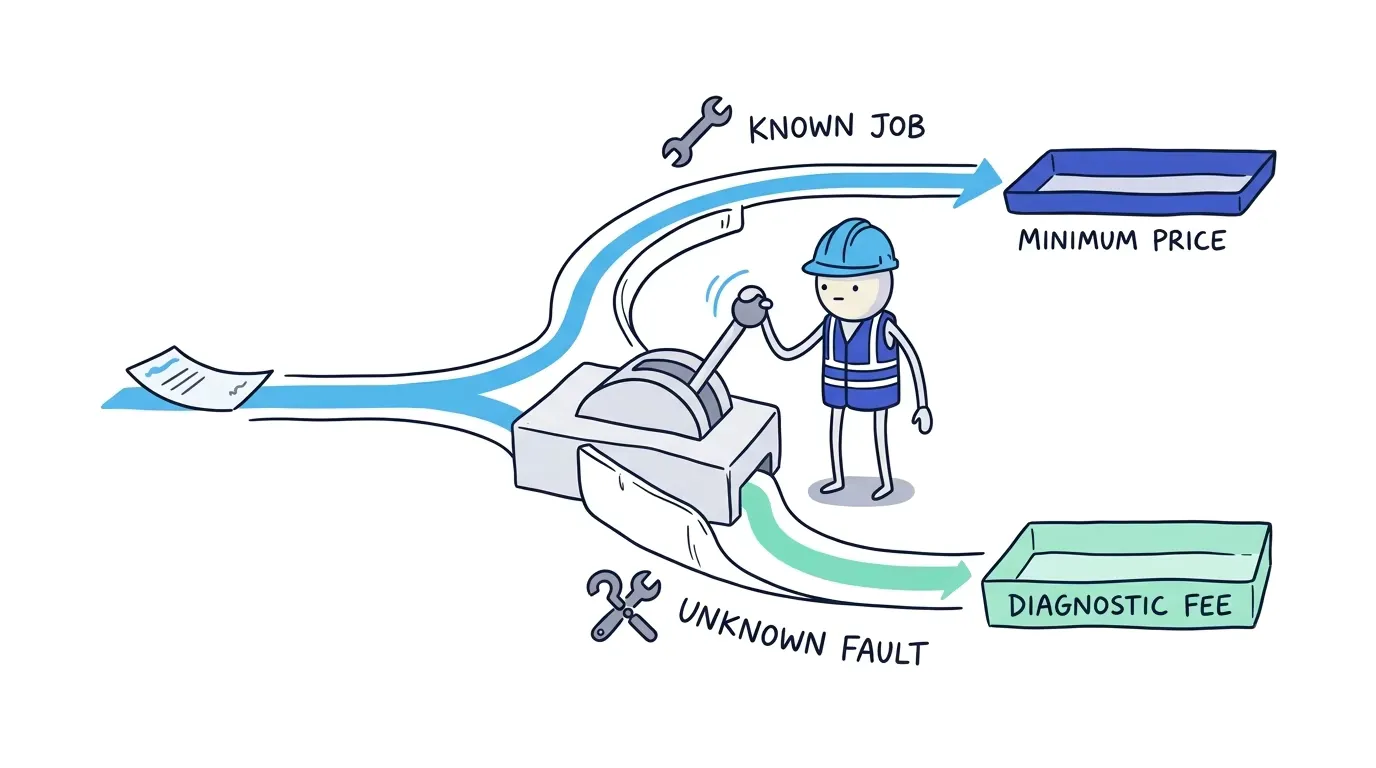
For routine work, use an all-in minimum job price. Use a separate service-call or diagnostic fee when the customer is paying for a clear visit, assessment, or diagnosis. State the charge before you dispatch.
When a minimum service fee makes sense
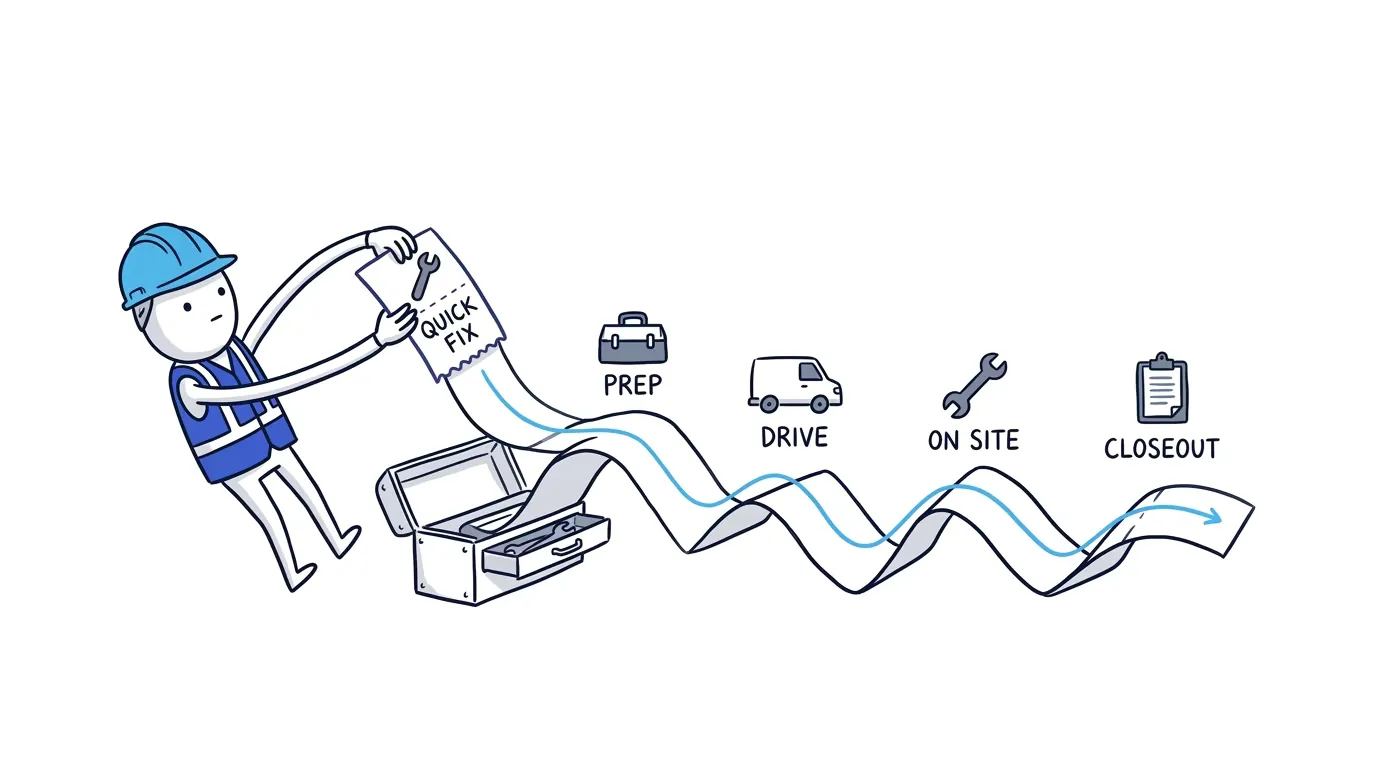
A 20-minute repair can occupy 90 minutes of the day:
- 15 minutes to prepare and load
- 20 minutes to drive to the customer
- 20 minutes on site
- 20 minutes to drive back or reach the next job
- 15 minutes to take payment, write notes, and close the invoice
Charging for only the 20 minutes on site leaves the other 70 minutes unpaid. It also leaves out the truck, fuel, small consumables, insurance, software, office work, and the schedule slot you could have sold to another customer.
The decision rule is simple: set a minimum whenever the likely price of a short call falls below the cost and profit required to complete the full visit. This applies whether you do the work yourself or send a team member. Your time does not become free because it is not on payroll.
Minimum job price vs. service-call fee
These charges solve related problems, but they do not promise the same thing.
| Charge | What the customer receives | Best use |
|---|---|---|
| Minimum job price | The visit and a defined amount of routine work | Small, predictable jobs |
| Service-call fee | Dispatch, arrival, and an initial assessment | Calls where the work is not yet known |
| Trip fee | Travel to the location | Unusually long trips or separate return visits |
| Diagnostic fee | Troubleshooting and a diagnosis | Problems that require skilled investigation before quoting a repair |
Businesses use these labels differently. Define what each charge includes before booking.
Use an all-in minimum job price when you already know what the small task involves. “Our minimum for this type of visit is $110” is clearer than quoting a low repair price and adding a vague fee later.
Use a separate fee when the visit itself delivers something valuable. A technician who tests a system and identifies the fault has completed paid work even if the customer declines the repair.
You can credit a service-call or diagnostic fee toward approved work. Just make sure the repair price still recovers the visit cost. Waiving a visible fee does not make the truck, travel, and diagnosis disappear.
How to calculate your minimum service fee
Start with the entire visit, not the time at the property.
Total visit time =
  preparation
  + round-trip travel
  + minimum on-site time
  + closeout and invoicing

Total visit cost =
  labor burden for total visit time
  + vehicle and consumables
  + allocated overhead

Minimum charge =
  total visit cost / (1 - target profit margin)
Define each input before doing the math. In this worksheet, labor burden means wages plus payroll taxes, workers’ compensation, and benefits. Vehicle costs and business overhead are added separately.
If your existing loaded hourly rate already includes the truck, insurance, software, office payroll, and other overhead, do not add those costs again. Use one complete method rather than stacking two pricing methods on the same job.
If the minimum includes a standard part or another job-specific material, add that cost before applying the margin. Otherwise, quote the additional material separately before the work continues.
The last line protects margin. To target a 20% margin, divide total cost by 0.80. Adding 20% to cost produces only a 16.7% margin; that is markup, not a 20% margin.
Minimum service fee calculation example
Suppose a small repair consumes 90 minutes from preparation through invoicing. Use these illustrative costs:
| Cost | Calculation | Amount |
|---|---|---|
| Labor burden | 1.5 hours x $36 | $54 |
| Vehicle and consumables | Fuel, wear, and small supplies | $14 |
| Allocated overhead | Office, liability insurance, tools, and software | $16 |
| Total visit cost | $84 |
The owner wants a 20% profit margin:
$84 / (1 - 0.20) = $105The calculated floor is $105. Quoting a clean $110 minimum is easier to communicate and leaves a small cushion for variation. That is not a recommended market rate. It is the result of this example’s time, costs, and margin. Replace every input with your own numbers.
How to explain a minimum service fee to customers
Tell the customer the amount, what it includes, and when the price could change:
Our minimum charge is $110. That covers the trip, setup, and the first 30 minutes on site. If the job needs more time or materials, we will explain the price before we continue.
That wording gives the customer a number and a deliverable. It also prevents the fee from appearing as a surprise on the invoice.
If you credit a separate call fee toward the repair, explain that at the same time. Do not advertise the fee as waived unless the approved job price has enough room to absorb the visit cost.
When not to charge your standard minimum
Not every visit carries the same cost. A recurring cleaning route with four customers in one neighborhood spreads travel across several jobs. A maintenance plan may recover part of the visit cost through recurring payments. Two tasks completed at the same property share one truck roll. A business may also choose to subsidize an initial visit to acquire the right kind of repeat customer.
Those cases can justify a different minimum. They do not justify ignoring the cost. Write down where the unrecovered amount is paid back: route density, recurring revenue, bundled work, or expected repeat business. If the answer is nowhere, the discount comes out of profit.
How to test your minimum job charge
To check your small job pricing, pull ten recent jobs that felt too small and record the total time from preparation through closeout. Add the labor burden, vehicle and consumables, and a fair overhead share. Compare that cost with what each customer paid. The small-job pricing guide then shows how to test bundling, half-day rates, and route batching against that floor.
If those jobs repeatedly miss your required margin, raise the minimum or change how you package the visit. The right minimum is not the number another contractor charges. It is the lowest clear price that lets your business complete the full call without paying part of the customer’s bill.
A clear service page gives customers a place to understand the work, service area, and quote path before a truck rolls. Qualified local service businesses can apply for a free website built around those details.
Frequently asked questions
Should commercial customers pay a minimum service fee?
Yes. Commercial visits still consume travel, labor, and overhead. The contract may call the floor a mobilization charge, service-call fee, or labor minimum.
Can I use a one-hour minimum instead of a service fee?
Yes, if the billed hour covers preparation, travel, on-site work, closeout, vehicle cost, overhead, and profit, not only the hour at the property.
- pricing
- minimum-service-fee
- minimum-job-charge
- minimum-job-price
- service-call-fee
- small-job-pricing