

How to Price a House Cleaning Job
Most cleaners price backwards, starting from a competitor’s number instead of their own costs. Here is how to build a cleaning price that actually covers your labor, supplies, drive time, and profit — and walk away with a real number.
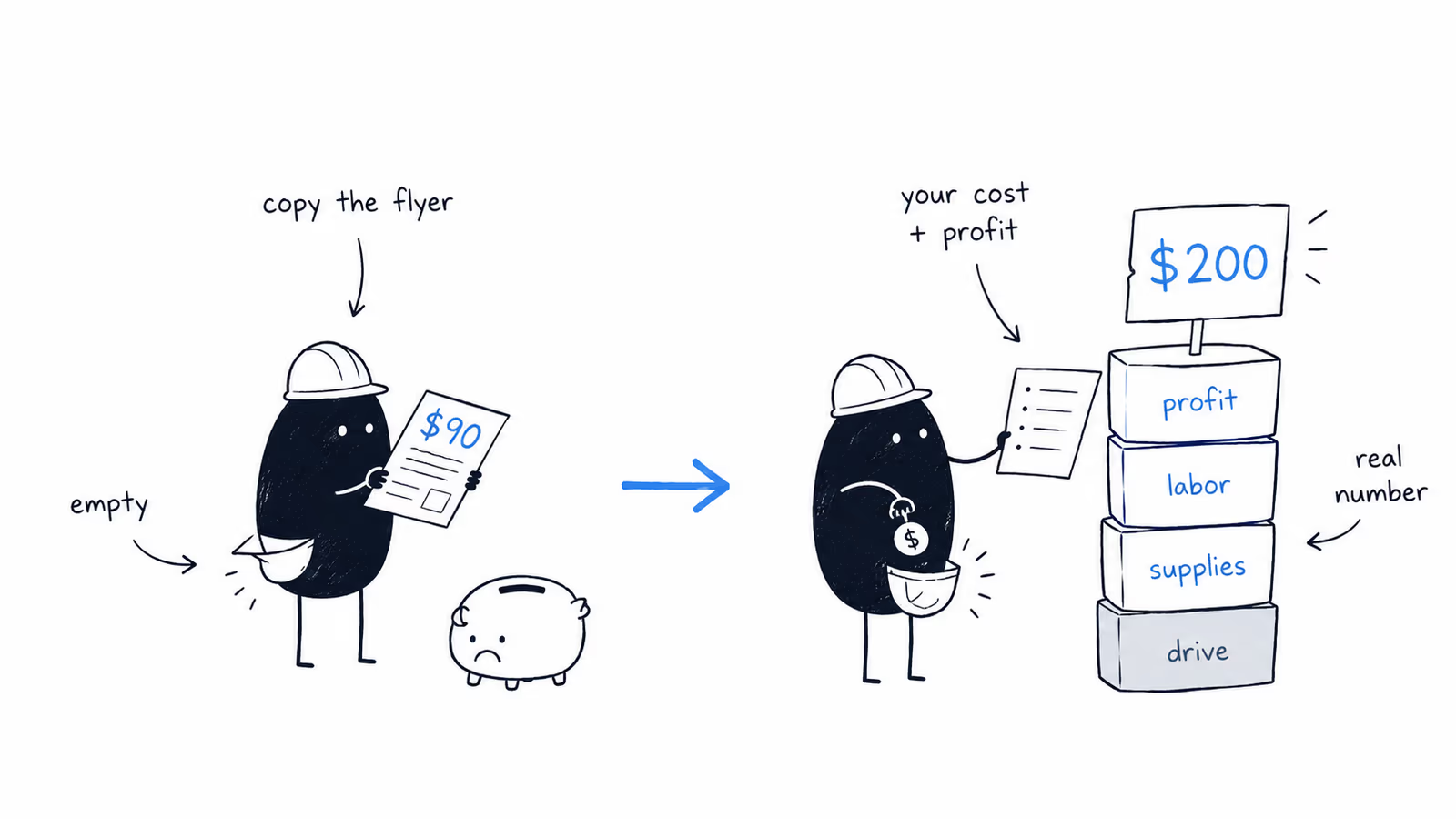
House cleaning prices go wrong when they start with the company across town. A competitor’s number does not show whether the price covers your own labor, supplies, travel, overhead, and profit.
Price the other direction. Build the number from your costs and your profit first. The market comes in at the end, as a check, never as the starting point.
Start with your own labor cost
Solo cleaners can miss this one. If you’re the person scrubbing the tub, your time is a cost. Put a real hourly wage on it — say $35 in an illustrative calculation — and build the price on top. Leave it out and your own labor disappears into a line called “profit” that isn’t really there.
Once you hire, that hourly cost climbs past the wage: add payroll taxes and workers’ comp. The full calculation is its own topic. For pricing a job, settle on one loaded hourly number and use it.
What goes into a house cleaning price
Four costs, every job:
- Labor — your hours times your hourly wage.
- Supplies — cleaner, cloths, bags, vacuum wear.
- Drive time — the round trip is unpaid time and fuel.
- Overhead — insurance, phone, software, marketing, as a per-job share.
Those four are your cost, not your price. Choose a target margin that fits your overhead and profit goals, then calculate the selling price from that target. The worked example below uses a 30% margin only to show the method.
Which house cleaning pricing method to use
There are four common ways to charge. Once you’ve cleaned enough homes to trust your time estimates, flat per job gives the customer one number up front and lets you keep the efficiency gain when the work takes less time than expected.
Use the others when flat doesn’t fit. Hourly for jobs you can’t predict — first cleans, move-outs, houses left in rough shape — but walk through before you quote, because the faster you get, the less hourly pays you. Per room when you’re quoting fast over the phone. Per square foot for larger homes, with a higher rate on small or cluttered ones, since the work per foot goes up. The hourly-versus-flat-rate guide explains the risk and efficiency trade-off.
A simple house cleaning price formula
Price = (Labor + Supplies + Drive + Overhead) ÷ (1 − target margin)
A 30% margin is not the same as adding 30% to cost. Adding 30% is a markup and produces about a 23% margin. To price for a true 30% margin, divide cost by 0.70.
How to price a 2,000 sq ft house cleaning job
A standard clean on a 2,000 sq ft, 3-bed / 2-bath home, done solo. Three hours of your time at $35, about $15 of supplies, $15 for the round trip, and a $20 share of overhead comes to $155 in cost. For a 30% target margin, divide $155 by 0.70: the calculated price is about $221, which you might round to $225. Your wage, time, supplies, and target margin will differ; the method is what carries over.
The price came out of your own hours, supplies, drive, and target margin — not a flyer from the cleaner across town. That’s the difference between a price you can defend and a number you hope covers the work.
How much to charge for deep cleans and recurring work
Deep cleans and move-outs eat time and supplies a routine visit never touches — baseboards, grout, inside the oven. Estimate those added tasks and hours directly instead of applying one multiplier to every home.
Recurring cleans may take less time once you know the home and keep it maintained. Lower the per-visit price only when your tracked labor and supply use support it, then confirm that the recurring price still clears your cost and target margin. For offices and facilities, use the separate workflow for bidding a commercial cleaning job.
Set a minimum house cleaning price
A one-bedroom clean still carries drive, setup, and overhead. Calculate a minimum from the full cost of the visit and your target margin so small jobs stay worth the trip. The minimum service fee guide shows that calculation.
How to compare your prices to local cleaners
Only now, with your own number in hand, compare it with a few local cleaners offering a similar scope. If the prices differ sharply, recheck the hours, wage, supplies, travel, overhead, scope, and target margin behind your number before changing it.
What you don’t do is drop under your own cost to match a lower quote. Another cleaner may have different labor time, scope, overhead, or profit goals. You do not know which input explains the difference, so compare the scope and check your own math instead of copying the number. If completed jobs repeatedly miss their intended margin, use the audit in am I charging enough?.
Price is only part of the decision. A clear website can show the services, area, photos, reviews, and contact details a customer may compare before booking. We build one free for service businesses.
Frequently asked questions
How much should I charge to clean a 2,000 sq ft house?
There’s no fixed rate — it depends on your costs. Built from labor, supplies, drive time, overhead, and a 30% target margin, a standard clean on a 2,000 sq ft home works out to about $221 before rounding in the example above. Run your own numbers to get your figure.
Should I charge by the hour or a flat rate?
Charge a flat rate once you’ve cleaned enough homes to trust your time estimates; it gives the customer one number and lets you keep the efficiency gain. Use hourly for jobs you can’t predict, like first cleans or homes left in rough shape.
How much more should a deep clean cost?
Estimate the added labor and supplies for the actual deep-clean scope instead of applying one universal multiplier. Baseboards, grout, appliance interiors, and heavy buildup can change the hours substantially.
- pricing
- house-cleaning
- cleaning-business
- quoting
- small-business



