How do I get commercial lawn care contracts?
Learn how to get commercial lawn care contracts by finding property buyers, qualifying route fit, inspecting turf zones, and preparing a clear bid handoff.
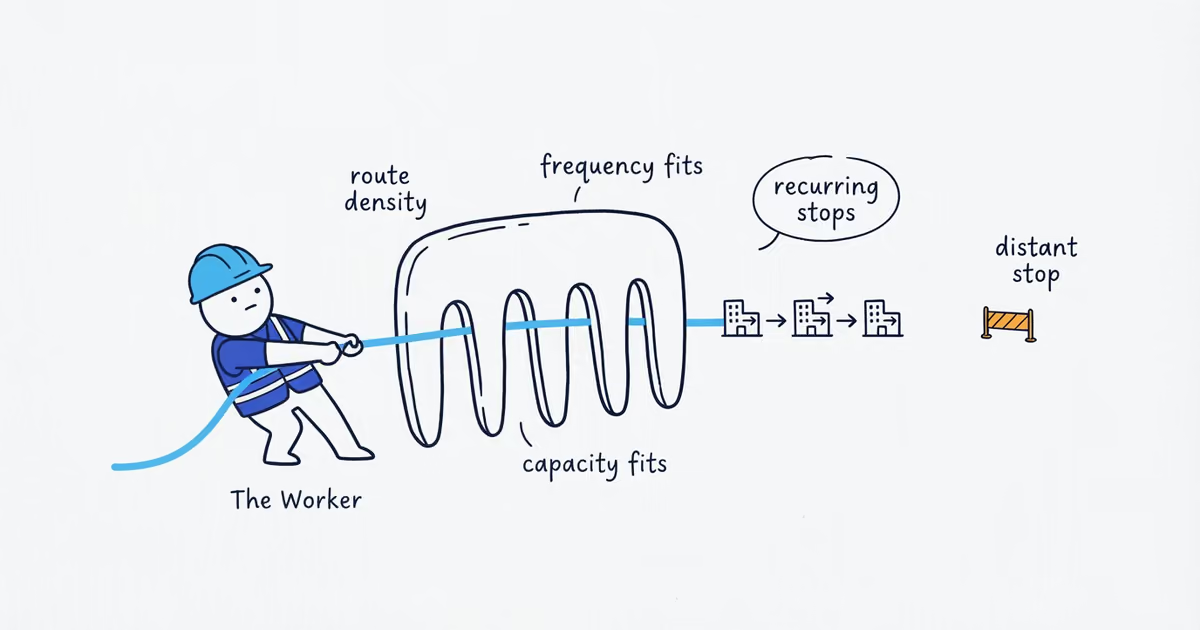
Get commercial lawn care contracts by choosing an account pattern your current route can support, building a list of named properties, verifying the buyer and review route, making relevant one-to-one contact, qualifying and inspecting the site, and sending only a verified scope into pricing and proposal work. That process creates qualified opportunities. It does not guarantee an award.
The target is privately purchased recurring mowing or routine turf maintenance for businesses, managed properties, HOA common areas, multifamily grounds, and local multi-site operators. Offer only work you can lawfully and competently perform. This is not public procurement, technical turf treatment, or legal drafting. Broader grounds and project work belongs in How do I get commercial landscaping contracts? The 90-day route system, residential route filling, reviews, retention, weather recovery, and equipment expansion belong in How do I grow a lawn care business?
Keep the stages separate. A named account is a specific property with a source and date. A verified contact has a confirmed buying, access, approval, communication, or payment role. A qualified opportunity has a confirmed need or review route and enough facts to justify more work. A site inspection checks scope and operating facts. A bid or proposal handoff sends checked facts to pricing and document work. An awarded contract is buyer-awarded work. Earned revenue follows work performed and recorded under the customer arrangement. Earlier stages are neither.
How to choose commercial lawn care accounts that fit your route
The U.S. Small Business Administration recommends checking demand, customer location, saturation, alternatives, and the target customer. Apply this to current routes, owner records, named properties, and buyer information. There is no universally best niche or service radius.
For one initial pattern, record route zones, services, frequency and season, crew and supervision capacity, mower and equipment fit, service-window limits, permission-cleared proof, administrative tolerance, and no-fit conditions. Check drive, loading, parking, staging, backup, weather rescheduling, and seasonal capacity before outreach.
Who hires commercial lawn care companies
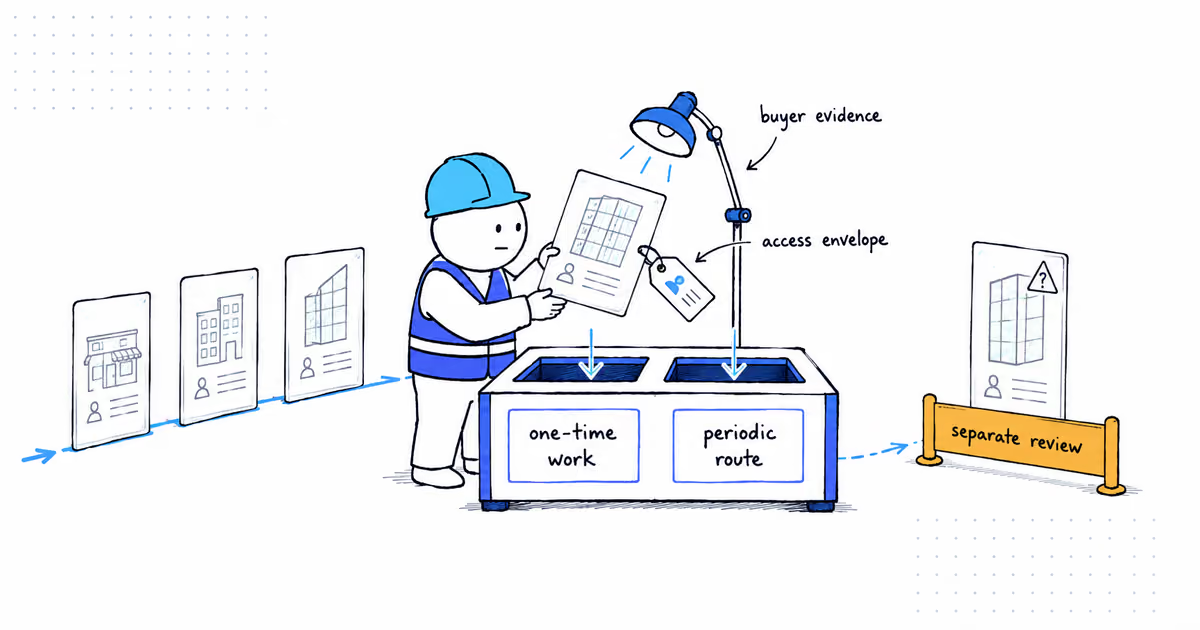
Every title below is a contact to verify, not a guaranteed decision-maker.
| Property or account pattern | Likely contact to verify | Starting channel | Credible account-specific reason to contact | Route or capacity fit question | Proof or readiness item | No-fit or caution signal |
|---|---|---|---|---|---|---|
| Owner-managed office or retail | Owner or site manager | Official site or permitted introduction | Confirmed service review | Does route and window fit? | Service area; approved proof | Address only; no review route |
| Managed office, retail, or multifamily | Property, facilities, or site manager | Manager site or local connection | Confirmed change, review, or invitation | Do access and reporting fit? | Current details; completion records | Tenant contacted without authority check |
| HOA common areas | Community manager or authorized contact | Association route or requested introduction | Confirmed review or private opportunity | Do zones, frequency, access, and reporting fit? | Approved common-area proof | Authority, areas, or process guessed |
| Local multi-site business or franchise | Operator, facilities, or procurement contact | Company site or relationship | Confirmed site-group review | Do all sites fit route, crew, and equipment? | Supported area; communication readiness | One site breaks capacity |
| Private warehouse or light industrial | Site, facilities, or owner contact | Property or company site | Invitation about supported work | Do access, traffic, staging, and windows fit? | Clear scope; current capacity | Work or conditions exceed capability |
| Real referral or complementary provider | Referred property contact | Permission-safe introduction | Named-property referral | Does the account fit without relying on the relationship? | Permission; accurate relevant proof | Referral mistaken for approval |
| Buyer-published vendor or private bid | Buyer-named contact | Published private route | Dated matching invitation | Do scope, timing, and administration fit? | Current requested documents | Public bid, expired notice, or unsupported requirements |
Verify who selects service, controls access, approves work, communicates expectations, and processes invoices. Roles may sit with one person or across the tenant, owner, HOA, and manager. Be ready with exact business and contact details, truthful scope and service area, approved proof, capacity facts, and a reliable communication and completion-record process.
Use named properties, real referrals, local connections, official sites, relevant associations, visible routes, and published private opportunities. Record a source and date. A rough lawn, guessed expiration, directory entry, or address proves nothing. Do not use scraped or purchased lists or mass messages.
How to contact commercial lawn care buyers
A first contact needs one truthful reason, supported service, and question:
Subject: Pine Street Office lawn service review
Your property website lists you as the contact for Pine Street Office. We provide recurring commercial mowing in the surrounding route area. Are you the person who reviews that service, or could you point me to the right contact? If a review is planned, I can take a short qualification call or property visit.
Pine Street Office is fictional, not a claimed relationship or opening. For U.S. commercial email, the Federal Trade Commission says CAN-SPAM has no business-to-business exception. Use accurate sender and subject information, a valid postal address, a clear opt-out route, and honor opt-outs. Check other applicable rules; this is not legal advice.
Last verified: September 2, 2026 (United States).
How to qualify a commercial lawn care account
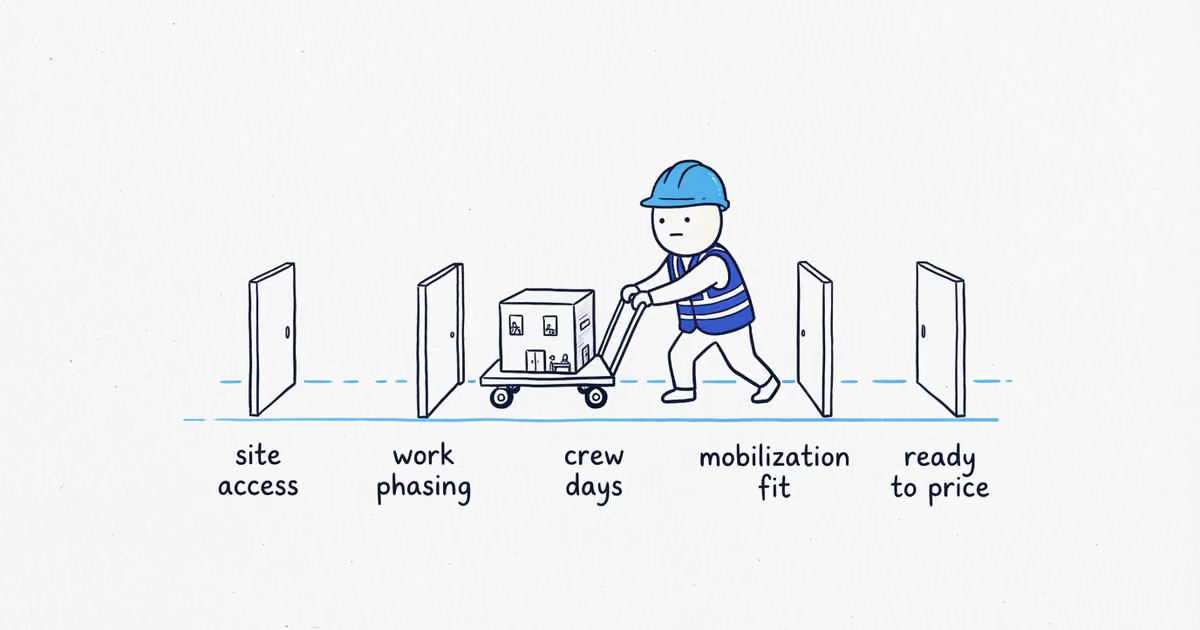
Before a visit, confirm all sites; five buyer roles; scope; area or turf zones; frequency and season; service and reporting windows; buyer-shared trigger; review process; due, decision, and start dates; buyer conditions; invoice path; route; and capacity. Mark unknowns.
Stop before a walkthrough when a real condition fails. If a site is outside your workable route and its confirmed window cannot be covered, record stop: route and window do not fit.
At the site, record included and excluded zones; maintained area supplied or normally checked; slopes, wet areas, obstacles, gates, loading, staging, parking, traffic, pedestrian use, operating windows, access, reporting, customer responsibilities, optional work, and assumptions. These are handoff facts, not field instructions.
Separate base scope from optional, seasonal, specialist, and one-time work. Do not let “full-service” hide frequency, zones, cleanup, access, responsibilities, or exclusions. Record chemical, irrigation, tree, drainage, installation, snow, and other specialist requests as excluded, referred, or held. The SBA notes that license and permit requirements vary by activity, location, agency, and government rules. Verify what applies instead of using a universal list.
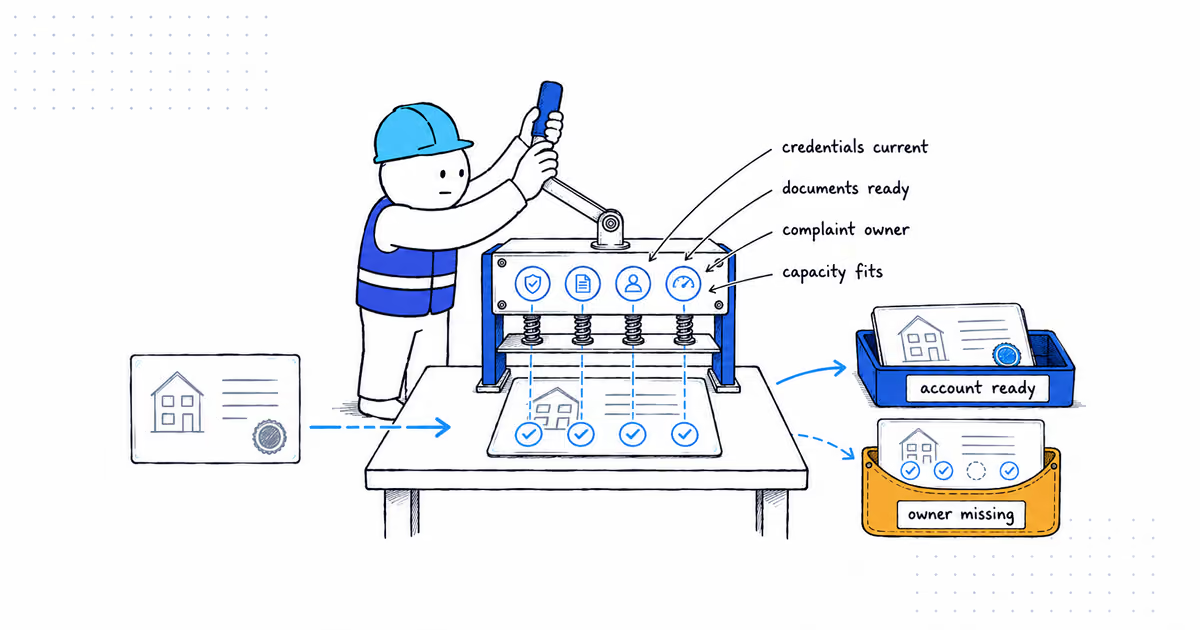
Commercial lawn care contract route scorecard
Use one scorecard per account. The completed example below is fictional and contains no claimed client, price, acreage, contract term, or award.
| Field | Example record | Gate |
|---|---|---|
| Named account and site | Pine Street Office; one private office site | Pass |
| Source and date | Property site checked September 2, 2026; timing confirmed directly | Pass |
| Property and buyer pattern | Locally managed office; starting contact verified | Pass |
| Decision, access, approval, communication, and payment roles | First four confirmed; payment contact unknown | Hold |
| Verified recurring scope boundary | Recurring mowing and routine turf care; specialist and project work excluded | Pass |
| Maintained acreage or turf zones | Front and side zones identified; maintained area unconfirmed | Hold |
| Frequency, season, and service window | Buyer supplied each; current calendar supports them | Pass |
| Route zone and drive or non-service exposure | Current zone; drive and loading checked in owner records | Pass |
| Gates, loading, staging, parking, traffic, and site-use constraints | Each recorded; no open operating constraint | Pass |
| Terrain, wet areas, and obstacles | Observations recorded only as operating facts | Pass |
| Crew, supervision, mower, equipment, backup, weather, and seasonal-capacity fit | Each checked; capacity available | Pass |
| Completion or reporting expectations | Buyer described the record and communication route | Pass |
| Review, renewal, or bid timing | Buyer confirmed its review route and dates | Pass |
| Buyer-specific vendor conditions | Requested conditions recorded; nothing extra promised | Pass |
| Inspection status | Operating facts checked; maintained area remains open | Hold |
| Pricing or proposal handoff | Blocked until area and payment role are confirmed | Hold |
| Current stage | Qualified opportunity; not an award or revenue | Hold |
| Next owner, action, and date | Sales owner: confirm area and payment contact by September 5, 2026 | Hold |
| No-fit reason | None yet; record and stop if missing facts reveal a delivery failure | Hold |
How to prepare to bid a commercial lawn care job
When fields pass, hand off sites, roles, zones, area, scope, frequency, season, window, constraints, reporting, customer responsibilities, buyer conditions, dates, optional work, and assumptions. Pricing and bid math belong in a commercial lawn-care pricing article. Proposal structure belongs in What should a contractor proposal include? Registration, portals, work orders, and invoice requirements belong in How do I become a vendor for property management companies?
If you still need to choose and qualify the account pattern, use the commercial contracts guide to work through buyer readiness, named-account research, and the walkthrough gate before bid math. When a property manager requires formal onboarding, use the property-management vendor guide to follow its official document and approval route without mistaking vendor status for work authorization.
Confirm receipt, record the buyer’s process, answer questions, and set an owner and dated action. Stop after a decline or contact refusal. Before accepting work, rerun the route-and-capacity gate, including direct delivery costs and seasonal capacity. A contact, vendor-list entry, walkthrough, bid invitation, proposal, or verbal interest predicts nothing.
For the fictional Pine Street Office example, the decision is hold. The sales owner must obtain the buyer-confirmed maintained-area record and payment contact by September 5, 2026. Until then, it does not move to pricing.
Frequently asked questions about commercial lawn care contracts
When should I contact commercial lawn care buyers?
Contact a buyer when you have a sourced, account-specific reason, such as a confirmed review period, requested introduction, management change, or published private opportunity. Record the source and date instead of guessing at a universal buying season or contract expiration.
How do I get HOA lawn care contracts?
Treat an HOA as a named private account and verify who can select the provider, approve work, control access, communicate expectations, and process invoices. Confirm the common turf zones, frequency, season, reporting needs, review process, and route fit before investing in a walkthrough or bid.
How do I price commercial lawn care?
Price only after the buyer has confirmed the sites, maintained area or turf zones, recurring scope, frequency, season, service window, access constraints, and optional work. Use those facts in a separate pricing process; this acquisition workflow does not supply a universal rate or bid formula.
Sources
- commercial-contracts
- how-to-get-commercial-lawn-care-contracts
- commercial-lawn-care-contracts
- how-to-get-commercial-lawn-accounts
- commercial-mowing-contracts
- lawn-care