How do I grow a landscaping business?
Learn how to grow a landscaping business by qualifying leads, improving site visits and proposals, and building a seasonal backlog your crew can deliver.
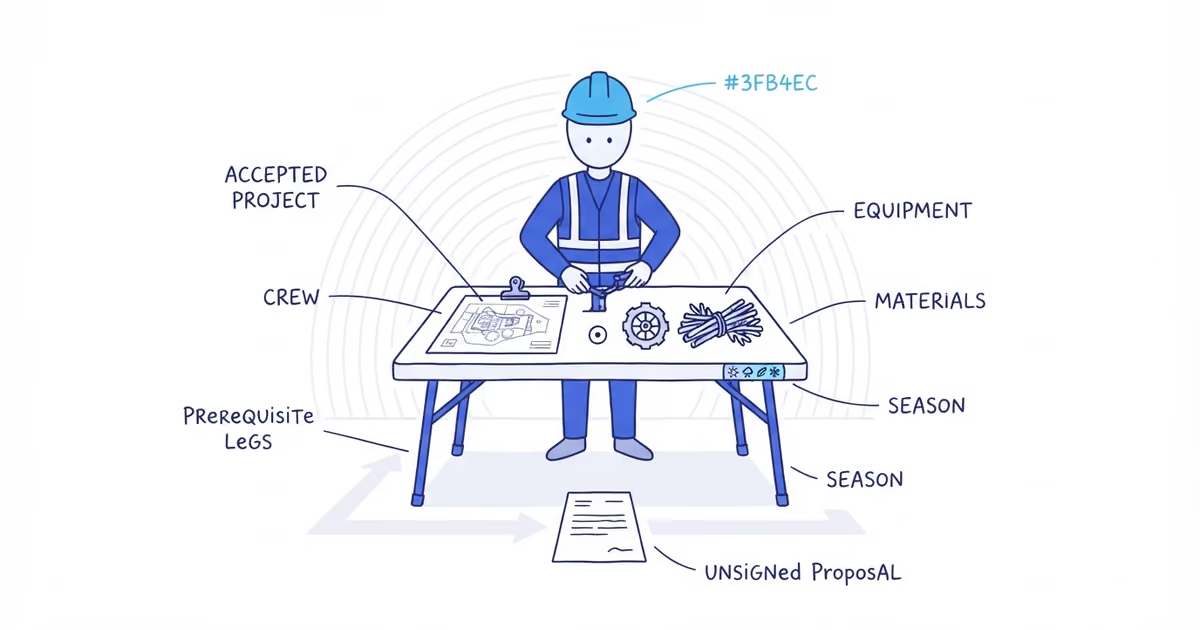
Grow a landscaping business by choosing project and property types the company can deliver well, then moving qualified leads through site visit, proposal, accepted prerequisites, seasonal backlog, completion, review, referral, and the next property need. Healthy growth means suitable projects completed to standard inside real crew, equipment, material, season, schedule, and cash commitments. More leads, services, territory, crews, trucks, or booked revenue do not prove it.
Last verified: August 28, 2026 (United States)
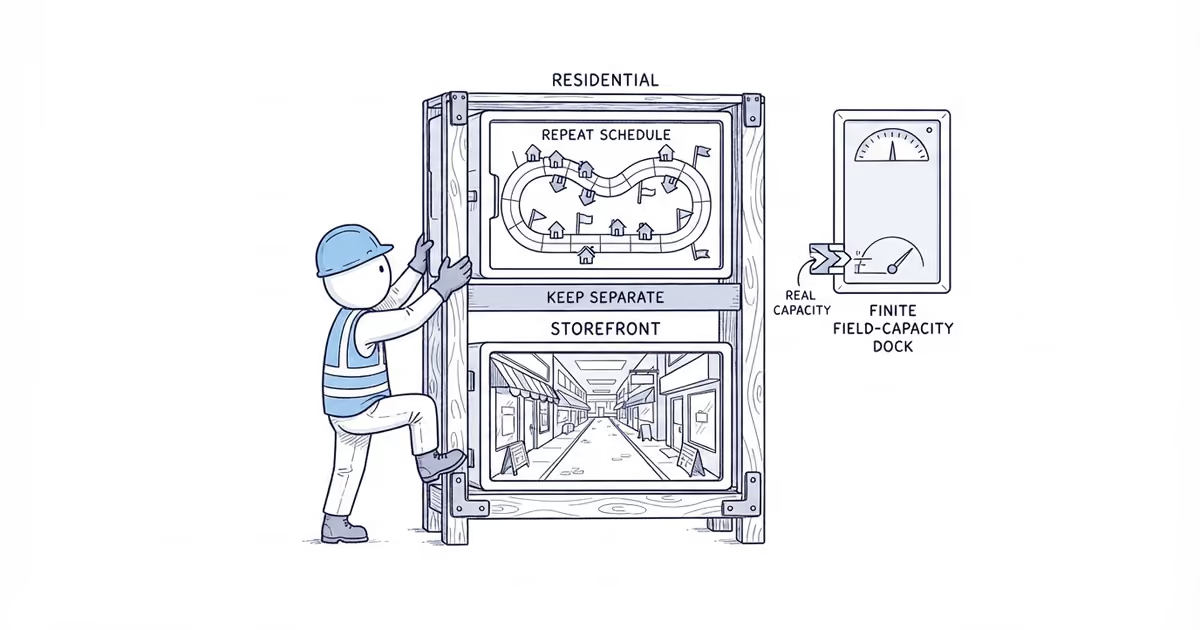
This covers project-led design, installation, renovation or enhancement, planting, hardscape, and related maintenance actually offered. The lawn-care growth model owns recurring mowing, stop density, route scheduling, renewals, frequency, and route upsells.
Choose the landscaping project scope and target property
Compare only work the company could realistically support. No scope is universally the most profitable.
| Candidate scope | Property, buyer, and trigger | Visit and decision path | Proof and relationship value | Constraints and main delivery risk |
|---|---|---|---|---|
| Design or planning, when offered | Homeowner or named property buyer preparing a defined project | Site visit, inputs, participants, approvals, timing, and owner | Permission-cleared examples and process can support later work | Design/admin time, applicable credentials, approval delay, and delivery handoff |
| Installation or new project | Property with a confirmed need and decision path | Site visit, scope inputs, selections or approvals, and target window | Comparable work, process proof, and completion records | Crew skill/hours, equipment, materials, suppliers, access, season, and supervision |
| Renovation or enhancement | Existing property with a stated change | Site visit records scope, missing inputs, buyer, timing, and next decision | Permission-cleared before, progress, and finished views | Unclear inputs, changes, access, material timing, crew fit, and slippage |
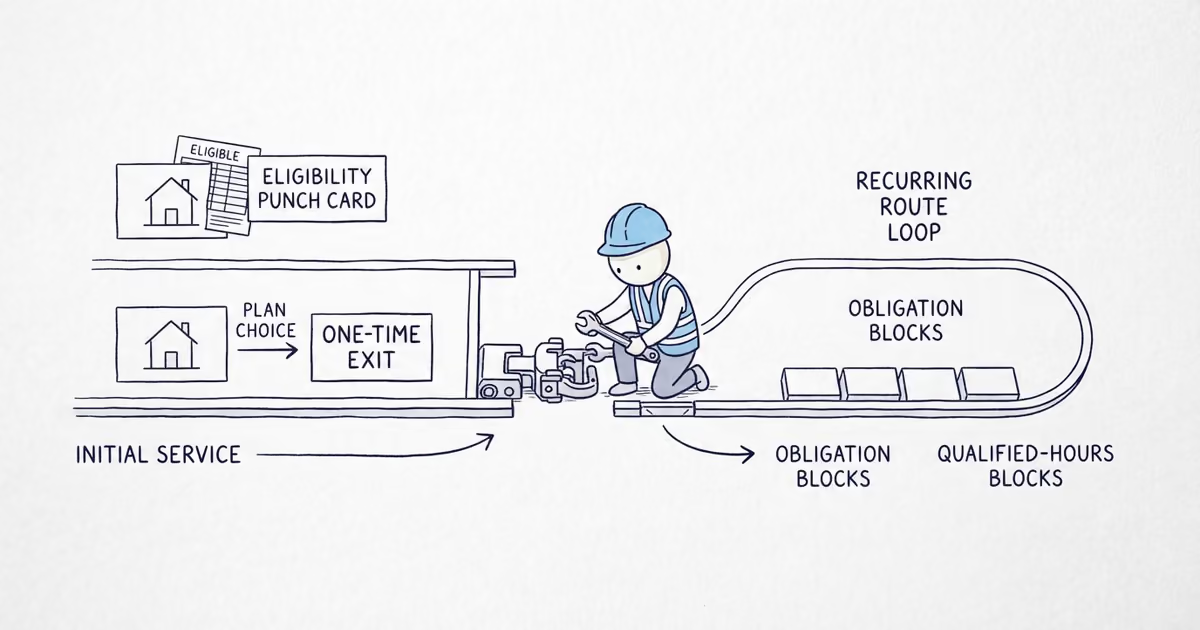
| Project-related maintenance | Completed project or relationship with a follow-on need | Keep scope, visit, schedule, and decision separate | Can preserve the relationship and surface a later project | It consumes project capacity or becomes an untracked mowing model |
Choose one primary and one controlled secondary scope for 90 days. Include only work supported by skills, truthful current credentials where relevant, crew, equipment access, supplier path, schedule, and completed-work evidence. Do not copy a competitor’s service list.
Define target fit by buyer, property, real service area, scope, accepted site conditions, decision process, timing window, and any minimum or maximum constraint supported by company records. Do not impose a universal budget minimum.
Audit landscaping project and property fit in Days 1-14
Audit the last 60 to 90 days of inquiries and projects. Record:
- Source, requested scope, property or buyer, area, qualification result, and timing.
- Site-visit and proposal states, voluntarily provided budget context under the real process, and won, lost, or deferred reason.
- Accepted and completed dates, direct crew labor, project-specific materials and equipment, crew hours, schedule variance, and payment state.
- Rework, return visits, photo permission, review, referral, later property work, and any missing data.
Mark unknowns as unknown. Do not reconstruct old hours, costs, permissions, or outcomes from memory.
Map areas from completed-project fit, mobilization, crew/equipment movement, supplier access, site-visit burden, schedule reliability, and contribution. Do not use a Maps radius or assume more listed areas improve rank.
Write a primary-scope fit card: property and buyer, included/excluded work, pre-visit information, visit purpose, non-coercive budget context, timing and decision inputs, proof, proposal owner, delivery prerequisites, and stop conditions. Align expectations under company policy without pressure or an invented minimum.
Deliverable: a baseline pipeline and project-fit card showing scope, property, area, owner, season, proof, prerequisites, capacity, and stop conditions. Select the primary and secondary scopes; mark missing data for collection.
Build local landscaping SEO, proof, and lead qualification in Days 15-30
Audit one eligible Google Business Profile. Use the real name, truthful primary category/services, accurate hours, phone, website, correct address or service-area treatment, and permission-cleared photos. Do not create virtual locations, stuff the name, or list work not provided.
Create a page for each priority scope and useful pages for real areas. State who it fits, area, process, starting information, site-visit or design step, scheduling factors, inclusions/exclusions, proof, and next step. Do not clone city pages.
If those scope, proof, and site-visit facts do not yet have a usable online home, ShiftFlow’s free website setup can turn them into a clear project and contact path for real service areas.
For each proof project, record permission, unexaggerated before condition, agreed scope, representative progress, result, useful date/season, property type, non-private area, and comparison limits. Do not expose addresses, customer details, children, plates, neighbors, design documents, or private site information without permission.
Beside the images, show the company’s inquiry, qualification, visit, proposal, approval, scheduling, communication, completion, and issue process. Use license, insurance, certification, warranty, sustainability, native-plant, irrigation, pesticide, engineering, or design claims only when current, true, and relevant.
Capture contact, property, requested scope in the customer’s words, permission-safe photos when helpful, decision-maker, timing, policy-based budget context, access, and fit with scope, area, season, and capacity.
Give every lead an owner and visible state:
New inquiry -> Qualification waiting -> Qualified or no-fit -> Site visit scheduled -> Site visit complete, no-show, or deferred -> Scope, design input, selection, or approval waiting -> Proposal in progress -> Proposal sent -> Follow-up due -> Accepted pending prerequisites -> Backlog scheduled -> Active -> Completed -> Review, referral, reactivation, maintenance feeder, or next-property action -> Lost or deferred with reason
Deliverable: one accurate local-to-site-visit path for each active scope, with proof permission recorded and no unowned lead.
Move landscaping site visits and proposals into backlog in Days 31-60
Answer whether the company serves the property, accepted project types, what to prepare, the site-visit path, separate design/selections, start-timing factors, high-level change handling, and expected follow-up. Do not publish design, construction, irrigation, drainage, pesticide, plant-health, grading, engineering, or safety instructions.
Run a bounded AI-search check with fixed customer questions. Record tool/date, answer, cited sources, wrong or missing facts, and the page/profile to correct. Google’s standard search requirements apply to AI features; no special AI file or schema is required. OAI-SearchBot access affects ChatGPT search eligibility, not guaranteed crawling, citation, rank, or recommendation.
Confirm visits through the existing process, record scope and missing inputs, assign the proposal owner, and give each open proposal a next action/date. Separate no-show, no-fit, delayed, lost, and deferred reasons. Do not invent a follow-up cadence.
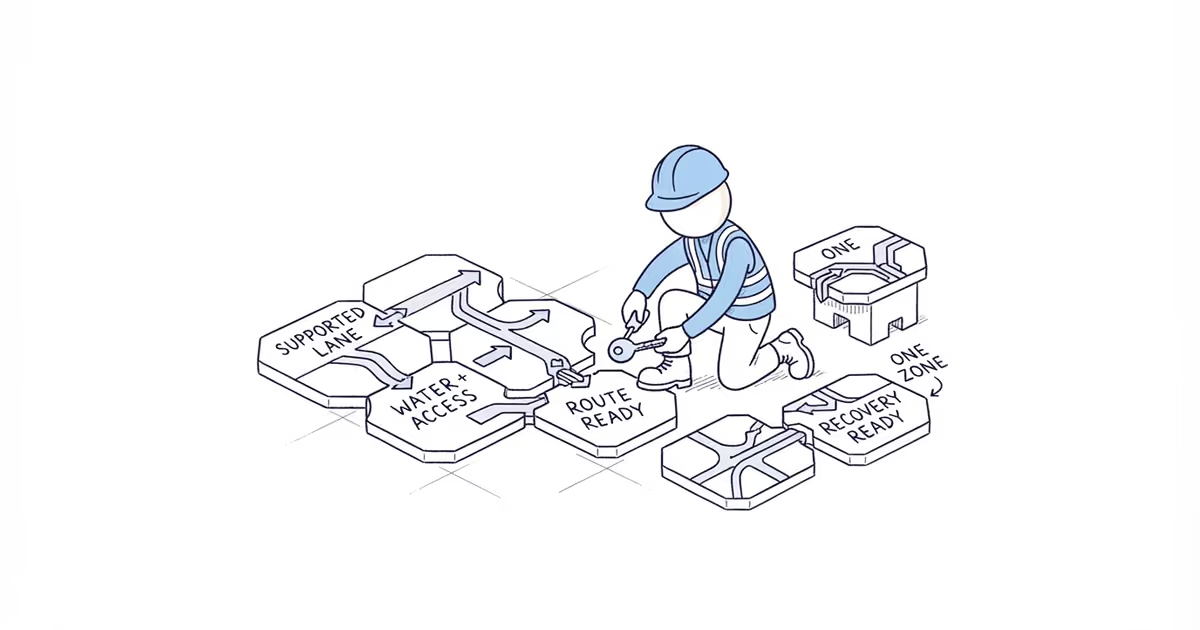
Move accepted work into backlog only after the prerequisites are visible:
- Target start window and customer approvals or selections.
- Crew hours and required skill, equipment, and supervision.
- Material and supplier status and any subcontractor dependency.
- Site access and permits or approvals only where the actual project requires them.
- Deposit or payment milestone under the existing contract.
- Weather or seasonal dependency and the customer communication owner.
An unsigned proposal is not backlog. Accepted work with missing prerequisites remains accepted pending prerequisites, not a promised start.
Request reviews after completion or a resolved milestone. Use one neutral rule, send the direct link, restrain reminders, and protect private details. Do not buy reviews, review-gate, suppress criticism, or condition incentives on positive sentiment.
Before the relevant season, reactivate suitable project customers and ask for referrals after resolution. Record completed scope, permitted proof, open next need, contact timing, and owner without turning this into a contract guide.
If the team needs to decide which old records are eligible and how to run a bounded seasonal campaign, the past-customer reactivation guide provides the selection, contact, and stop rules.
Deliverable: a seasonal backlog containing accepted work only, with start window, prerequisites, crew hours, equipment, materials, access, approvals, dependencies, and customer owner visible.
Match landscaping backlog to delivery capacity in Days 61-90
Compare backlog with reliable crew hours/skill, equipment, material/supplier timing, subcontractor commitments, access, weather/season, and supervision. Resolve prerequisites before promising starts. There is no universal backlog or utilization target.
For the primary scope, record approved scope, used plans/selections, exclusions, property/access notes, crew/equipment assignment, material status, communication owner, change-process reference, completion proof, issue state, and review or next-property action. This is a handoff, not construction instruction.
Use maintenance only as a deliverable project feeder or retention offer. It may protect completed work or surface a later project, but this is not a mowing-route, stop-density, renewal, or route-upsell lesson. Keep its economics and capacity separate.
Deliverable: backlog matched to real delivery capacity, a written proposal-to-field handoff, and keep, fix, stop, or defer decisions for each scope, property, area, source, and maintenance feeder.
Review the landscaping lead-to-backlog scorecard weekly
| Measure | Definition and owner use |
|---|---|
| Qualified inquiries by scope and source | Count inquiries that fit the selected project, property or buyer, real area, timing, and delivery boundary. Keep no-fit reasons. |
| Site-visit movement | Track scheduled, completed, no-show, deferred, and no-fit visits. Do not hide failed visits inside a total. |
| Proposal movement | Track proposals in progress, sent, open with an owner and next-action date, accepted, lost, and deferred by scope. |
| Accepted backlog | Record accepted project value and crew hours by target start window only after approvals, selections, access, material, equipment, subcontractor, payment, and other real prerequisites are visible. |
| Completed-project contribution per crew labor hour | (completed-project revenue - direct crew labor - project-specific materials, equipment rentals, and subcontractor costs) / crew labor hours. Compare delivered projects; do not use it to set a customer price. |
| Schedule and quality leakage | Track prerequisite delays, avoidable start slippage, rework, return visits, punch items, and service credits consistently. |
| Relationship outcome | Track genuine reviews, referred opportunities, reactivated customers, active property relationships, and next-property actions. Do not count routine lawn stops as project wins. |
| Delivery capacity | Compare committed with reliable available crew hours. Display crew skill, equipment, material or supplier, dependency, access, season or weather, and supervision constraints. Hoped-for hires or equipment are not capacity. |
Completed-project contribution is not net profit. Vehicles, owned-equipment costs, shop or yard, insurance, licenses, design/admin time, marketing, taxes, owner pay, overhead, financing, callbacks, and other costs may sit outside the formula.
Stop these landscaping growth mistakes in the first 90 days
- Offering every outdoor service or mixing mowing-route results into project results.
- Using customer images without recorded permission or exaggerating before-and-after comparisons.
- Booking unqualified site visits everywhere or using budget as a pressure tactic.
- Leaving proposals without owners or dates, or counting unsigned work as backlog.
- Promising starts before crew, equipment, materials, access, approvals, and season align.
- Publishing cloned area pages, technical or unsafe advice, unsupported claims, or AI hacks.
- Gating reviews or hiring before the project handoff and delivery capacity are repeatable.
Frequently asked questions about growing a landscaping business
Should I ask for a budget before a landscaping site visit?
Only when the company has a consistent, non-coercive budget-context policy. Use the answer to check fit and expectations, not to pressure the customer or impose an invented project minimum. Detailed phrasing belongs in the lead-qualification process.
How do I get property manager or HOA landscaping work?
Treat the organization as a named buyer and qualify property, scope, decision process, timing, documentation, and delivery fit before scheduling a visit. Keep outreach lists, vendor onboarding, bids, contracts, service levels, and renewals in a separate commercial account process.
Sources
- Google: Guidelines for representing your business
- Google: Tips to improve your local ranking
- Google: Ask for and manage reviews
- FTC: Consumer Reviews and Testimonials Rule questions and answers
- Google Search Central: AI features and your website
- OpenAI: Overview of crawlers
- Google Search Central: Spam policies and doorway abuse
Make the Day-90 keep, fix, stop, or defer decision
Keep a project scope, property, area, source, or maintenance feeder only when qualified demand progresses through site visit and proposal, accepted prerequisites become a deliverable backlog, completed projects preserve contribution and quality, relationships produce honest next actions, and crew, equipment, material, and schedule capacity support the work. Fix one named bottleneck. Stop repeated failures. Defer unsupported expansion.
- local-seo-foundations
- how-to-grow-a-landscaping-business
- how-do-i-grow-a-landscaping-business
- landscaping-business-growth-plan
- landscaping-lead-qualification
- landscaping-proposal-follow-up
- landscaping-seasonal-backlog