How do I grow a painting business?
Learn how to grow a painting business by improving qualified leads, site visits, estimate follow-up, production-ready backlog, and painting crew capacity.
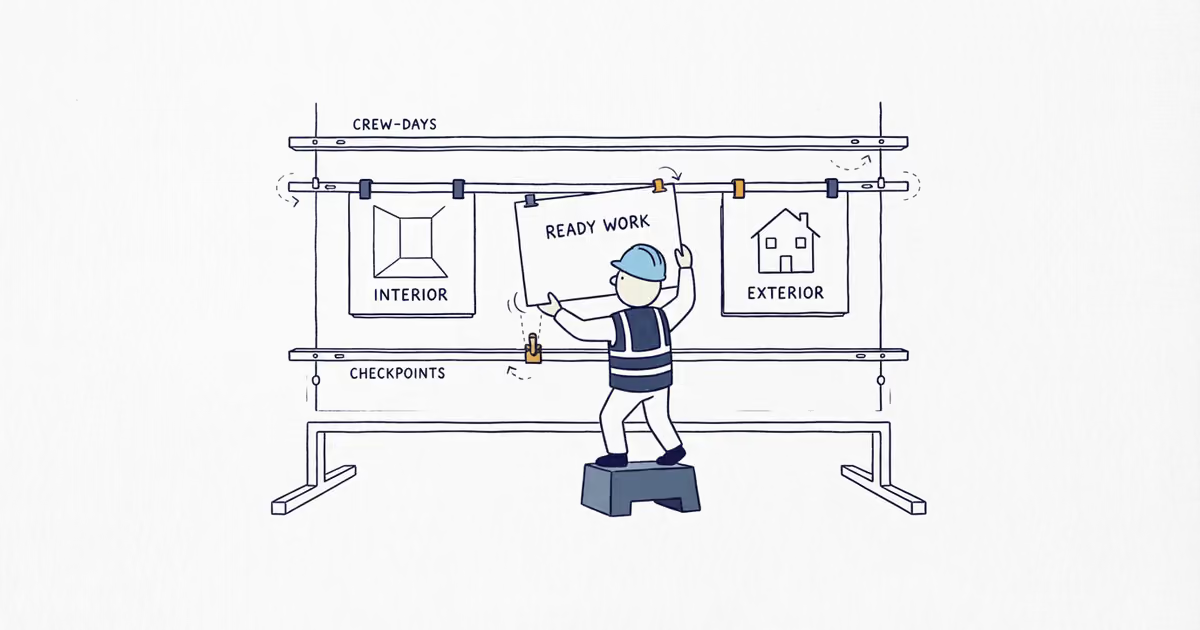
Grow a painting business by choosing a project mix you can scope, staff, supervise, and finish consistently, then control the path from qualified inquiry and site visit through estimate, permissioned visual proof, production readiness, closeout, review, and referral. Sell against eligible crew-days and available supervisor checkpoints; a job that is not production-ready is not schedulable backlog.
Last verified: August 28, 2026 (United States).
Choose the painting project lanes your crews can deliver
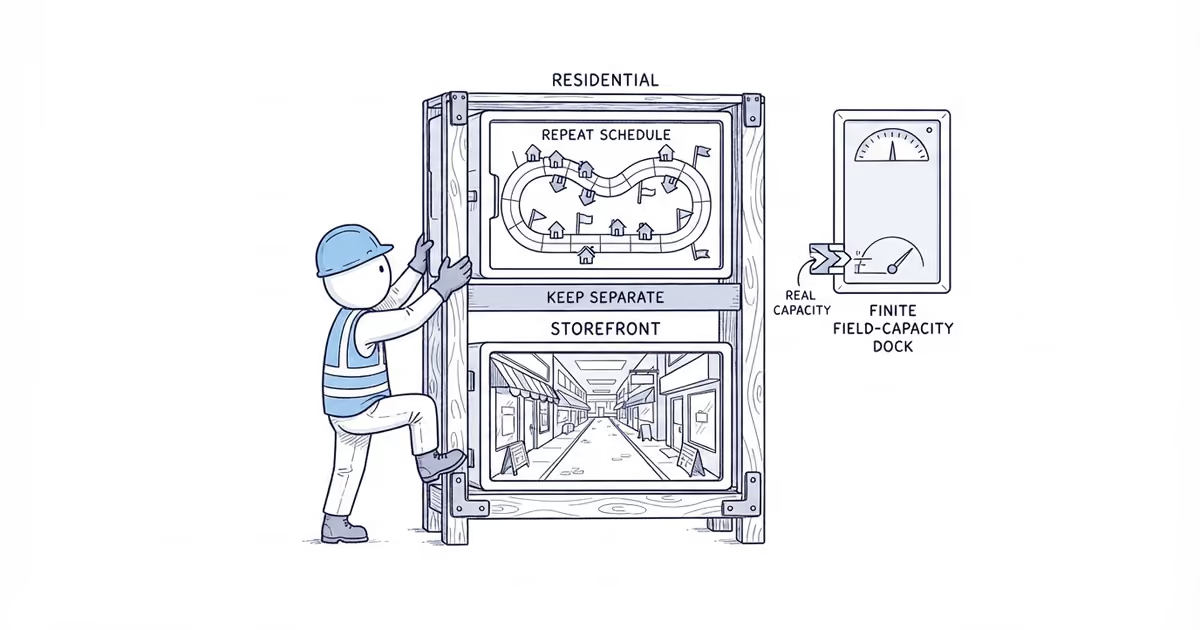
Treat each lane as a different operation. Do not rank one as universally more profitable or scalable.
| Project lane | Buyer and operating pattern | Capacity test |
|---|---|---|
| Residential interior repaint | Homeowner or resident; occupied work depends on access, communication, selections, and daily coordination | Completed-job evidence, crew skill, occupied-space workflow, supervisor coverage, proof, and current interior demand |
| Residential exterior | Homeowner or property buyer; local weather and site constraints affect eligible days and start windows | Exterior-capable crew and equipment, comparable proof, local operating window, weather buffer, and supervision |
| Commercial maintenance or turnover | Property manager or commercial buyer; repeatable access, scheduling, documentation, and buyer updates matter | Suitable buyer path, estimate ownership, access process, crew configuration, update boundaries, and production capacity |
| Supported specialty | Customer seeking a service such as cabinets or refinishing that the company genuinely performs | Separate skill, workflow, equipment, proof, estimating path, crew-days, and checkpoints; a general repaint record is not enough |
Choose lanes supported by completed work, crew skill, supervision, equipment, a real buyer path, local demand, and the season. SBA guidance supports checking demand, location, and alternatives; your completed-job and capacity records decide the mix.
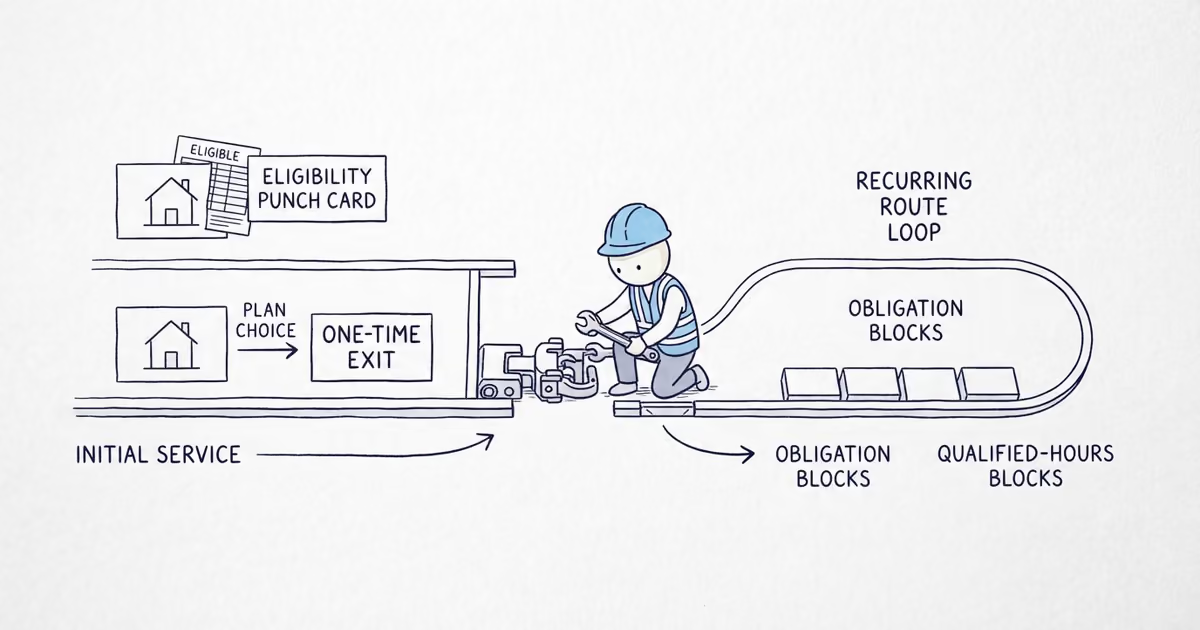
Put every opportunity on one board using these stages:
New inquiry -> qualified for lane and area -> site visit scheduled -> visit completed -> estimate required -> estimate delivered -> follow-up due -> accepted/declined/pending -> production-ready/blocked -> scheduled -> in production -> punch/closeout -> completed/collected -> review/referral eligible
Each record needs lead ID, source/direct spend, buyer, lane, area, received/acknowledged/useful-response times, owner, and fit outcome. Add visit required/scheduled/completed/rescheduled, access/occupancy/participants, goals, selections/questions, and proof needed. Record the estimate owner, promised/actual delivery, receipt, follow-up, decision/reason, accepted date, and validity/recheck status. Then carry readiness blocker/owner, eligible crew lane/days, equipment/material status, weather eligibility, checkpoints, start window, start/completion, punch/recovery, collection, authorized proof/privacy, review eligibility/request/result, and relationship/referral outcome.
Audit painting crew capacity and proof in Days 1-14
Place existing inquiries, visits, estimates, sold jobs, and completions on the board. Separate production-ready sold jobs from blocked accepted work. Audit the Google Business Profile, area, pages, direct answers, images, and reviews against the chosen lanes.
Define one crew-day as one specifically configured crew’s usable production day for an eligible project lane. Interior, exterior, commercial-maintenance, and specialty crew-days are not automatically interchangeable. Estimate required crew-days from your own completed records; there is no universal production rate.
For each of the next 13 weeks, show:
- Production-ready crew-days by lane, plus blocked sold work and its owner.
- Exterior-eligible windows with weather and schedule buffer.
- Genuinely sold or marketable interior/turnover demand, not invented gap filler.
- Leave/training, equipment constraints, access/selection holds, and material status.
- Supervisor checkpoints required by scheduled work and checkpoint slots actually available.
Supervision coverage is required project checkpoints for the scheduled week / supervisor checkpoint slots actually available that week. Define checkpoints by lane and company process. It exposes quality risk, not an industry utilization target or crew ratio.
For every image, keep the job, lane, date, authorized files, factual scope caption, permission, privacy edits, and original review source together. Remove unapproved addresses, faces, belongings, plates, access details, and other private information. Never alter color, coverage, starting condition, or result to exaggerate the work.
Improve painting site visits and estimate follow-up in Days 15-30
Set a staffed response target. Record inquiry time, acknowledgement, first useful human response, owner, lane, area fit, visit step, and outcome. Compare like sources and staffed windows; reject universal minute rules.
Qualification is operational, not technical. Confirm buyer type, area, lane, approximate customer-described scope, occupancy and access, timing, decision participants, whether a site visit is needed, and the next step. Do not diagnose a surface or give application advice.
Confirm each visit’s purpose, window, property, access, decision participants, information or selections to prepare, next step, and reschedule path:
Hi [name], this confirms our painting site visit for [property] on [date/window]. We will review the [project lane/customer-described scope] so we can prepare the next-step estimate. Please confirm access and who will join the decision. If the window no longer works, reply here so we can reschedule.
Afterward, hand off customer goals, company scope inputs, spaces/surfaces named at estimate level, access/occupancy notes, selection status, exclusions/questions, needed proof, estimate owner, promised date, and follow-up date. This is not a measurement, coating, preparation, or price worksheet.
Follow estimates without pressure: confirm receipt, ask about scope, options, or schedule, agree on a real next date, follow up then, and record accepted, declined, pending, not ready, unreachable, or invalid/recheck. Stop after a decline or opt-out.
Hi [name], I am checking that you received the estimate for [actual project]. Is any part of the scope, options, or schedule unclear? If you are still deciding, tell me a useful date to check back. I will use that date rather than keep chasing you.
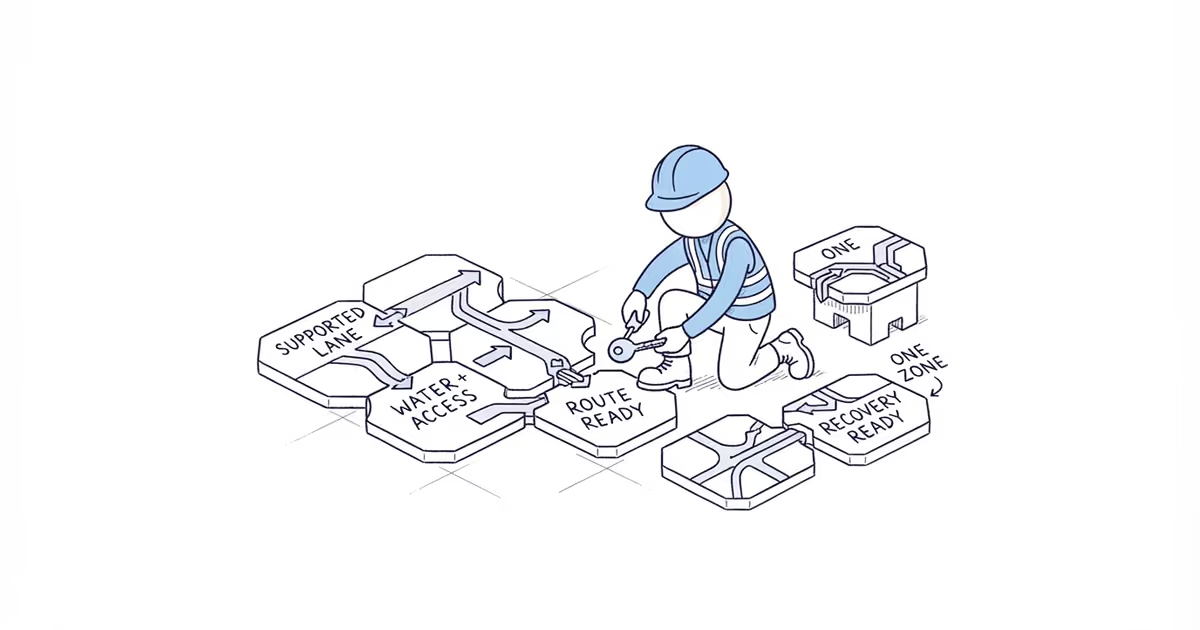
Production-ready requires authorization, confirmed scope/exclusions, recorded selections, access/occupancy, assigned material/equipment status, eligible crew, available checkpoints, applicable approval ownership, and a truthful start-window update. Show any weather, access, selection, approval, crew-skill, or supervision blocker and owner. Keep blocked work off the live schedule.
Build local painting SEO and permissioned proof in Days 31-60
Keep the Google Business Profile’s real identity, services, area, hours, contact path, and photos current. Google says local results are mainly based on relevance, distance, and prominence. Accurate information guarantees neither Maps position nor leads. Do not create fake offices or list lanes the business cannot estimate and deliver.
Build pages only for real service-and-area combinations. Answer who fits, how visits and estimates work, how access, selections, scheduling, protection, and updates are handled, what scope/proof customers receive, what closeout means, and what happens next. Use first-party evidence. Helpful content guarantees neither rank nor AI citation; avoid cloned city pages.
If those lane-specific pages and proof do not yet exist on a useful site, ShiftFlow’s free website setup can organize the real services, areas, project evidence, reviews, and estimate request path.
Build one compact proof pack for each active lane:
- A comparable, authorized before/during/after sequence.
Beforeestablishes the real starting condition;duringcan document authorized protection or process evidence without teaching technique;aftershows the customer-facing result. - A factual caption, permission and privacy record, and one genuine attributable review from the original source.
- Current verifiable credentials where relevant, a short communication/protection/closeout process, and only warranty or workmanship terms that actually apply. The estimate and written terms control.
After agreed scope is complete and assessable, apply one neutral review rule. Ask eligible customers regardless of expected sentiment, provide a direct platform path, never request a rating or sentiment-based incentive, protect details in replies, and assign complaints to recovery. Feed quality feedback to crews and supervisors. Google and FTC guidance set the solicitation boundaries.
Treat realtor, builder/GC, and property-manager relationships as different workflows. Define the fitting lane, area, intake owner, visit/estimate path, update boundary, capacity, and outcome feedback. Never promise standing volume, compensation, or contract terms.
We handle [accepted lane] in [real area]. [Owner] qualifies each request and arranges the site-visit or estimate step. We confirm schedule fit only after production readiness, and [contact/update boundary] owns updates. Send [defined intake facts] for a fit decision; this is not a promise of availability or volume.
Reactivate only from records: an eligible estimate, a known later phase requested by a past homeowner, or a fitting lane for a relationship contact. Never invent timing or urgency. After closeout, ask: Would you be comfortable introducing us to someone with a similar project? No pressure if nobody comes to mind. Record permission, source, lane, and outcome.
If the eligible record and timing rules still need to be defined, the past-customer reactivation guide helps build a limited campaign without manufacturing a need or deadline.
Some work may trigger federal, state, or local requirements. The EPA’s Lead Renovation, Repair and Painting Program is one reason to send potentially regulated work through a separate, fact-specific compliance check before acceptance or scheduling. Do not interpret it here. Broad green, safe, non-toxic, low-VOC, or similar claims require separate product-specific substantiation and current review under FTC environmental-marketing boundaries.
Balance painting backlog, crew-days, and quality in Days 61-90
Track every source through qualified inquiry, scheduled and completed visit, delivered estimate, accepted job, production-ready job, completion, collection, reliable gross profit where available, punch or callback, and repeat/referral result. Direct spend belongs with the source. Raw leads, clicks, and site visits are not completed work.
Move exterior work only into eligible local windows. Do not assume interior demand fills each weather gap. Compare production-ready crew-days with eligible crew-days, then compare required checkpoints with available supervisor slots. Review planned starts and completions, punch work, callbacks, blocked jobs, and truthful customer updates before adding demand, another active crew, or a wider schedule. Name the current bottleneck: inquiry fit, response, site visits, estimate handoff, buyer decision, selection/access, eligible crew-days, supervision, quality, or insufficient demand.
Frequently asked questions about growing a painting business
How fast should a painting contractor respond to a new lead?
Use a standard the office can staff during claimed hours. Track acknowledgement, useful human response, lane and area disposition, and the site-visit next step. Do not copy a universal minute target.
When should a painting business add another crew?
Only when production-ready work needs eligible crew-days, supervisor checkpoints remain available, and the lane-specific handoff and quality records hold. Blocked jobs and hoped-for demand do not pass that gate.
Sources
- Google: Tips to improve your local ranking
- Google: Manage your service areas
- Google: Guidelines for representing your business
- Google: Tips to get more reviews
- FTC: Soliciting and Paying for Online Reviews
- Google Search Central: Creating helpful, reliable, people-first content
- EPA: Lead Renovation, Repair and Painting Program
- FTC: Green Guides
- SBA: Market research and competitive analysis
Run the weekly painting scorecard
| Measure | Formula and owner use |
|---|---|
| Qualified inquiry rate | Inquiries fitting lane, area, buyer, and intake rules / connected inquiries reviewed. Split inquiries and direct source spend by lane; compare useful response with the staffed target. |
| Site-visit completion rate | Completed site visits / site visits scheduled in the cohort. Record customer/company reschedules and compare scheduled with completed visits. |
| Estimate delivery reliability | Estimates delivered by promised date / estimates due in the cohort. Show due, on-time, delivered, owner, age, next action, and decision. |
| Estimate decision rate | Delivered estimates with accepted or declined decisions / delivered estimates in the cohort. Keep pending, not-ready, unreachable, and recheck visible. |
| Production-ready rate | Accepted jobs passing the documented gate / accepted jobs in the cohort. Show sold jobs as ready or blocked, with reason and owner. |
| Sold backlog in eligible crew-days | Crew-days required for accepted production-ready jobs / eligible crew-days available in the period. Keep each lane separate and show planned starts/completions. |
| Supervision coverage | Required project checkpoints for the week / supervisor checkpoint slots available that week. Use company-defined checkpoints, not a benchmark. |
| Closeout quality load | Jobs with open punch, callbacks, or recovery / jobs reaching planned completion in the cohort. Keep causes separate and track authorized proof and review asks/results. |
| Source completed-job contribution | Reliably attributed collected job gross profit - direct source spend. Use only reliable accounting data; also show collections, relationship outcomes, and repeat/referral results. |
Use these bottleneck rules:
- If connected inquiries rarely fit the lane or area, fix the service promise, page, source, or intake before buying leads.
- If qualified inquiries do not become completed visits, repair response, confirmation, access, travel fit, or appointment ownership.
- If completed visits wait for estimates, fix the handoff and estimate capacity before adding appointments.
- If estimates sit without a real question or next date, work follow-up and proof gaps without fake urgency or a blanket discount.
- If sold work is blocked, assign selection, access, scope, material, weather, approval, crew-skill, or supervision ownership before publishing a start date.
- If crew-day backlog is high but supervision coverage is weaker, protect checkpoints and quality before adding a crew or source.
- If punch items or callbacks rise, pause demand expansion and repair the estimate-to-crew handoff, checkpoint, or closeout.
- If exterior work becomes ineligible, use only actual sold or qualified interior/relationship demand; do not invent a backlog or accept a new lane to fill hours.
- If source leads rise while production-ready and completed jobs do not, judge the full funnel instead of defending raw volume.
Not yet: No new service/area page, specialty, commercial relationship promise, paid source, crew, supervisor span, or schedule expansion until the current lane, estimate handoff, proof, production-readiness, crew-day, supervision, and quality records support it.
- local-seo-foundations
- how-to-grow-a-painting-business
- how-do-i-grow-a-painting-business
- painting-business-growth-plan
- painting-estimate-follow-up
- painting-production-ready-backlog
- painting-crew-capacity
- local-seo-for-painters