How do I grow a plumbing business?
Learn how to grow a plumbing business with three demand lanes, stronger local SEO, disciplined follow-up, repeat properties, and protected technician capacity.
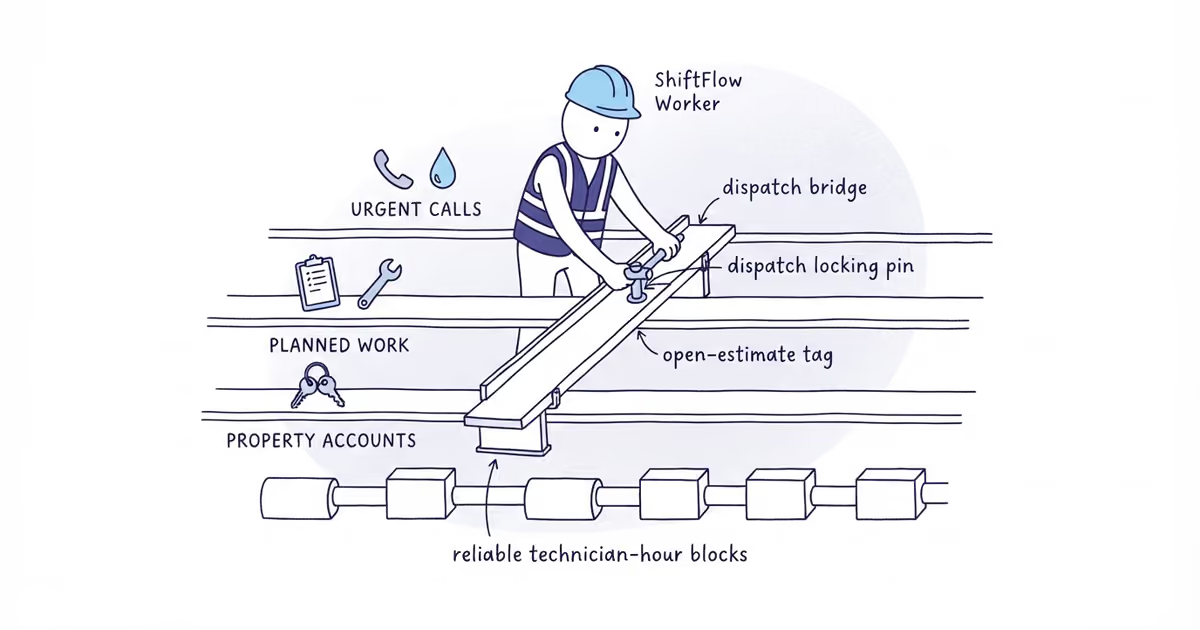
Grow a plumbing business by separating urgent calls, planned jobs, and remodel or property-account work, then improving response, local visibility, proof, follow-up, repeat relationships, and technician capacity in that order. Healthy growth means more completed work with acceptable contribution in areas the team can serve reliably, with fewer missed calls, dead estimates, callbacks, and overbooked days. More calls, miles, vans, technicians, or revenue do not prove healthier growth.
Last verified: August 28, 2026 (United States)
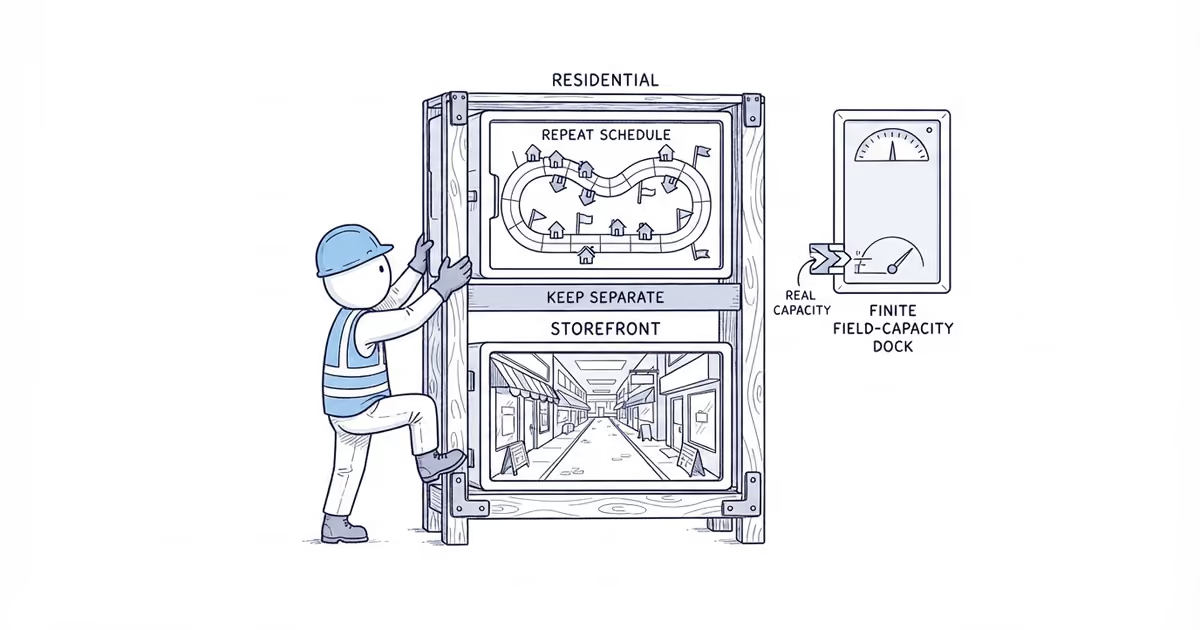
Separate plumbing leads into three demand lanes
Put each inquiry into one of three lanes at first contact.
| Lane | Customer intent and first contact | Non-diagnostic qualification and disposition | Proof and decision path | Follow-up or repeat path | Main capacity risk |
|---|---|---|---|---|---|
| Urgent service calls | High-intent phone demand with a fast decision | Record address, real-area fit, the customer’s stated problem, property, contact, access, claimed-hours fit, and dispatch feasibility. Give a dispatch or no-dispatch outcome without diagnosis. | Truthful availability, company or technician identification, and current credentials when applicable; close after the agreed work is resolved. | Keep property history; ask for a review or referral only after resolution. | Phone coverage and dispatch slots fail first. |
| Planned repair or replacement | Call or form demand with more decision time | Record service, property, location, appropriate photos, visit or estimate need, and timing. Assign an owner and next step. | Use relevant proof, written scope or options if offered, estimate state, and decision date. | Track state, next action, owner, and date; suitable past customers may return. | Estimates go stale or planned work crowds out urgent capacity. |
| Remodel, builder, or property account | Project or relationship demand with several parties or dates | Confirm buyer and property fit, stated scope, schedule, access, decision process, documentation need, and one contact. | Show relevant project history, completion records, issue ownership, and applicable warranty or credential facts. | Track opportunities, completed properties, documents, next reviews, and account concentration apart from homeowner history. | Coordination or one account consumes field capacity. |
Words such as emergency, 24/7, same-day, after-hours, licensed, insured, certified, guaranteed, and specialist are operating claims. Keep them only when the company can answer, qualify, dispatch, document, and support them. Remove unsupported wording everywhere customers see or hear it.
Classify plumbing demand and choose lanes in Days 1-14
Pull the last 60 to 90 days of inquiries and completed work. Classify every record into the three lanes. For each one, capture:
- Source, requested service in the customer’s words, location, and qualified or not-qualified reason.
- First-response result, booked or lost reason, scheduled date, and completed date.
- Invoice or job revenue, direct technician labor, job-specific parts and materials, technician hours, and material drive burden where it is reliably known.
- Callback or warranty-return status and whether the customer or property returned.
Mark missing fields as missing. Do not estimate old labor hours, invent a source, or turn an unknown callback status into a clean job.
Map the service area from completed work and dispatch, not an aspirational radius. Compare areas by travel, response feasibility, job mix, technician coverage, contribution, and callbacks. Mark areas to keep, restrict, schedule differently, review for separate pricing elsewhere, or stop serving. Adding cities does not improve Maps rank by itself.
Choose one primary lane and one controlled secondary lane for the next 90 days. For each, write down the services actually performed, real areas, claimed hours, response owner, fit questions, proof set, available dispatch and technician capacity, and stop conditions. Leave the third lane visible on the board, but do not let it control the schedule.
Deliverable: a baseline board with lane, area, service, source, owner, response outcome, completed-work evidence, capacity ceiling, and stop conditions. Missing data has a collection owner.
Improve local plumbing SEO and first contact in Days 15-30
Audit one eligible Google Business Profile. Use the real business name, accurate primary category and services, actual hours, working phone and website, correct address or service-area treatment, and current permission-cleared photos. Do not create virtual locations or add keywords to the name. List emergency or after-hours service only when phone and dispatch support it.
If the profile is missing, unclaimed, or incomplete, ShiftFlow’s Google Business Profile setup can establish the accurate services, hours, service area, photos, and contact path before demand is increased.
Build distinct priority-service pages and useful pages for real service areas. State the service, who it fits, where it is available, how contact and assessment work, information needed, accurate scope or exclusions, proof, and the next step. Do not clone one page across cities.
Create separate first-contact paths:
- Urgent calls use one visible number and a named answer owner during the hours claimed. The office records non-diagnostic fit information and gives a dispatch, no-capacity, out-of-area, wrong-service, or customer-declined disposition.
- Planned and project inquiries have a request owner, information checklist, visit or estimate state, next action, and follow-up date. Ask for photos only when the company’s normal intake process can use them appropriately.
If the team still needs to define what a useful response contains and how urgency changes the workflow, the lead response guide helps set a staffed standard without copying a universal minute target.
Assemble first-party proof from real work: permission-cleared photos, current relevant credentials, team or vehicle identification, scope and completion records, and warranties only as offered. For property accounts, show documentation and issue ownership. Do not invent results or imply one job predicts every outcome.
Deliverable: one accurate path from local discovery to recorded disposition for each active lane. The phone, form, pages, proof, claimed hours, response owner, and dispatch outcome agree with one another.
Convert and recover plumbing leads in Days 31-60
Publish direct answers on the priority pages. Tell a customer whether the company serves the location, which stated services it handles, what information the office needs, how a visit or estimate proceeds, which hours are covered, how access is coordinated, and what documentation follows. Keep diagnosis, repair instructions, do-it-yourself advice, and safety direction off these pages.
Run a bounded AI-search accuracy check using a fixed set of real customer questions. Record the tool and date, the answer, the public sources cited, any wrong or missing business fact, and the owned page or profile that needs correction. Google’s guidance says its normal search requirements apply to AI features and no special AI file or schema is required. OpenAI states that allowing OAI-SearchBot affects eligibility to appear in ChatGPT search, not a guarantee of crawling, citation, rank, or recommendation.
Create a neutral review workflow. Trigger it after the issue is resolved or the agreed work is complete, not while the customer is waiting on an outcome. Apply the same eligibility rule, send the direct review link, keep reminders restrained, and reply without exposing private customer or property details. Do not buy reviews, review-gate, suppress criticism, or condition an incentive on positive sentiment.
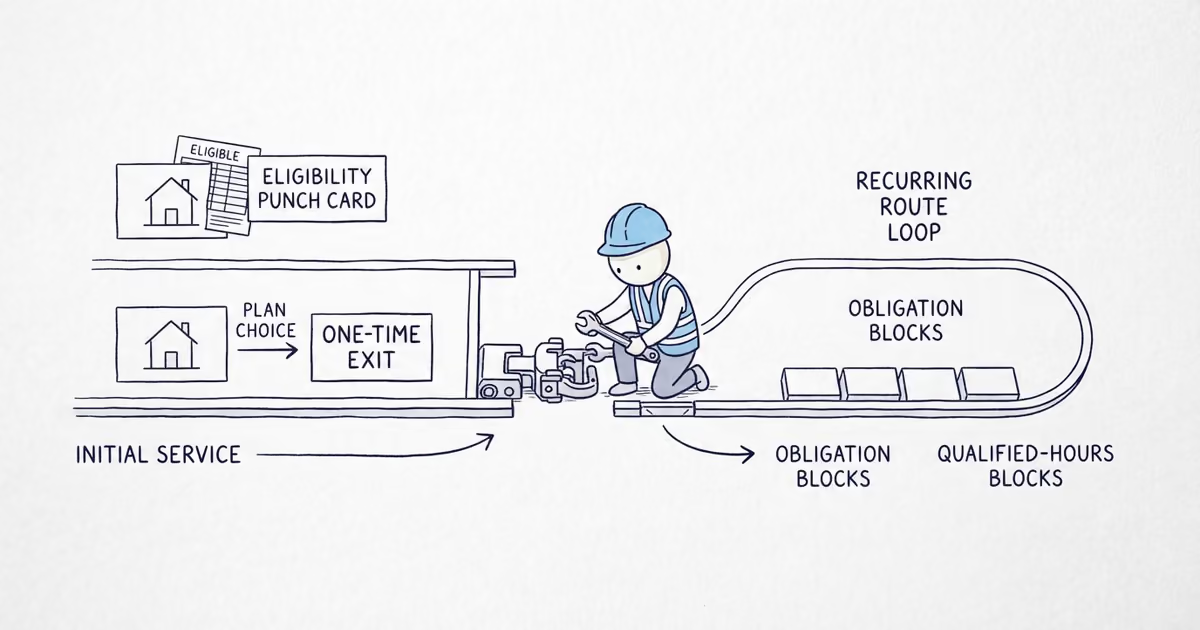
Recover demand already earned. Give every planned repair, replacement, remodel, builder, and property opportunity an owner, current state, next action, and date. Follow the established estimate process, reactivate past customers only for relevant planned work, and ask for a referral or introduction only after a resolved experience. Keep this narrow; the board needs an outcome, not a library of follow-up scripts.
Start a repeat-property record. Link the customer or account to the property, completed scope, dates, fixture or equipment notes the business normally records, documents sent, open recommendations from the job record, and next agreed contact. Keep homeowner history separate from a property manager or multi-property relationship.
Deliverable: a weekly operating rhythm connecting accurate owned information, inquiry state, open opportunities, completed work, reviews, reactivation, referrals, and repeat properties.
Protect plumbing dispatch and technician capacity in Days 61-90
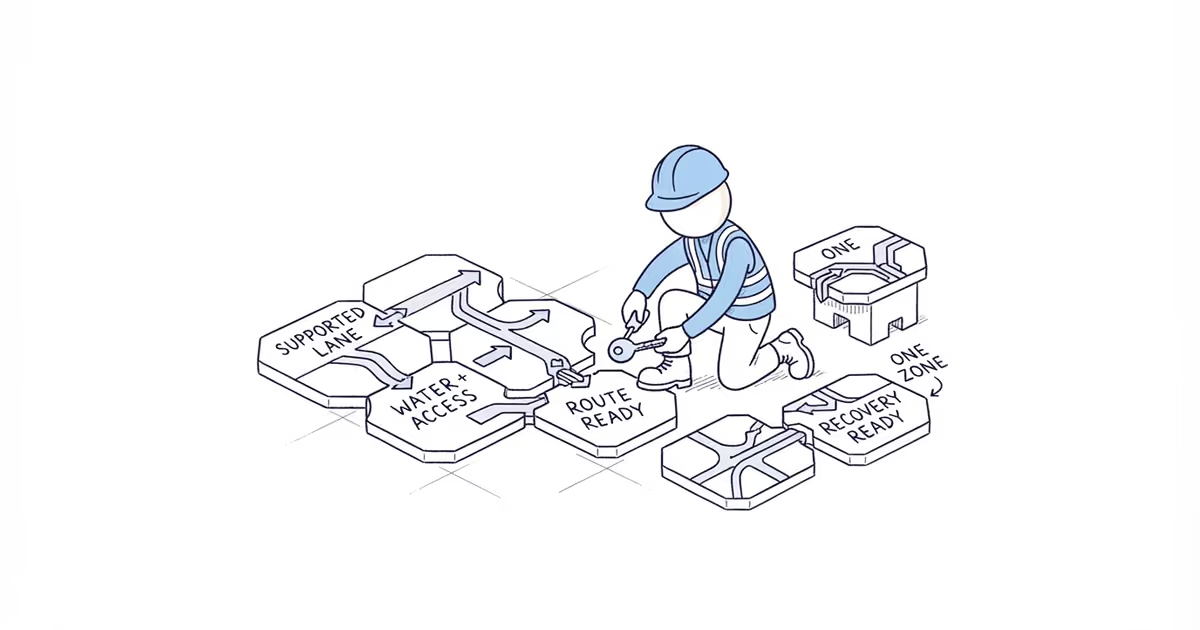
Use the board to tighten areas and scheduling. Protect capacity for the primary lane, group planned work where practical, and reject or reschedule out-of-area work under the company’s stated policy. Give each accepted job a named technician or owner and make the handoff from phone to dispatch to completion visible. Do not impose a universal service radius or utilization target.
Before adding a van, technician, operating hours, or territory, require all of the following:
- Repeatable qualified demand in the lane and area.
- Acceptable completed-job contribution after direct job costs.
- A written phone-to-field handoff and completion standard.
- A trainer or field owner who can support the added capacity.
- Enough dispatch ownership to schedule and update the work.
- Sold hours that fit reliable available technician hours.
- A visible method for monitoring callbacks or warranty returns.
Unscheduled hours and hoped-for hires are not current capacity. A full board is not a reason to expand if the work cannot be dispatched, completed, documented, and supported at the current callback load.
Deliverable: sold work compared with reliable technician hours by lane, area, and operating window, plus a keep, fix, stop, or defer decision for each lane, service, source, and area.
Review the plumbing demand and capacity board every week
| Measure | Definition and owner use |
|---|---|
| Qualified inquiries by lane and source | Count demand that fits a real service, area, customer or property, and workable timing. Preserve no-answer, out-of-area, no-capacity, wrong-service, customer-declined, and duplicate outcomes. |
| Response coverage | Count qualified inquiries that received the promised human response or a clear disposition during the hours the company actually claims. Measure against the company’s internal standard, not a universal response time. |
| Booking or opportunity conversion | For urgent and planned work, divide booked jobs by qualified demand in the same lane and period. For remodel or account work, track accepted opportunities separately so a long project decision is not treated like an urgent booking. |
| Completed jobs | Count work completed and documented in the same lane. Keep cancellations, reschedules, and incomplete records visible. |
| Open opportunity follow-up | Count planned, replacement, remodel, builder, and property opportunities with an owner, current state, next action, and next-action date. |
| Completed-job contribution per technician hour | (completed-job revenue - direct technician labor - job-specific parts and materials) / technician hours. Compare delivered work by like lane and area. This is not net profit. |
| Callbacks and relationship outcome | Track callbacks and warranty returns separately from repeat customers, referred customers, and active property relationships. A callback is not repeat demand. |
| Technician capacity | Compare sold technician hours with reliable available technician hours in the same lane, area, and claimed operating window. Do not count a hoped-for hire as available time. |
Completed-job contribution excludes many costs that may sit outside the formula: vehicles, dispatch, rent, insurance, licenses, tools, marketing, taxes, owner pay, overhead, unpaid travel, and other expenses. Use it to compare delivered jobs, not to claim net profit or set a customer price.
Stop these plumbing growth mistakes in the first 90 days
- Claiming
24/7or emergency coverage the company cannot staff. - Adding every surrounding city or sending all callers into one queue.
- Buying untracked leads or increasing ads before response and dispatch work.
- Publishing cloned area pages, diagnosis content, or unsupported service claims.
- Chasing AI hacks or treating crawler access, schema, reviews, or a profile field as a recommendation guarantee.
- Requesting a review before resolution or exposing customer and property details in a reply.
- Hiring or adding a van, hours, territory, or service before standards, dispatch ownership, sold work, and reliable technician capacity support it.
Frequently asked questions about growing a plumbing business
How fast should a plumbing business respond to new leads?
Use the fastest truthful standard the company can staff and measure, not an industry number. Urgent calls need a human owner and a clear dispatch or no-dispatch outcome during claimed hours; planned and project inquiries need an owner, next action, and date.
How do I get property manager plumbing clients?
Treat property-manager demand as its own lane rather than mixing it with homeowner calls. Qualify buyer and property fit, name one accountable contact, show documentation and issue ownership, and keep every opportunity on a dated next action. Prospecting, vendor onboarding, and contracts need a separate account-acquisition process.
Sources
- Google: Guidelines for representing your business
- Google: Tips to improve your local ranking
- Google: Ask for and manage reviews
- FTC: Consumer Reviews and Testimonials Rule questions and answers
- Google Search Central: AI features and your website
- OpenAI: Overview of crawlers
- Google Search Central: Spam policies and doorway abuse
Make the Day-90 keep, fix, stop, or defer decision
Keep a lane, area, service, or source only when qualified demand receives the promised response, converts, is completed with acceptable contribution and callback load, creates useful repeat or relationship value, and fits reliable dispatch and technician hours. Fix a named bottleneck. Stop repeated failures. Defer territory, hours, hiring, vans, or services the board cannot yet support.
- local-seo-foundations
- how-to-grow-a-plumbing-business
- how-do-i-grow-a-plumbing-business
- plumbing-business-growth-plan
- local-seo-for-plumbers
- plumbing-lead-response-and-follow-up
- plumbing-dispatch-and-technician-capacity