How do I grow a roofing business?
Learn how to grow a roofing business with a 90-day inspection-to-production plan for qualified leads, trusted estimates, crew-days, and producible backlog.
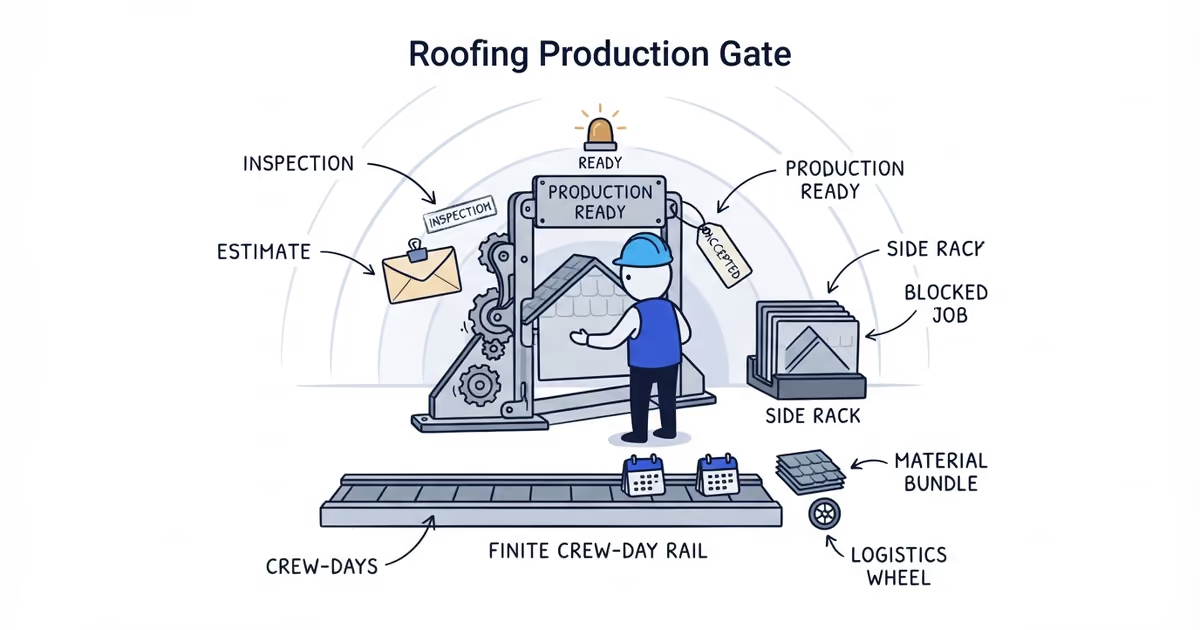
Grow a roofing business by narrowing the residential projects and geography the team can profitably sell and produce, then manage one path from qualified inquiry through inspection, estimate, decision, production readiness, completion, and collection. Use real proof and dated follow-up, carry source cost to completed results, and release demand only when estimator slots, crew-days, materials, logistics, and schedule capacity support it.
Last verified: August 28, 2026 (United States).
Build a roofing inspection-to-production pipeline
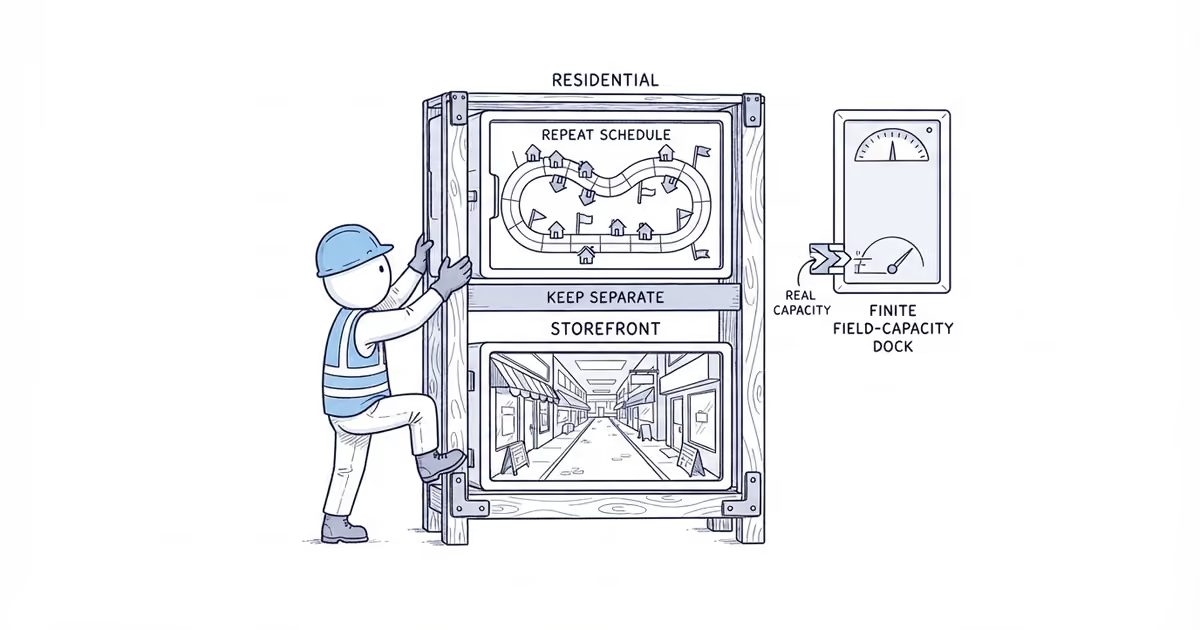
Choose the operating lane before adding demand. Name the residential work the estimator and crews already support: repair, replacement, or a genuinely supported roof-system specialty. Then name the cities, ZIP codes, or travel radius the operation can serve. Do not add commercial roofing, metal, storm work, siding, gutters, solar, or another specialty because the pipeline is quiet.
Use these stages:
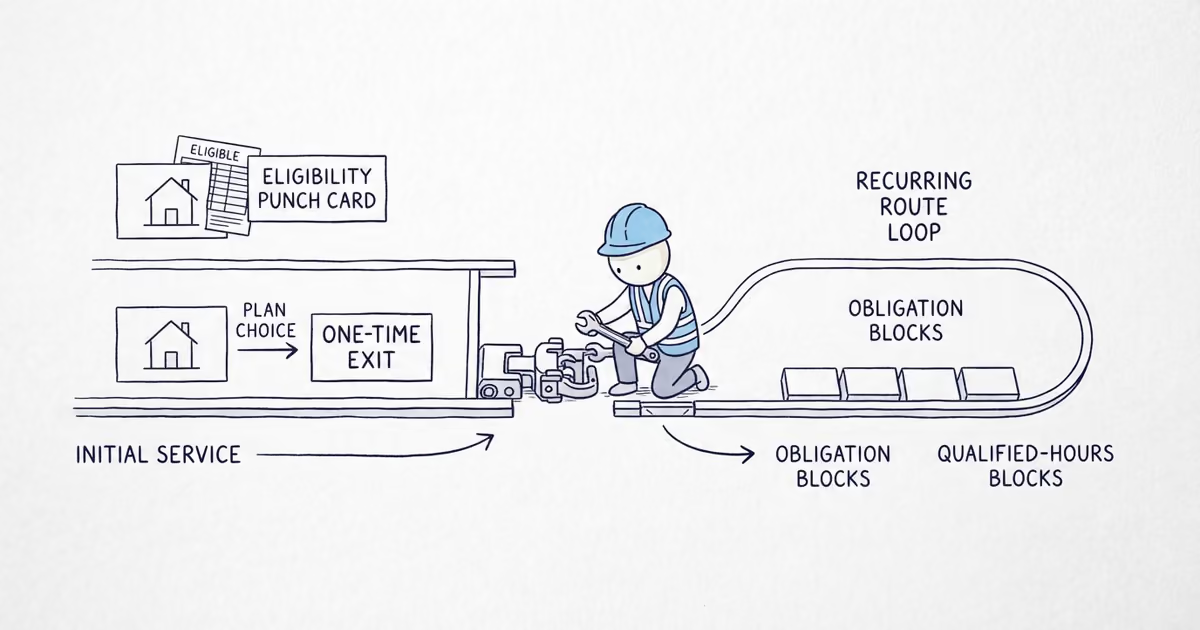
New inquiry -> qualified for service and area -> inspection scheduled -> inspection completed -> estimate required -> estimate delivered -> follow-up due -> accepted, declined, or pending -> production-ready -> scheduled -> completed -> punch-list or callback resolved -> invoiced and collected -> review or referral eligible
Each lead record should carry five groups of fields:
- Source and fit: lead ID, date, source and direct spend, project lane, real service area, response owner, and not-fit reason.
- Inspection: property, contact, timing, access, decision participants, purpose, window, confirmation, reschedule or no-show, and completion.
- Estimate: required status, owner, promised and actual dates, proof pack, validity or recheck status, follow-up, and decision reason.
- Production: accepted date, ready or blocked status and reason, required crew-days, project-lane crew, material and supplier status, logistics or approval owner, schedule window, and customer update.
- Result: completion, punch-list or callback, invoice and collection, reliable collected revenue and gross profit, review eligibility and result, referral result, and final loss or delay reason.
Qualification stays operational. Confirm the property, contact, project type, real service area, timing, access, decision participants, inspection purpose, and next step. Do not use this board to teach inspection, damage identification, coverage, roof access, or safety.
Build roofing lanes and capacity in days 1-14
Move every active lead and estimate into one stage. Add its source and direct spend. Missing information stays marked as missing; do not reconstruct it from memory.
Build a rolling 13-week capacity view with separate lines for inspection slots, estimate-writing capacity, usable crew-days by project lane, accepted jobs, material-ready jobs, supplier dates for current orders, delivery or site logistics where relevant, and the schedule buffer chosen by the owner. Roof systems, project sizes, estimators, and crews are not interchangeable.
Set a compact proof standard for estimates:
- One comparable project with authorized before, during, and after images
- Factual captions describing the work shown
- Relevant process evidence for property protection, communication, cleanup, and closeout
- One genuine attributable review
- Current verifiable credentials where applicable
- Only the written workmanship or manufacturer warranty terms that truly apply
The estimate itself remains the owner of scope, materials, allowances, exclusions, schedule, payment terms, and applicable warranty language. This growth board owns the handoff, proof, decision status, and follow-up, not takeoffs, pricing, or estimate construction.
When the inspection record is ready for takeoffs, scope, options, and customer presentation, the roofing estimate guide helps build the detailed estimate without turning this growth board into a pricing worksheet.
Audit the Google Business Profile, locations, service areas, project pages, answers, reviews, and storm claims. Google describes local visibility through relevance, distance, and prominence. Keep identity, services, hours, contact path, and actual service area accurate. Never create a fake office, storm location, or desired-area profile.
Output by Day 14: chosen project and geography lanes, every active item placed in a stage, source fields, a 13-week estimator/crew/material view, a proof-pack standard, and a list of inaccurate public claims to correct.
Fix roofing inspection and estimate follow-up in days 15-30
Set a response process the business can staff. Record received time, acknowledgement, useful human response, owner, source, project type, area, inspection next step, and outcome. Compare similar inquiries inside the same staffed windows; do not impose a universal minute target.
An inspection confirmation should state the date and window, property and contact, who is coming, visit purpose, access needs, what the customer receives next, and how to reschedule. It must not promise a finding or insurance outcome.
Hi [name], your roofing inspection for [property] is scheduled for [date/window]. [Name or role] is coming to document the project under our normal process. We need [real access requirement]. After the visit, we will confirm the next step and whether an estimate is required. To reschedule, reply here or call [number].
After a completed inspection, create a business-process handoff. Record the project lane, field documentation attached under company procedure, customer questions and goals, estimate owner, delivery date promised to the customer, proof needed, and next follow-up date. Do not add technical conclusions or claim documentation to a marketing record.
For long decisions, confirm receipt, answer open scope or option questions, agree on the next contact date, follow up on that date, and record accepted, declined, pending, not ready, unreachable, or invalid. Stop when the customer declines or asks not to be contacted. Silence is not permission to manufacture urgency.
Hi [name], I am checking that you received the estimate for [project/property]. Are there any open questions about the written scope or options? Unless you prefer otherwise, I will check back on [real date]. If the project is not moving forward, tell me and I will update the record.
Storm-related demand follows the same inspection and estimate path. For an insurance-adjacent inquiry, record only what the customer reports. Do not advise on filing, coverage, claim value, adjuster strategy, supplements, policy interpretation, deductibles, deductible waivers, or whether insurance will pay. Direct those questions to the carrier or an appropriately qualified adviser.
Output by Day 30: staffed response ownership, inspection confirmation and rescheduling, a named inspection-to-estimate handoff, delivered-estimate follow-up by real next date, aged pending estimates, and storm inquiries held inside the normal documented path.
Build local roofing trust and source tracking in days 31-60
Create pages only for real project lanes and areas. Each should answer who the service fits, how inspection and estimate scheduling works, what proof the customer receives, what can affect timing, and what happens after approval. State where insurance, warranty, financing, licensing, permit, and technical advice sit outside the page.
Use short answers for inspection scheduling, estimate delivery, scope comparison, project-timeline process, property protection, cleanup, proof, applicable workmanship terms, service area, and next steps. Support them with first-party process and project evidence. Google’s people-first content guidance supports useful firsthand material; it does not promise organic rank or AI citation.
If the business has the proof and process but no useful place for homeowners to inspect them, ShiftFlow’s free website setup can turn the real project lanes, service area, photos, reviews, and contact path into a clear local website.
Ask for a review after agreed work and closeout are complete, open issues have a recovery owner, and the customer can describe the experience. Apply one neutral eligibility rule. Never request a positive rating, filter expected criticism, or reward sentiment. Google prohibits review incentives; FTC guidance warns against selective positive-review requests, undisclosed incentives, and fake reviews. Feed complaints into production QA.
Give referral partners a documented handoff. A realtor, property manager, home inspector, general contractor, or another relevant partner should know the accepted project fit, real service area, response owner, inspection next step, permitted update, and outcome boundary. Do not prescribe compensation, kickbacks, insurer arrangements, or legal terms.
Thanks for referring [customer/property]. The request fits our current [project lane] and service area. [Owner] will contact the customer about the inspection next step by [real window]. With the customer’s permission, we can update you on [allowed update]. We will not discuss insurance or claim outcomes.
Reactivate only from truthful records. Follow up an estimate that remains eligible under its stated process. Contact a past repair customer only when the service history supports the check-in. Ask a completed customer for a referral without pressure. Never infer roof age, damage, storm impact, warranty coverage, or replacement need from marketing data.
Carry each source and its direct spend through qualified inquiries, completed inspections, delivered estimates, accepted jobs, completed jobs, collected revenue, and reliably calculated job gross profit. The FTC’s action concerning deceptive representations about shared home-improvement leads is a practical reason to judge purchased sources by your own completed outcomes, not the seller’s description or raw lead count.
Output by Day 60: accurate project and area pages, authorized proof, a neutral closeout review process, documented partner handoffs, fact-based reactivation, and source records reaching completed inspections and accepted jobs.
Release production-ready roofing work in days 61-90
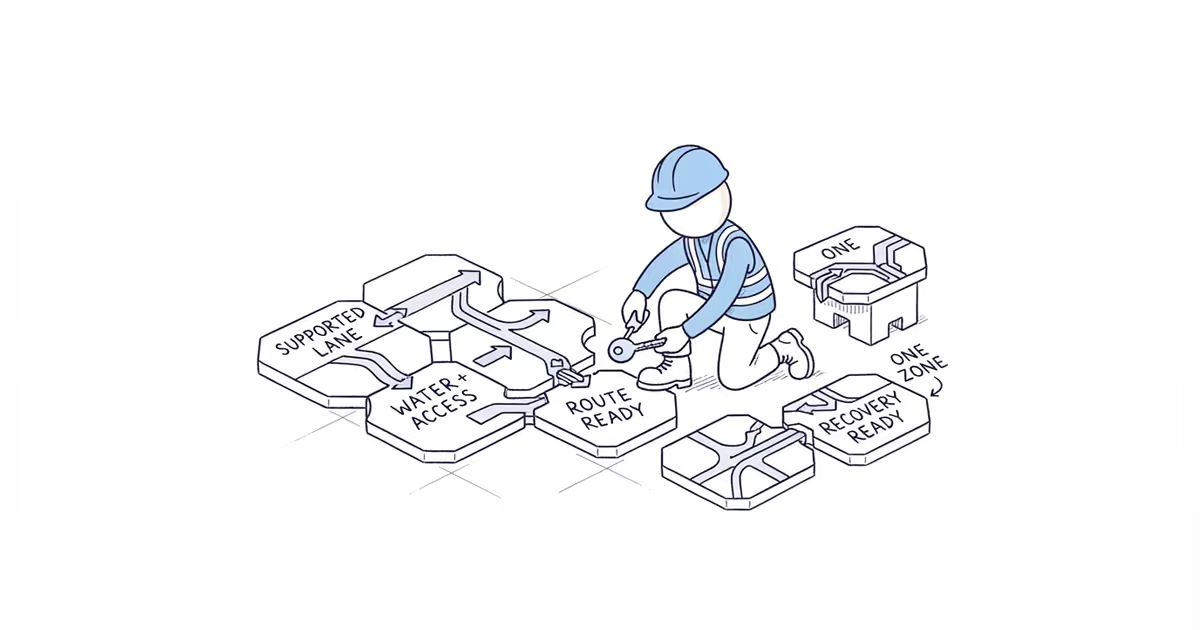
An accepted job is production-ready only when:
- Required customer authorization is in place
- Scope and selections are confirmed
- Required local approvals are assigned or completed as applicable
- Material availability is confirmed against the current order
- Project-lane crew-days and delivery or site logistics are assigned
- The customer has a truthful schedule update
This is an operating gate, not permit, contract, warranty, or legal advice. Keep every accepted-but-blocked job in a separate queue with a named blocker and owner. Do not hide missing selections, approvals, materials, logistics, or customer communication inside the production schedule.
After a verified local weather event, treat the spike as a capacity event, not a different ethical standard. Update staffed phone coverage, inspection slots, real service area, crew and material capacity, and customer-facing timing before increasing promotion. Do not imply every property has damage, manufacture a deadline, guarantee approval, claim insurer-approved status without evidence, promise a free roof or deductible waiver, advertise claim maximization, fabricate damage, or tell every homeowner a replacement is needed. FTC consumer guidance identifies pressure, vague promises, and unverifiable credentials as post-disaster trust concerns; the response is transparent conduct, not fear-based copy.
Reconcile crew-days and material-ready work with the rolling schedule. Review punch-list and callback causes. Compare source spend with completed inspections, accepted jobs, collections, and gross profit only where the accounting record is reliable.
Output by Day 90: accepted jobs split into production-ready and blocked, crew-days reconciled with material status and logistics, quality causes assigned, and one written bottleneck decision.
Use a weekly roofing pipeline and capacity scorecard
Alongside the eight measures below, keep leads and direct spend by source; qualified, scheduled, completed, rescheduled, and missed inspections; useful response; required and delivered estimates; estimate age and decisions; accepted value; material-ready work; scheduled and completed projects; callbacks and punch lists; collections; review requests and results; partner referrals; and loss or delay reasons.
| Measure | Owner-defined formula | What it exposes |
|---|---|---|
| Inspection completion rate | Completed inspections / inspections scheduled in the selected cohort | Whether scheduled volume reaches a decision point; keep cancellation and reschedule reasons |
| Inspection-to-estimate handoff rate | Completed inspections requiring an estimate with a named owner and promised date / completed inspections requiring an estimate | Work lost between field documentation and sales ownership |
| Estimate decision rate | Delivered estimates with accepted or declined decisions / delivered estimates in the cohort | Pending, not-ready, unreachable, expired or recheck, accepted, and declined outcomes |
| Cost per completed inspection | Direct source spend / completed inspections attributed to that source | Source cost at a real sales event rather than at raw lead volume |
| Cost per accepted job | Direct source spend / accepted jobs attributed to that source | What the source cost to create accepted work, not whether the job was profitable |
| Source contribution after direct spend | Reliably attributed collected job gross profit - direct source spend | Source result after direct spend when job gross profit is already reliable |
| Production-ready rate | Accepted jobs passing the documented production-ready gate / accepted jobs in the cohort | Work blocked by scope, selections, approvals, materials, logistics, crew assignment, or communication |
| Approved backlog in crew-days | Crew-days required for accepted production-ready jobs / usable crew-days available in the selected period | The load on the owner’s usable capacity; this is an internal ratio with no universal target |
Use eight bottleneck rules:
- If inquiries are plentiful but qualified inspections are weak, fix project and geography fit or response before buying leads.
- If inspections are scheduled but not completed, fix confirmation, access, rescheduling, ownership, or travel-area fit.
- If completed inspections lack estimate owners or promised dates, fix the handoff before adding inspection demand.
- If estimates remain pending without a real next date or reason, work scope and proof questions without urgency or blanket discounts.
- If accepted work is blocked, resolve the named scope, selection, approval, material, logistics, or communication issue before promising a start.
- If production-ready backlog consumes usable crew-days, slow demand release or add qualified capacity only when quality, supervision, materials, and cash readiness are visible.
- If a source produces cheap leads but few completed inspections, accepted jobs, or collected gross profit, judge the lower funnel instead of defending cost per lead.
- If storm demand exceeds phone, inspection, material, or production capacity, publish truthful limits and work the queue before expanding promotion or geography.
Frequently asked questions
How long should I follow up on a roofing estimate?
There is no universal cadence. Confirm receipt, answer written scope or option questions, agree on a real next date, and record the status after each contact. Stop when the customer declines or asks not to be contacted; keep silence as pending or unreachable under the company’s stated process.
Should I increase roofing marketing after a storm?
Only after a verified local event and a fresh capacity check. Confirm staffed phone coverage, inspection slots, real service area, material status, crew-days, and customer timing first. Never imply every roof has damage or use a storm to promise insurance approval, a waived deductible, or a replacement deadline.
When should I add another roofing crew?
Consider qualified capacity only when production-ready backlog repeatedly consumes usable crew-days and supervision, materials, logistics, quality control, and cash readiness support another crew. Accepted jobs blocked by scope, approvals, selections, or materials do not prove a crew shortage.
What not to add to a roofing business yet
Do not add a new ZIP code, storm campaign, paid source, project specialty, estimator, crew, supplier commitment, or schedule promise until the board shows the matching inspection, estimate, production, material, quality, and cash capacity.
- local-seo-foundations
- how-to-grow-a-roofing-business
- how-do-i-grow-a-roofing-business
- roofing-business-growth
- how-to-get-roofing-leads
- roofing-estimate-follow-up
- roofing-production-capacity