How do I grow an HVAC business?
Learn how to grow an HVAC business with a 90-day plan for repair, replacement, and maintenance demand, backed by technician, truck, and install capacity.
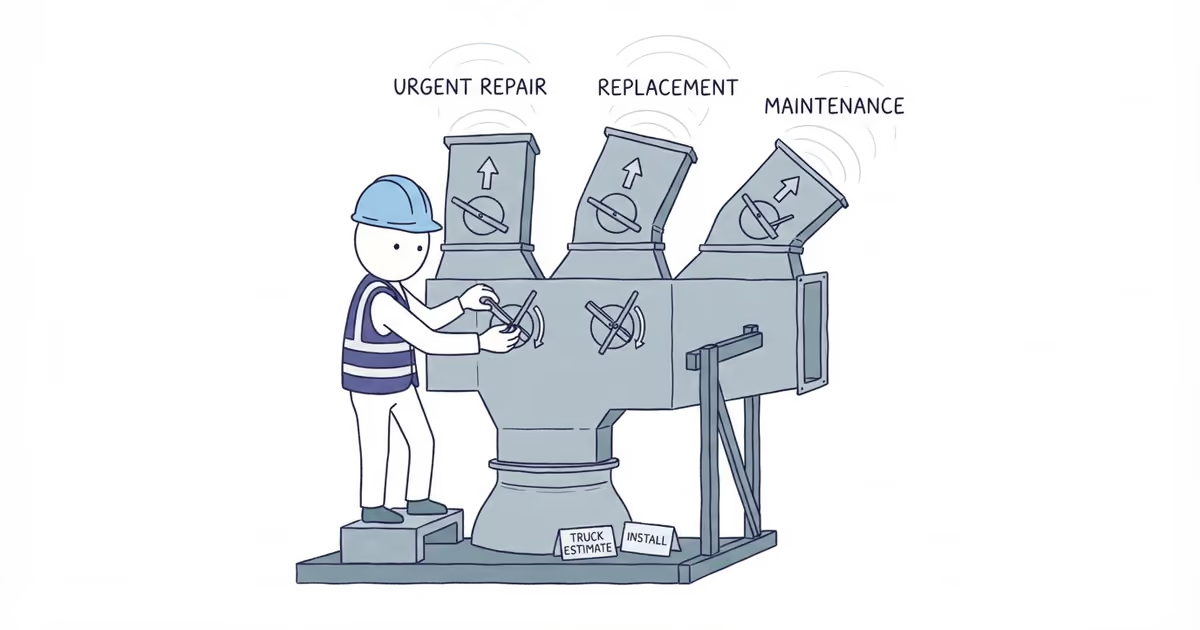
Grow an HVAC business by managing three demand lanes: urgent repair, planned replacement, and recurring maintenance agreements. Match each lane’s seasonal demand to qualified technician hours, equipped trucks, estimate capacity, and install days. More calls do not help when nobody can respond, estimates lack an owner, maintenance visits are overdue, or the install calendar is full.
Last verified: August 28, 2026 (United States).
Manage urgent repair, replacement, and maintenance demand
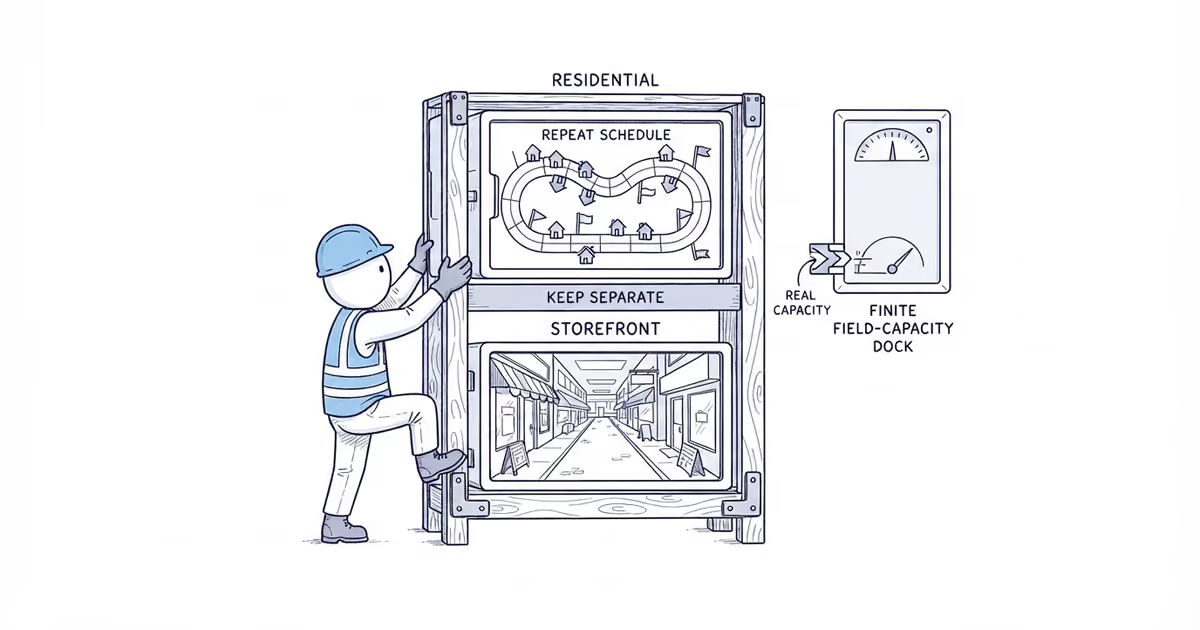
Do not combine all HVAC revenue into one growth number. The work reaches the company differently and consumes different capacity.
| Demand lane | Its job | Workflow to protect | Capacity to watch |
|---|---|---|---|
| Urgent repair | Capture time-sensitive demand and create an accurate equipment and service history | Monitored contact, useful human response, qualification, triage, dispatch decision, arrival window, job outcome, follow-up | Qualified service-technician hours and appropriately equipped truck hours |
| Planned replacement | Turn a documented field finding or customer request into clear options and a decision | Diagnostic handoff, estimate owner, scope and proof, promised next step, follow-up, accepted or declined outcome | Diagnostic capacity, estimate slots, and install-crew days |
| Maintenance agreements | Create scheduled obligations, renewal opportunities, and work that can be placed deliberately around seasonal demand | Eligibility, documented offer, scheduled visits, fulfilment, renewal notice, renewed, declined, or lapsed status | Qualified hours and truck time inside the promised service window |
None is automatically the best lane. Repair may fill service capacity while install days remain open. Replacement estimates may pile up while technicians stay busy. Agreement sales may look healthy while promised visits fall overdue. Keep the lanes separate so the board shows the actual constraint.
Build an HVAC demand and capacity baseline in days 1-14
For each lane, record leads, booked work, completed work, field hours, collected revenue, and gross profit only where existing records support it. Do not use an industry mix or reconstruct missing numbers.
Build a rolling 13-week view with separate rows for:
- Qualified service-technician hours
- Appropriately equipped truck hours
- Replacement estimate slots
- Service blocks and install-crew days
- Maintenance visits already due or promised
- Seasonal or after-hours coverage the company has actually staffed
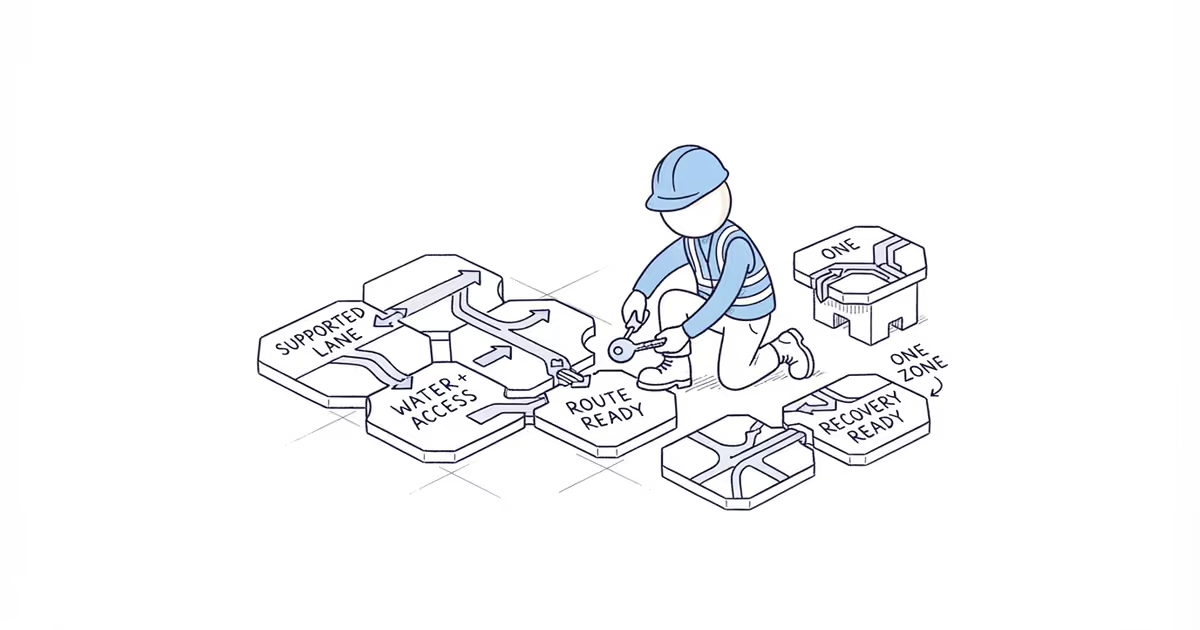
For planning, define deliverable field capacity as the smallest currently usable constraint among qualified technician hours, appropriately equipped truck hours, and scheduled service or install blocks. This is an internal decision framework, not an industry formula. A service technician, estimator, and install crew are not interchangeable simply because they all have open time.
Assign an owner and backup to every monitored inquiry window. Audit open replacement estimates by age and promised next step. List active agreements, visits due, renewal dates, and lapsed agreements. Then compare those operating records with the company’s Google Business Profile, real hours, service area, emergency claims, service pages, proof, and reviews.
Google’s current guidance says local results are primarily based on relevance, distance, and prominence. Keep the real-world name, services, service area, hours, phone path, and website consistent with the operation. A broader service area does not guarantee visibility, and a complete profile does not guarantee rank.
Output by Day 14: a three-lane baseline, a 13-week capacity board, named response owners, an aged estimate list, an agreement-obligation list, and a record of any public claim the operation cannot fulfil.
Fix HVAC intake and estimate follow-up in days 15-30
Make urgent HVAC intake truthful
The urgent-repair workflow is:
- Inquiry reaches a monitored channel.
- The company records received time and sends an acknowledgement.
- A useful human response confirms the known facts, service-area fit, priority, and next step.
- The assigned person makes the triage and dispatch decision under company procedure.
- The customer receives the real scheduled window or another truthful outcome.
- The job outcome and follow-up are recorded.
An automatic acknowledgement is not a dispatch. Do not diagnose equipment by message or tell the homeowner how to handle a hazard. Route urgent, same-day, routine, and after-hours inquiries to different truthful next steps. Use a response standard the staffed team can meet rather than publishing a universal minute promise.
Track received time, acknowledgement time, useful human response time, owner, priority, next step, and outcome. If an after-hours channel only records a message for the next staffed window, do not call the service 24/7.
Use an acknowledgement like this:
We received your HVAC service request for [address or area]. Our next staffed response window is [real window]. A team member will contact you to confirm the details and whether dispatch is available. This message does not confirm an appointment or diagnose the system.
Give every HVAC replacement estimate an owner
Create a diagnostic-to-estimate handoff that records the customer’s stated problem and goals, the technician’s documented findings under company procedure, relevant equipment details, whether replacement options were requested, the estimate owner, the promised next step, and current follow-up status. This is a record handoff, not a technical repair rule.
The replacement path should identify the proposed equipment and major scope, explain what is included and excluded, and state permits, warranties, schedule, commissioning, and disposal only as they truly apply. Present understandable options without pressure. Use real install proof with permission. Keep full estimate construction and pricing outside this growth board.
When that handoff is complete and the owner needs to turn it into a customer-ready scope and options document, the HVAC estimate guide shows what to organize before pricing and presentation.
Follow up in four steps: confirm receipt and the decision path, answer open scope questions, follow up on the date you stated, then record accepted, declined, pending, unreachable, or withdrawn. Stop when the customer declines or asks not to be contacted.
Hi [name], I am checking that you received the [specific system or scope] estimate. The next step is [real decision or scheduling step]. What scope or option questions can I answer? I will follow up on [stated date] unless you prefer otherwise.
Output by Day 30: staffed intake paths by priority, recorded response events, a named diagnostic-to-estimate handoff, a replacement proof and option check, dated follow-up, and no unsupported emergency or 24/7 claim.
Build HVAC maintenance demand in days 31-60
Define the maintenance agreement before promoting it. Record the equipment or property covered, visit cadence, included work, exclusions, scheduling window, customer access responsibilities, renewal method, and any priority or response benefit the company can consistently deliver. Do not assume every plan needs the same visit count or benefits.
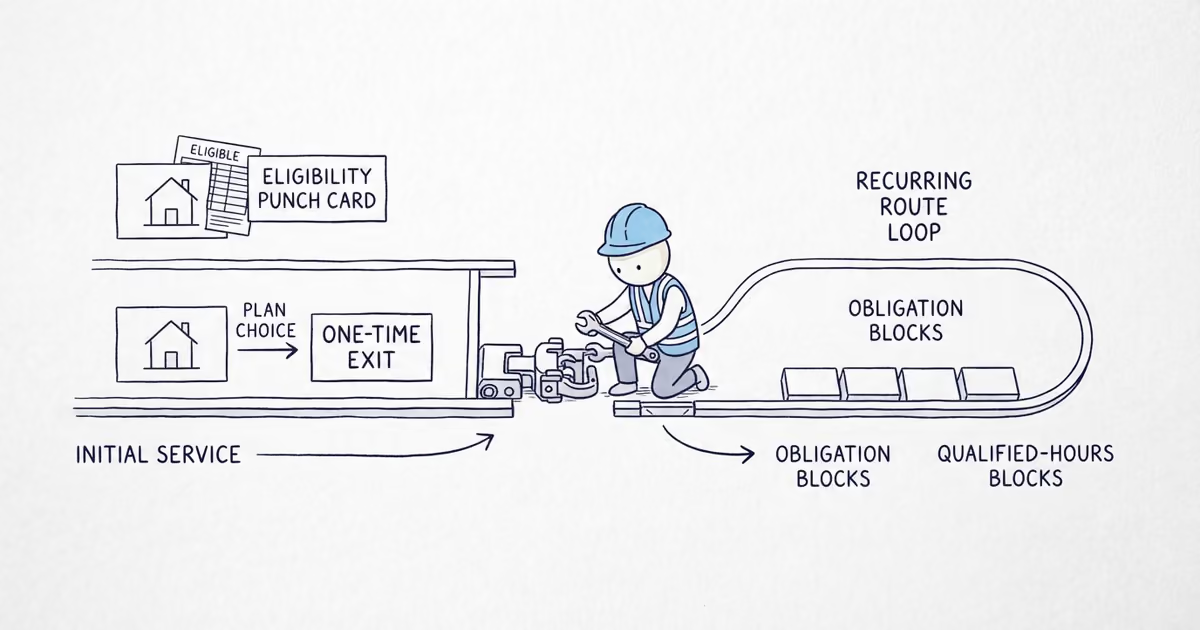
Identify eligible repair and install customers under one documented rule. Make the agreement offer after the immediate job decision, place included visits against real capacity, track fulfilment, send a notice before the agreement ends, and record renewed, declined, or lapsed. A sold agreement with no room for its visits is an overdue obligation in waiting.
Use actual history when contacting a lapsed customer:
Hi [name], our records show that the maintenance agreement for [covered equipment or property] ended on [date], and the last recorded service was [service/date]. If you want to review the current maintenance option and available scheduling window, reply here. If not, tell us and we will close this reminder.
Give each lane its own useful website path. Repair pages should state real coverage, hours, intake, and next steps. Replacement pages should explain the estimate process, decision steps, scope proof, and follow-up. Maintenance pages should explain included visits, exclusions, scheduling, renewal, and customer responsibilities.
Answer common questions directly: the real service area, staffed hours, emergency availability, what happens at a diagnostic visit, estimate timing, the repair-versus-replacement decision process, agreement inclusions, renewal, equipment documentation, and the next customer step. Support those answers with real technicians and trucks, actual process details, permission-cleared project photos, accurate credentials, written options, and genuine customer evidence.
Google’s people-first content guidance supports useful, first-hand explanations; it does not promise search placement or an AI citation. ENERGY STAR’s homeowner maintenance checklist is a useful official reference for describing real professional checks and customer responsibilities, but it is not a reason to publish technical procedures or savings claims the company cannot support.
If those repair, replacement, and maintenance facts still appear incorrectly or not at all in ChatGPT and Google AI, ShiftFlow’s AI search optimization can identify the public information gaps to correct.
Use a neutral review rule tied to the job: after a completed repair, after a completed installation when the customer can speak to the experience, or at a suitable maintenance relationship milestone. Do not ask only customers expected to be positive, request a particular rating, tie an incentive to sentiment, or ask after every agreement visit. Google supports a direct review-link workflow and prohibits review incentives. FTC guidance also warns against selective positive-review requests, undisclosed incentives, and fake reviews. Route service complaints into recovery instead of filtering those customers out.
Invite satisfied customers to refer someone without pressure. Revisit replacement estimates only while they remain eligible for follow-up. Remind installed-system customers about the real maintenance path, and give reactivation contacts a clear opt-out.
Output by Day 60: maintenance offers linked to fulfilment capacity, scheduled visits, renewal and lapsed states, three accurate service paths, direct answers and first-hand proof, plus neutral review, referral, and history-based reactivation workflows.
Balance HVAC demand and field capacity in days 61-90
Compare the three-lane mix with the Day-14 baseline and the next 13 weeks. Clear or honestly reschedule overdue maintenance obligations. Review replacement estimates by age and next action. Route callbacks and review complaints to a named process fix.
Then name the bottleneck: lead flow, monitored intake, diagnostic handoff, estimate conversion, agreement renewal, qualified technician hours, equipped trucks, estimate slots, or install days.
Add technician capacity only when qualified work repeatedly exceeds qualified hours and onboarding and supervision are ready. Add or replace a truck only when usable vehicle capacity is the demonstrated smallest constraint. Do not buy either to fix missed calls, weak estimate follow-up, or maintenance visits the schedule has not placed. If install days are full while service capacity is open, protect the distinction; another repair booking does not create an install day.
Output by Day 90: cleared obligations, an aged estimate decision, an updated demand mix, and one written bottleneck decision with its next action.
Use a weekly HVAC growth scorecard
Start with leads, bookings, completed work, field hours, collected revenue, and gross profit where reliably tracked, split by repair, replacement/install, and maintenance. Add missed or abandoned inquiries, callbacks, review requests and results, qualified technician hours, truck availability, estimate slots, install days, and backlog.
Use these owner-defined measures. Keep each cohort and eligibility rule consistent.
| Metric | Definition | Decision it supports |
|---|---|---|
| Demand mix | Booked field hours, collected revenue, and reliably tracked gross profit, each split by lane | Shows what fills the calendar and produces results without prescribing an ideal mix |
| Useful response time | Useful human response time minus the time an inquiry reached a monitored channel | Compares like priorities and staffed windows; acknowledgement stays separate |
| Diagnostic-to-estimate handoff rate | Eligible diagnostic visits with an estimate owner and promised next step / eligible visits where replacement options were requested or identified under company process | Finds opportunities lost between field documentation and estimate ownership |
| Replacement estimate decision rate | Estimates with an accepted or declined decision / estimates delivered in the selected cohort | Keeps pending, unreachable, and withdrawn outcomes visible |
| Maintenance start rate | Eligible customers who start an agreement / eligible customers receiving the documented offer | Tests the offer and handoff against the company’s eligibility rule |
| Maintenance renewal rate | Agreements renewed / agreements reaching a renewal decision in the cohort | Separates renewal from new sales and agreements not yet due |
| Agreement fulfilment | Included visits completed or scheduled inside the promised window / included visits due in that window | Stops agreement sales from outrunning delivery |
| Deliverable field capacity | The smallest usable constraint among qualified technician hours, equipped truck hours, and scheduled service or install blocks | Identifies the bottleneck while keeping service and install capacity separate |
If urgent inquiries lack an owner, fix coverage before buying emergency leads. If eligible diagnostics lack an estimate owner, fix the handoff before chasing replacement demand. If estimates stall on unclear scope or proof, repair that path rather than adding pressure or a blanket discount. If agreement visits are overdue, stop accelerating agreement sales. If all deliverable capacity is open but bookings are weak, fix the weakest lane’s intake, proof, follow-up, referral, or reactivation step before widening the territory.
Frequently asked questions
Should I advertise 24/7 HVAC service?
Only when a staffed answer-triage-dispatch path can deliver the promise. A message recorded for the next staffed window is not 24/7 dispatch. Keep the profile, website, phone path, and customer acknowledgement aligned with the real operation.
When should I hire another HVAC technician?
Hire only when qualified work repeatedly exceeds available qualified hours and onboarding and supervision are ready. If the constraint is missed calls, unowned estimates, truck availability, or full install days, adding a technician may not solve it.
Can HVAC maintenance agreements fill the slow season?
They can help shape shoulder-season work when the company’s call history and booked obligations support that plan. Reserve capacity for every included visit first. A sold agreement creates a fulfilment and renewal obligation, not guaranteed demand at the ideal time.
What not to add to an HVAC business yet
Do not add a wider service area, adjacent trade, extra lead spend, 24/7 claim, new truck, technician hire, aggressive replacement offer, or maintenance-plan push until its response coverage, proof, fulfilment, follow-up, demand, and capacity condition is visible on the board.
- local-seo-foundations
- how-to-grow-an-hvac-business
- how-do-i-grow-an-hvac-business
- hvac-business-growth
- hvac-marketing-strategy
- hvac-maintenance-agreements
- hvac-technician-capacity