How do I qualify leads before giving a free estimate?
Qualify leads before a free estimate with five job-fit checks, practical intake questions, and clear rules to book, request details, or decline the work.
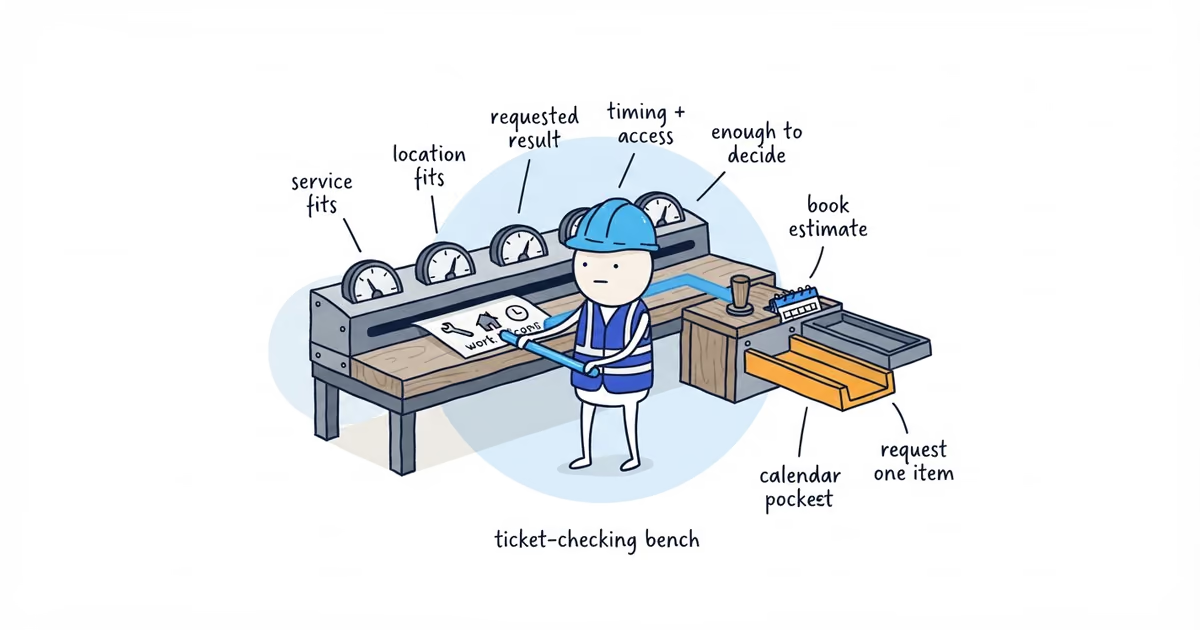
Before you offer a free estimate visit, confirm five things: the work fits your services, the job is inside your service area, the customer can describe the result they want, the timing and access are workable, and you have enough information to choose the next step.
That does not mean deciding whether someone “looks serious.” It means checking whether the job is ready for your unpaid travel and estimating time.
Use three possible outcomes:
- Book the estimate when the basic job facts are clear.
- Request one missing item when a useful answer, photo, or measurement would make it ready.
- Decline the job when the work is outside what you actually do or where you actually go.
Check five things before offering a free estimate
1. Does the work fit your services?
Start with the job, not the customer.
Ask:
What would you like us to repair, replace, clean, build, or improve?
“I need some work done” is not enough. “I need the exterior trim and front door repainted” gives you something to qualify.
If the request includes work you do not perform, say that early. Do not book a visit hoping the job will turn into something else.
2. Is the job inside your working area?
Ask for the job address or at least the ZIP code before choosing a time.
What is the address where the work would be done?
Use the same service-area rule for every inquiry. Make any exception deliberately, based on the work and travel involved.
3. Is the requested result clear enough?
Customers often describe a symptom instead of the result they need. “The room looks rough” could mean patching, painting, trim repair, or all three.
Ask one question that turns the request into an outcome:
What would need to be completed for you to consider the job finished?
You are not writing the scope yet. You are checking whether there is a real, understandable job to estimate. If one missing detail would settle that, ask for it rather than scheduling around a guess.
4. Do the timing and access work?
Ask:
When would you like the work completed, and is there anything we need to know about getting access to the job area?
Work outside your availability is a timing mismatch, not proof of a bad lead. Also confirm whether a tenant, property manager, homeowner, or another decision-maker needs to be present before the scope can be agreed.
5. Do you have enough information for the next step?
The next step does not always have to be a site visit. You may need one more answer, a few useful photos, or confirmation about which option the customer wants considered.
Ask only for information that changes what you do next. Do not send a ten-question form when one missing answer is holding up the decision.
Use these lead qualification questions
For a phone call or text inquiry, this is enough to start:
- What would you like done?
- Where is the job?
- What result are you looking for?
- When would you like it completed?
- Is there anything we need to know about access or who needs to approve the work?
- Is there one detail, photo, or choice we still need before deciding the next step?
Keep it a normal job conversation. Tell the customer why you are asking when the reason is not obvious.
Decide whether to book, request information, or decline
| What you know | Next step | What to say |
|---|---|---|
| Service, location, requested result, timing, and access all fit | Book the estimate | “This sounds like work we handle. Let’s find a time to look at it properly.” |
| The job may fit, but one useful detail is missing | Request that item | “Before I book the visit, could you send me [missing item]? Once I have it, I can tell you the right next step.” |
| The work or location is outside your stated service | Decline clearly | “Thanks for checking with us. We do not handle [work/location], so I do not want to take your time with an estimate we cannot complete.” |
Do not use neighborhood, accent, appearance, age, family status, or a guess about someone’s finances as a substitute for job facts. Qualification should make your process consistent, not give personal assumptions a respectable label.
Lead qualification example before a free estimate
A customer sends this message:
I need a price to fix up the walls downstairs.
You know the general type of work, but not whether they want patching, painting, or both. Instead of rejecting the inquiry or booking immediately, ask:
Are you looking for the damaged areas to be patched only, or would you like the walls prepared and repainted as well?
The customer replies that they want three damaged areas repaired and the living room repainted. The address is in your service area, their timing works, and they can provide access. The inquiry is now ready for the next step.
One useful answer changed the visit from a guess into a useful estimate appointment.
Free estimate qualification checklist
Before adding a free estimate to the calendar, make sure you can answer:
- What work is the customer asking about?
- Is it a service you perform at that location?
- What result do they want?
- Do their timing and access work?
- Is the next step a visit, one missing item, or a clear decline?
If one answer is missing, ask for that answer. If the facts fit, book the estimate. If they do not, decline promptly and give the customer a clean answer instead of wasting both sides’ time.
Once the lead is ready and you have walkthrough notes or measurements, use the contractor estimate guide to turn those facts into a clear scope, allowances, exclusions, and customer total.
Frequently Asked Questions
How do I know if a lead is serious?
Do not try to predict the customer’s behavior. Check whether they will provide the basic job facts, answer a useful follow-up question, and agree to a clear next step. That tells you whether the inquiry is estimate-ready without relying on personal assumptions.
What if the customer will not provide the missing information?
Explain what you need and why it affects the next step. If the information is necessary to decide whether the work fits or to plan a useful visit, leave the inquiry unbooked until you receive it. Do not guess just to fill the calendar.
- pricing
- how-to-qualify-leads-before-free-estimate
- how-to-qualify-leads-before-a-free-estimate
- lead-qualification-checklist
- contractor-lead-qualification-questions
- how-to-know-if-a-lead-is-serious
- free-estimate-qualification