What should I say to a one-star review with no comment?
Three replies for a rating with nothing written on it, a way to work out which job it belongs to, and why leading with an apology is the expensive move here.
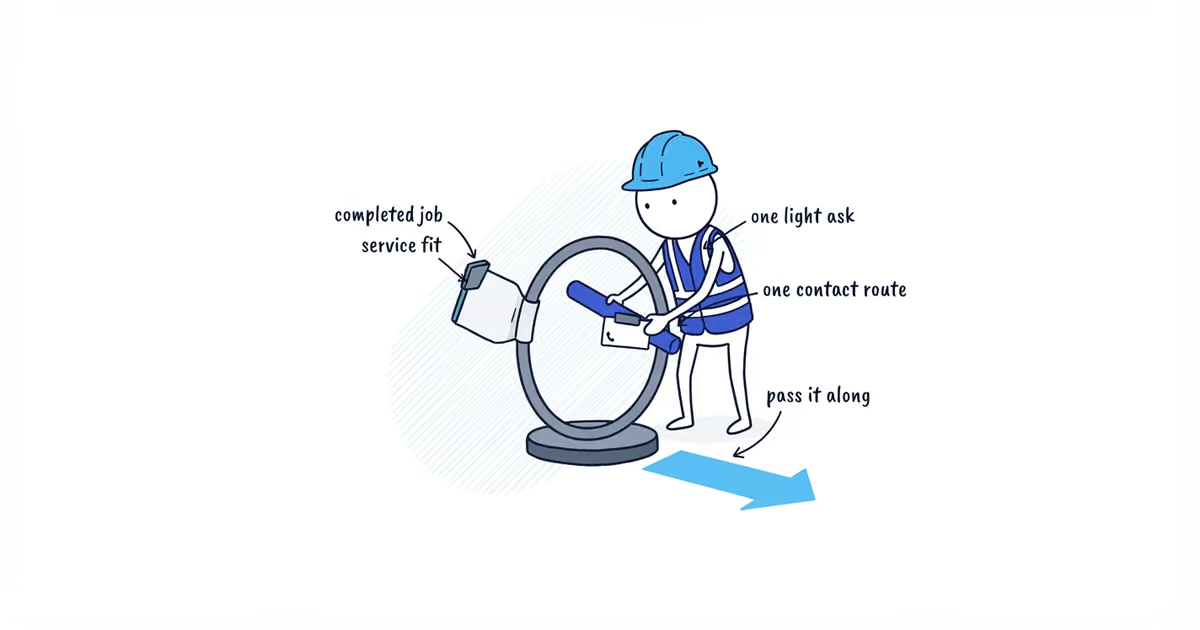
Say that you can see the rating, that you’d like to know what fell short, and give them a number that gets answered. Do not apologise. There are three versions of that reply below, and which one you use depends on the one thing worth doing first: working out which job it was.
That order matters more here than anywhere else in review handling. With a written complaint, an apology is aimed at something. Under a one-star review with no comment there’s nothing on the page except your reply — so “we’re so sorry we let you down” becomes the only account of the job anyone can read, and every future customer takes your word for it that something went wrong.
Google documentation checked: August 10, 2026 (United States).
How to find out who left the 1-star review
You have more to go on than it looks. Three passes, in this order.
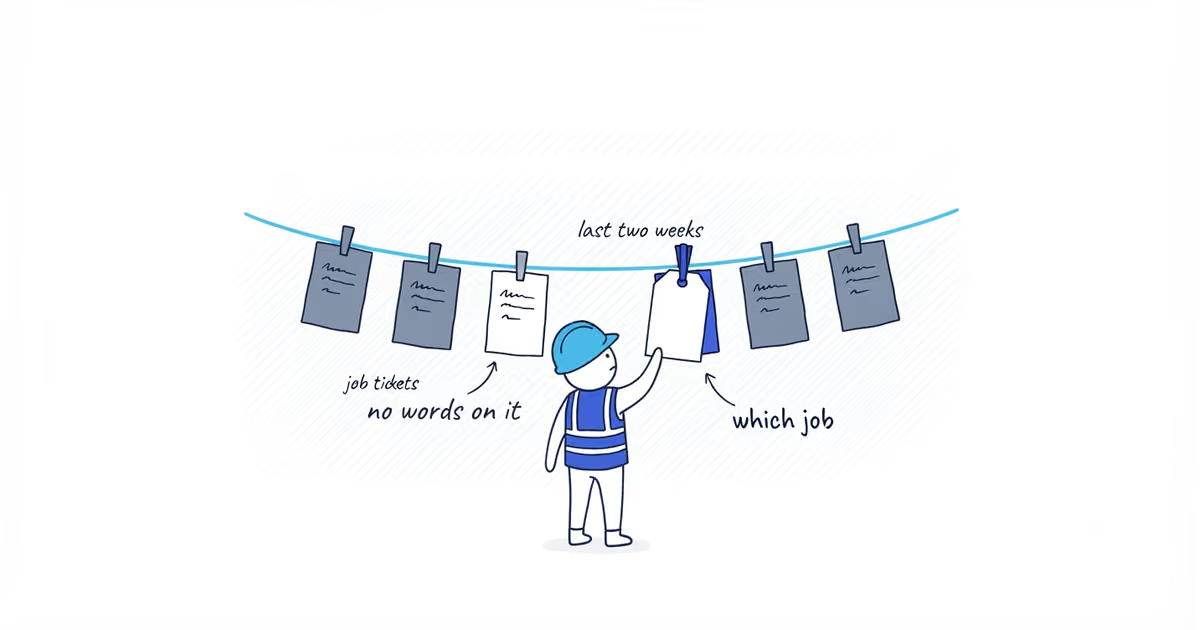
1. Turn the review’s age into a window. Google shows you how long ago the rating was left — “2 weeks ago” — not the day it was posted, and that label rounds. So don’t go looking for one date. Pull your jobs for roughly two to three weeks back and work with the whole span. Most advice on this subject says to check the review date. There isn’t one to check.
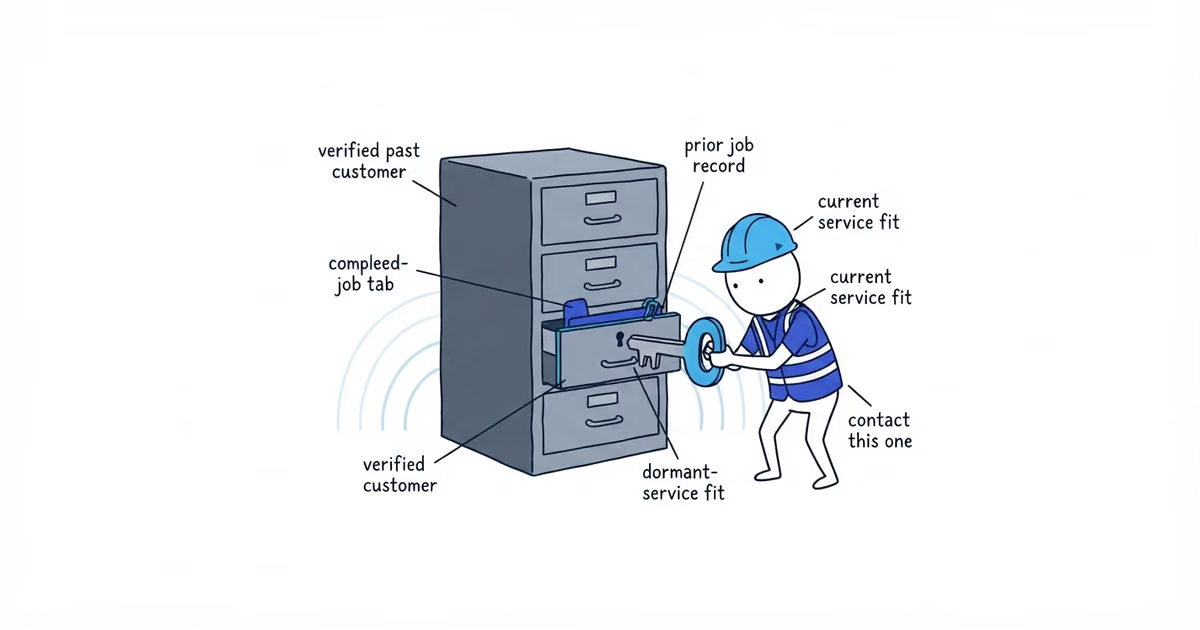
2. Match the name against your paperwork. Run the display name past invoices, text threads, and the name the job was booked under. Expect partial matches — first names only, a spouse’s name, a name that’s obviously the account holder rather than whoever met you at the door. If two or three jobs in that window are plausible, that’s still a much shorter list than you started with.
3. Look at the reviewer, not just the review. Open their profile. No photo, no other reviews anywhere, and a name matching nobody you’ve served is the common shape of a rating that didn’t come from a customer. It’s not proof — plenty of real people review once and never again — but combined with an empty search of your records it tells you which of the three replies below to write.
What to say to a 1-star review with no comment
| What the pass turned up | What to write |
|---|---|
| The job, and you can guess what went wrong | Name the job and the date, say you’d rather hear it from them than guess, give a number |
| The job, but no idea what went wrong | Say you can see the visit but not what fell short, and that you’d like to know |
| No record of this person at all | Say plainly you can’t find a matching job, and give them a way to correct you |
You found the job and you have a fair idea:
Hi [Name] — [Your name] from [Business]. I can see we were out to [replace the disposal] on [the 14th]. I’d rather hear what went wrong from you than guess at it. I’m on [555-0142] and I’ll pick up.
You found the job and you’re stuck:
Hi [Name] — [Your name] from [Business]. I can see we were out to you on [the 14th], but not what fell short. I’d genuinely like to know. [555-0142] gets me directly.
You found nothing:
[Business] here. We’ve been through our records and can’t find a job matching this name. If we have worked for you and it’s booked under something else, ring us on [555-0142] and we’ll look again.
Note what none of them do: apologise. That’s not coldness, it’s sequencing — an apology is the right move once you know what for, and it’s available to you on the phone the moment they call.
If the third one is where you landed and the reviewer’s profile is empty as well, that’s the point at which reporting becomes worth considering, and our fake review removal guide covers what Google will and won’t take down.
Should you apologise for a rating with no comment
Every guide on this topic tells you to lead with an apology. It’s decent advice for a review with text and poor advice for a bare rating, for a reason that’s easy to miss.
A reader arriving at your profile sees one star, no explanation, and your reply. If your reply says you’re sorry the customer had a bad experience, you have just confirmed there was one. You’ve supplied the missing complaint on the complainant’s behalf, and it now reads as established fact rather than an unexplained rating from someone who may have tapped the wrong star.
The neutral version costs you nothing. “I can see the job, I don’t know what went wrong, here’s my number” reads as a business paying attention. If it turns out you did let them down, you apologise properly on the call, where it belongs — and if they update the review afterwards, the whole arc is visible to everyone who comes later.
Frequently asked questions
Can I get a rating with no comment removed?
It’s the hardest kind. Removal requires the review to breach one of Google’s content policies, and a bare rating gives you almost nothing to point at — there’s no text to be off-topic, abusive, or fabricated. Google is also explicit that “Do not report a review just because you disagree with it or dislike it.” If you can show the reviewer isn’t a customer or has a connection to a competitor, that’s a different argument and worth making.
Is a one-star with no words usually fake?
Don’t start there. Plenty of genuine customers rate and never write, especially from a phone. The reviewer’s profile tells you more than their silence does.
Should I reply at all, if there’s nothing to reply to?
Yes. An unanswered one-star with no explanation is the only version of that story on the page. Two lines showing you looked into it changes what a reader concludes from the same star.
Sources
- google-reviews
- one-star-review
- no-comment-review
- review-response
- home-services