

Should I Collect a Deposit Before Starting a Job?
Learn when to collect a contractor deposit before starting a job, check legal limits, calculate upfront exposure, and set clear progress-payment milestones.
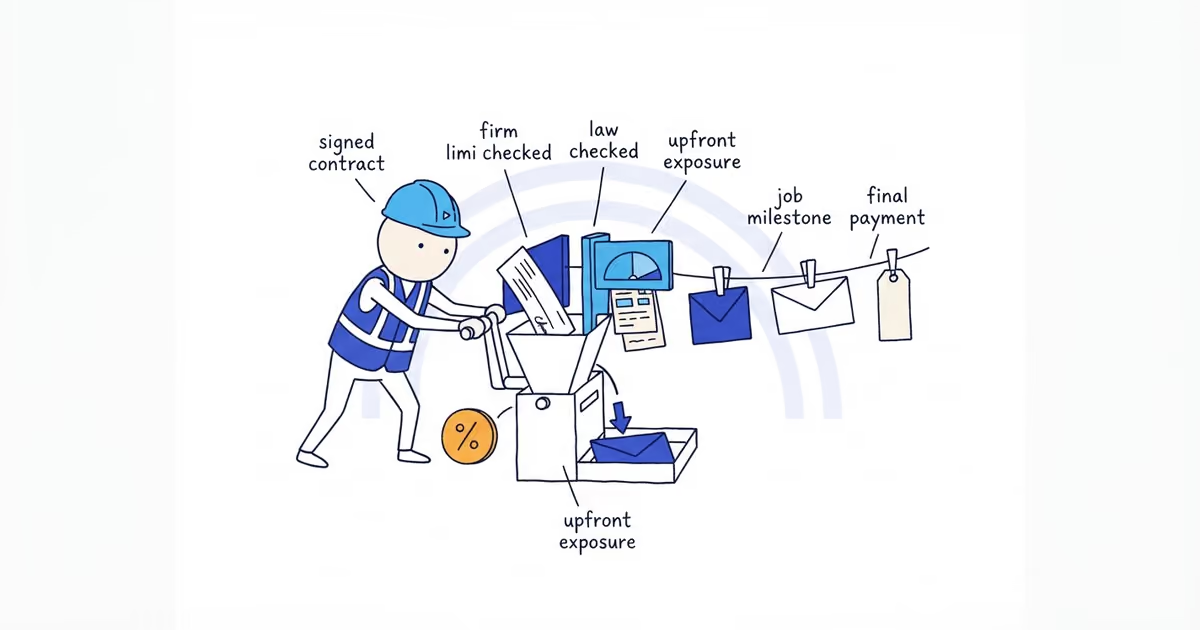
Collect a deposit when the job creates a real commitment before work begins and the rules governing that job allow it. Small same-day work may need no deposit. A custom-material or longer project may need a lawful deposit followed by payments tied to completed milestones.
Do not choose the amount from a universal rule such as 10%, one-third, or 50%. For US residential work, the allowed amount and required contract language can depend on the state, locality, trade, contract type, and how the agreement was made.
Last verified: August 25, 2026 (United States; California, Massachusetts, and Maryland home-improvement examples).
Check the rule that applies to the job
Three official state sources show why a nationwide percentage is unsafe:
| Official guidance | Rule covered by the source |
|---|---|
| California Contractors State License Board | For a home-improvement job, the down payment cannot exceed $1,000 or 10% of the contract price, whichever is less, excluding finance charges. The CSLB says there is no exception for special-order materials. |
| Massachusetts home-improvement contract guidance | An advance deposit cannot exceed the greater of one-third of the total contract price or the actual cost of special-order or custom-made material or equipment that must be ordered before work starts. |
| Maryland Home Improvement Commission | A contractor cannot accept more than one-third of the contract price as a deposit and may not accept payment until the contract is signed. |
These rules cover the home-improvement work described by each authority. They are examples of how rules differ, not three options a contractor can choose from.
For the actual job, identify the location, contract type, trade or license category, required notices, cancellation rights, deposit cap, and any progress-payment restrictions. Check the applicable licensing board, consumer authority, statute, and required contract form. Get qualified local advice when the answer is unclear.
Match the payment structure to the real commitment
Once the legal limit is known, list what the business must commit before work starts:
- Custom or nonreturnable materials and the supplier’s cancellation terms.
- Permit or application costs.
- Equipment, delivery, or subcontractor commitments.
- Crew time that must be reserved.
- Supplier credit or a lawful customer-direct purchase that reduces the cash exposure.
This explains why the business wants a deposit. It does not create permission to collect that amount. If the business must commit $8,000 and the legal cap is $1,000, the cap controls. The remaining choices are supplier terms, order timing, a lawful purchase arrangement, a different schedule, or declining the job.
| Job type | Payment structure to consider |
|---|---|
| Small same-day repair with stocked parts | Often no deposit. Use written service terms and collect at completion. |
| Custom or material-heavy job | A lawful deposit may be justified once the contract, cancellation, and order timing are clear. |
| Multi-week project | Use a lawful deposit followed by objective progress payments and a defined final-payment trigger. |
A booking fee, diagnostic fee, retainer, material payment, and deposit may be treated differently. Changing the label does not automatically change the legal treatment.
Tie progress payments to visible work
For a longer project, use milestones the customer and contractor can both identify, such as documented material delivery, completed preparation, approved rough-in, a finished installation stage, or final closeout.
Avoid milestones such as “two weeks after start” or “when the contractor needs cash.” Some jurisdictions restrict how progress payments relate to work or materials, so verify those rules as well.
The agreement should state the dollar amount and trigger for the deposit, how it is applied to the contract price, the cancellation or refund treatment, each progress milestone, and the final-payment event. Use wording like this only as a starting point for local review:
Deposit: $________ due after ______________________________.
The deposit is applied to the contract price as follows: ______________.
Cancellation and refund treatment: ________________________,
subject to the rights and rules governing this agreement.

Progress payment: $________ due after _____________________
has been completed, delivered, and documented as required.

Final payment: $________ due after ________________________.
Do not casually call the deposit “non-refundable.” Cancellation rights, required notices, the signed contract, work already performed, and applicable law may control what can be retained.
Three common job decisions
Same-day repair: A technician uses stocked parts and makes no permit, special-order, equipment, or multi-day crew commitment. Written service terms and payment at completion may be simpler than creating a deposit and refund issue.
Custom-material job: The contractor records the supplier quote, order deadline, cancellation terms, and customer approval. The deposit stays within the governing cap. If it does not cover the supplier’s demand, the contractor changes the purchase arrangement rather than collecting more without authority.
Multi-week project: A bathroom project includes ordered materials, rough-in, inspection, finishes, and closeout. The agreement uses a lawful deposit, then payments tied to documented stages the customer can recognize on the job.
Before taking payment, confirm that the required agreement is signed, notices have been delivered, the order timing respects any cancellation process, the deposit application is clear, and the customer will receive a receipt. Each later payment should point to an objective milestone and the final trigger should match the agreement.
Once the lawful deposit and milestone schedule are set, the contractor estimate guide helps you place them beside the scope, allowances, exclusions, schedule, and change terms in a complete customer document.
Frequently asked questions
How much deposit should a contractor ask for?
There is no safe nationwide percentage. Start with the rules governing the specific job, then choose an amount no higher than the lawful limit and no higher than the documented pre-start commitment it is meant to cover.
Can a contractor charge a non-refundable deposit?
Do not assume the label makes the deposit yours to keep. Cancellation rights, required notices, the signed contract, work performed, and applicable law may control the result.
When should a contractor use progress payments?
Use them when a longer project has distinct stages both parties can verify. Tie each amount to an objective event, subject to the agreement and governing rules.
Sources
- What Is a Contract?, California Contractors State License Board.
- Home Improvement Contract Sample Language, Commonwealth of Massachusetts.
- Home Improvement Contracts, Maryland Home Improvement Commission.
- pricing
- should-i-collect-deposit-before-starting-job
- should-i-collect-a-deposit-before-starting-a-job
- contractor-deposit-before-work-starts
- home-improvement-deposit-limits
- contractor-progress-payment-schedule



