Attendance Tracking for Malaysian F&B and Retail Businesses
How Malaysian F&B and retail businesses run attendance in 2026. Mall multi-outlet reality, EA 1955 closing shifts, kiosk patterns, and the common failures.
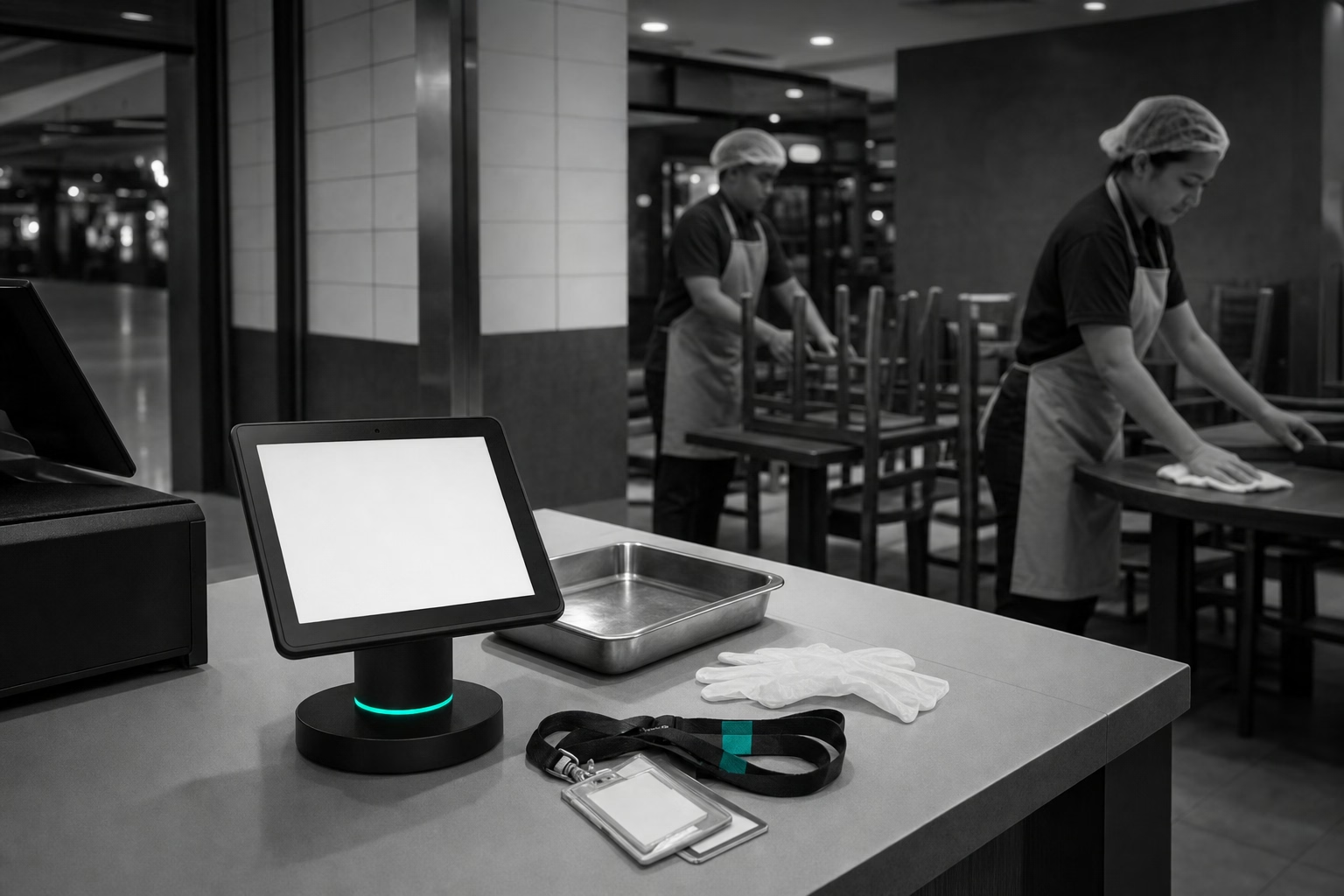
A mamak outlet in PJ opens at 7am for breakfast, runs through teh tarik service until 10am, hits lunch rush 12-2pm, slows in the afternoon, ramps back up for dinner from 6pm, then runs late-night service past midnight. The closing crew clocks out at 1am after the last lock-up. One day. That stretches across the EA 1955 standard 8-hour shift cap, a 10pm shift-allowance trigger many F&B employers apply as company policy, and a rest-day rotation that puts a third of the staff off on Sundays and the rest off mid-week. Now run it across three outlets with part-time staff churning every quarter. The 48.7% of Malaysian employment that sits in MSMEs (DOSM, MSMEs Performance 2024) stops looking like a single market and starts looking like 8.1 million different scheduling problems. What follows is what F&B and retail attendance actually has to handle, where the manual systems fail, and what good looks like.
Operational reality F&B and retail attendance has to fit
Five things make F&B and retail attendance harder than office or field attendance.
Shift patterns cross premium-pay windows. Many Malaysian F&B employers apply a 10pm shift-allowance trigger as company policy. EA 1955 itself does not define a 10pm night-shift threshold for general workers. So a waiter on a 4pm-midnight shift typically earns ordinary rate for the first six hours and the company’s late-shift allowance on the last two. The attendance system has to detect and classify the crossover automatically. Manually tagging it produces errors every single pay period.
Part-time and shift workers churn fast. A typical mall F&B outlet onboards 2-4 new part-timers per quarter and offboards a similar number. Forcing every new hire to install a personal-phone app, register a face, and validate a workflow on day one is friction the manager will eventually skip. The system needs kiosk mode (shared tablet at the counter) so onboarding is a 30-second four-digit PIN, not a 20-minute setup.
The per-location pricing trap. A retail chain or F&B group with three to seven outlets in KL or Selangor pays per-location pricing on some global tools. The bill scales faster than the staff count justifies. Per-seat pricing in MYR (ShiftFlow at RM 14.9, Jibble Premium at ≈RM 18) or per-employee modular pricing (Kakitangan, BrioHR) holds up much better.
Rest day rotation is often weekday, not Sunday. A Sunday-busy retail outlet gives staff weekday rest days. Rest-day OT under EA 1955 pays 2x for hours worked beyond the normal shift on a rest day. The attendance system has to know each worker’s rest day per shift to apply the right multiplier. Generic schedulers default to Sunday and produce wrong OT calculations.
Foreign worker rules apply. A significant share of MY F&B staff are foreign workers. From October 2025, foreign workers became required to contribute to EPF at 2% employer and 2% employee. The payroll handoff has to apply the right contribution rate per worker class. The attendance system feeds the right data into payroll.
Where the manual systems fail
Most MY F&B and retail operators run some combination of three manual systems.
Punch cards. Solve attendance at the office door. Fail at everything else. They cannot detect 10pm crossings, cannot enforce EA 1955 hour caps, cannot tell a Sunday rest day from a weekday rest day, and produce a stack of cards that the bookkeeper retypes into Excel each cut-off. Adequate for compliance on paper. Useless for operational insight.
Fingerprint scanners. Better than punch cards on identity verification. Still cannot capture off-site work (a foreman doing supplier runs, a manager opening a second outlet). Still produces data that needs manual reconciliation against shift schedules. Better than nothing. Worse than mobile-plus-kiosk.
Google Sheets. The honest fallback for the smallest operators. Works for 3-5 staff. Breaks at 10. By 20 staff, the manager is reconstructing Maria’s hours from a WhatsApp message thread.
Each of these failure modes compounds. A 25-staff F&B operator running punch cards plus Excel typically loses 2 to 4 hours of HR time per pay period to reconciliation alone, before any errors even get caught.
What good attendance looks like for MY F&B and retail
Three elements separate operational from theatrical attendance in this industry.
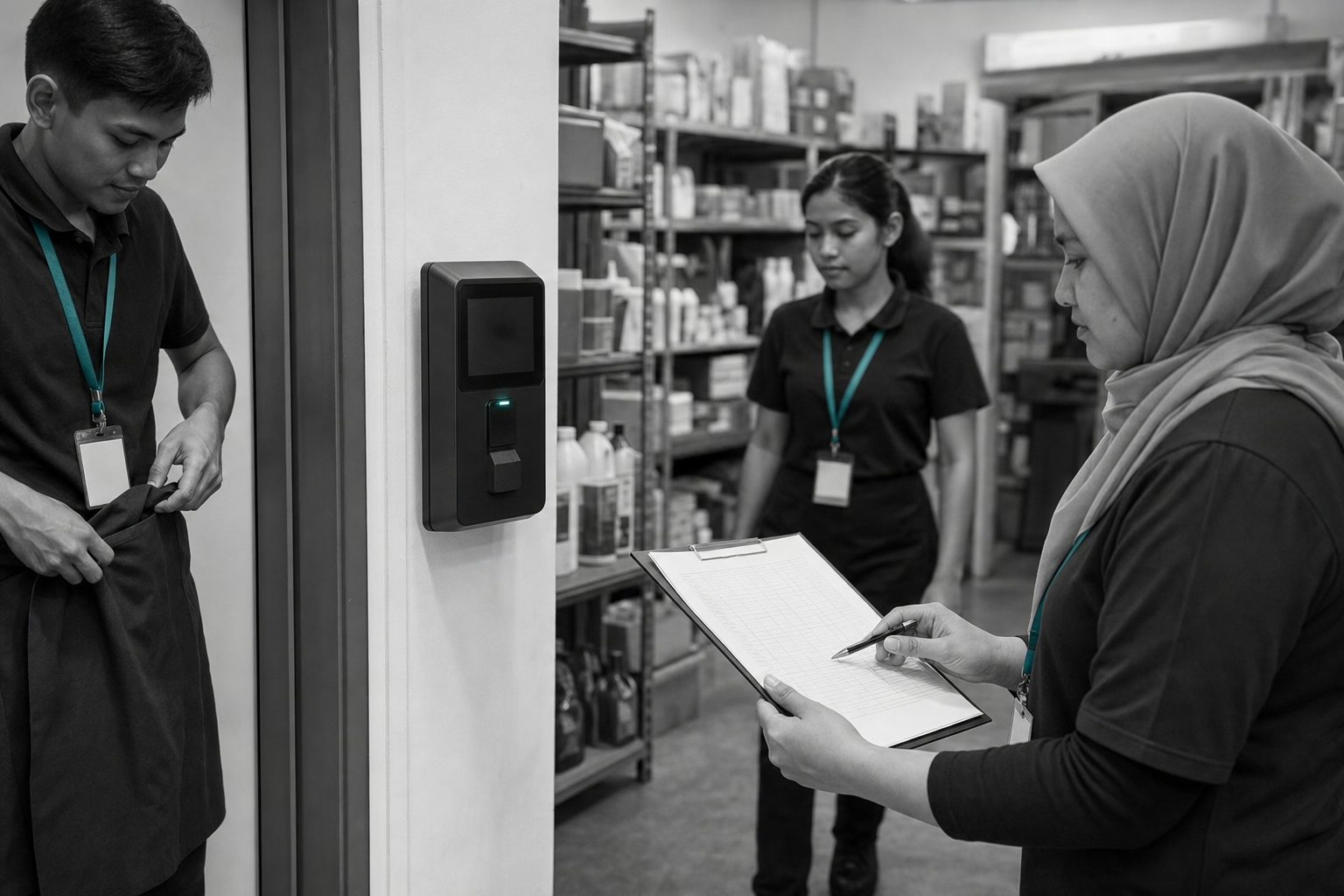
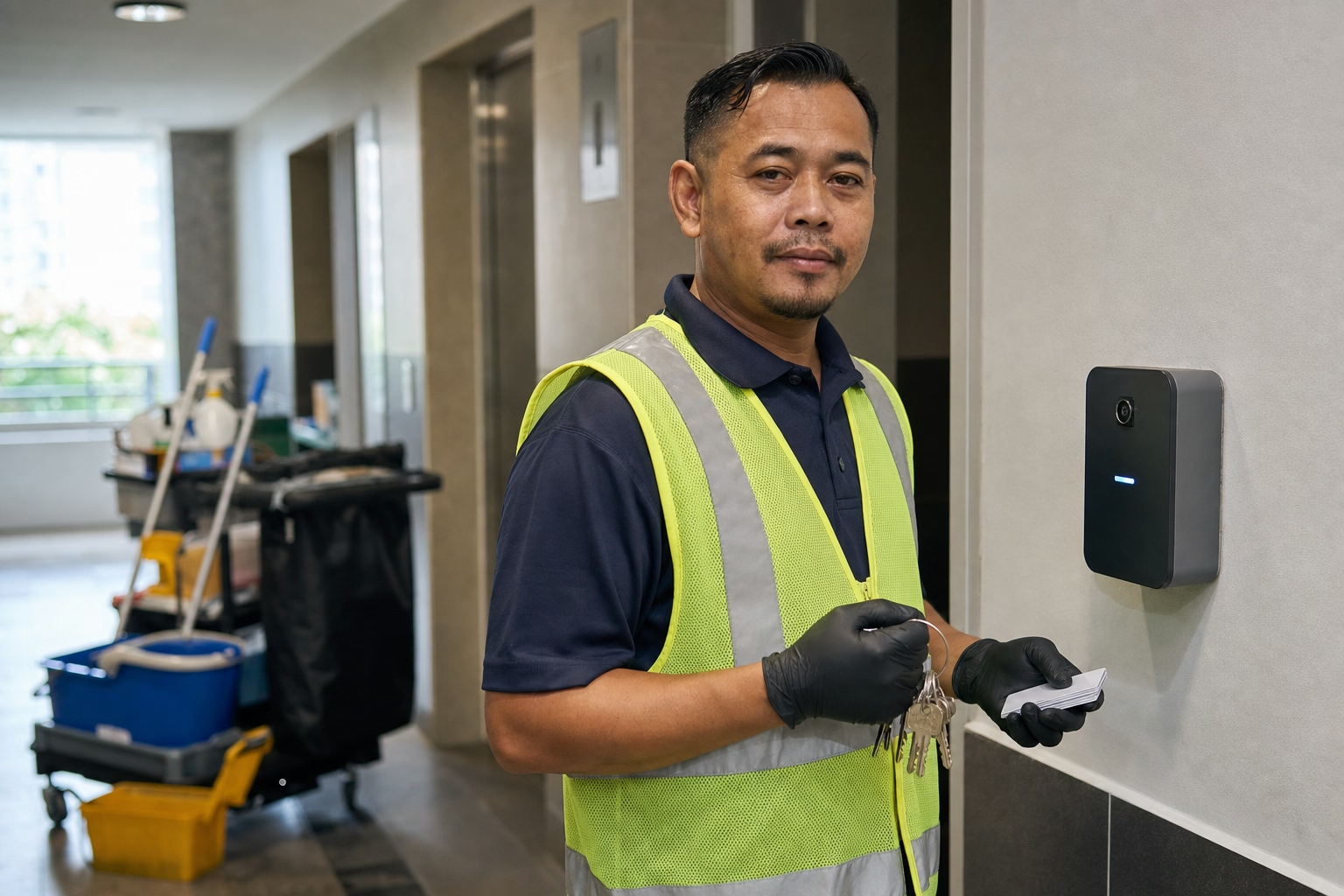
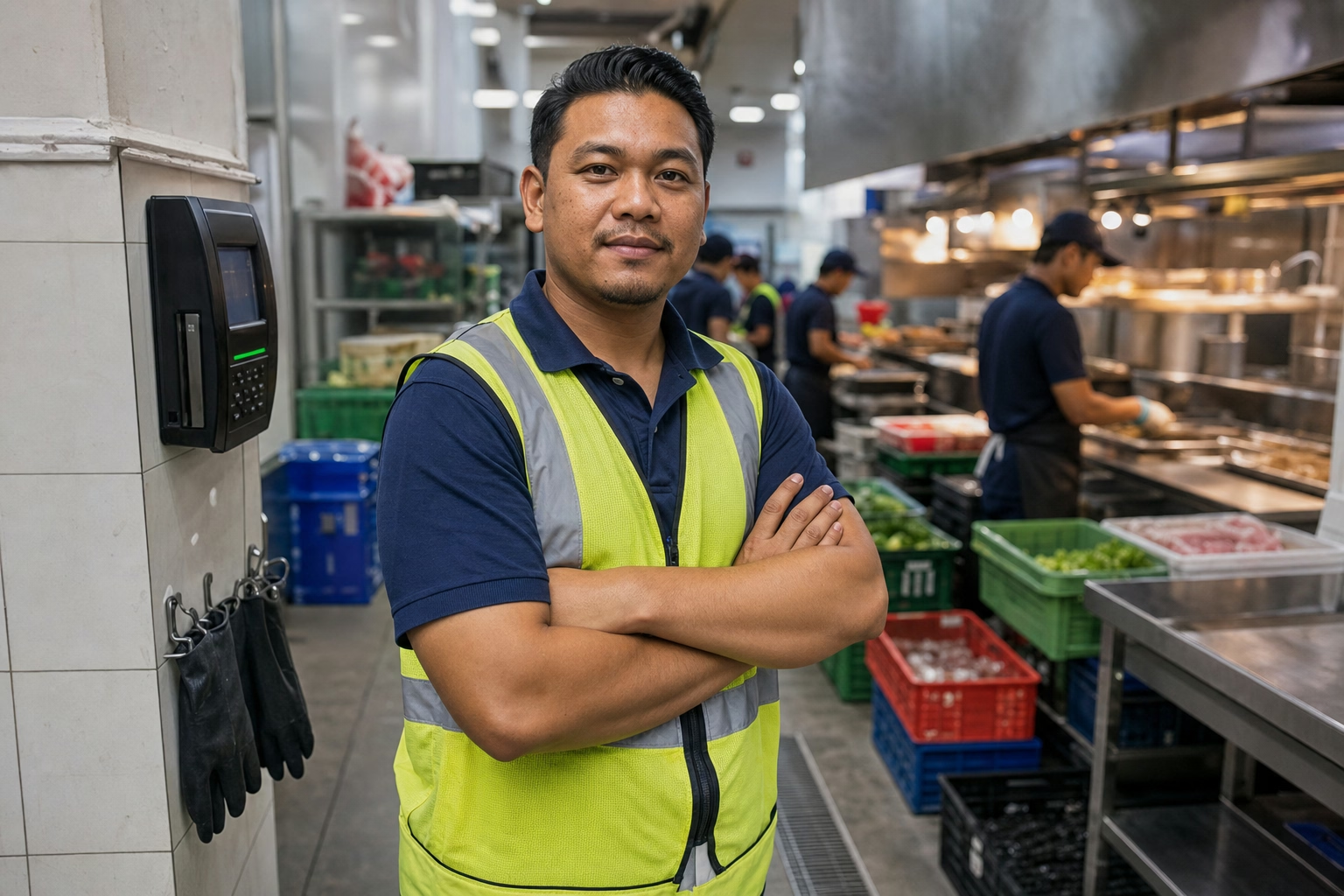
Kiosk-on-counter as the default clock-in mode. A shared tablet at the counter. Four-digit PIN or facial recognition at sign-on. Clock-ins take 5-10 seconds per worker. New hires onboard in minutes. The personal-phone-app option is there for shift supervisors or managers who want it. The default is kiosk.
Per-worker rest-day assignment. Each worker’s rest day lives in the system so the right OT multiplier applies. Mall retail typically gives weekday rest days. Mamak F&B often gives Wednesday or Thursday. The system handles the variation, not the bookkeeper.
Automatic late-shift tagging on closing shifts. Hours worked past the company’s policy threshold (10pm in most F&B chains) are tagged automatically and fed to payroll with the right allowance applied. Boundary detection has to happen at the timesheet level. Not at the payroll level.
CSV export or native integration with MY payroll. PayrollPanda (free) for the simplest stack. Kakitangan, BrioHR, or Swingvy if you want attendance and payroll in one product. Time tracking software that works alongside Malaysian payroll covers the handoff patterns.
Audit trail for retroactive edits. When a worker forgets to clock out and the supervisor adjusts the time the next morning, the edit is logged with the supervisor’s ID and the original value. Without that, manual adjustments look identical to fabricated punches.

Three setups MY F&B and retail operators actually run
Setup A. Free stack for under-20 staff at 1-2 outlets. Jibble Free for attendance (GPS, kiosk, facial recognition, unlimited users) plus PayrollPanda Free for EPF/SOCSO/EIS/PCB filings. Monthly cost: RM 0. The catch is the 2-geofence cap on Jibble Free. A third or fourth outlet pushes you into Premium. And the HR side stays basic.
Setup B. Paid per-seat for multi-outlet operators. ShiftFlow at RM 14.9 per seat for the single plan covering GPS, kiosk, scheduling, EA 1955 OT rules, plus PayrollPanda Free for statutory. A 20-staff three-outlet chain pays RM 298 / month for attendance and RM 0 for payroll. Operationally lightweight. Lets the operator scale outlets without per-location penalty.
Setup C. Consolidated MY HR suite for 30+ staff. Kakitangan, BrioHR, Swingvy, or altHR handles attendance, leave, claims, payroll, EPF/SOCSO/EIS/PCB filing, and LHDN e-filing in one product. Monthly cost: RM 200 to RM 600 depending on modules. Best fit when the operator wants vendor consolidation and has an HR coordinator who can actually run an HRIS. Best time tracking software in Malaysia for SMEs runs the full comparison.
What a specific scenario looks like in practice
Picture a five-outlet kopitiam chain across Klang Valley with 35 total staff. Operations look like this.
- 12 full-time service staff rotating across outlets weekly
- 15 part-time staff (mostly weekend coverage) churning every 3–6 months
- 5 kitchen staff fixed at specific outlets
- 3 outlet managers
- 4 foreign workers across kitchens and cleaning
EA 1955 considerations stack up fast. 45-hour weekly cap on all 35. 1.5x ordinary OT, 2x rest-day OT excess. The chain’s company-policy late-shift allowance from 10pm (kopitiam dinner service runs late on weekends). October 2025 foreign worker EPF 2%/2% applies to the 4 foreign workers. The RM 1,700 minimum wage took effect 1 February 2025 for employers with at least 5 workers and became universal from 1 August 2025, so it applies across the entire base cost.
A 35-staff chain on Setup B (ShiftFlow + PayrollPanda Free) pays RM 521.50 per month for attendance and RM 0 for statutory payroll. Setup A holds for the first 20 staff but the 5-outlet operation blows past Jibble Free’s 2-geofence cap. Setup C (Kakitangan modular or Swingvy at RM 99/mo for the first 20 employees plus RM 7 per additional employee, so ≈RM 204/mo for 35 staff) lands in the low-to-mid hundreds plus add-ons, with attendance and payroll consolidated.
Grab the ShiftFlow app, no card needed
The pick really comes down to whether the chain wants attendance and payroll in one tool or two. Both work. The math is similar.
What the cut-off cycle looks like with good attendance
A 35-staff chain on Setup B running well.
- Day 1: HR coordinator pulls the ShiftFlow CSV for the pay period (5 minutes)
- Day 1: imports the CSV into PayrollPanda (5 minutes)
- Day 1: reviews PayrollPanda’s calculated gross, deductions, and net pay per worker (30 minutes)
- Day 1–2: handles any worker queries on specific timesheet entries via the ShiftFlow audit trail
- Day 2: PayrollPanda submits EPF / SOCSO / EIS / PCB filings to LHDN e-filing (one click each)
- Day 2: generates bank file for payment (one click)
Total HR time per cut-off: ≈1 hour. Compare that to the 8-12 hours a manual setup typically takes for the same headcount. The time savings compound across 24 cut-off cycles per year. How to choose an attendance system for Malaysian SMEs covers the broader decision framework, and Attendance management for SMEs in Malaysia covers the operational rhythm.
Sources
- DOSM MSMEs Performance 2024 for SME employment baseline
- Employment Act 1955 (Akta Kerja, PDF from MoHR) for the 45-hour cap, 104-hour OT ceiling, and break rules
- Malay Mail on RM 1,700 minimum wage nationwide enforcement from 1 Aug 2025 (took effect 1 Feb 2025 for ≥5-worker employers; universal from 1 Aug 2025)
- Foundingbird guide to EPF, SOCSO, and EIS for contribution rates and Oct 2025 foreign worker rules
- Jibble pricing, Kakitangan attendance, PayrollPanda
- malaysia
- fb-retail
- attendance
- time-tracking
- kiosk
- multi-outlet
- tofu