How Construction Crews Lose Hours to Missed Clock-Ins on the Job Site
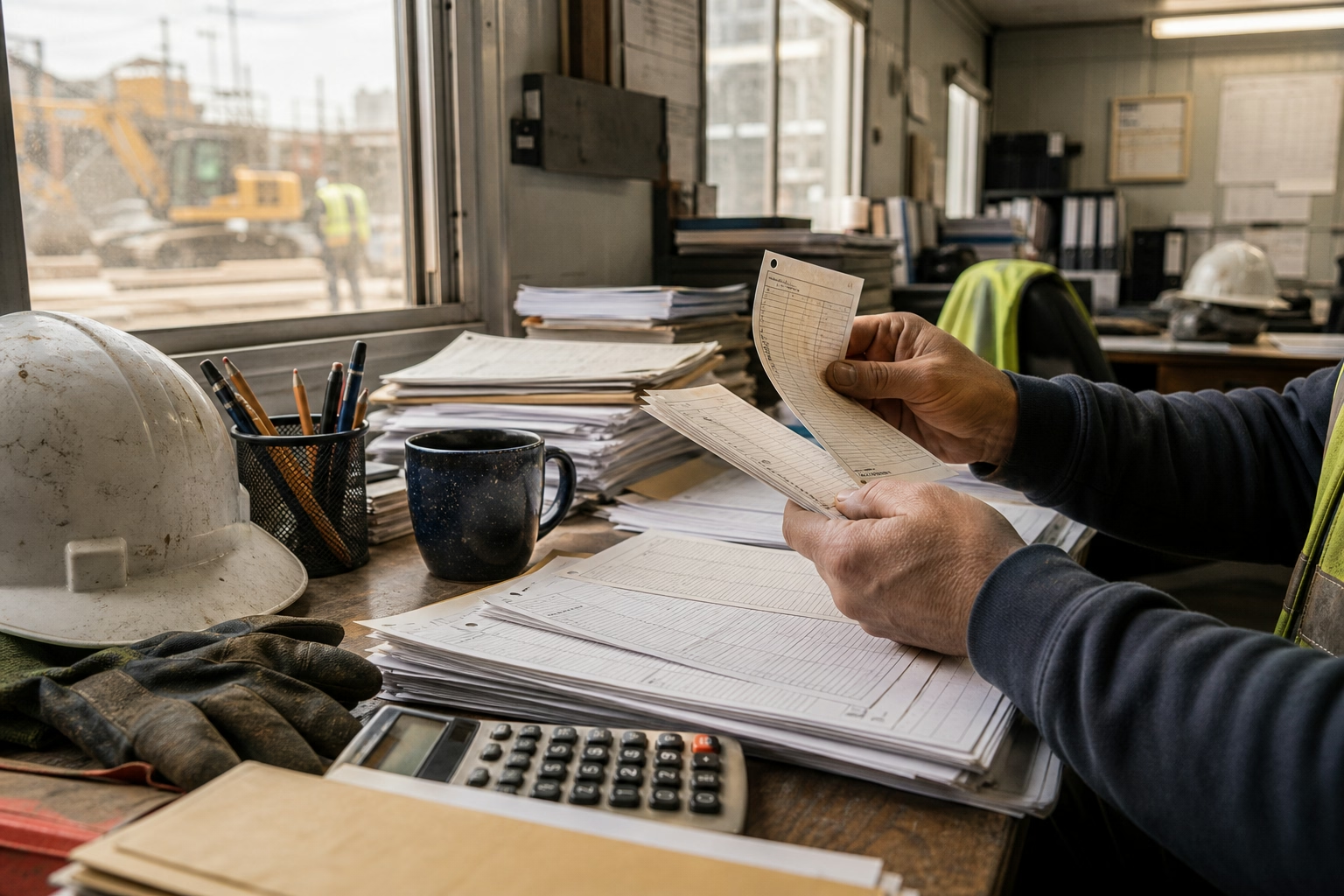
A forgotten clock-in on a job site is not a one-second mistake. It is a guessed-at time, a payroll argument, and a job-cost number you can no longer trust. Here is why crews miss punches and how to fix it where it actually breaks.
The Missed Punch Is Cheap. The Cleanup Is Not.
A guy forgets to clock in. Takes one second to skip. Then it costs you the rest of the week.
Now someone in the office is texting him to ask when he got to the site. He gets back to you a day later with “uh, like 6:30, maybe 6:15.” That guess goes on the timesheet. And guesses about your own start time always seem to land a little early. So you pay for fifteen minutes that may not have been worked, on one punch, for one guy. Multiply that across a six-man crew and a two-week pay period and you’re reconstructing a dozen start times from memory every cycle.
The payroll leak isn’t even the worst part. What it does to your numbers is. The hours that landed on that job are now part fiction, so the labor cost you booked against the job is wrong too. You bid the next one off bad data. The missed punch didn’t just cost you fifteen minutes — it quietly poisoned the one number you use to decide whether the work is worth doing.
And no, a sternly worded text to the group chat doesn’t fix it. If half the crew is missing punches, the crew isn’t the problem.
The way they clock in is.
Why Job Sites Are Worse Than Most Workplaces
A missed punch in an office is rare, because the work and the clock-in happen in the same place at the same desk. A job site breaks every part of that.
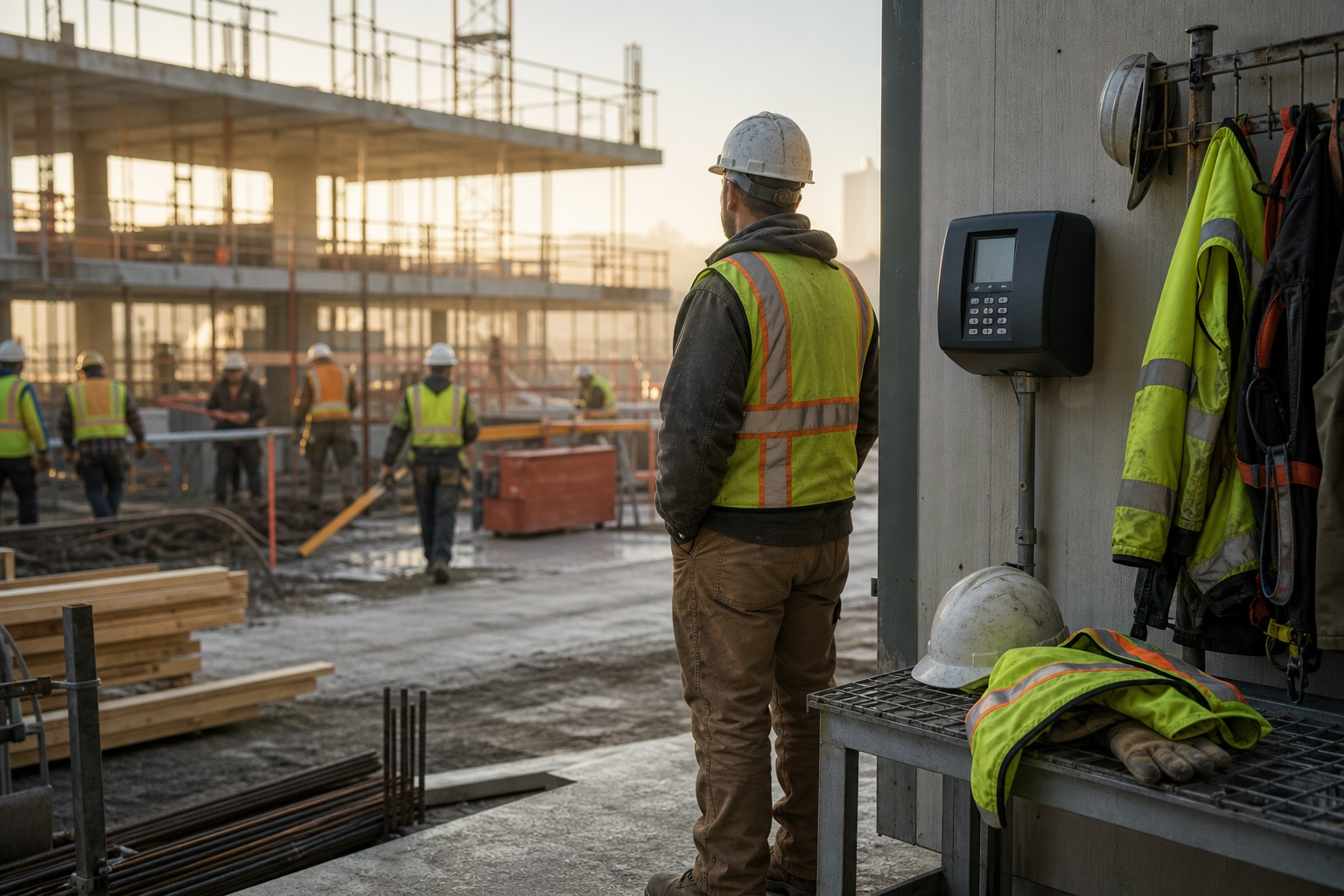
Crews start early, often before the foreman is even on site, so there’s nobody to ask “everybody in?” The first thing that happens when the truck pulls up is unloading and getting tools to where the work is. Clock-in is competing with the actual job, and the job wins. Plenty of these sites sit in a cell dead zone, a basement, or a steel frame that kills signal, so even the guy who remembers can’t get the app to respond. And it’s cold, or raining, and he’s got gloves on. Pulling out a phone to tap through a menu is the last thing on his mind.
None of that is laziness. It’s the work. Any fix that ignores how a job site actually runs at 6 a.m. is going to fail.
Fix the Process First, Before You Touch Software
Some of this you can fix this week without buying anything.
Make clock-in the first thing, before tools come off the truck. Park, punch in, then unload. If it happens before the work starts, it’s far less likely to get swallowed by the work.
Give the foreman one job at start of shift. Walk the crew, confirm everyone’s punched in before the first task. Thirty seconds. It catches almost every miss before it becomes a payroll problem two weeks later.
Attach it to a habit they already have. If the crew checks the day’s plan or the site address on their phone in the morning, that’s the moment. Open the app, check the job, clock in — one sequence instead of a separate step nobody remembers.
Look at yesterday’s hours today, not on payroll Friday. A missed punch from this morning can still be reconstructed accurately this afternoon, while everyone remembers. The same gap on Friday is a pure guess. Daily review turns an impossible cleanup into a thirty-second correction.
These all help. But they don’t scale past a point, because every one of them depends on a person remembering to do it. That’s where the tool has to carry the weight.

What Software Actually Changes
The biggest drop in missed punches comes from a time clock built for how field crews work, not one designed for a desk.
Geofence prompts. The worker’s phone reaches the site, and the app prompts the clock-in on its own. He doesn’t have to remember — crossing onto the job is the trigger. For a crew that starts before the foreman shows, this is the single biggest fix.
Reminders on a schedule. Scheduled to start at 6:30 and no punch by 6:40? Push notification straight to the phone. The miss gets caught in real time, on site, instead of surfacing on Friday when nobody can fix it.
A clock-in that works in dead zones. Basements, steel frames, rural sites with no bars. A time clock built for the field records the punch offline and syncs when signal comes back. No signal should never mean no punch.
Two taps, with the job already loaded. Open, tap, done — no scrolling a list of job codes with gloves on. The app knows where he is and which job that location maps to, so the right job gets the hours without anyone choosing from a menu.
Foreman alerts. When someone hasn’t punched in, the foreman knows on his own phone right then, and can walk ten feet to fix it. The problem gets solved on site in the moment instead of in the office a week later.
An audit trail when a correction is needed. A miss still happens now and then. When the foreman adds the time, the system logs the original gap, the correction, and who made it. That’s a record you can stand behind at payroll and in an audit, instead of a number someone penciled in.
GPS-stamped, geofenced clock-ins are also how you prove the crew was actually on site when a clock-in time gets questioned. The same feature that prevents the miss also settles the argument about it.
What You Get Back When the Friday Cleanup Stops
Move a crew to a mobile time clock and you get back the office hours spent chasing start times, a payroll run that stops leaking fifteen minutes at a time, and job-cost numbers you can bid the next job on — because the hours on the job are finally the hours that were worked.
If missed clock-ins are eating your admin time every pay period, see how a time clock built for construction crews fixes it where it breaks, or put ShiftFlow’s mobile time clock on your next job and watch the Friday cleanup disappear.
Frequently Asked Questions
Why do construction crews miss clock-ins so often?
They start early, often before the foreman arrives, in places with weak signal and with gloves on. The first priority on site is unloading and starting work, not opening an app. When clock-in competes with getting the job moving, the job wins — and the punch gets reconstructed from memory later, usually rounded in the worker’s favor.
How much does a missed punch actually cost a contractor?
The lost minute is the small part. The real cost is the office time spent chasing the real start time, the way guessed times drift early, and a job-cost number that no longer matches what the crew worked. Across a full crew and a month of pay periods, that’s hours of admin and steady payroll leakage on top of decisions made off bad labor data.
What’s the best way to reduce missed clock-ins on a job site?
Use a mobile time clock with geofence prompts that fire when the worker reaches the site, reminders if no punch happens by the scheduled start, and an offline mode for dead zones. Pair that with a foreman who confirms the crew’s punched in before the first task. Together those remove most misses without anyone having to remember.
Should I write up workers for forgetting to clock in?
Fix the process before you reach for discipline. Most missed punches are a system problem, not an attitude problem. Make clock-in automatic with reminders and geofencing, attach it to a habit the crew already has, and catch misses the same day. Save write-ups for the rare worker who still skips it after the process is genuinely solid.