
How to Stop Buddy Punching on Construction Sites
On a spread-out job site with no one watching the time clock, one worker punching in for another is easy and nearly invisible. Here is how buddy punching actually happens in construction and how GPS and a selfie shut it down.
A Few Minutes a Day, Across a Whole Crew
Buddy punching sounds minor. One guy texts another, “clock me in, I’m five minutes out.” His friend taps it. He shows up at 6:35 instead of 6:30.
Who cares about five minutes?
You do, when it’s every morning, for half the crew, all year. Five minutes a day per worker on a ten-man crew is roughly an hour of paid-but-not-worked time every single day. Price that at a loaded labor rate and it’s a five-figure leak a year that produces zero feet of finished work. And because the punch looks legitimate — right name, plausible time — it never shows up as a problem. It just sits inside your labor cost, quietly making every job look a little worse than it should.
The deeper damage is the same one missed clock-ins cause. Your hours stop matching reality, so the labor you book against each job is fiction, and you bid the next one off it. Buddy punching is time theft that also poisons your estimating.
Why Job Sites Make It So Easy
A construction site is close to the perfect environment for buddy punching. Not because your crew is dishonest — because the setup invites it.
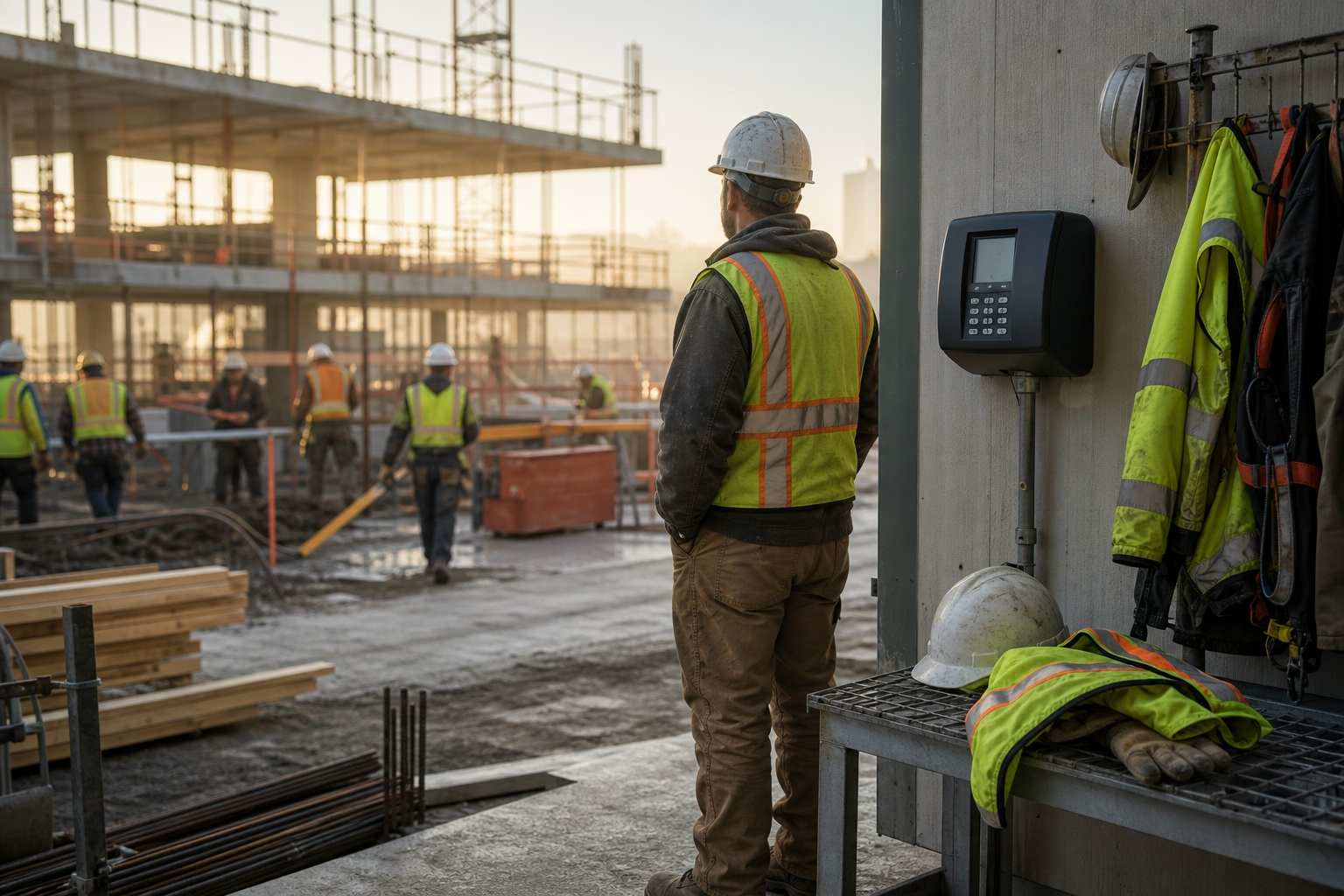
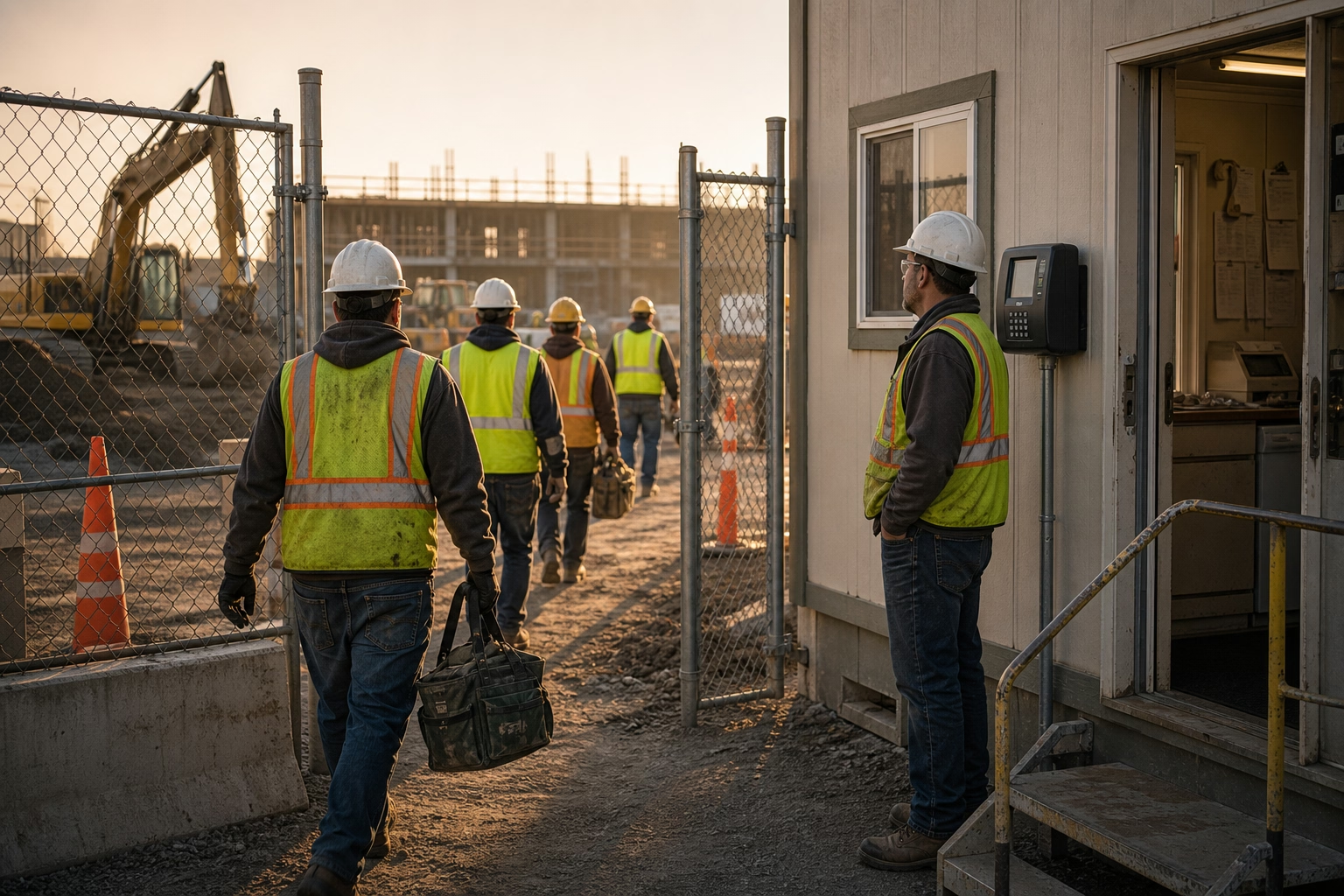
Think about how the morning actually runs. The site is big and spread out. The foreman is running the work, not standing at a single entrance checking faces against a clock. Workers arrive in waves from different directions. If clock-in runs off a shared tablet in the gang box, anyone can tap any name. If it runs off a PIN, well, a PIN is four numbers a buddy can punch in his sleep. A badge is a thing you can hand to someone.
None of those methods can tell whether the person clocking in is actually the person whose name is on the punch. They verify a credential, not a human.
Fix that, and buddy punching has nowhere to live.
What Doesn’t Fix It
PINs and badges. Both are transferable. A PIN gets shared, a badge gets handed over. They authenticate the credential, not the person holding it.
A sign-in sheet. A clipboard is the easiest thing in the world to fill in for someone else. No timestamp you can trust, and nothing to verify against.
Telling the foreman to watch more closely. He already has a job, and it’s building the thing. Ask him to also police every entrance and one of those two jobs gets done badly. Surveillance doesn’t scale, and it sours the crew.
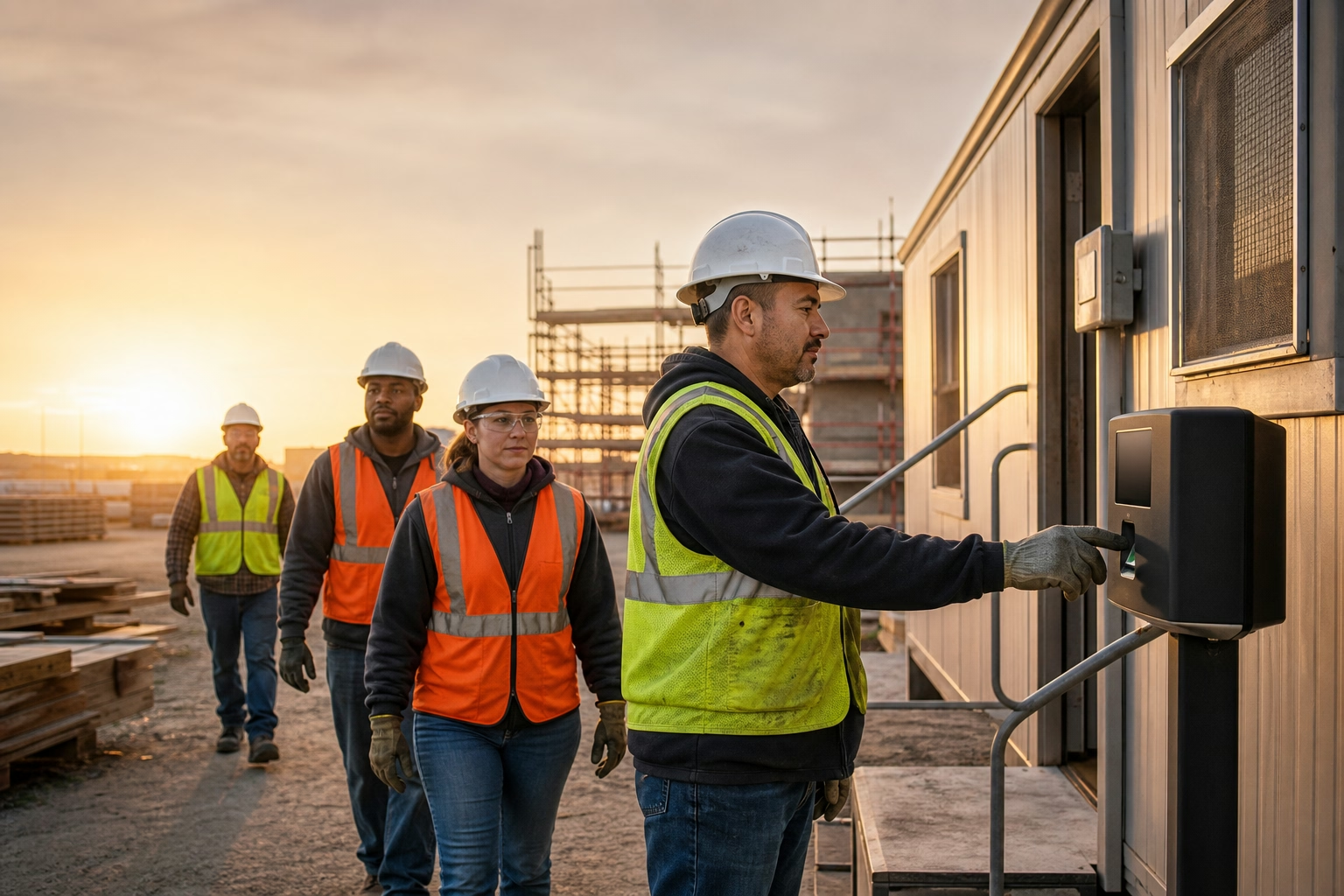
A biometric fingerprint clock at the trailer. Better at proving identity, sure. But it creates a single chokepoint everyone lines up at, it chokes on dusty or cut-up hands, and it does nothing for the crews who head straight to a scattered work area instead of through the trailer.
So the fix has to verify the actual person, at the actual location, without adding a chokepoint or a babysitter.

What Actually Stops It
Two features, working together, take buddy punching off the table for almost every crew.
GPS-stamped clock-ins. Every punch carries the phone’s location. A clock-in can only be created from the job site — not from a worker’s bed, not from a coworker’s truck on the highway. Put a geofence around the site and a punch attempted from the wrong place gets flagged or blocked outright. That alone kills the “clock me in, I’m not there yet” move, because the system can see he’s not there yet.
Selfie verification. GPS proves where the punch came from. A selfie proves who made it. When a worker clocks in, the app grabs a quick photo and attaches it to the punch. Covering for an absent coworker now means producing his face, which you can’t. It takes a second, it needs a face and not clean hands, and it turns every punch into a visual record you can actually check. Pairing the two is also how you verify the crew genuinely showed up, not just that a name appeared on a list.
One record per person, per phone. Each worker clocks in on their own device, so there’s no shared tablet to tap five names into. The punch, the location, and the photo get bound together into one thing that’s hard to fake and easy to audit later.
None of this is about treating the crew like suspects. It makes the dishonest punch impossible while the honest punch stays a two-second tap. A worker doing the right thing notices nothing. A worker trying to game it has nowhere to go.
Keep It Honest, Not Heavy-Handed
One real caution. This is verification at the moment of clocking in, not all-day monitoring. ShiftFlow captures a GPS point and a photo when someone punches, on the clock — it doesn’t track location continuously through the day or take screenshots, and you shouldn’t frame it to the crew as if it does. Tell people plainly what gets captured and when, put it in a short written policy, and confirm your state’s rules, since GPS and photo capture at work varies by state — and on a personal phone, some states want explicit consent, not just notice. A crew that understands you’re verifying punches, not watching them dig, comes around fast — especially the honest majority who were quietly subsidizing the buddy punchers.
What GPS Plus Selfie Drains Out of Payroll
Contractors who move to GPS plus selfie clock-in usually watch the soft padding in their hours vanish in the first pay period. The job-cost numbers get honest. And the crew members who were never doing it stop carrying the ones who were.
If buddy punching is padding your payroll, see how a time clock built for construction crews verifies every punch with GPS and a photo, or put ShiftFlow on your next job and let the soft minutes drain out on their own.
Frequently Asked Questions
How common is buddy punching in construction?
It’s one of the most common forms of time theft in field work, because the conditions invite it. Crews are spread across a large site, the foreman can’t watch every entrance, and a shared tablet or a quick text makes covering for a late coworker almost frictionless. A few minutes here and there, across a crew and a year, becomes real money paid for no work.
How does GPS stop buddy punching?
When each clock-in is stamped with the phone’s location, a punch can only be created from the job site — not from a worker’s couch or a coworker’s truck. A geofence around the site flags or blocks any punch attempted from the wrong place. GPS doesn’t prove who pressed the button on its own, which is why you pair it with a selfie that captures the worker’s face at the moment of the punch.
Does selfie verification actually work for crews with gloves and dust?
It only needs a face, not clean hands. The worker holds the phone up for a second when they clock in, and the photo attaches to the punch. It takes about as long as the clock-in itself and gives you a visual record that the right person was on site at that time — something a PIN or a badge can never do, because both are transferable.
Is GPS and selfie tracking on a personal phone legal?
On a personal phone, it’s allowed in most states when workers are notified — but several states (California and Texas among them) require their written consent, and that bar is higher for a personal device than a company one. And where the selfie verifies identity by face-matching, biometric-privacy laws like Illinois’ BIPA can add their own notice-and-consent rules. Put it in a clear written policy and confirm your state’s rules first.
- construction
- buddy-punching
- time-theft
- gps-time-tracking
- selfie-verification
- field-service
- payroll
- time-clock