Can I ask a customer to update a bad review?
Yes, and the line is exactly one sentence wide. What you can say when you call, when a refund is fine, and the message that turns a complaint into a policy problem.
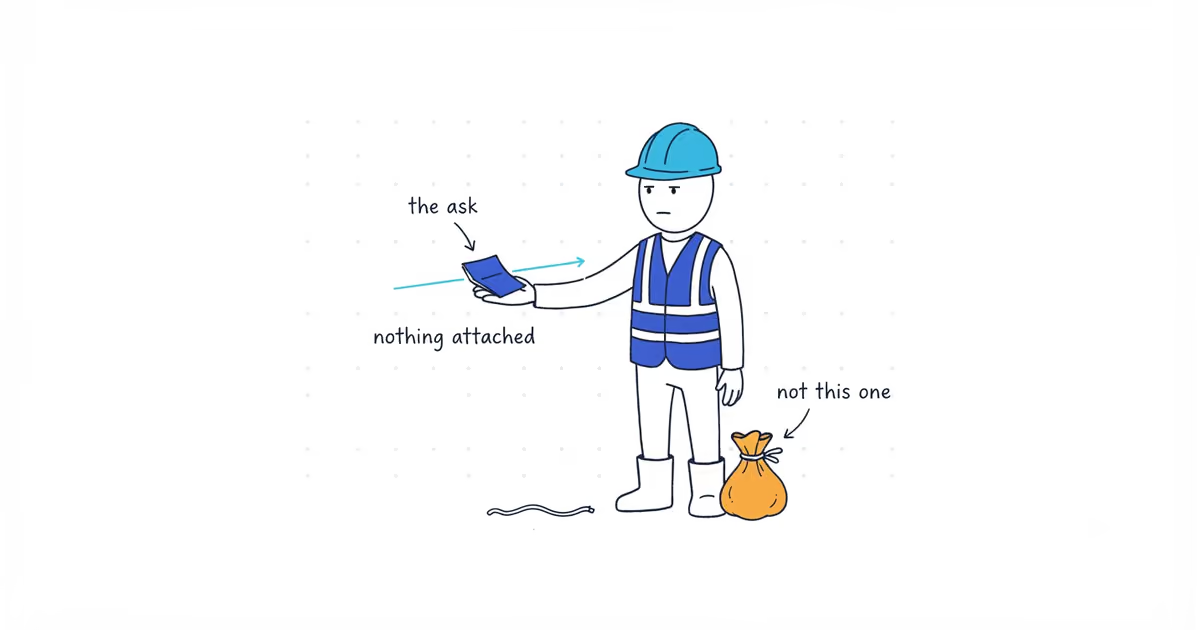
Yes — you can ask a customer to update a bad review. What you cannot do is attach anything to the asking.
Google’s policy prohibits offering incentives — “such as payment, discounts, free goods and/or services - in exchange for posting any review or revision or removal of a negative review.” Read that carefully: the thing being banned is the trade, not the request. Fix the problem, then ask. Fix the problem, then offer money to have it taken down, and you have crossed a line that is easy to prove and hard to explain.
Google documentation checked: August 10, 2026 (United States).
| The move | Fine | A violation |
|---|---|---|
| Asking them to update it | Asking once, after it’s fixed, with nothing attached | ”Update the review and we’ll waive the trip charge” |
| Calling the customer | Calling to sort out the problem, with no mention of the review | Calling to negotiate what it would take to make it go away |
| Refunding | Refunding what they’re owed, because they’re owed it | A refund offered, hinted at, or timed as the price of taking it down |
| Doing nothing off the platform | Always available, and often correct | — |
The rows are one sentence apart. That’s the whole difficulty: the compliant version and the violating version of every move here look almost identical from the inside, and completely different from the outside.
How to ask a customer to update a review
Ask after it’s fixed. Not during — while the work is unfinished, the review is the only leverage the customer feels they have, and asking for it back confirms every suspicion they had about why you came.
One sentence is enough:
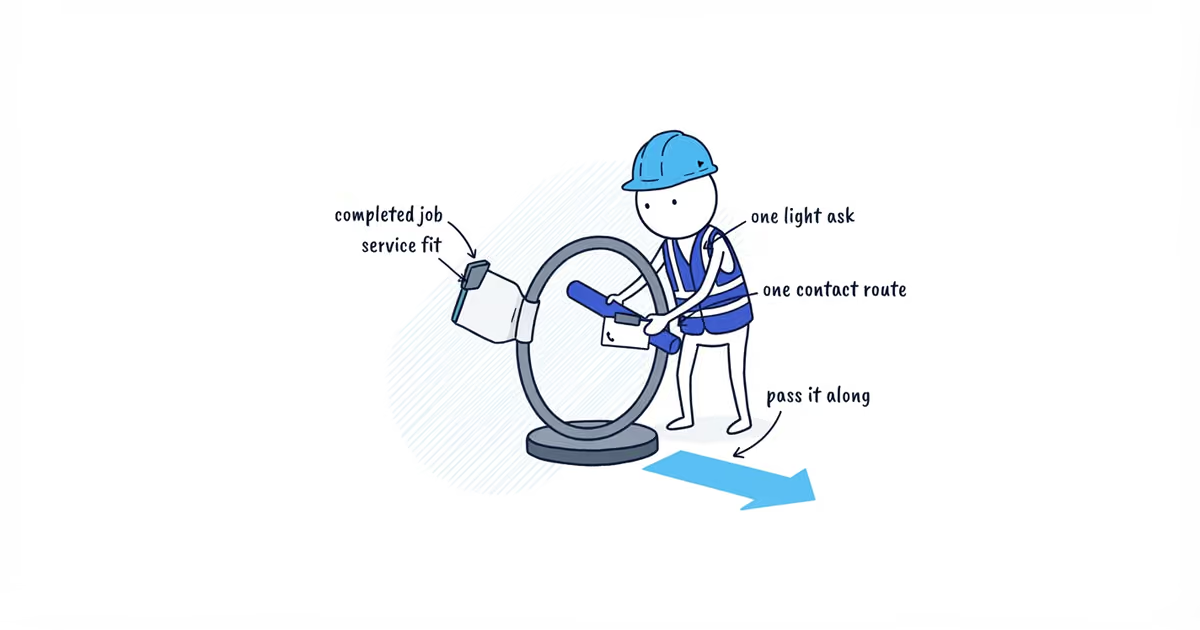
“I’m glad we got that sorted. If you think the way we handled it is worth updating your review, I’d appreciate it — either way, thanks for letting us put it right.”
Then leave it. Ask once, don’t follow up, and don’t tell them what to write or what rating to leave — Google’s policy also bars requesting that specific content be included in a review, and “could you make it five stars” is exactly that.
It’s worth asking, and here’s the mechanism: the reviewer is notified when you reply to a review, they can revise what they wrote afterwards, and the displayed date updates when they do. So an updated review doesn’t just change the number — it resurfaces as recent, with the whole arc visible. A complaint that ends in a fix is a better advertisement than a fresh five-star from someone who had an ordinary day.
What to say when you call the customer
Nobody updates a review because you asked nicely. They update it because the problem went away. Which makes the call, not the ask, the part that actually does the work.
Open like this:
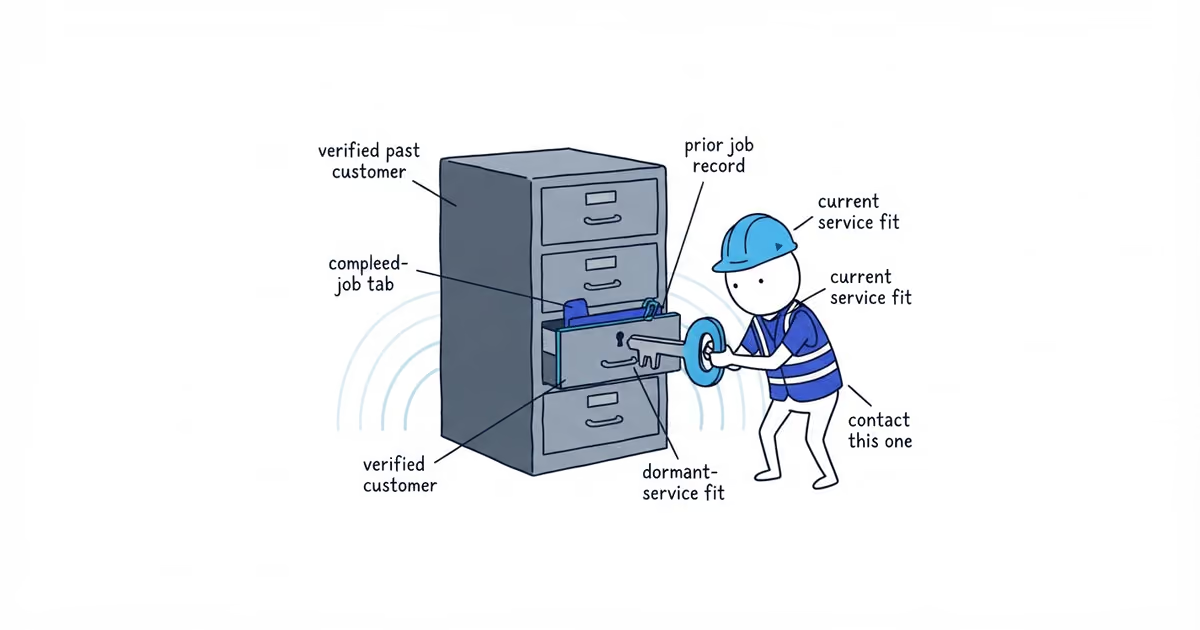
“Hi [Name], it’s [Your name] — I’m the owner at [Business]. I read what you wrote about [the water heater job] and I wanted to hear it from you directly. I’m not ringing about the review.”
That last sentence is doing the work. Say it and mean it, because the customer is expecting the opposite and the whole call turns on the first ten seconds.
Then listen, and don’t promise anything you wouldn’t give another customer in the same spot. That’s the test worth holding onto: if you’d do it for anyone who had this go wrong, do it here. If you’d only do it because this one wrote a review, don’t.
Two cases where you shouldn’t make the call at all. If you’re still angry, wait — a bad call is much harder to recover from than a slow one. And if they’ve already named a price for taking the review down, stop; that isn’t a customer complaint any more, and our fake review removal guide covers the separate channel Google runs for exactly this.
Can I offer a refund to remove a bad review?
If the job warrants a refund, refund it. Do it because it’s owed, and keep it in a different conversation from the review entirely.
The moment a refund is offered, hinted at, or even just timed alongside a request to take the review down, three things are true at once. It breaks Google’s policy, which names “revision or removal of a negative review” outright. It looks exactly like extortion from the customer’s side of the phone — and they have the screenshots. And Google’s own guidance for businesses being extorted says the same thing back to you: “Do not try to resolve it yourself by offering money or services.”
Federal rules land in the same place from a different angle. The FTC’s rule on consumer reviews prohibits compensation conditioned on a review expressing a particular sentiment, so paying for a rating to change is out. The rule does not itself ban offering compensation to remove a review — but the FTC’s own guidance notes that paying consumers to change or remove truthful negative reviews may violate the FTC Act, and knowing violations of the rule carry civil penalties.
The simple version: refund because you should. Ask separately, or don’t ask at all.
Can I threaten legal action over a bad review?
When the call doesn’t work, the next thing an angry owner reaches for is a lawyer, or the suggestion of one.
The FTC rule addresses this directly. It bars businesses from using unjustified legal threats, other intimidation, or false accusations to prevent or remove a negative consumer review. An “unfounded or groundless legal threat” is one with no basis in law or no evidentiary support — which is what most of these are, sent to frighten rather than to litigate.
So the message that begins “our attorney will be in touch unless this is removed by Friday” is not a grey area. If you genuinely have a defamation problem, that’s a conversation with an actual lawyer about an actual claim, and it isn’t something to gesture at over text.
Update your public reply either way
Most customers won’t update anything. That’s fine, and it doesn’t leave you where you started.
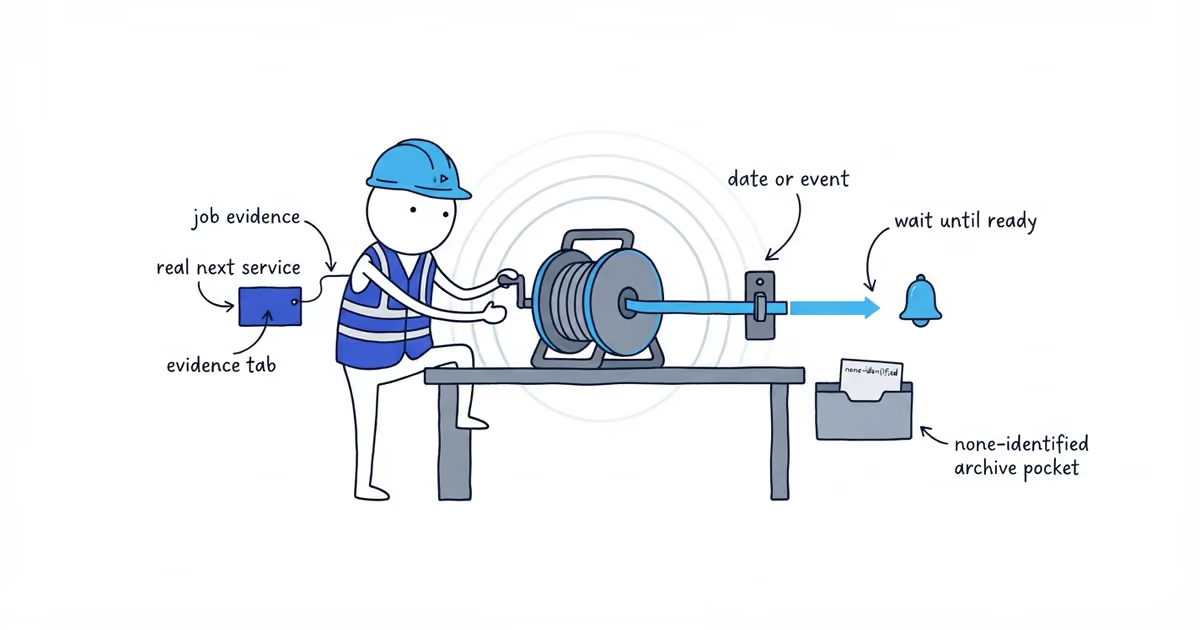
Go back to your public reply and add a line saying the work was finished and the customer was taken care of. If the original reply needs rewriting rather than extending, our bad review response templates give you the wording by complaint type. Someone reading that review next spring has no other way to know how the story ended, and a resolved complaint reads completely differently from a frozen one.
Your edited reply goes through Google’s policy check before it appears, which “usually take[s] up to 10 minutes to review, but sometimes a review can take up to 30 days.” Write it and leave it alone.
Frequently asked questions
The customer says they’ll take it down if I refund them. Should I?
Refund them if the refund is owed, and let the review sit wherever they leave it. Do not agree to the trade. If money is being demanded in exchange for removal, especially alongside a run of new negative reviews, that’s not a refund negotiation — Google treats that as extortion and has a separate reporting channel for it.
Can I give them a discount on the next job as a goodwill gesture?
Only if it has nothing to do with the review — meaning you’d have offered it anyway, and you don’t mention it in the same conversation as the ask. A gesture that arrives attached to a request is an incentive, whatever you call it internally.
They updated the review but it’s still only three stars. Can I ask again?
No. Ask once. A second ask is pressure, and pressure to change a rating is the thing the policy is written about. Three stars with a visible resolution is a good outcome. Leave it there.
Sources
- google-reviews
- review-policy
- negative-reviews
- review-incentives
- home-services