How do I get commercial cleaning contracts?
Learn how to get commercial cleaning contracts by finding local accounts, reaching verified buyers, qualifying opportunities, and planning 30 days of outreach.
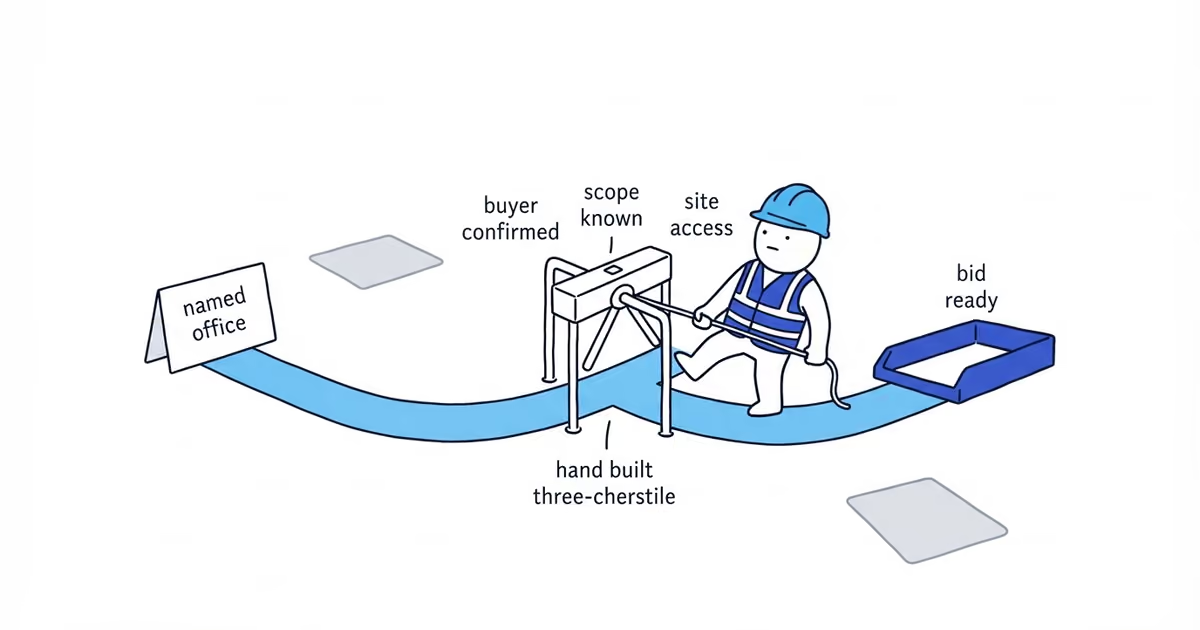
Get commercial cleaning contracts by choosing a facility type you can serve, researching named local accounts, reaching the cleaning decision-maker through a suitable channel, qualifying the opportunity, walking the site when practical, submitting a clear bid, and following the buyer’s process. No channel or 30-day plan guarantees a contract.
How to identify qualified commercial cleaning accounts
A target account is a business or managed property worth researching. A qualified opportunity has a plausible need, buyer, timing, and operating fit. A walkthrough and proposal advance it; a signed service agreement is an outcome, not step one.
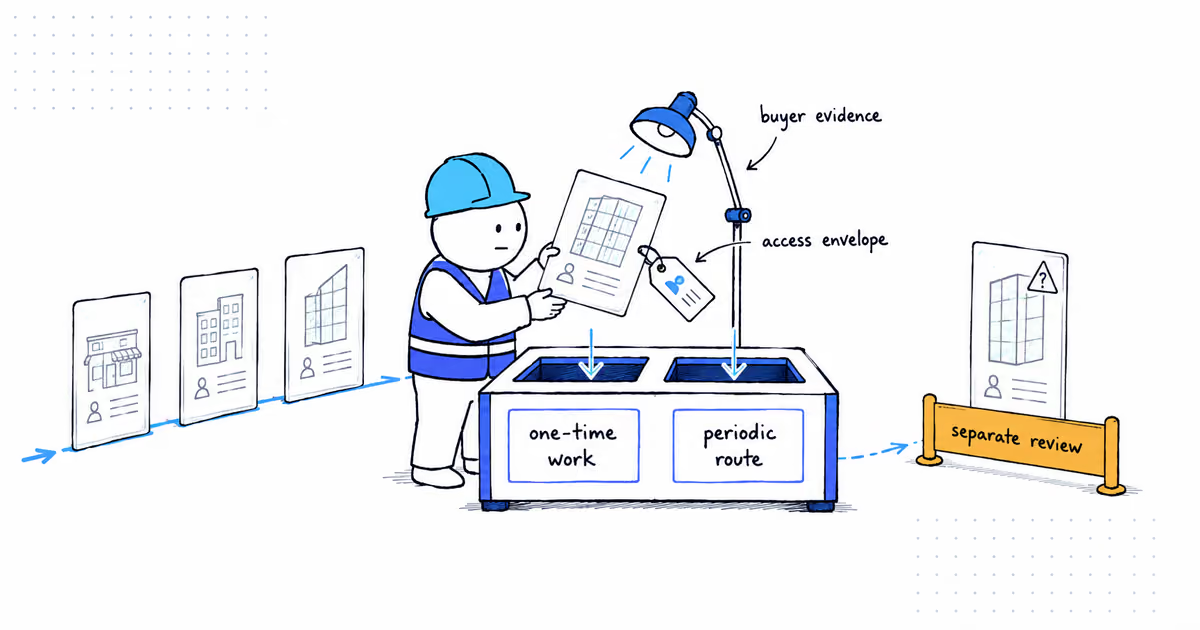
Choose one facility pattern using your service area, route concentration, service window, crew and supervision capacity, equipment, similar completed work, permission-cleared proof, and specialist limitations. Examples include small offices, local retail, or apartment common areas. Avoid specialist facilities unless you have verified the service, training, documentation, regulatory, insurance, and buyer requirements.
Record facility type, real geography, likely pattern and window, supportable size or complexity, contact role to verify, proof, and no-fit conditions. Leave price, margin, and staffing out.
Where to find commercial cleaning contracts
Verify every suggested contact; no title always owns cleaning decisions.
| Account or facility pattern | Likely contact to verify | Useful starting channel | Credible reason to contact | Proof or readiness to lead with | No-fit or caution signal |
|---|---|---|---|---|---|
| Owner-managed office or local business | Owner, office, or operations contact | Published route or relationship | Named facility fits area and window | Cleaning summary and relevant proof | Unsupported scope or window |
| Property-managed office or apartment common areas | Property, maintenance, or vendor contact | Manager site, vendor page, or introduction | Named property fits your service pattern | Comparable proof and applicable credentials | Closed category, access mismatch, or unknown route |
| Local multi-site business | Operations, facilities, procurement, or site contact | Published route, supplier, or referral | Named sites fit your route | Supervision and consistent-work proof | Beyond crew or geographic capacity |
| Commercial real estate, turnover, or post-construction relationship | Property-service, broker, or project contact | Trade relationship, association, or introduction | Supported work matches a named property or project | Permission-cleared similar work and available window | No opportunity or unsupported specialist scope |
| Referral partner | Authorized customer, service vendor, supplier, or local contact | Genuine relationship | A specific suitable facility | Shareable truthful summary | No real connection, permission, or relevance |
| Inbound local search | Owner or facility contact making the inquiry | Website, business profile, or published route | Stated job may fit | Service area and supported-facility details | Outside area, scope, or capacity |
| Public or formal bid listing, when intentionally pursued | Buyer’s procurement or bid contact | Buyer-published bid page | Notice matches demonstrated capability | Proof requested in the notice | Unsupported rules, scope, or specialist work |
Find named accounts through current customer and vendor relationships, property-management and real-estate sites, research directories or maps, associations or chambers, nearby route observations, referrals, and buyer-published pages. Verify each facility; never buy or scrape lists.
Look for published office, operations, facilities, property-management, ownership, procurement, or vendor contacts. If unclear, ask through the published route who handles janitorial service or the next vendor review. Record the source; a guessed title or scraped email is not a decision-maker.
30-Day Commercial Cleaning Account Plan
Set activity by your capacity, not an industry quota. This acquisition test is separate from the broader 90-day growth system.
| Phase | Owner actions | Required output | Gate before continuing |
|---|---|---|---|
| Days 1-3: set the target | Choose the facility pattern, geography, service window, capacity, and no-fit rules. | Ideal-account record | Reject work outside the real area, window, capability, or capacity. |
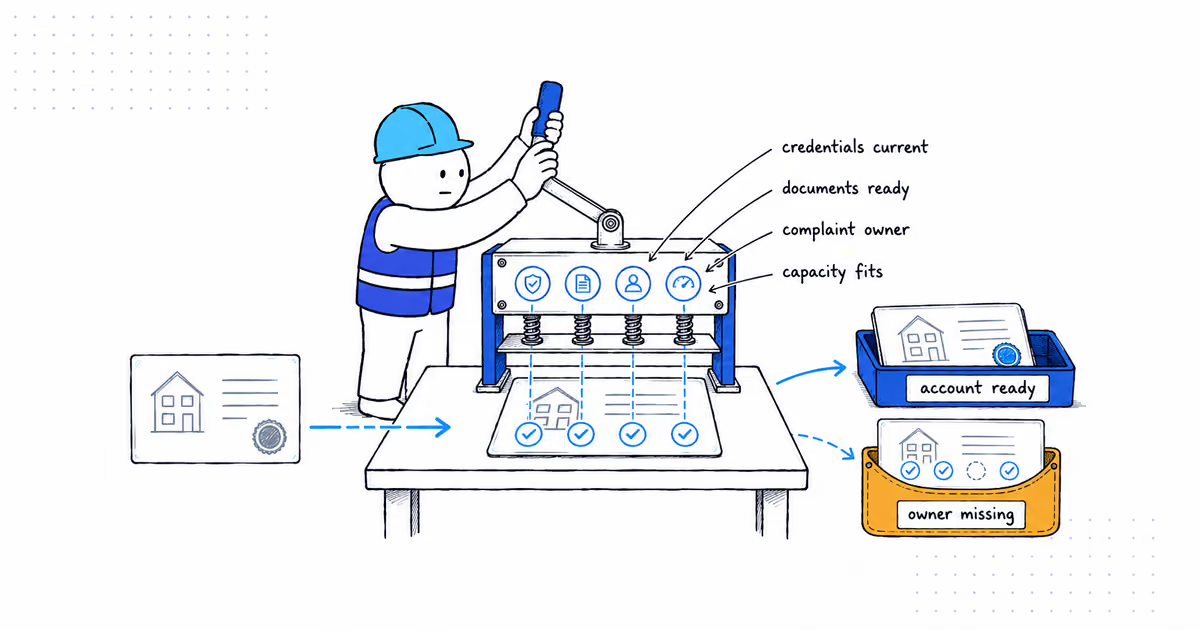
| Days 4-7: assemble readiness | Prepare an accurate summary, supported-service facts, permission-cleared proof, a direct contact path, and only applicable current credentials or insurance details. | Buyer-readiness set | Hold outreach until every claim is current, supportable, and relevant to the target account. |
| Days 8-14: account research | Confirm named facilities and likely contacts through published sources or real relationships; record source and channel. | Named-account list with contact status | Remove accounts without a relevant facility, credible route, or supportable pattern. |
| Days 15-21: introductions and contact | Request appropriate introductions; send relevant one-to-one messages; log replies and opt-outs. | Contact and referral log with source, owner, and dated next action | Stop on declines or no-contact requests; reject invented reasons and unverified contacts. |
| Days 22-30: qualify and hand off | Qualify replies, request suitable walkthroughs, follow agreed steps, and review qualified movement by buyer/channel combination. | Qualified-opportunity list with walkthrough and proposal handoffs | Do not bid while need, buyer, timing, decision process, scope, or operating fit is unclear. |
Before outreach, use the contractor capability statement guide to assemble an accurate one-page company summary, current capacity, and a small proof set that a facility buyer can verify.
A hypothetical small cleaner selects professional offices on its evening route. It verifies an accounting office on the company site, then calls the published number to identify the janitorial contact. It assumes no need, renewal date, or problem. Only confirmed need, decision path, timing, and operating fit justify a walkthrough and bidding handoff.
How to contact commercial cleaning decision-makers
We clean [supported work] at [facility type] in [real area and window]. I’m reaching out because [truthful facility, relationship, or published reason]. Is there a current problem or vendor-review window, and who owns it? Would a short qualification call or walkthrough help?
Never invent a complaint, referral, nearby customer, vacancy, need, or renewal date. Request introductions from satisfied authorized commercial contacts, service vendors, real-estate contacts, suppliers, or business relationships only with a real connection and permission. Do not pay for an introduction, imply endorsement, or name a customer without consent.
The FTC’s CAN-SPAM guidance covers business-to-business commercial email. Use accurate sender and subject information, identify the business, include required postal and opt-out information, and honor opt-outs. Check the actual channel and jurisdiction. Stop on a decline or no-contact request. Never use deceptive subjects, automated volume, repeated unsolicited messages, or platform-rule evasion.
Last verified: September 2, 2026 (United States).
How to qualify a commercial cleaning opportunity
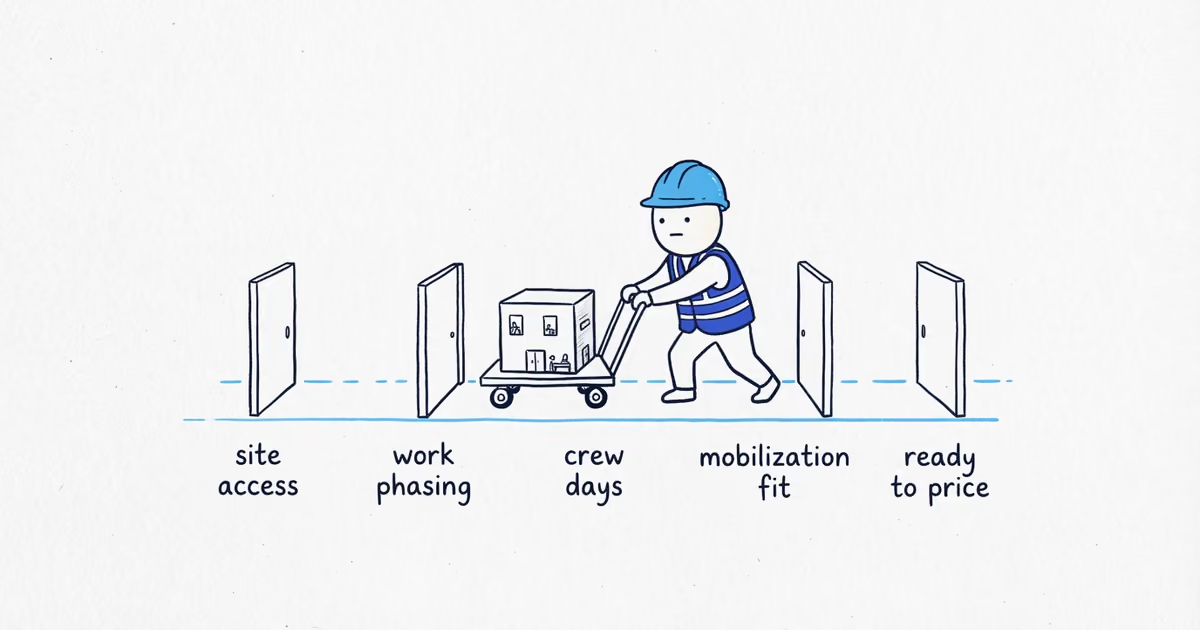
A reply is not a qualified opportunity. Confirm facility and locations, approximate cleanable area or scope, requested frequency and window, current problem or reason for review, buyer and stakeholders, decision or bid timing, buyer-stated vendor requirements, access or specialist constraints, and current route, crew, supervision, and equipment fit.
At the walkthrough, reconfirm fit. When a qualified account is ready for detailed scope and pricing, use the commercial cleaning bid guide to turn site facts into a task schedule, labor hours, account costs, and bid price. Do not improvise from the first conversation.
For the proposal handoff, follow the buyer’s format and due date, keep scope and price consistent with the walkthrough and bid, confirm receipt, and assign the next-action owner and date. The separate commercial-cleaning proposal article owns the document.
Use the agreed follow-up date. Otherwise, ask one concise status question, record the response, and mark the account active, dated nurture, no-fit, declined, or do-not-contact.
Frequently Asked Questions
Do I need a capability statement to get commercial cleaning contracts?
Not for every account. Prepare accurate buyer-readiness facts first, then use a capability statement only when the buyer requests one or the channel supports it. It does not replace qualification, a walkthrough, a bid, or a proposal.
Do property management companies require vendor approval before a cleaning bid?
Some may, but their processes differ. Follow each company’s published vendor route and confirm whether onboarding comes before a bid, proposal, or work order. A vendor page or portal signup does not authorize work.
Commercial Cleaning Acquisition Scorecard
Set your activity limit. By source channel, record named accounts researched, contacts verified, introductions requested, relevant first contacts, replies, qualified conversations, walkthroughs requested and booked, proposals requested or handed off, no-fit reasons, and next-action dates.
Record a signed contract when it happens; never forecast one from an email open, reply, or walkthrough. Continue, revise, nurture, or stop each buyer/channel combination based on qualified movement and capacity.
Sources
- commercial-contracts
- how-to-get-commercial-cleaning-contracts
- how-to-get-commercial-cleaning-accounts
- where-to-find-commercial-cleaning-contracts
- commercial-cleaning-account-plan
- commercial-cleaning-decision-maker
- commercial-cleaning