How do I grow an electrical business?
Learn how to grow an electrical business with a 90-day service-mix plan for qualified leads, estimate follow-up, project backlog, and reliable crew capacity.
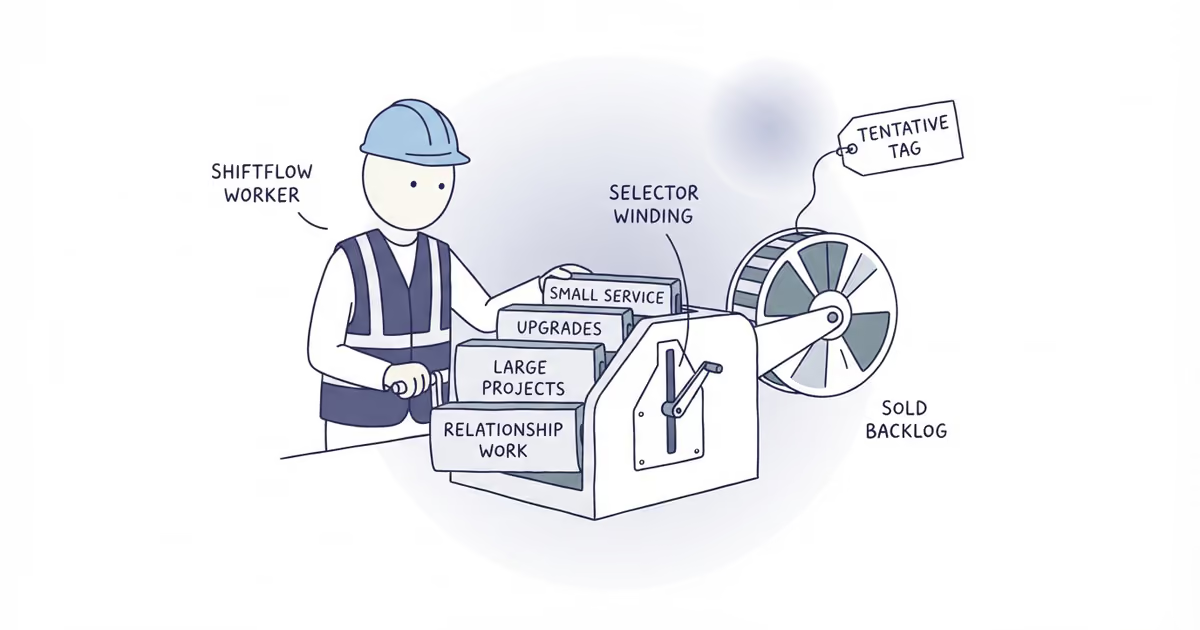
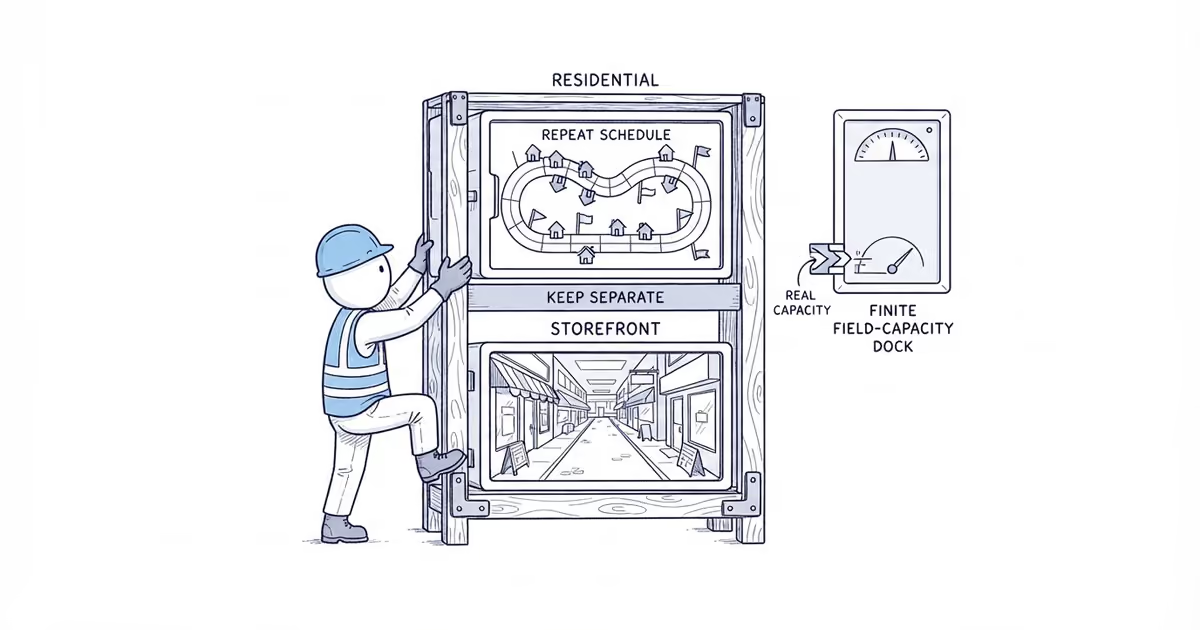
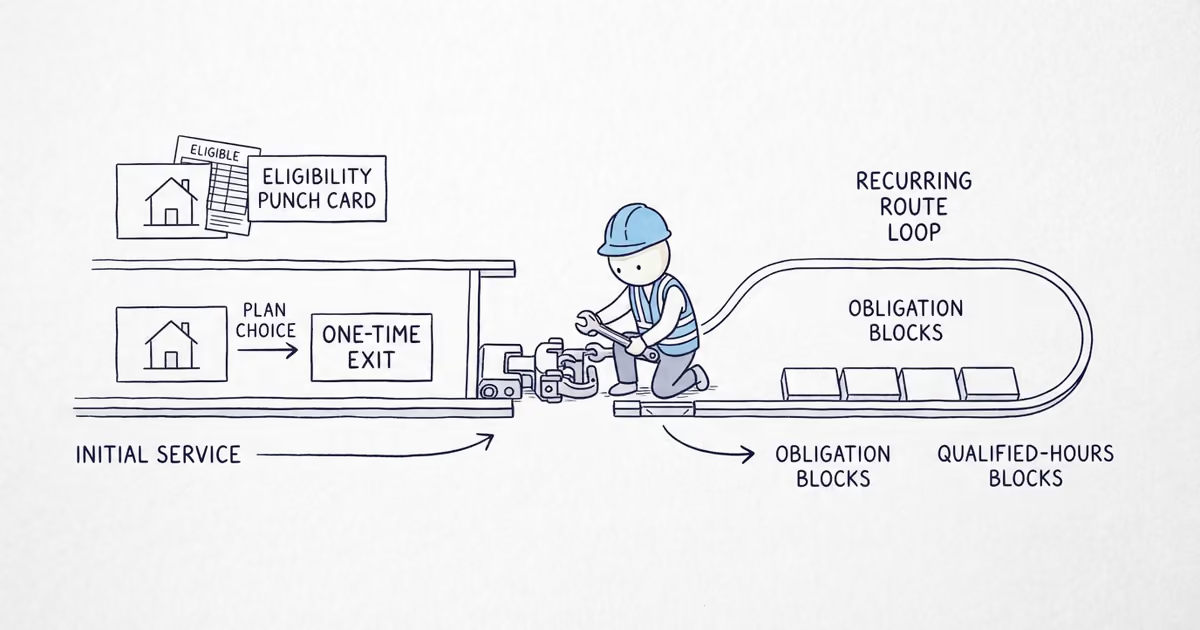
Grow an electrical business by choosing a deliberate mix of small service work, planned upgrades, and larger projects, then giving each lane its own qualified demand, sales path, proof, follow-up, and field capacity. Builder, property manager, general contractor, realtor, and complementary-trade relationships can supply suitable work, but they are optional sources, not a requirement. Growth means more profitable, supportable work completed to your standard. More inquiries, estimate value, booked revenue, services, territory, or headcount does not prove that.
Last verified: August 28, 2026 (United States).
How to choose an electrical business service mix
Split existing records across four lanes: qualified leads, bookings, estimates and outcomes, collected revenue, reliable job contribution, planned and actual field hours, callbacks, source, area, and customer type. Mark gaps as missing and start tracking now.
Define the actual mix:
| Work lane | Customer, accepted scope, and source | Qualification | Proof, sales step, and follow-up | Schedule, capability, and backlog risk |
|---|---|---|---|---|
| Small service work | Local customers with work the company already accepts; often found through Google, repeat history, or referrals | Contact, decision-maker, location, customer-stated need without remote diagnosis, property type, timing, access, service-area fit, and fit outcome | Current identity or credential verification where applicable, a relevant review, and a clear process; give a truthful service or no-service outcome, schedule, complete, close out, ask neutrally for a review, and record any relevant future contact | Protect short-horizon slots staffed by appropriately qualified people with needed vehicles or equipment; risk: larger work consumes the service promise |
| Planned upgrades | Customers or properties that fit an established upgrade service; found through a priority page, repeat history, referrals, or suitable local demand | Broad requested scope, location, decision-maker, timing, documents or photos only when appropriate, and whether a site or estimate appointment is needed | Comparable completed-work proof and a named estimate owner; deliver the estimate, confirm receipt, resolve open questions, set a dated follow-up, record accepted, declined, pending, or lost, place sold hours, then close out | Requires estimate capacity before field time; risk: estimates age while sold work stacks up |
| Larger projects | Fit property and project types within the company’s real capability; sourced directly or through suitable bid and relationship opportunities | Decision-maker, broad scope, documents or site review required by the company’s estimating process, bid timing, procurement or credential requirements, schedule, and dependencies | Comparable project proof, scope process, stakeholder communication, and applicable current documents; record the next action and outcome | Reserve a real crew block plus supervision or project-management time; risk: one project displaces service, estimates, or other sold work |
| Relationship-sourced work | Suitable work introduced by a builder, property manager, general contractor, realtor, or complementary trade | Named partner/account, customer or property type, relevant lane, geography, project fit, credential package, communication burden, payment process, and schedule | Seek a relevant introduction, vendor-list event, or bid invitation; record the stakeholder, next action/date, and outcome | Uses the capacity of the lane it feeds; risk: relationship activity creates obligations but no qualified work, or work with poor delivery fit |
Choose one or two primary lanes. Keep other work only when its area, capability, delivered economics, and schedule fit. Relationship work is not automatically recurring, profitable, or preferable.
Every intake card needs the contact and decision-maker, real location, customer-stated need, property/customer type, lane, timing, access constraints, appropriate documents, source, next step, owner, and fit outcome. For project or relationship work, add stakeholders, bid date, requested documents, and schedule constraints.
Days 1-14 of an electrical business growth plan
Build the baseline, choose the primary lanes, finish the intake card, open a 13-week view, and list proof gaps. The credential register needs the issuer or official source, correct business or person, jurisdiction and scope, displayed status or expiry, public-use decision, and last-checked date.
The SBA says license and permit requirements vary by activity, location, issuing authority, and government rules. Check the actual authority and job requirements. Say who handles permits or inspections only when true. One license, registration, insurance document, manufacturer status, or training record does not cover every person, service, or jurisdiction.
Proof depends on the lane. Small service may need current identity or credential verification, a relevant genuine review, and a clear process. A larger project may justify comparable project proof, the scope process, stakeholder communication, and applicable current documents. Use permission-cleared photos or factual descriptions; remove unverified claims.
Consider the fictional Bright Current Electrical. Every number is illustrative, not a benchmark or target. During a service-heavy week, it has 96 reliable qualified field hours, protects 24 for small service, has 32 sold hours from its upgrade estimate backlog, and faces a 48-hour request from one larger sold project. The 104 requested hours create an 8-hour conflict before estimates, supervision, leave, or dependencies. The owner must move a crew block, change an honest commitment, or rebalance the mix before adding demand.
Days 15-30 for electrical business local SEO and leads
Give each inquiry or opportunity an owner and next step; add age, status, next date, and outcome reason. Audit the Google Business Profile: identity, primary and additional categories, services, phone, hours, website, address or service-area treatment, and photos. Google says local results are mainly based on relevance, distance, and prominence. Accurate information helps Google understand the business but guarantees neither rank nor leads. The service area must match where customers are actually served.
If category choice is the unresolved part of that audit, the electrician GBP category guide helps match the primary and additional categories to the work the company actually accepts.
Create one useful page for each primary lane or priority service. State:
- The work the company actually accepts and the customers or properties it serves.
- The genuine service area and whether the next step is a service visit or an estimate.
- What the customer should prepare and what the scope or estimate process does next.
- How applicable credentials can be checked and how permits or inspections are addressed when required.
- First-party proof matched to the decision, followed by the exact post-inquiry process.
Do not create fake locations, stack desired specialty categories, clone thin service-city pages, or replace evidence with broad claims such as safe, licensed, certified, code-compliant, or fully insured.
Make those facts visible in direct answers. Google’s AI-features guidance calls for ordinary SEO foundations and helpful visible content; no special AI markup is required. Any structured data must match the page. Indexing, inclusion, citation, recommendation, and leads are not guaranteed.
Run the same AI-search questions each month: accepted work, customers/properties, area, visit versus estimate, scope process, credential verification, permits or inspections when applicable, and the post-contact step. Record wrong or missing facts and correct the owned profile or page.
If the owner cannot tell whether the profile, website, reviews, listings, or proof is causing the visibility gap, ShiftFlow’s online presence audit can identify which basics to fix first.
Use narrower Playbook guides for electrical pricing, electrician Google Business Profile categories, proof packs, lead response, and estimate follow-up. This board records whether each step works.
Days 31-60 for electrical service and project demand
For small service, monitor local inquiries, record the need without diagnosis, check service and area fit, give a truthful next step, schedule an available slot, complete and close out, apply the neutral review rule, and record any relevant future contact. Do not claim emergency or 24/7 coverage that is not staffed.
For planned upgrades, use the matching service page, qualify the request, arrange a site or estimate appointment when appropriate, assign the estimate owner, show comparable proof, deliver the estimate, confirm receipt, resolve open questions, and set dated follow-up. Record the decision and place accepted work into sold hours before promising a window.
For larger projects, record the decision-maker, property type, broad scope, documents or site review required by your estimating process, bid timing, credential or procurement needs, dependencies, crew block, supervision, next action, and outcome. This is pipeline control, not a contract, code, design, permitting, or detailed estimating tutorial.
For relationship work, approach only partners whose customers, properties, geography, project fit, documentation, communication burden, payment process, and timing fit a real lane. Track introductions and bid events, not networking volume. Narrow or stop activity that produces no qualified path to suitable work.
After completed service or a suitable milestone, ask every eligible customer under the same neutral rule, regardless of expected sentiment. Provide a direct platform path, protect job details in replies, and route complaints to recovery. Do not gate or buy reviews, request a rating, or tie an incentive to positive sentiment. FTC guidance requires genuine experience and warns against deceptive solicitation and incentives.
Use work history for referrals and reactivation. Ask satisfied customers or suitable partners for pressure-free introductions. Contact a past customer only when the message fits completed work or a prior request; track lane and source. Never use danger-based fear, fabricated needs, fake deadlines, or mass lists. Narrower review, referral, and reactivation guides own the scripts.
Days 61-90 for electrical backlog and capacity planning
For each of 13 weeks, separate sold field hours from tentative holds. Show reliable available hours for currently qualified people, estimate capacity, supervision or project-management time, vehicle/equipment constraints, leave/training, and material, permit, inspection, or other dependencies. Planned hires are not current capacity.
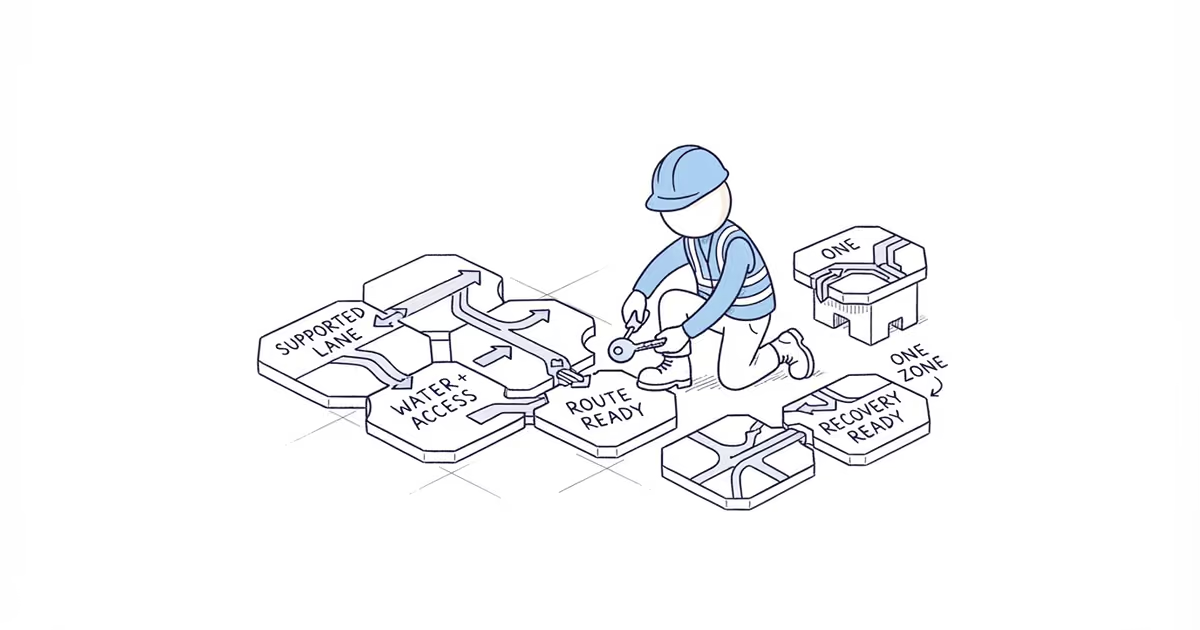
Protect near-term space for the service lane and put sold upgrades and projects into real crew blocks. Find the smallest constraint across response, estimating, field work, supervision, equipment, dependencies, and closeout. Add demand only when that chain supports it. Evaluate hiring or subcontracting separately through a qualified, compliant process only after repeated sold demand proves the need.
Compare delivered lanes using the owner’s reliable records: planned versus actual hours, callbacks or rework, collected revenue, and gross profit or job contribution only where existing accounting already provides a dependable figure. This board does not set prices, rates, margins, or bids. Close stale inquiries, estimates, and partner opportunities or give each a real next action. Then mark every service, source, relationship type, and proposed capacity change keep, fix, stop, or defer.
Frequently asked questions about growing an electrical business
Should an electrical business specialize or offer more services?
Choose one or two primary lanes for the next 90 days using completed-work, estimate, quality, and capacity records. Keep another service only when the business has sustained real demand, qualified people, verifiable proof, a working sales path, and schedule room.
How much backlog should an electrical business have?
There is no universal backlog length. Use the rolling 13-week board to compare sold hours with reliable qualified field hours, estimate and supervision capacity, equipment, leave, and job dependencies, while keeping tentative work separate.
When should an electrical business hire another electrician?
Evaluate hiring when repeated sold demand remains supportable and reliable qualified field hours are consistently the smallest constraint. Hiring, licensing, supervision, onboarding, employment, and subcontracting decisions require a separate compliant process.
Sources
- SBA: Plan Your Business - Market Research and Competitive Analysis
- SBA: Launch Your Business - Apply for Licenses and Permits
- Google: Tips to Improve Your Local Ranking
- Google: Manage Your Service Areas
- Google Search Central: AI Features and Your Website
- FTC: Soliciting and Paying for Online Reviews
Electrical business growth metrics to review every week
| Measure | Definition and decision use |
|---|---|
| Qualified demand and bookings | Count leads that pass the written location, customer, broad scope, timing, decision-maker, and capability gate; split qualified leads and booked work by lane and source. |
| Useful response | Compare first useful human response with the company’s staffed target; keep automated acknowledgements separate and record owner, next step, and outcome. |
| Service bookings | Track qualified small-service inquiries through booked, declined, no-capacity, out-of-area, or wrong-fit outcomes. |
| Estimates | Record delivered date, age, receipt confirmation, open question, next action/date, accepted, declined, pending, withdrawn, or lost status, and reason where known. |
| Relationship pipeline | Record fit conversations, introductions or bid invitations, customer/property type, lane, next action/date, outcome, and reason. |
| Backlog and capacity | Compare sold and tentatively held hours by lane/week with reliable available field hours; show estimate and supervision capacity separately. |
| Delivery | Compare planned and actual field hours and record callbacks, rework, credits, or company-caused missed handoffs under one consistent definition. |
| Job result | Use collected revenue and gross profit or job contribution only where current accounting reliably supplies them; never substitute the board for financial statements. |
| Earned demand and proof | Track eligible review asks and results, service-recovery cases, and completed work from repeat customers, referrals, relevant reactivation, and fit partners. |
If qualified service inquiries are unowned or unscheduled, fix response and protected slots before buying more demand. If estimates lack a next action, fix follow-up before expanding that lane. If partner activity produces no qualified introductions, bids, or suitable work, narrow or stop it. If a large project consumes protected service hours, rebalance the backlog instead of double-booking. If work repeatedly exceeds planned hours or creates callbacks, repair scope and delivery before adding demand. If qualified demand is healthy but reliable field hours repeatedly remain the smallest constraint, evaluate capacity separately. If capacity is open, improve the weakest demand, proof, response, follow-up, referral, or reactivation step before adding territory.
Not yet: Do not add a specialty, wider service area, extra ad spend, emergency or 24/7 claim, builder/property push, large-project bid, hire, vehicle or equipment purchase, or cloned SEO page until the board shows the relevant demand, qualification, credentials, proof, follow-up, delivered economics, and current capacity.
- local-seo-foundations
- how-to-grow-an-electrical-business
- electrical-business-growth-plan
- electrical-contractor-marketing
- electrical-business-service-mix
- electrical-project-backlog