

How do I stop customers from haggling?
Reduce haggling with a complete quote process: set expectations, define scope and options, control concessions, and use exact responses to common negotiation tactics.
“What’s your best price?”
Sometimes that’s a real budget question. Sometimes the customer asks everyone, every time, because it works often enough. You won’t prevent the question, but you can keep it from turning the quote into a guessing game.
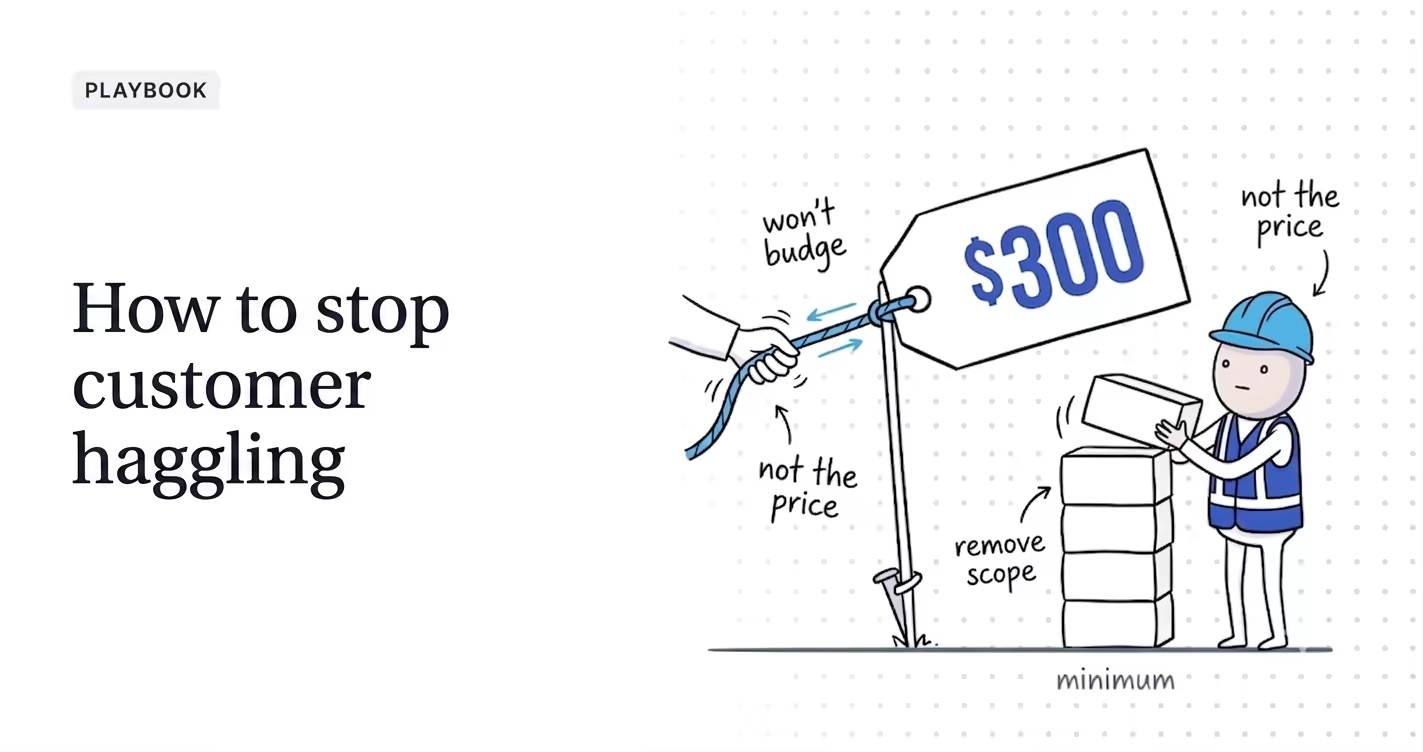
Set expectations before estimating. Put the whole deal in writing. And when the number moves, make sure something in the scope, cost, timing, risk, or payment terms moves with it.
A price question isn’t haggling
These are normal buying questions:
- “What is included?”
- “Why is this more than I expected?”
- “Can I see a less expensive option?”
- “How does this compare with another quote?”
Haggling is repeated pressure to change the deal after the scope and terms are understood, without offering a corresponding change in what the customer receives or what the job costs to deliver.
One reasonable question doesn’t make someone a bad customer. Answer it, clarify the decision, and watch what happens next.
Fix the quote process first
Qualify before you drive out
Before driving to the job, confirm the service, location, timing, decision-makers, and any known budget constraint.
“Mind if I ask a few questions before we book the visit? I want to make sure this is work we handle.”
For work with repeatable pricing, state the service-call fee or a qualified range. Custom work needs a little restraint: wait until you know enough to support the range.
“Our diagnostic visit is
$[amount], which covers [scope]. Repairs are quoted after the diagnosis.”
Or:
“Jobs like that have recently started around
$[amount]. Access, materials, and finish can move it quite a bit, so I won’t have a useful range for yours until [site visit/design step].”
State what the number is based on and what could change it. An unsupported low range creates the same conflict later.
Say the minimum before dispatch
Travel, dispatch, setup, and administration exist even when the repair takes 15 minutes. Calculate a minimum service fee from those costs and disclose it before booking. A surprise minimum at the door feels negotiable because the customer never agreed to the premise.
Put the whole deal in writing
A professional quote should make these items easy to find:
- The result and detailed scope
- Quantities, material or equipment specifications, and allowances
- Work the customer or another contractor must perform
- Exclusions and assumptions
- Required permit, protection, cleanup, disposal, and restoration
- Schedule or scheduling assumptions
- Warranty and callback terms
- Payment milestones, fees, and quote-validity date
- How changes are requested, priced, and approved
A lump-sum price can still have a detailed scope. Itemization should create clarity, not expose an internal cost sheet or imply that the customer can delete necessary work one line at a time.
Give customers a real choice
Options move the choice from “hire or reject this one number” to “which defined solution fits?” Every option must be safe, compliant, and profitable on its own.
For an illustrative exterior-painting proposal:
| Option | Scope difference | Price |
|---|---|---|
| Essential | Wash, scrape failed coating, spot-prime bare areas, two finish coats on siding | $6,800 |
| Extended | Essential scope plus full bonding primer and trim repaint | $8,400 |
| Complete | Extended scope plus shutters, doors, minor caulk replacement, and longer workmanship coverage | $10,200 |
The “good” option still has to be a job you’d be proud to deliver. Price each option from its own labor, materials, overhead, and margin.
Trade something; don’t just discount
Write down what team members may change, who approves it, and what the business receives in return. A concession should alter cost, capacity, cash timing, or risk.
| Customer request | Possible trade, if it changes the economics |
|---|---|
| Lower total | Remove optional scope, use a different acceptable specification, or phase later work |
| Flexible start date | Schedule during a defined low-demand window or combine nearby work |
| Faster payment | Use an approved prompt-payment term where lawful and economically justified |
| Multiple properties or jobs | Price verified volume and mobilization savings, not a promise of future work |
| Customer supplies an item | Rewrite responsibility, compatibility, delay, damage, and warranty terms, then recalculate |
Padding the original quote to stage a theatrical discount only makes the first number dishonest. Cash still goes on the books, tax stays accurate, and the contract and licensing rules still apply.
Lines for the common asks
”What’s your best price?”
“That’s the price for everything listed. If the total needs to come down, let’s look at what can come out or change."
"Can you do it for cash?”
“Cash doesn’t change the price. We record every payment, and any card fee or approved payment discount will already be shown in the quote.”
If card processing or prompt-payment terms legitimately change your cost, follow a consistent written policy and applicable law.
”Round it down and we have a deal today.”
“I can get it booked today at the quoted price. If you need the number lower, we can go back through the options and change the job."
"Throw this small extra in.”
“I can add it. Let me document the scope and price so the crew and warranty record are correct.”
Small work still consumes time and creates responsibility. A deliberate goodwill item should be approved and shown rather than hidden.
”Another contractor will do the same job for less.”
“Send me the written quote and we’ll put them side by side. It may be the same job for less, or the scopes may be different.”
Use the competitor price decision before changing your number.
”I always negotiate with contractors.”
“Fair enough. I don’t build bargaining room into quotes, so there isn’t a padded number to knock down. I’m happy to change the job and reprice it.”
When the conversation is over
After answering the concern and offering any supportable option, ask for a decision:
“The choices are the original scope at
$[price], the revised scope at$[price], or closing the quote for now. Which would you like to do?”
End the conversation when the customer repeatedly demands a below-floor price, refuses clear payment or change-order terms, asks for unsafe or unlawful work, or becomes abusive. Keep the exit factual:
“It sounds like we’re too far apart on scope and price, so I’m going to close this quote. Thanks for considering us.”
Once a contract has been accepted, this is no longer a sales negotiation. Follow the agreement and get appropriate advice before changing, suspending, or ending the work.
Watch revisions, not just close rate
Track more than quote acceptance:
- Percentage of quotes changed after presentation
- Discount dollars and reason codes
- Option selected and resulting margin
- Estimate-to-approval time
- Change orders caused by unclear original scope
- Completed-job margin, callbacks, and collection time
A no-haggle process is working when fewer proposals require unplanned revisions and completed jobs retain their intended economics. It is not successful merely because team members say “no” more often.
Frequently asked questions
What if I already gave a number and now they’re haggling?
Ask what they want to change: total scope, specification, schedule, payment timing, or nothing except the number. Reprice a documented change. If they want the same deal for less, apply the approved concession policy and ask them to choose the quoted option or close the quote.
Won’t a minimum scare off small jobs?
A minimum may deter some small jobs, but that does not make every small job unprofitable. Calculate the dispatch, travel, labor, and overhead your visit actually consumes, then set a floor that recovers those costs and the required margin.
Should I offer a discount to close on the spot?
Only when an approved business reason supports it and the resulting job still meets its required economics. Examples include a defined low-demand schedule, verified mobilization savings, or reduced scope. Never offer a discount or anything else of value in exchange for a review.
Sources
- pricing
- haggling
- price-objections
- negotiation
- estimates



