

What marketing should I do if I only have one hour a week?
Use this one-hour marketing plan for contractors to follow up warm leads, request reviews, publish job proof, and track which sources turn into booked work.
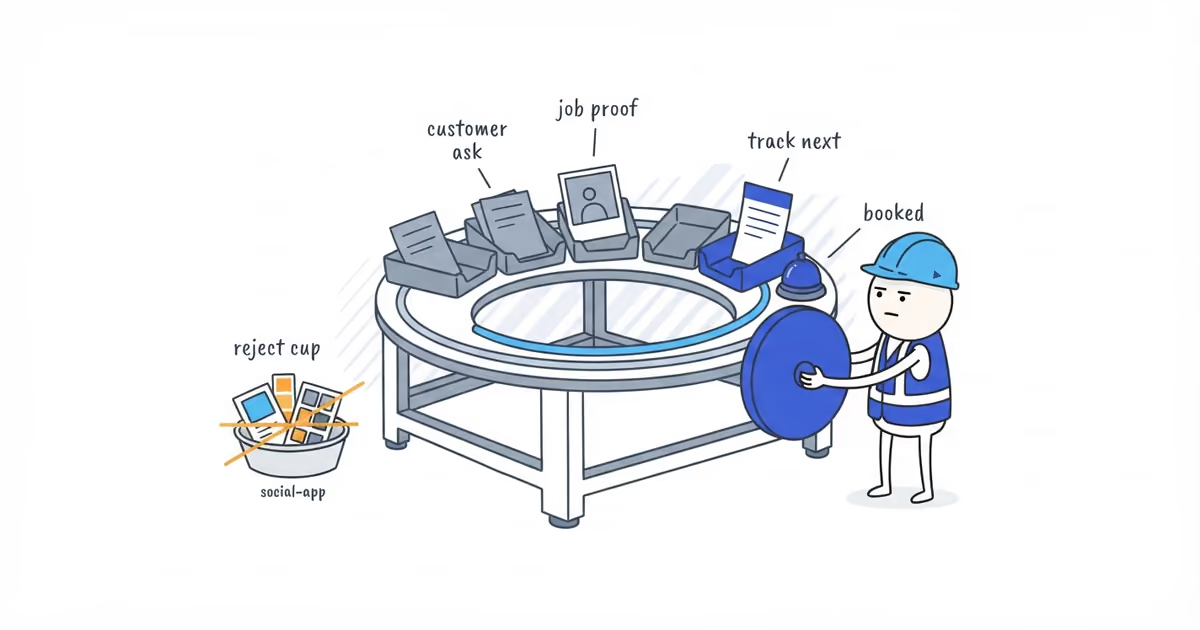
Use the hour on four jobs, in this order:
| Time | Task | You are done when |
|---|---|---|
| 20 minutes | Follow up warm opportunities | Every open estimate has a next action, or you have contacted three past customers if the pipeline is empty |
| 15 minutes | Ask for reviews or referrals | Three recent customers have received one clear, personal request |
| 15 minutes | Publish one piece of job proof | One useful job photo and explanation are live where customers already check the business |
| 10 minutes | Update the lead tracker and prepare next week | Each active lead has a source, stage, next action, and outcome; next week’s names are ready |
Work closest to a booked job first. Do not divide the hour between Facebook, Instagram, Google, email, a new logo, and an advertising dashboard. One completed follow-up is worth more than five half-finished marketing tasks.
BrightLocal’s 2025 US survey found that 54% of small-business owners manage marketing alone. The useful plan is one that survives customer work.
A one-hour weekly marketing plan for contractors
Start with demand the business has already earned, create proof for the next customer, then record what happened. Set a timer for each block and move on when the target is met or time runs out. An open estimate is closer to booking than a stranger scrolling a social feed.
Spend 20 minutes following up warm leads
Open estimates and inquiries that still need an answer. Start with customers who described a job, received a price, or asked about availability. Send the promised information, answer the question, follow up, or close the lead.
A simple estimate follow-up can be enough:
Hi [Name], I am following up on the estimate for [job]. Is there anything in the scope you would like me to explain? If you are ready to move ahead, reply here and I will send the current scheduling options.
Change the wording to match the conversation. Do not invent urgency.
If an estimate needs more than one check-in, the estimate follow-up text guide helps you confirm delivery and keep each message to one low-pressure next step.
What to do if there are no warm leads
Contact three past customers who have a real reason to hear from you: recurring service is due, seasonal work is approaching, or a related service follows the completed job. Write about their job rather than sending a generic blast.
If the business has no customers yet, use the block to fix the clearest missing item on its main website page or business profile: service, service area, proof, or contact step. If those are clear, contact one relevant local referral partner.
Spend 15 minutes asking for reviews or referrals
Choose three recent jobs. Ask for one thing rather than a review, referral, testimonial, and social follow in the same message.
If the business needs more public proof, send a direct review request:
Hi [Name], thanks again for choosing us for [job]. If you have a minute, would you leave an honest review about the work? Here is the link: [review link].
Keep the direct review link ready before the session. If the business already has recent reviews, use the block for a relevant referral or rebooking conversation instead. The request should make sense for the customer without a promotion attached.
Spend 15 minutes turning one completed job into proof
Pick one job that represents work you want more of. Use one clear photo, or an approved before-and-after pair. Write four pieces of information:
- The problem the customer needed solved.
- The work the business completed.
- The general service area, without publishing a private address.
- The next step for someone with the same problem.
Use this fill-in structure:
A [customer type] in [general area] needed help with [specific problem]. We [plain description of the completed work]. If you are dealing with [recognizable version of the problem], [clear contact or booking step].
Publish it on one primary surface where customers already evaluate the business: the website, Google Business Profile, or the social page that produces real inquiries. Do not rewrite it for five platforms.
If Google Business Profile is the surface you chose, the Google Business Profile post guide helps you turn the completed job into a useful post without splitting the hour across channels.
Spend 10 minutes tracking marketing results
Use a spreadsheet, notebook, or the system the business already opens. Track five fields:
| Customer and service | Source | Stage | Next action | Outcome |
|---|---|---|---|---|
| Jordan, water-heater replacement | Google Maps | Estimate sent | Follow up Friday | Open |
Record what the customer says brought them in. Measure qualified enquiries, estimates, booked jobs, completed work, and revenue by source. Likes and views may explain a channel, but they are not booked work.
Use the final minute to list the customers, jobs, and photos needed next week so the next session begins with action.
What to skip when marketing time is limited
- Opening another social-media account.
- Redesigning the logo, colors, or business cards.
- Posting a generic holiday message with no connection to the work.
- Writing a long article when estimates are waiting for follow-up.
- Starting paid ads without a way to identify the leads and booked jobs they produce.
- Studying reach or follower reports without deciding what action changes.
Run the same routine for several weeks before adding a channel. The pattern will show whether the business lacks enquiries, loses estimates, has weak proof, or fails to record where work comes from.
If the routine shows that enquiries are weak but the website, Google profile, reviews, listings, and photos do not reveal one obvious cause, ShiftFlow’s online presence audit identifies which basics to fix first.
Make the weekly marketing routine easier to repeat
Prepare the raw material during job closeout:
- Save one approved job photo in a folder named for the service and date.
- Keep the review link somewhere it can be pasted from the phone.
- Record the lead source when the customer first contacts the business.
Keep one running list of estimates and customers who need a reply. Put the marketing hour at the same point each week. The schedule can move; the order stays: warm work, customer proof, public proof, then tracking.
Frequently asked questions
Can I split the marketing hour into 10 minutes a day?
Yes. Keep the same order and completion targets. A daily block can work well when it follows job closeout or invoicing, but do not replace the routine with six unrelated tasks.
What should I automate first in my marketing?
Automate the reminder and setup, not the customer judgment. A recurring calendar block, ready review link, and running follow-up list save time without making customer messages generic.
- pricing
- one-hour-marketing-plan-for-contractors
- weekly-marketing-routine-for-contractors
- contractor-marketing-checklist
- how-to-market-my-business-with-no-time



