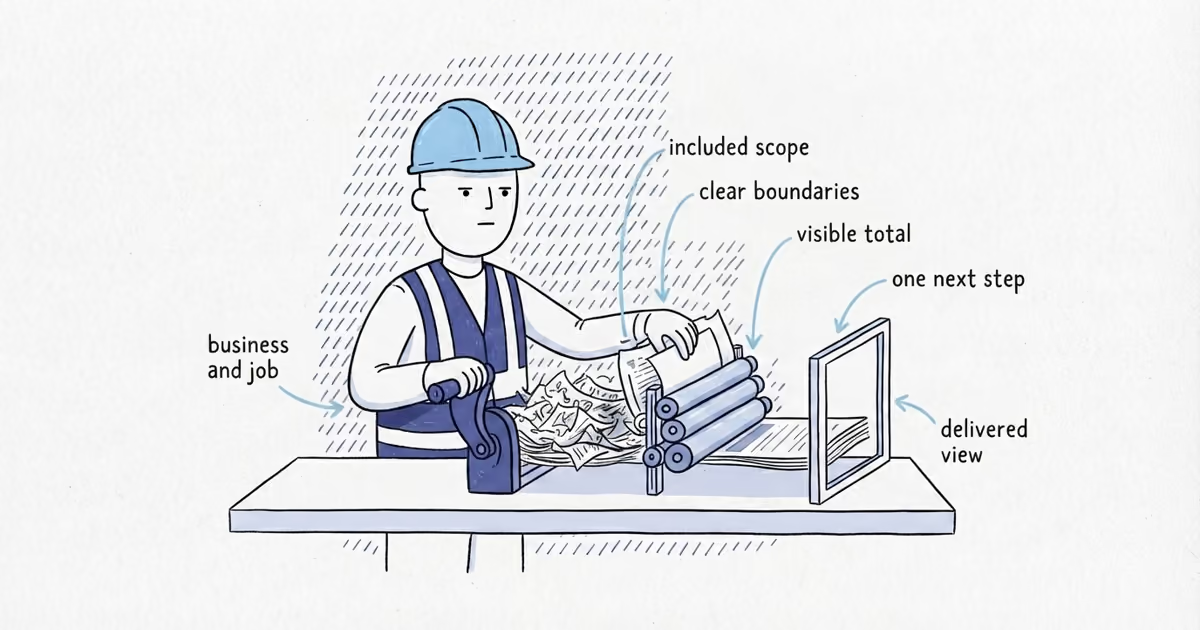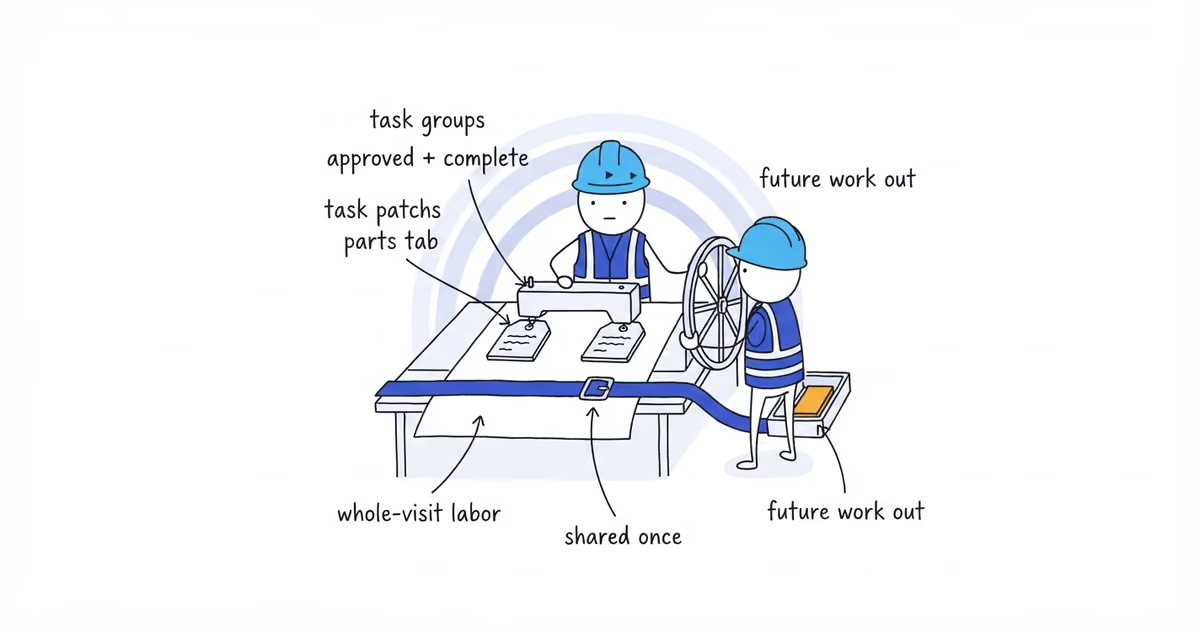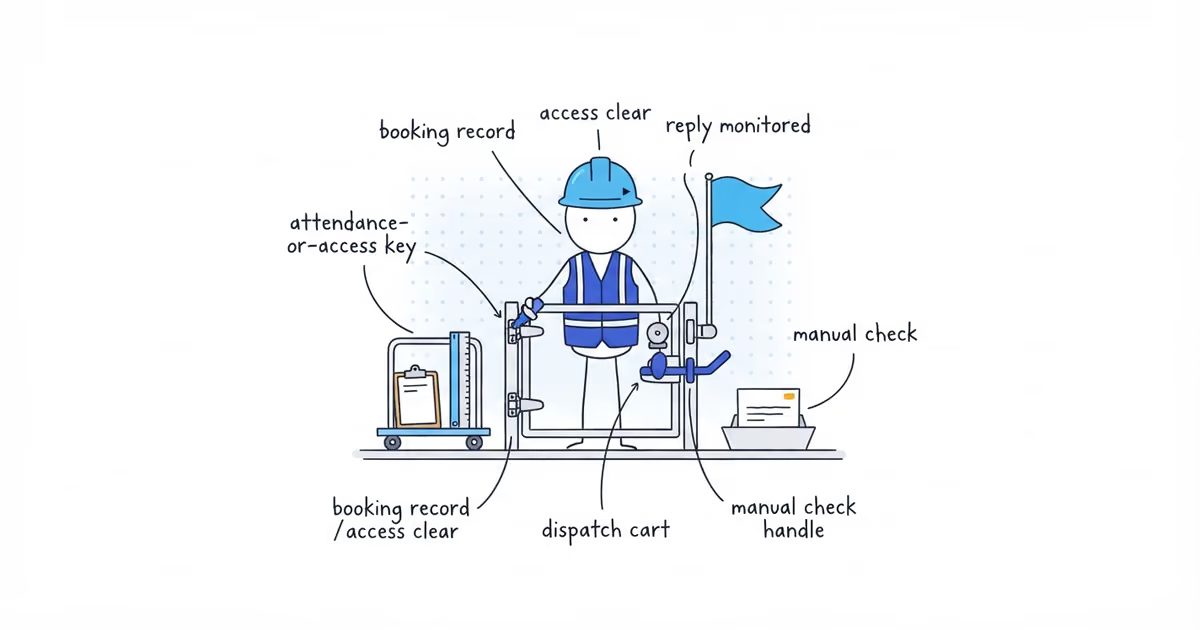

How Much Do Roofing Business Owners Make?
How much do roofing business owners make? Follow contract revenue through materials, production, commissions, overhead, owner pay, and retained cash each year.
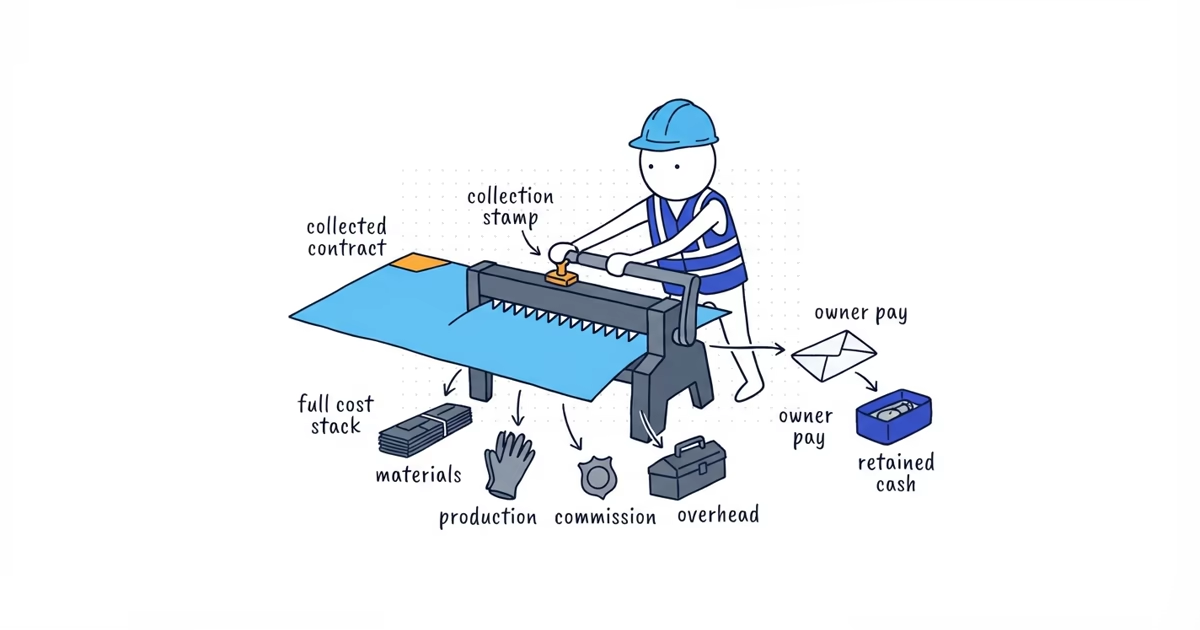
An $18,000 signed roof replacement is not $18,000 of owner income. In the planning model below, it becomes $17,820 invoiced, $17,460 collected, $2,968 in cash before owner compensation, $2,226 in planned owner compensation, and $742 in retained cash.
That is one illustration, not an industry benchmark. No reviewed public source provides a defensible national average for roofing-owner take-home pay. The useful answer begins with completed and collected contracts, then follows the money through job costs, overhead, owner compensation, and retained cash.
Roofing contract revenue and owner pay example
A signed contract feels like revenue because it puts a large number in the pipeline. It is not money in the bank, and even the money collected still has to pay for the roof and the business that sold it.
Here is one disclosed small-residential replacement model:
| One-contract cash waterfall | Amount |
|---|---|
| Signed contract value | $18,000 |
| Net approved scope/invoicing adjustment: 1% of signed | -$180 |
| Invoiced value | $17,820 |
| Collection shortfall: 2% of signed | -$360 |
| Collected cash | $17,460 |
| Materials: 30% of collected cash | -$5,238 |
| Loaded crew or subcontractor production: 25% | -$4,365 |
| Sales commission: 8% | -$1,397 |
| Permit and dumpster: 3% | -$524 |
| Merchant or financing fees: 1% | -$175 |
| Lead cost: 4% | -$698 |
| Warranty and rework allowance: 2% | -$349 |
| Allocated overhead: 10% | -$1,746 |
| Cash before owner compensation | $2,968 |
| Planned owner compensation: 75% of pre-owner cash | -$2,226 |
| Retained cash | $742 |
Illustrative planning model, not an industry average. The 1% invoicing adjustment and 2% collection shortfall are separate editorial assumptions; the annual tables combine them as one net revenue adjustment. Neither is a published roofing change-order, cancellation, or bad-debt rate. All eight cost percentages also await operator review.
The $2,968 is what survives the modeled job costs and overhead. It is not automatically the owner’s paycheck. This example allocates 75% to compensation before personal tax and keeps 25% in the company. Retained cash may be needed for working capital, weather delays, deposits on materials, warranty work, debt, taxes, or another obligation outside this simplified job.
If the signed value is still being built from takeoff, scope, and price inputs, use our roofing estimate generator to calculate roof quantities, check scope items, and export a customer PDF before the job enters this owner-income model.
Roofing revenue, profit, and owner compensation
Roofing income pages often move too quickly from contract value to owner pay. The missing distinctions are practical:
| Term | What it means in this model |
|---|---|
| Signed value | The contract amount before later changes, cancellation, invoicing, or collection |
| Invoiced value | The amount billed after approved scope and price changes |
| Collected cash | Customer or financing money the company has actually received |
| Direct job costs | Materials, production, commission, permit/dumpster, fees, lead cost, and warranty work |
| Overhead | The job’s allocation of operating costs that are not carried as one direct job item |
| Cash before owner compensation | Collected cash minus direct job costs and allocated overhead |
| Owner compensation | The selected share allocated to the owner before personal tax |
| Retained cash | Cash kept in the business after the owner allocation |
The model does not prescribe a salary, draw, or distribution. Entity-specific owner-pay and tax treatment belong with the company’s accountant. Its job here is narrower: keep proposals, sales, job cash, owner compensation, and retained business cash from becoming one impressive but unusable number.
Roofing business owner income examples
The annual examples are operating shapes, not company-size tiers or a growth path.
The repair-focused owner-operator completes inspections and sales, performs much of the repair work, and uses limited helper or subcontractor production. The small residential replacement company has the owner inspecting, selling, and coordinating production while crews or subcontractors install. In the established residential team, the owner concentrates on management, financial control, and selected sales oversight while team members handle most selling and production.
Annual scenario inputs use the same editorial planning model.
| Annual input | Repair-focused owner-operator | Small replacement company | Established residential team |
|---|---|---|---|
| Modeled signed jobs | 180 | 60 | 160 |
| Average signed value | $1,250 | $18,000 | $20,000 |
| Net revenue adjustment | 4% | 3% | 4% |
| Materials | 18% | 30% | 29% |
| Loaded crew/subcontractor production | 12% | 25% | 25% |
| Sales commission | 0% | 8% | 9% |
| Permit and dumpster | 2% | 3% | 3% |
| Merchant or financing fees | 1% | 1% | 1% |
| Lead cost | 5% | 4% | 5% |
| Warranty and rework allowance | 2% | 2% | 2% |
| Overhead | 18% | 10% | 11% |
| Share allocated to owner compensation | 85% | 75% | 60% |
The higher overhead share in the repair model represents many operating costs spread across smaller tickets. Its 0% sales-commission input assumes the owner sells the work and receives compensation through the owner-allocation line. That does not make owner sales time free; it makes the owner’s role explicit.
The formula is:
Signed jobs x average signed value x (1 - net revenue adjustment) = collected revenue
Then:
Collected revenue - direct job costs - overhead = cash before owner compensation
Annual model outputs:
| Annual model output | Repair-focused owner-operator | Small replacement company | Established residential team |
|---|---|---|---|
| Signed value | $225,000 | $1,080,000 | $3,200,000 |
| Collected revenue | $216,000 | $1,047,600 | $3,072,000 |
| Materials | $38,880 | $314,280 | $890,880 |
| Production | $25,920 | $261,900 | $768,000 |
| Sales commission | $0 | $83,808 | $276,480 |
| Permit and dumpster | $4,320 | $31,428 | $92,160 |
| Merchant or financing fees | $2,160 | $10,476 | $30,720 |
| Lead cost | $10,800 | $41,904 | $153,600 |
| Warranty and rework allowance | $4,320 | $20,952 | $61,440 |
| Overhead | $38,880 | $104,760 | $337,920 |
| Cash before owner compensation | $90,720 | $178,092 | $460,800 |
| Planned owner compensation | $77,112 | $133,569 | $276,480 |
| Retained cash | $13,608 | $44,523 | $184,320 |
The established team collects more than 14 times the repair operator’s revenue, but its modeled owner compensation is about 3.6 times as large. Production, selling, lead, and operating costs absorb cash, and the larger example deliberately retains 40% of pre-owner cash.
Personal tax, debt principal, owner benefits, depreciation, capital purchases, and reserves beyond the retained-cash line are not modeled. Add them before using the result for a real owner-pay decision.
How material costs affect roofing owner income
On the $17,460 collected contract, moving materials from 30% to 35% adds $873 of cost. With every other assumption unchanged, cash before owner compensation falls from $2,968 to $2,095.
At the same 75/25 allocation, planned owner compensation falls from $2,226 to about $1,571, and retained cash falls from $742 to about $524. That is the arithmetic consequence of one input change, not a claim that material costs will move by five points.
The same test works for production, commissions, lead cost, and callbacks. Change one observed input, keep the others still, and see exactly which line absorbs the difference. Otherwise, a job-cost problem can hide inside a busy sales month.
How supplements and collections affect roofing revenue
An approved supplement or change order belongs in the model when it changes the invoice, and it affects available cash when the money is collected. An anticipated supplement does not pay material deposits. A canceled contract should leave the pipeline rather than remain in projected annual revenue.
If approved scope changes still need a defensible revised price, use the change-order pricing guide to account for added labor, materials, remobilization, schedule impact, overhead, profit, tax, and credits before updating the invoice.
Collection timing matters too. A completed job invoiced in one month and paid in the next can make a short reporting period look unusually weak or strong. Use a consistent trailing-12-month view, then reconcile completed, invoiced, and collected jobs instead of mixing dates.
Weather affects the sequence without creating a universal percentage adjustment. It can delay production, invoicing, collection, or the next available install day while overhead continues. Replace the model’s single adjustment with the company’s actual cancellation, completion, invoicing, and collection records. Do not multiply one storm-season month into a representative year.
What Census data says about roofing business revenue
The exact 2023 County Business Patterns row for Roofing Contractors, NAICS 238160, reports 25,519 employer establishments, 215,242 employees, and $15.186 billion in annual payroll. Those are useful employer-industry counts. They do not reveal owner compensation, retained cash, job margins, or company revenue distributions.
The historical 2023 Nonemployer Statistics file does not publish exact NAICS 238160. It publishes the broader NAICS 2381, Foundation, Structure, and Building Exterior Contractors, with 306,340 nonemployer establishments and $26.288 billion in aggregate receipts. Those figures include more than roofing businesses. They cannot be labeled roofing-only, and aggregate receipts before expenses cannot be turned into owner income by division.
If you need an employee benchmark for installation and repair work, use the roofer salary guide to compare against May 2025 wage data without mixing employee payroll with owner compensation.
How to calculate roofing owner compensation
Build one trailing-12-month report from records that reconcile:
- Export signed jobs, then identify cancellations and approved scope or price changes.
- Match completed jobs to invoiced amounts and invoiced amounts to collected deposits.
- Pull material invoices and loaded employee or subcontractor production cost by job.
- Match sales commissions, permit and dumpster charges, transaction or financing fees, and lead cost to the same jobs.
- Pull warranty, callback, and rework cost, including paid production time and material.
- Allocate insurance, vehicles, facilities, software, admin, and other overhead consistently across the same period.
- Subtract job costs and overhead from collected cash to find cash before owner compensation.
- Set the retained-cash requirement before deciding what is available for owner compensation.
That report may support more or less owner compensation than any example here. The trustworthy answer is the amount left after completed work becomes collected cash, every relevant cost is paid, and the business keeps the cash it still needs. The signed-contract total is only the beginning of that calculation.
Frequently asked questions
What is a good roofing profit margin?
The reviewed sources do not support one universal roofing margin benchmark. In the disclosed $18,000 contract model, 17% of collected cash remains before owner compensation, but that is an editorial assumption to replace with completed-job records, not an industry target.
Do roofing supplements count as revenue?
An approved supplement or change order affects the model when it changes the invoice. It becomes available cash only when collected; an anticipated or disputed supplement should not be counted as money the owner can use.
Is roofing sales commission part of owner income?
No. This model treats sales commission as a direct job cost before cash available for owner compensation. When the owner sells the job without a separate commission, that sales work still belongs in the stated owner role and compensation decision.
Sources
- roofing
- business-owner-earnings
- owner-compensation
- business-revenue
- roofing-profit