Should Contractors Use Facebook?
Should contractors use Facebook? Run a six-week Facebook Business Page test, track qualified local inquiries, and choose active use, maintenance, or pause.
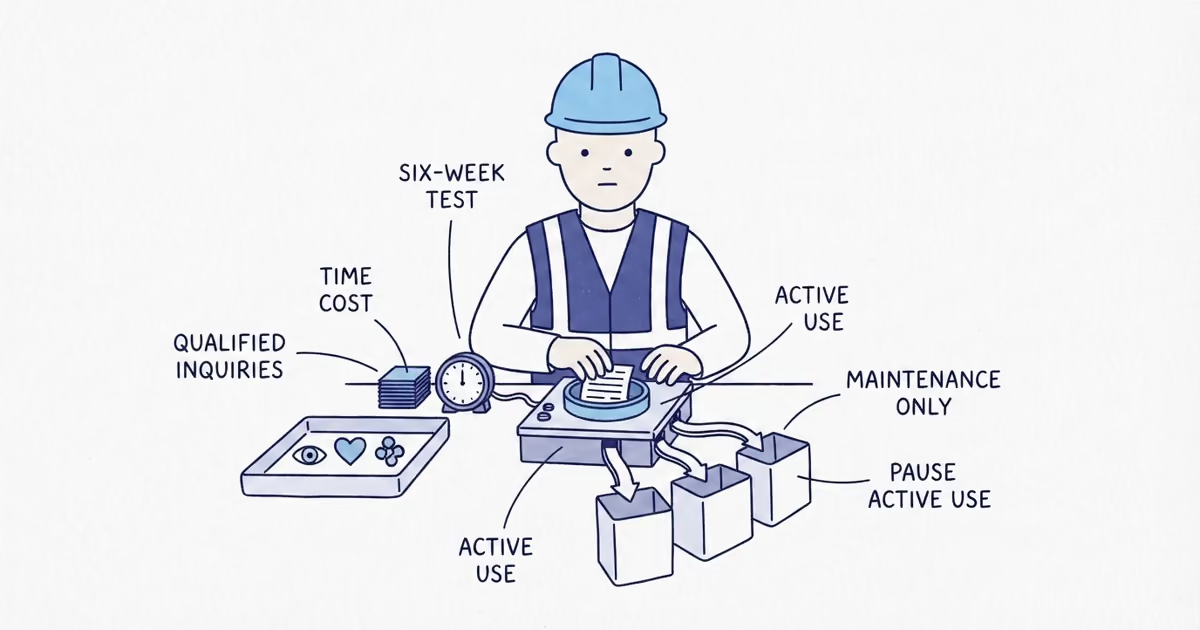
Contractors should use Facebook when customers or referral partners check it, the business can keep a Facebook Business Page accurate, and a limited test produces enough qualified local opportunity to justify the time. Free access, competitor activity, and Facebook’s size do not establish local fit.
At the end of the test, choose one of three states: continue active Page use, maintain accurate basics without regular publishing, or pause active use. This article evaluates a Facebook Business Page only. It does not test a personal profile, local Facebook Groups, boosted posts, or paid ads.
Platform details checked: August 27, 2026 (United States).
Meta describes Pages as a business and brand surface and treats profiles, Pages, and groups as different products. A Group or paid-campaign lead does not prove that Business Page work earned it.
If local Group participation is the channel under review, use our local Facebook Groups guide to check community rules, disclosure, and permission before posting.
What Should a Facebook Business Page Do for Contractors?
Choose one or two roles before the test:
- Help a referred prospect confirm the business, service area, and recent work.
- Provide a current route for a local prospect to inquire.
- Create local exposure from approved Business Page posts about one service.
“Build awareness,” “stay active,” and “gain followers” are not testable roles. Name what a prospect should confirm or do.
Review recent inquiry-source notes and ask a small set of customers or referral partners whether they checked Facebook. Record real Page visits, recommendations, tags, messages, calls, or forms. This checks local fit; it is not a representative survey.
Is Your Contracting Business Ready for Facebook?
Complete all four rows before starting the clock.
| Gate | Pass condition | If it fails |
|---|---|---|
| Customer signal | A recent customer, prospect, or referrer says they checked the Page | Use a lower-effort channel or collect better evidence first |
| Accurate Page | Name, service, area, availability, and inquiry route are current and working | Correct the details and test the route |
| Approved proof | Approved, privacy-checked work material is ready for the selected service | Resolve approval and privacy first |
| Response owner | One named person can review Page work and handle inquiries | Assign coverage or do not start |
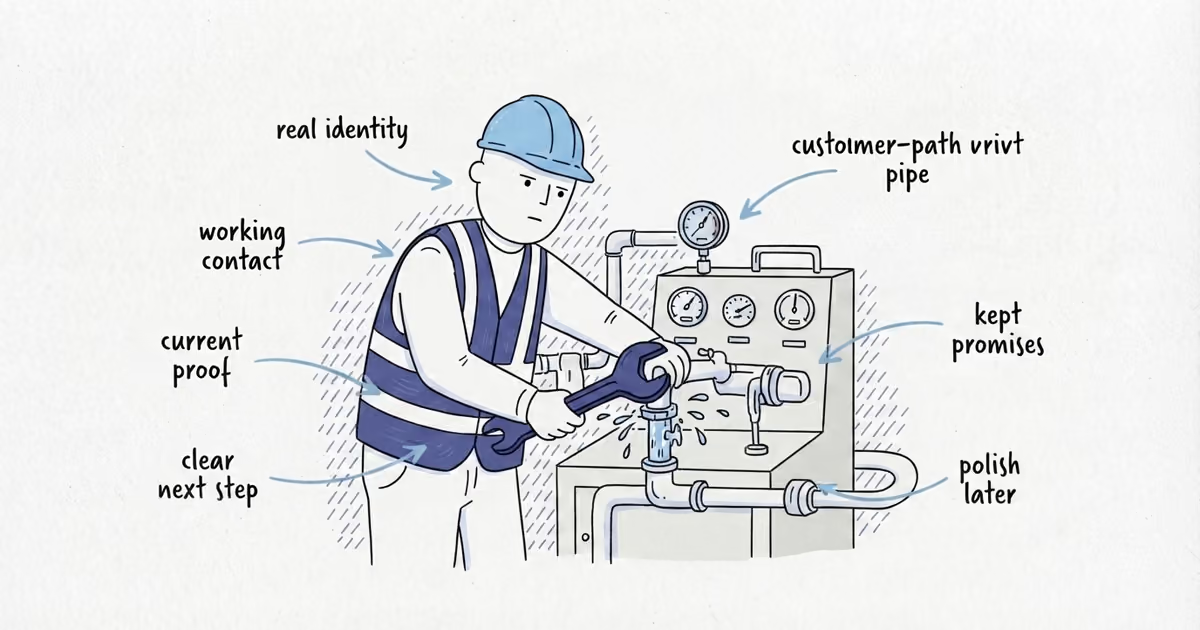
An old phone number, dead inquiry route, or uncleared job-photo folder fails the gate. Fix those inputs before Facebook gets an active slot.
If the Facebook Page shows a different phone number, hours, or service area from the business’s other core profiles, ShiftFlow’s local listings cleanup can trace the conflicting sources and align the main customer-facing records.
How to Run a Six-Week Facebook Business Page Test
Six weeks is this worksheet’s operating window, not a Meta recommendation, industry standard, or universal proof.
Fill this setup block before publishing anything:
| Test field | Your entry |
|---|---|
| Named service | |
| Service area | |
| Page role | Verification, inquiry route, local exposure, or two of these |
| Working inquiry route | |
| Sustainable posting plan | |
| Weekly time cap | |
| Owner or staff hourly value | |
| Current baseline | Page-attributed inquiries, estimates, wins, and assisted checks |
| Source question or field | ”How did you hear about us?” |
| Minimum acceptable outcome | Inquiry target and maximum time cost, set before results |
Use a schedule the business can support; there is no universal number here. Do not boost posts, buy ads, or count Group promotion. Mixing those activities spoils the Page test.
A qualified inquiry comes from the service area, requests the named service, and concerns a real job the business can consider. Handle deeper qualification elsewhere.
If the Page starts producing messages or forms but the team has not defined the next handoff, use our social media lead guide to capture, qualify, assign, and track each inquiry through the normal estimate or booking process.
How to Measure Facebook Marketing for Contractors
Fill one row each week. Keep Page diagnostics brief.
| Week | Planned / published | Minutes | Page diagnostics | Qualified Facebook inquiries | Estimates | Won jobs | Verified assisted checks |
|---|---|---|---|---|---|---|---|
| 1 | / | ||||||
| 2 | / | ||||||
| 3 | / | ||||||
| 4 | / | ||||||
| 5 | / | ||||||
| 6 | / | ||||||
| Total | / |
A customer identifies a Page-attributed inquiry as coming from Facebook. An assisted check means a referred prospect says the Page helped confirm the crew’s work. Keep unknown sources unknown.
Meta says Page Insights report Page performance. Reach, views, visits, reactions, comments, and follower changes are diagnostics. They do not prove an inquiry, estimate, booked job, revenue, or return on time.
At the end, calculate:
Facebook time cost = Facebook hours x chosen hourly value
Cost per qualified Facebook inquiry = Facebook time cost / qualified Facebook inquiries
With zero qualified inquiries, do not report a $0 cost. There is no measurable cost per qualified inquiry: time was spent and none were received.
How a Raleigh Painting Company Tests Facebook
Oakline Painting tests exterior repainting in Raleigh. The owner values time at $60 per hour, caps Facebook at 75 minutes weekly, and requires at least two qualified inquiries at no more than $200 each. The office manager owns replies.
After six weeks and 6.5 hours, three Page-attributed prospects qualify. Two receive estimates, one hires Oakline, and two referred prospects report checking the Page before calling.
- Time cost:
6.5 x $60 = $390 - Cost per qualified inquiry:
$390 / 3 = $130 - Delivery: the work stayed below the combined 7.5-hour cap
- Outcome: three qualified inquiries, two estimates, one won job, and two assisted checks
Oakline continues: it met the preset target, stayed within its allowance, and covered replies. These hypothetical figures are not a Facebook or painting benchmark.
When Should Contractors Continue, Maintain, or Pause a Facebook Page?
Continue active use when the preset outcome is met, the cost compares well with the next-best source, and the team can publish and respond. One high-view post does not justify more work.
Choose maintenance-only when publishing has not earned its time but prospects repeatedly use the Page to verify the business. Keep core details and the inquiry route accurate; stop requiring regular posts.
Pause active use when a completed test produces no acceptable attributed or assisted evidence, exceeds the time cap, or causes skipped approvals and unanswered inquiries. This does not require deleting the Page. If prospects inspect it, keep its details and contact route accurate. If the business cannot do that, resolve the public exposure instead of leaving it misleading.
A test is inconclusive when work was not delivered, tracking was skipped, or inquiries went unanswered. That tested the operating process, not Facebook. Repeat only if fixing it beats the next available channel.
Facebook earns one written decision: an active slot, an accurate maintenance-only presence, or no current operating attention. The scorecard makes that choice; follower count does not.
Frequently Asked Questions
What should contractors post on Facebook during the test?
Use approved Business Page posts tied to the named service and Page role. Choose the post mix separately; this test measures whether the plan produces business evidence.
How often should contractors post on Facebook?
There is no universal schedule. Choose the smallest sustainable plan that fits the time cap, then record what was planned and published.
How many Facebook followers does a contractor need?
There is no minimum. A Page can help with verification or qualified local inquiries, but follower count alone never passes the test.
Sources
- local-platform-decisions
- should-contractors-use-facebook
- facebook-business-page-for-contractors
- facebook-marketing-for-contractors
- facebook-page-test
- how-often-should-contractors-post-on-facebook