
How to Prove Your Guards Were Actually on Post
A guard schedule says someone was at the gate from 10 PM to 6 AM. A clock-in says a button was pressed. Neither proves a person was actually standing post. Here is how to turn attendance into evidence you can hand a client.
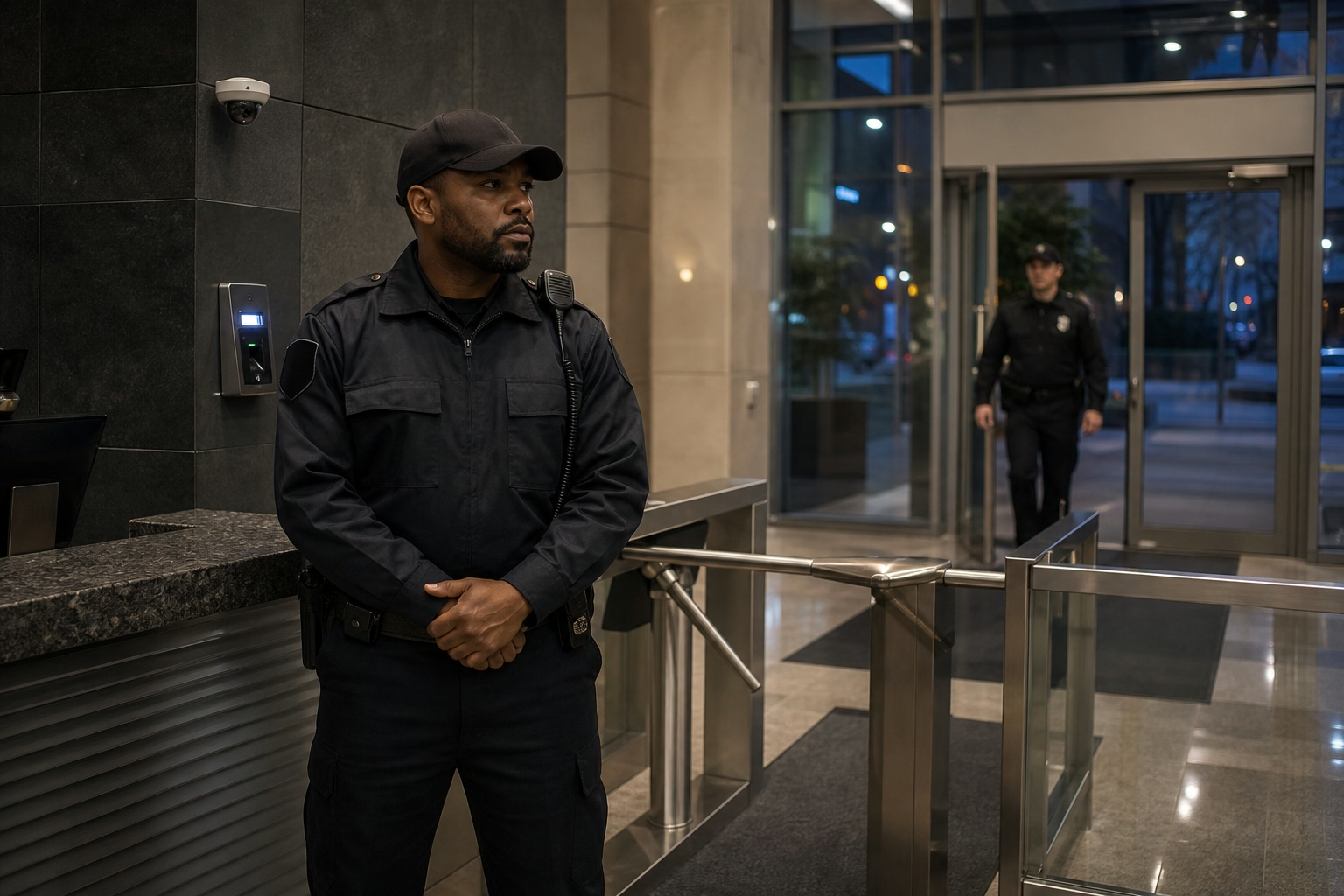
A Schedule Is a Plan. A Client Wants Proof.
Here’s the call every guard company dreads. The client’s building got hit overnight, or a manager swung by at 2 AM and saw an empty lobby, and now they’re on the phone asking one question: was your guard actually here?
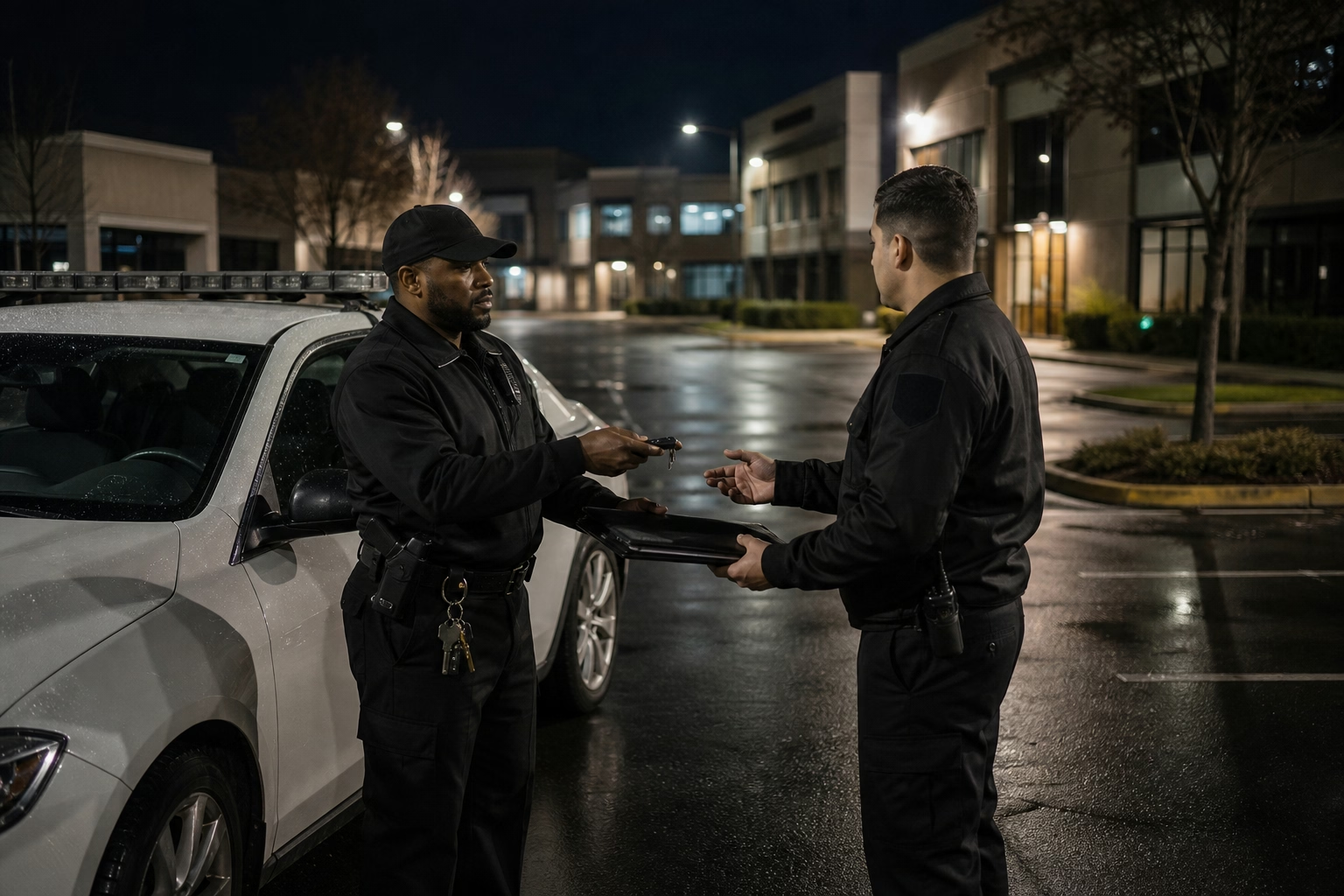
What can you show them? The schedule says Martinez was posted 10 to 6. But the schedule is a plan. It says who was supposed to be there, not who was. You pull the time record and it says someone clocked in at 9:58. But a bare clock-in only proves a button got pressed somewhere. It doesn’t prove Martinez was at the gate instead of at home, or that it was Martinez at all and not his cousin covering the shift.
Selling security is selling presence. The client is paying for a human being to be physically at a specific place during specific hours. If the one thing you can’t prove is the one thing they’re buying, every dispute becomes your word against theirs. And you lose those — along with the contract.
Why “Someone Clocked In” Isn’t Enough
Each method establishes something different, and the gap is the whole problem.
The schedule tells you the intent. Zero evidence about reality.
A bare clock-in tells you a punch happened at a time. It says nothing about location — the guard could have clocked in from his car, from the highway, from his couch — and nothing about identity, because a PIN or a shared device can be operated by anyone.
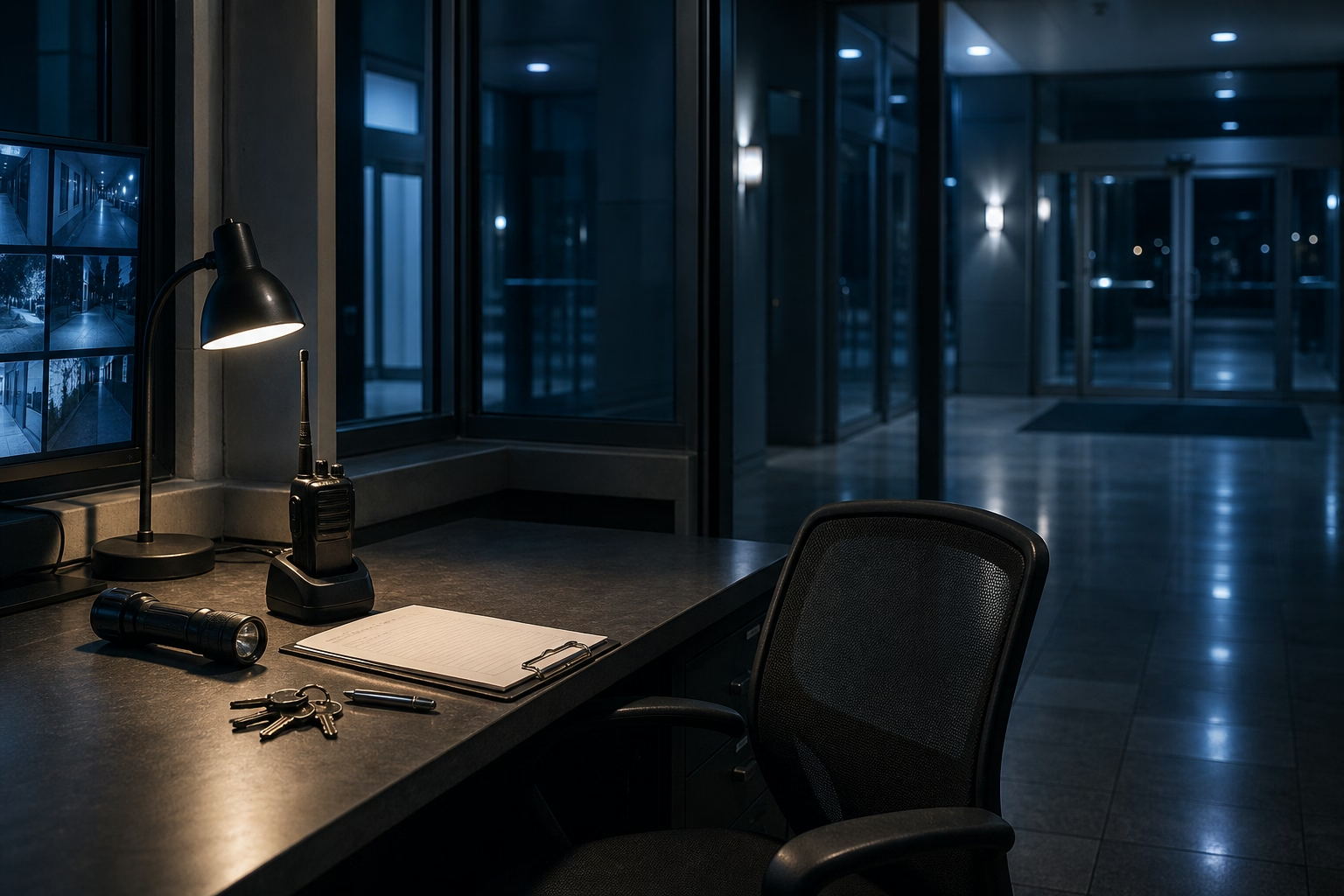
A paper post log or sign-in sheet is filled in by hand, after the fact, by the person whose presence is in question. It’s the definition of unverifiable. At 3 AM with no one watching, it’s trivial to fill in for a shift that was half-slept-through.
A supervisor’s spot check covers the one moment the supervisor was there. It tells you nothing about the other seven hours and fifty-five minutes.
Each of these answers a weaker question than the one the client is asking. The client wants to know a specific person was at a specific place for a specific window. Proof has to carry all three.
What Turns Attendance Into Evidence
Three things, captured at the punch, convert “we had someone scheduled” into “here’s the record.”
GPS location on every clock-in. The punch carries the coordinates it was made from. Now the record doesn’t just say 9:58 — it says 9:58, at the client’s address. A clock-in from anywhere but the post is visible immediately, and a geofence around the site can flag or block a punch attempted from the wrong place. This is the same proof-of-arrival logic that field crews rely on, and in guard work it’s the core of the service.
A selfie on the punch. GPS proves the place; the photo proves the person. When the guard clocks in, the app captures a quick image and binds it to the record. Now you can show not just that someone was at the post, but that it was Martinez — which kills the “my cousin covered for me” version of buddy punching that plagues unsupervised posts. It takes a second and needs only a face.
Clock-in and clock-out, both stamped. Presence is a window, not a moment. Stamping both ends — with location and photo on each — documents that the guard was there at the start and still there at the end, not that they showed their face at 10 and vanished at 10:15.
Put it together and a shift becomes a defensible record: this guard, at this location, from this time to this time, with photos and coordinates on both ends. That’s something you can forward to a client in an email, not argue about on a phone call.

Where the Proof Pays Off
The dispute call. “Was anyone there?” stops being a panic and becomes a thirty-second reply with a timestamped, located, photo-verified record attached. You’re not defending your word. You’re showing the file.
Winning and keeping contracts. Accountability is a selling point. A prospect choosing between guard companies will take the one that can prove coverage over the one that asks to be trusted. Showing a client the verification record during onboarding is often the thing that closes the deal.
Your own visibility. A live view of who’s clocked in, at which post, with location confirmed, means you know your posts are actually manned right now — from the office or your phone — instead of finding out from an incident report. The post that should have a guard and doesn’t is a problem you catch tonight, not next week.
What the Record Captures, and What You Can Defend
Here’s the honest boundary, and one worth stating plainly to your guards: this verifies the punch, not the entire shift minute by minute. ShiftFlow captures a location and a photo when a guard clocks in and out, while they’re on the clock — it’s not continuous all-night GPS tracking of the individual, and you shouldn’t present it that way. Tell guards exactly what’s captured and when, keep it in a short written policy, and confirm your state’s rules — location and photo capture at work varies by state, and where a selfie verifies identity by face-matching, biometric laws like Illinois’ BIPA can require explicit consent. Framed honestly as “we document that the post was manned,” it reads as professional. And it protects the guards too — when a client wrongly claims no one showed, the record clears them.
Proving presence is the product you actually sell, so see how a time clock built for security teams puts GPS and a photo on every punch, or put ShiftFlow on your next post and turn coverage into something you can show.
Frequently Asked Questions
How can a security company prove a guard was on post?
Tie every clock-in to a location and a photo. A GPS-stamped, selfie-verified punch shows the guard was physically at the site and confirms which guard it was, at the exact time. That combination turns a schedule entry into evidence you can put in front of a client when they ask whether anyone was actually there.
Why is a schedule not proof that a guard worked the post?
A schedule is a plan, not a record of what happened — it says who was supposed to be there, not who was. A plain clock-in is only slightly better, because it proves a button was pressed, not where or by whom. Proof requires the location and identity captured at the moment of the punch, which a schedule and a bare timestamp cannot provide.
Does GPS and selfie verification work on overnight and remote posts?
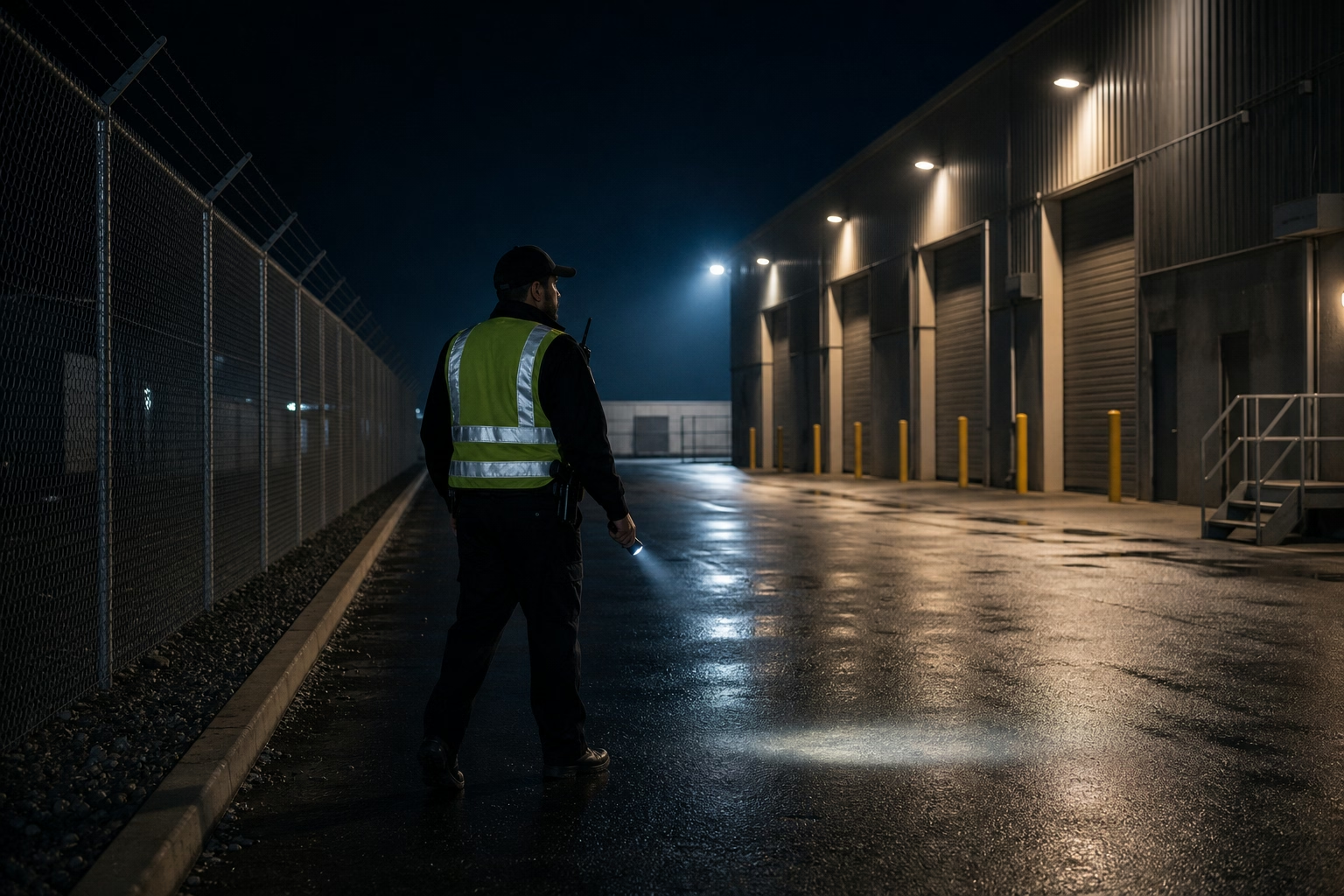
Yes. The location and photo are captured at clock-in regardless of the hour, and a time clock built for the field stores the punch offline at low-signal posts and syncs when service returns. A dark, remote gatehouse at 3 AM is exactly the situation where proof of presence matters most — and where it still works.
Is photo and location capture of guards legal?
In most states, capturing a location and a photo tied to a work punch is allowed when guards are notified — though some states require their written consent. And where a selfie is used to verify identity by face-matching, biometric-privacy laws like Illinois’ BIPA can require explicit notice and consent. Keep it in a clear written policy and confirm your state’s rules before rolling it out.