

How to Price an HVAC Job
HVAC pricing fails when owners quote a five-figure install off a competitor’s number instead of their own equipment, labor, and margin. Here is how to price each job type and hold your margin on the work that matters most.
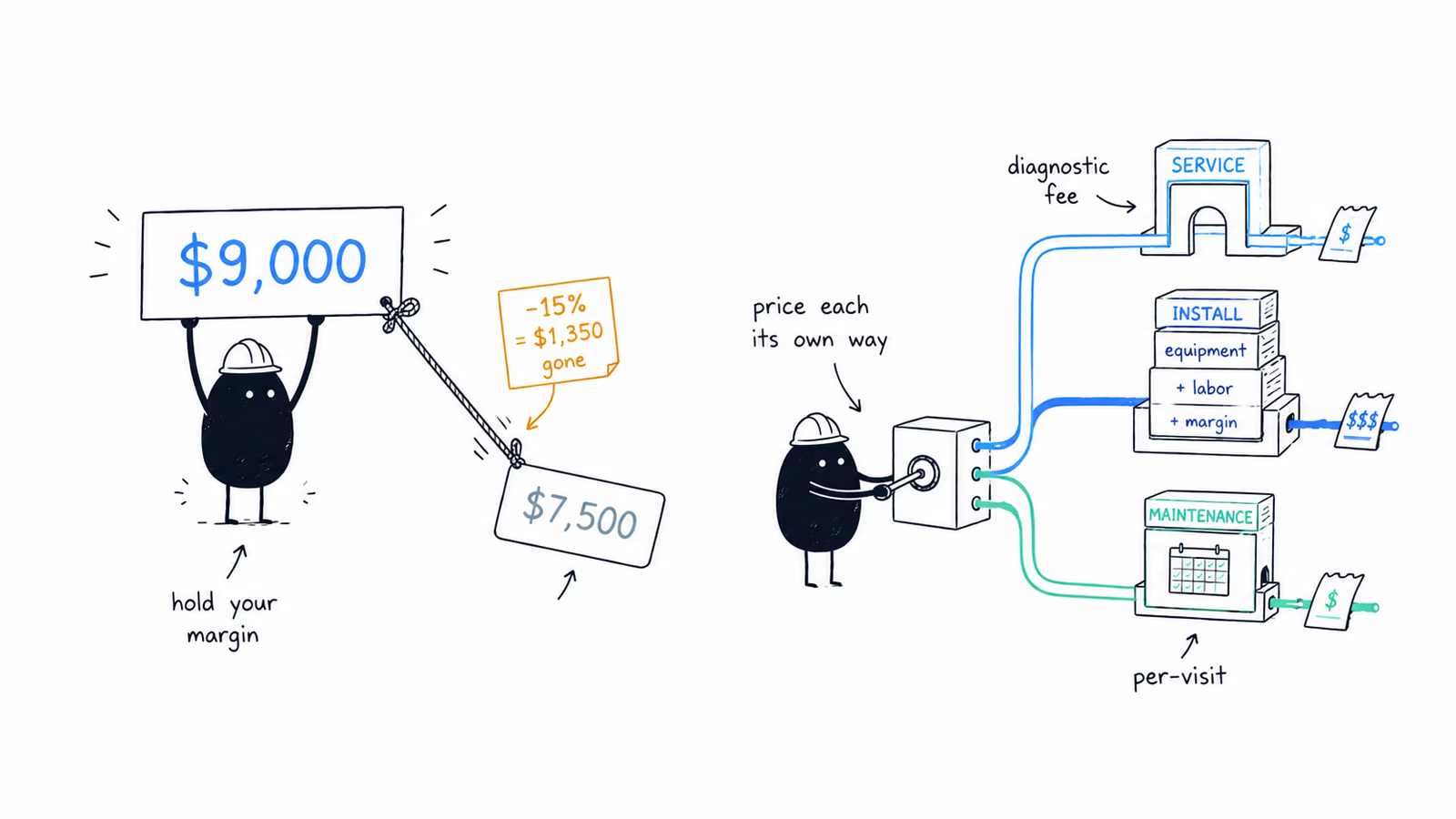
HVAC pricing has one expensive failure mode: quoting a $9,000 install off the contractor down the street instead of your own equipment, labor, and margin. On high-ticket work a few points of margin is real money, and matching a lowball quote can erase the profit on the biggest job you’ll do all month. Price from your costs, and price each job type its own way.
Price each HVAC job type differently
HVAC isn’t one price. Three job types, three approaches. Service and repair runs on a diagnostic fee plus flat-rate repairs. Installs and replacements — the high-ticket work — are built from equipment, labor, and a target margin. Maintenance is a flat per-visit price or a membership plan. Mixing these up is how owners underprice the jobs that matter most.
How to price HVAC service and repairs
Start every service call with a diagnostic fee — the flat charge that covers the truck, the drive, and figuring out what’s wrong. Then price the repair flat-rate from your price book when the scope is defined. For unresolved faults, use the options in how to price a job with an unknown duration. The trap is the “quick” repair: a $20 capacitor feels like easy money at $150, until you count the truck, the drive, and the overhead behind it. Priced right, even the short call clears its cost.
How to price an HVAC installation
Installs are where the money is and where margin quietly leaks. Build the price from four things: the equipment (condenser, furnace, coil, controls), the labor to install it, the materials (line set, pad, whip, fittings), and your overhead. Then add margin on top — not a flat-dollar guess, a target percentage. Use the HVAC estimate guide to turn that price into a documented equipment and installation scope.
How to calculate your HVAC labor cost
Equipment is usually the largest line on a replacement, but labor is the biggest variable — the part you can get wrong, and a loose estimate swings the whole quote. Use your burdened cost — wage plus payroll taxes, workers’ comp, and benefits — times the real crew hours, and pull those hours from past jobs, not optimism. Two techs for six hours is twelve labor hours, and every hour you underestimate comes straight out of margin.
A simple HVAC install price formula
Price = (equipment + materials, marked up) + (crew hours × burdened rate) + overhead, then priced to hit your target gross margin (price = cost ÷ (1 − margin)).
Mark up equipment and parts on a tiered basis when the underlying handling, inventory, warranty, and financing costs justify it. Set the gross-margin target for each job type from your overhead, callback and warranty costs, capacity, and net-profit goal. A copied departmental benchmark cannot tell you whether your own install or service work is profitable.
How to price an HVAC system replacement
A full system replacement: about $3,600 in equipment at cost, $900 of crew labor, $500 in materials, and $400 of overhead — $5,400 in cost. Price it at a 40% gross margin and you quote $9,000. Your equipment and hours will differ; run the same margin math on yours.
Undercut that to match a $7,500 competitor and you’ve handed back most of the margin on the biggest job of the week.
Protect your margin on high-ticket installs
The mistake that hurts most is discounting a big install to win it. On a $9,000 job, dropping 15% isn’t a small courtesy — it’s $1,350, more than a third of your margin on the job. Hold your number. When a customer pushes on price, give them good-better-best options — a lower-tier system, not a lower margin — so they choose the price down instead of you giving it away. For cost, contingency, and cash-flow controls, use the big-job pricing checklist.
How to compare your HVAC prices locally
Compare only genuinely similar local scopes after building your own price. Equipment model, efficiency, duct and electrical work, permits, warranty, financing cost, and installation conditions can move two replacement quotes thousands of dollars apart. A national range cannot tell you whether your price is correct; your job cost and target margin can.
Margin only matters while the installs keep coming, and on a five-figure job homeowners go with the contractor whose reviews they trust — we help you get and manage more reviews.
Frequently asked questions
How much should I charge to install an HVAC system?
It depends on the specified equipment, labor, materials, overhead, and target margin. The illustrative replacement here has $5,400 in cost and lands at $9,000 on a 40% gross margin. Build the number from your own costs, not a national range.
Should HVAC contractors use flat-rate or hourly pricing?
Use flat-rate pricing for work you can scope reliably and time and materials for genuinely unpredictable work. A business can use both models for different job types.
What is a good profit margin for HVAC?
There is no single correct HVAC margin for every department or business. Calculate the gross margin each job type must produce from your overhead, callback and warranty costs, capacity, and net-profit target, then compare it with your actual job-costing results.
- pricing
- hvac
- hvac-business
- installation
- small-business



