

How Do I Price Pest Control Services?
Price the full first-year pest-control promise, not the advertised visit. Calculate the initial treatment, recurring visits, re-service reserve, and honest monthly or quarterly equivalent.
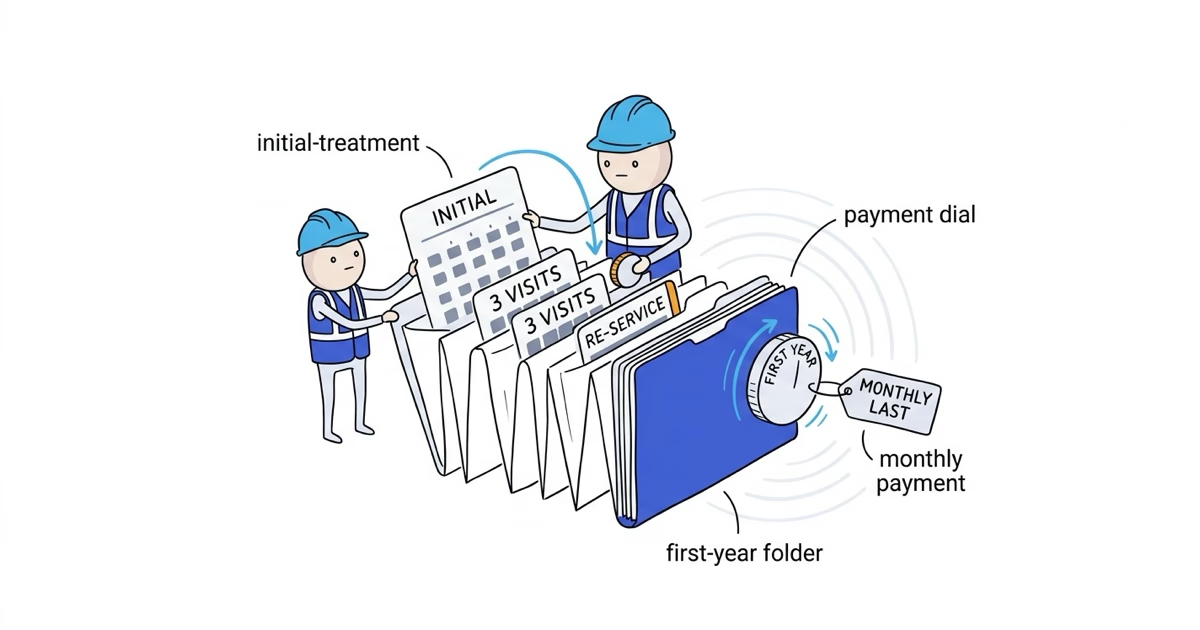
A low quarterly price can look profitable until the first treatment takes twice as long and two “free” re-services put the truck back at the same house. The number on the ad is one visit. The thing you sold is a first-year service promise.
Price that promise in this order:
Define the pest service → price the initial treatment → price the recurring visit → reserve for re-service → total the first year → convert it to the billing cadence
Do not start with $49/month. Start with what the property will cost you to service.
Define the residential pest-control service before pricing it
This method is for ordinary crawling-pest prevention and treatment at one single-family home. Define the covered pest class, property assumptions, visit cadence, inspection and treatment scope, documentation, and re-service conditions before calculating the price.
Termites, bed bugs, wildlife, fumigation, major rodent exclusion, and commercial or otherwise regulated accounts are not variations of this price. Stop the general worksheet when the inspection finds one of those scopes; the boundary is handled later in the article.
Property size, infestation severity, access, travel, and treatment method still change a general residential price. Change the estimated technician time and product inputs when those conditions change. Do not hide them behind a “large house × 1.5” multiplier that explains nothing.
How to calculate an initial pest-control treatment price
The initial visit is usually the expensive visit. The technician is learning the property, inspecting, documenting conditions, establishing the treatment, explaining the plan, and setting the service record. Do not force it into the shorter recurring-visit price.
Use this worksheet:
Initial cost = loaded technician time + chemicals/consumables + truck/travel + allocated overhead + re-service reserve
Then apply the target margin:
Initial customer price = initial cost ÷ (1 − target margin)
Take one hypothetical 2,000 sq ft single-family home with an ordinary crawling-pest issue:
| Initial-treatment input | Calculation | Cost |
|---|---|---|
| Loaded technician time | $40/hour × 1.5 hours | $60 |
| Chemicals and consumables | Per initial service | $25 |
| Truck and travel | Per visit | $15 |
| Allocated overhead | Per visit | $10 |
| Re-service reserve | Per customer | $10 |
| Initial-treatment cost | $120 |
At a 35% target margin:
$120 ÷ 0.65 = $184.62
Quote the initial treatment at $185.
Compare the result with genuinely comparable local treatments as a final reasonableness check. The market check is not the reason for the price; the $120 cost and 35% target margin are.
How to calculate a recurring pest-control visit price
The recurring technician already knows the property and service history. The scheduled visit can be shorter and use fewer consumables. Travel, documentation, overhead, and re-service exposure do not disappear.
For the same account, carry:
| Recurring-visit input | Calculation | Cost |
|---|---|---|
| Loaded technician time | $40/hour × 0.75 hour | $30 |
| Chemicals and consumables | Per recurring service | $8 |
| Truck and travel | Per visit | $15 |
| Allocated overhead | Per visit | $10 |
| Re-service reserve | Per visit | $8 |
| Recurring-visit cost | $71 |
At the same 35% target margin:
$71 ÷ 0.65 = $109.23
Quote the scheduled recurring visit at $109.
A distant property, difficult access, heavier product use, or a longer visit should change the inputs. Matching an advertised price does not make an unprofitable route healthy.
How to price a pest-control re-service guarantee
Do not call a re-service free. The customer may pay no additional invoice, but the business still pays the technician, truck, product, and lost route slot.
Build a reserve into the initial and recurring costs. The example carries $10 on the initial service and $8 on each recurring visit. Your reserve should come from actual history:
Annual re-service cost per account = total qualifying re-service cost ÷ active covered accounts
Use the result as the annual reserve before margin. Put it where your accounting can track it instead of pretending callbacks cost nothing.
Then bound the promise in writing:
Re-service applies during the active agreement term to the covered pest class when the customer has followed the documented preparation and sanitation requirements. It does not include new infestations, termites, bed bugs, wildlife, structural exclusion, inaccessible areas, or conditions outside the inspected service scope.
Use policy language reviewed for your business and location. The pricing point is simple: a broad promise needs a larger reserve; a narrow promise needs clear words.
A $512 first-year pest-control pricing example
The same 2,000 sq ft property receives:
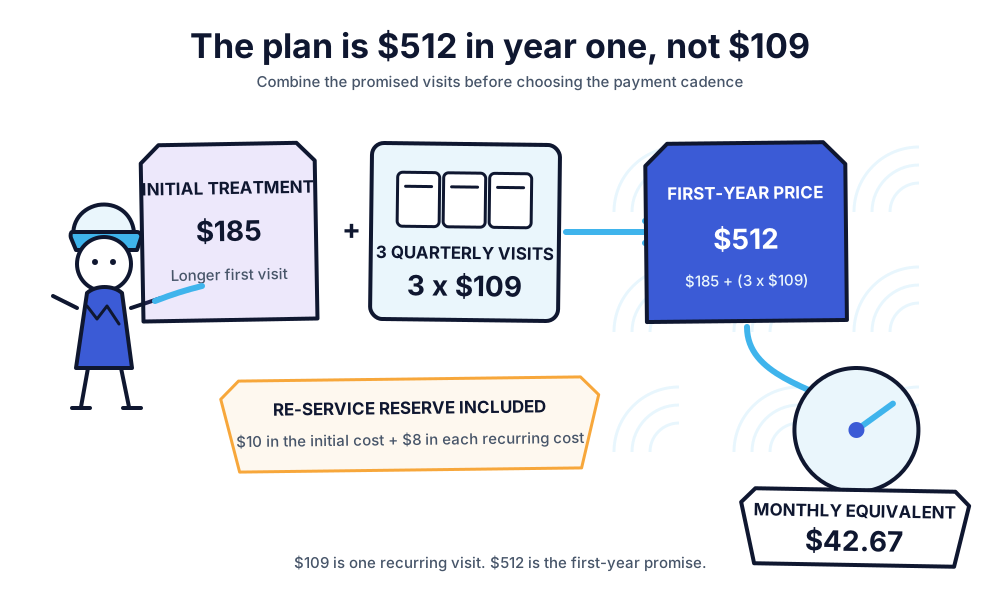
- One initial treatment at $185
- Three scheduled quarterly visits at $109 each
First-year price:
$185 + (3 × $109) = $512
That is the honest annual number. Now choose how to bill it.
Per-service billing
- $185 due at the initial treatment
- $109 due at each of three scheduled recurring visits
- Total paid in year one: $512
Level monthly billing
- $512 ÷ 12 = $42.67 per month after cent rounding
- Total paid in year one: approximately $512
If you advertise $43 per month, the written annual total is $516. Decide whether the extra $4 covers a real payment cost or whether you should use $42.67. Do not advertise $43 per month, collect a separate $185 initial fee, and let the customer discover that year one actually costs $701.
The recurring visit is $109. The first-year promise is $512. Those are different numbers answering different questions.
How pest-control cost drivers change the price
When the property is harder than the example, change the worksheet line that changed:
- Larger property: add technician time and the product quantity the compliant scope requires.
- Heavier ordinary infestation: increase initial inspection/treatment time and the likely re-service reserve.
- Difficult access: add the time required to reach and document the service areas.
- Long drive: change the truck/travel cost or decline work outside the route.
- Different service method: use the actual technician and consumable inputs for that compliant method.
Do not change the initial price because the house “feels bad.” Show yourself which technician minutes, product cost, travel, or re-service risk changed. That is a price you can audit later.
Which pest-control services need separate pricing
Stop the general worksheet when the inspection identifies termites, bed bugs, wildlife, fumigation, or major exclusion work. Those jobs can require their own visit sequence, equipment, materials, documentation, guarantees, and certifications.
Tell the customer:
“This quarterly plan covers the general household-pest scope we inspected. The termite activity is a separate condition and needs its own inspection and written quote before I can price it.”
That is more professional than forcing a specialty job through the nearest familiar number and recovering the loss later.
Pesticide applicator certification is administered through state, territorial, and tribal authorities under federal standards. Requirements vary. Check the authority governing the work and keep the business, technician, recordkeeping, and product use compliant.
This pricing method assumes compliant work performed according to the product label by an authorized applicator. It does not make an unlicensed service legal, and it is not a treatment guide. If the business cannot perform the scope lawfully, refer it out rather than lowering the price and hoping the requirement goes unnoticed.
Check pest-control pricing after the first 25–50 accounts
Track the model after launch:
- Initial technician time
- Recurring technician time
- Chemical and consumable cost
- Drive time by route area
- Qualifying re-service frequency and cost
- Gross margin by initial visit, recurring visit, and first-year account
Once you have 25–50 comparable accounts, use our pricing health guide to compare actual revenue, full cost, and margin before deciding whether to raise the price or fix service delivery.
If the initial visit keeps taking two hours instead of 90 minutes, change the allowed time or price. If one zip code adds 35 minutes of drive to every call, tighten the route or charge for the real travel. If the guarantee creates more re-services than the reserve covers, fix the service, narrow the promise, or raise the reserve.
The route becomes profitable account by account. A clean monthly price cannot repair a visit price that was wrong underneath.
Frequently asked questions
Should year-two pest-control pricing stay the same as year one?
Recalculate it. A renewal may no longer carry the original initial treatment, but it still needs to cover scheduled visits, expected re-services, administration, cost increases, and margin. Show the customer the new annual total before converting it to monthly or per-visit billing.
How do I price a pest-control plan that starts midyear?
Price the initial treatment and every visit promised during the agreement term, then show that term’s total before converting it to installments. Do not divide a full calendar-year example by the months remaining unless the customer is actually buying that exact visit schedule.
Sources
- pricing
- pest-control
- pest-control-business
- recurring-service
- re-service-guarantee
- small-business



