

How Do I Price Exterior Painting?
Price an exterior repaint with the same engine as interior work, but with measured elevations, prep, access, siding coverage, weather, and hidden conditions. Follow one two-story quote from walkthrough to margin.
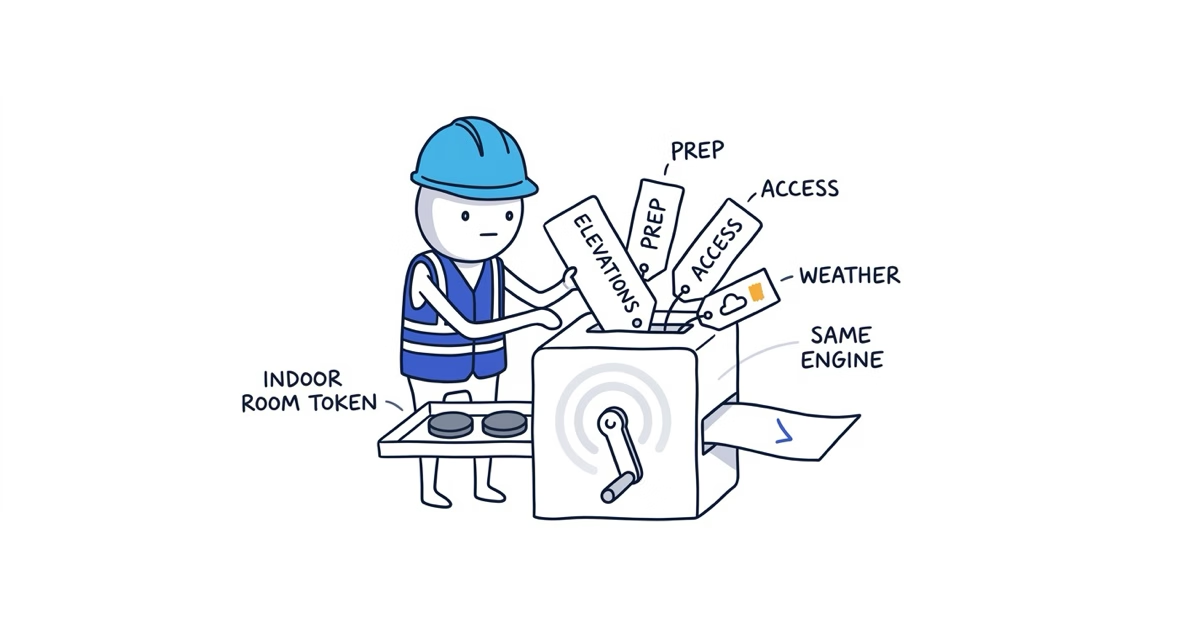
An exterior goes wrong when you price the visible wall and discover the actual job after the crew arrives. The square footage looked simple. The peeling fascia, failed caulk, ladder moves, thirsty stucco, and three rain days were not in the number.
To price exterior painting, use the same engine you use inside:
Exterior price = (labor hours × loaded rate + materials) ÷ (1 − target margin)
What changes outside are the inputs. If the base labor, material, overhead, and margin formula is not settled yet, use our painting job pricing guide to build it before applying the exterior adjustments below. Collect those inputs in the order your crew will meet them, then walk one calculation all the way to the quote.
How to estimate an exterior paint job on site
Do not stand at the curb and pick a price per square foot. Walk every elevation with one worksheet and record five things.
1. Measure body and trim separately
For each side, multiply wall length by wall height. Add triangular gable ends. Measure a detached garage or shed as its own structure. Keep siding in square feet, but measure fascia, gutters, corner boards, windows, and detailed trim in linear feet because they move at a different production rate.
On a plain wall, subtracting a large garage door can make sense. On a trim-heavy elevation, do not subtract every opening automatically. Masking and cutting around ten windows can consume the time that the missing wall area appears to save.
2. Count the preparation you can see
Do not write “prep as needed.” Count localized failures, failed joints, bare areas, and visible wood damage while you are standing in front of them.
Use starting anchors, then replace them with your crew’s actual production:
| Exterior prep | What goes on the worksheet |
|---|---|
| Power wash | Estimate the inspected surface, access, equipment, and buildup |
| Scrape peeling areas | Count each local failure and estimate the crew time |
| Caulk failed joints | Count or measure the joints found during the walkthrough |
| Spot-prime bare areas | Count the failures or square feet, plus the selected primer |
| Wood repair | Carry a written allowance or unit price on older exteriors |
Preparation can become a large share of exterior labor. Put hours beside the actual washing, scraping, caulking, and priming before the quote leaves your hands instead of applying a generic percentage.
3. Record where access slows the crew
Mark second-story work, steep grade, shrubs under ladder positions, dormers, roof access, and ornate trim. Height changes labor, not paint cost.
- Estimate the extra setup and production time for the inspected second-story work.
- Increase that labor only where blocked or difficult access actually slows the crew.
- Carry third-story scaffold or lift rental as a named cost, with the associated setup and operating labor.
Do not multiply every line on the estimate by 1.30 because the house has two stories. Calculate base labor, then increase the labor that access actually slows.
4. Let the siding set coverage and prep
Vinyl and sound fiber cement can provide a smoother baseline. Stucco can reduce coverage and slow production. Brick may need masonry primer and additional material and labor. Wood may use an ordinary amount of finish paint, but scraping, sanding, repair, and spot priming can dominate the job.
Use the selected product’s current label, coverage guidance, and price. The substrate, color change, application method, waste, and number of coats decide what belongs in this quote.
5. Stop at conditions that can change the job
Ask whether the home was built before 1978, whether the color needs HOA or historic approval, and whether the expected weather window fits the product.
These are not notes to deal with after scheduling. They decide whether you can quote, how much labor compliance adds, and when the crew can start. Carry them into written conditions before you calculate the final number.
Exterior painting pricing worksheet
The useful asset is not a national price table. It is the list that converts each field observation into a cost:
| Field observation | Change to the quote |
|---|---|
| Measured body area | Finish-coat production hours and paint gallons |
| Linear trim | Separate slower production hours |
| Wash, scrape, caulk, spot-prime | Named preparation hours and materials |
| Second story or blocked access | Labor-only adjustment and any rented equipment |
| Porous siding | Lower coverage, possible added coat, slower production |
| Visible or concealed rot risk | Defined base prep plus allowance or unit-priced repair |
| Weather window | Schedule buffer, not unlimited crew downtime |
| Pre-1978 disturbed paint | EPA RRP compliance cost or a stop until properly certified |
| HOA or historic color approval | Written approval before the start date is promised |
When the walkthrough cannot settle a condition, use our estimate exclusions guide to write the boundary, trigger, and customer approval step before the quote leaves your hands. “As needed” does not define a boundary.
When the damage is genuinely unknowable, the hourly-versus-flat-rate decision rule owns the exception. Do not present a fixed price as certain when opening the surface is the only way to learn the scope.
A two-story exterior quote from walkthrough to price
Walk one two-story vinyl home. The building is 40 ft × 25 ft with two 9 ft stories.
Measure the exterior
Perimeter: 40 + 25 + 40 + 25 = 130 ft
Two stories: 130 × 18 = 2,340 sq ft
Gable ends: about 160 sq ft
Body area carried for pricing: 2,500 sq ft
The walkthrough also finds 400 linear feet of trim, eight localized peeling failures, several failed joints, and a few bare areas. There is no lead-triggered scope, no rotten wood visible, and no approval delay.
Put hours on the findings
| Work | Calculation | Hours |
|---|---|---|
| Power wash | Straightforward house | 2 |
| Scrape | 8 failures × 0.25 hour | 2 |
| Caulk | Joints counted at walkthrough | 4 |
| Spot-prime | Bare areas counted at walkthrough | 2 |
| Two finish coats | 5,000 coat-sq-ft ÷ 200 sq ft/hour | 25 |
| Trim | 400 linear ft ÷ 40 linear ft/hour | 10 |
| Base labor | 45 |
For this worked example, the walkthrough supports a 30% two-story labor adjustment:
45 hours × 1.30 = 58.5 hours
At a $55 loaded labor rate:
58.5 × $55 = $3,217.50, rounded to $3,220 labor cost
Add the exterior materials
Two coats on the smooth vinyl require about 15 gallons in this example:
15 gallons × $55 = $825 paint
Primer, caulk, masking, plastic, and other job materials add $250.
Paint and job materials: $1,075
Labor: $3,220
Total job cost: $4,295
At a 30% target margin:
$4,295 ÷ 0.70 = $6,135.71
Round the base quote to $6,150.
The number did not come from “$2.46 per square foot.” It came from this house: 10 prep hours, 35 production hours, a two-story labor adjustment, and 15 gallons of paint. A one-story fiber-cement home in better condition should not inherit it. A peeling wood house should not inherit it either.
How to price hidden conditions in an exterior paint quote
Some exterior conditions cannot be priced as ordinary prep.
Wood rot. Scraping an older fascia or sill can expose damage the walkthrough could not measure. Carry a not-to-exceed allowance or agreed unit price:
Base price includes coating preparation only. Concealed rotten fascia, trim, or sill is repaired after customer approval and charged against a not-to-exceed $500 wood-repair allowance. Unused allowance is not billed.
Set the unit price from the actual carpentry, access, material, and finish work your crew performs.
Lead paint. Under the EPA Renovation, Repair and Painting rule, paid exterior work that disturbs more than 20 sq ft of painted surface on a pre-1978 home can trigger certified-firm, certified-renovator, containment, cleanup, and recordkeeping requirements. Price the actual compliant labor, materials, documentation, and cleanup. If the business is not properly certified, stop or refer the work instead of pricing noncompliance.
Color approval. HOA or historic review can delay the start. Do not promise a date until the customer has the approved color in writing.
Weather. Build a realistic buffer into the schedule and tie work to the selected product’s temperature, moisture, and dry-time requirements:
Work proceeds only when temperature, moisture, and forecast meet the selected product requirements. Weather delays extend the schedule without changing the approved scope.
These conditions do not need four more pricing systems. They need four clear decisions: add the measured cost, carry an allowance, delay the commitment, or decline work the business cannot perform correctly.
Frequently asked questions
How many coats should I include in an exterior painting estimate?
Price the coating system the surface, color change, and selected product actually require. If coverage cannot be confirmed until the first coat is on, state the assumed number of coats and the approved unit price or change-order rule for an added coat.
What if the customer changes the exterior paint color after approving the quote?
Recheck primer, coat count, product cost, and schedule before accepting the change. Put any added labor or material in a written change order instead of asking the original price to absorb a different coating system.
Can I use the same production rate for spraying and brush-and-roll work?
Only if your completed-job records show the same total crew time. Application speed, masking, back-rolling, access, overspray control, and cleanup all affect production, so keep separate rates when the methods produce different labor hours.
Sources
- pricing
- exterior-painting
- painting-business
- estimating
- job-costing
- small-business



