How to Check Every Timesheet Before Payroll Without Paying Someone to Do It
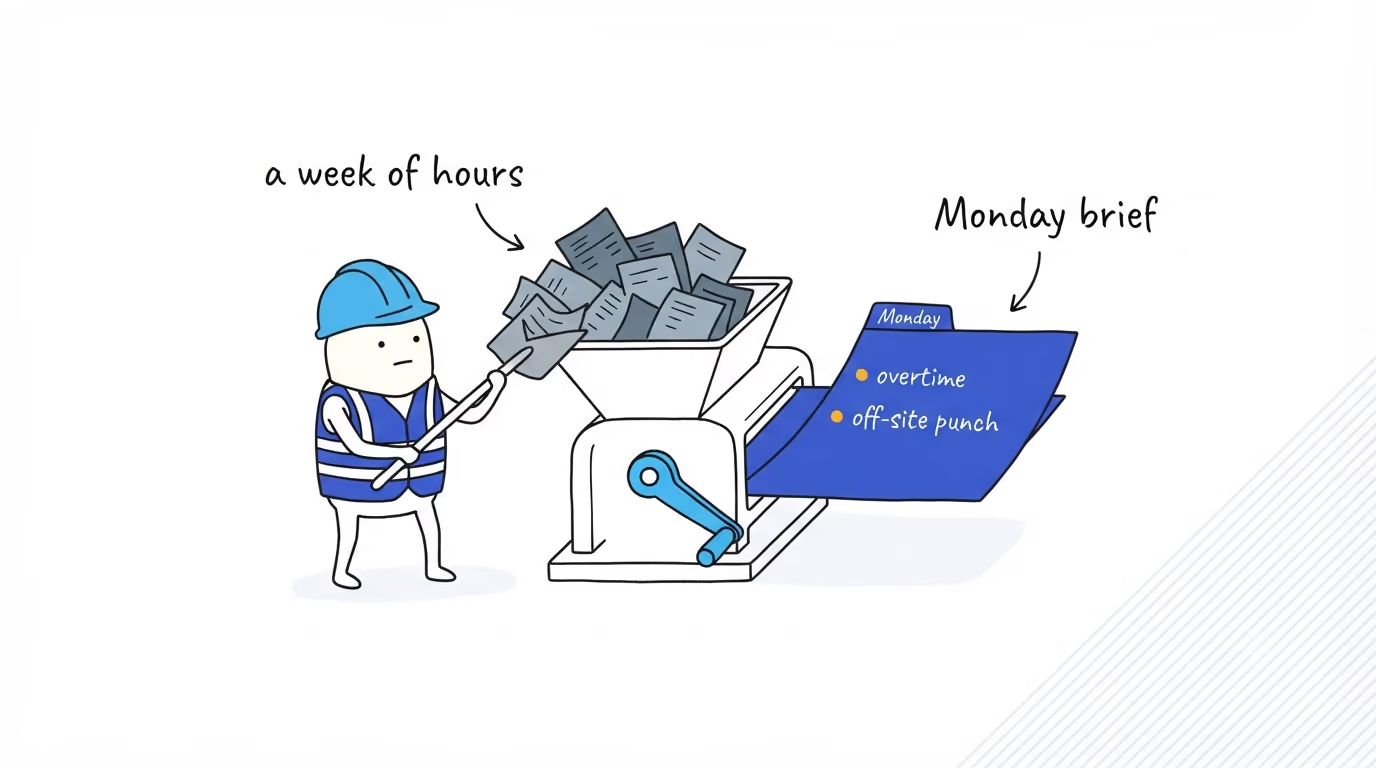
Most owners either skim timesheets on a Friday and hope, or pay someone to do it for them. There is a third option now: let AI read every entry, flag the few that are wrong, and keep the decision yours.
The Friday you already know
You run a field crew. It is the Friday before payroll runs. The hours are in the system, and now someone has to make sure they are right before they turn into checks. That someone is you, or the person you pay to do it.
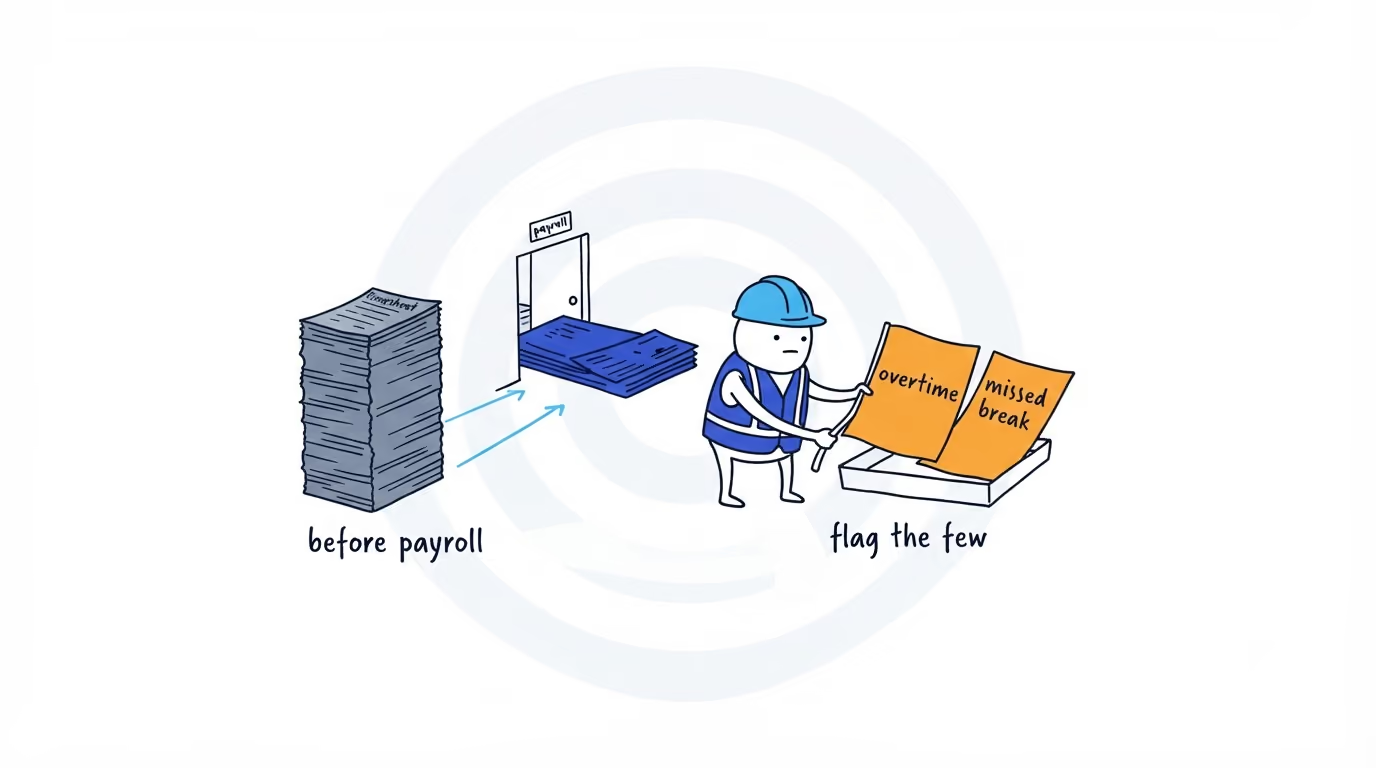
So you scroll. Forty timesheets, sixty, eighty. You are not really auditing. You are hoping. Hoping you spot the forty-four-hour week that should have been flagged for overtime, the ten-hour shift with no lunch logged, the clock-in from a gas station two towns from the job, before it goes out the door and becomes money you cannot get back. Somewhere around timesheet thirty the eyes glaze, the gut says it is probably fine, and you approve the batch. The three wrong ones sail through with the seventy-seven that were fine.
The other version of this costs more in a different way. You pay an admin or a bookkeeper to do the scrolling. It gets done more carefully, but you are now paying a salary for a job that is mostly reading correct timesheets to find a few wrong ones. Either way the real cost is the same: the only control you have on labor going out the door is one set of human eyes on a stack too tall to read.
Reading faster is not the fix. The fix is that the only timesheets that ever reach a human are the few actually worth a human’s attention.
What is actually expensive here
It is worth being precise about where the money leaks, because a check is only useful if it looks at the right things.
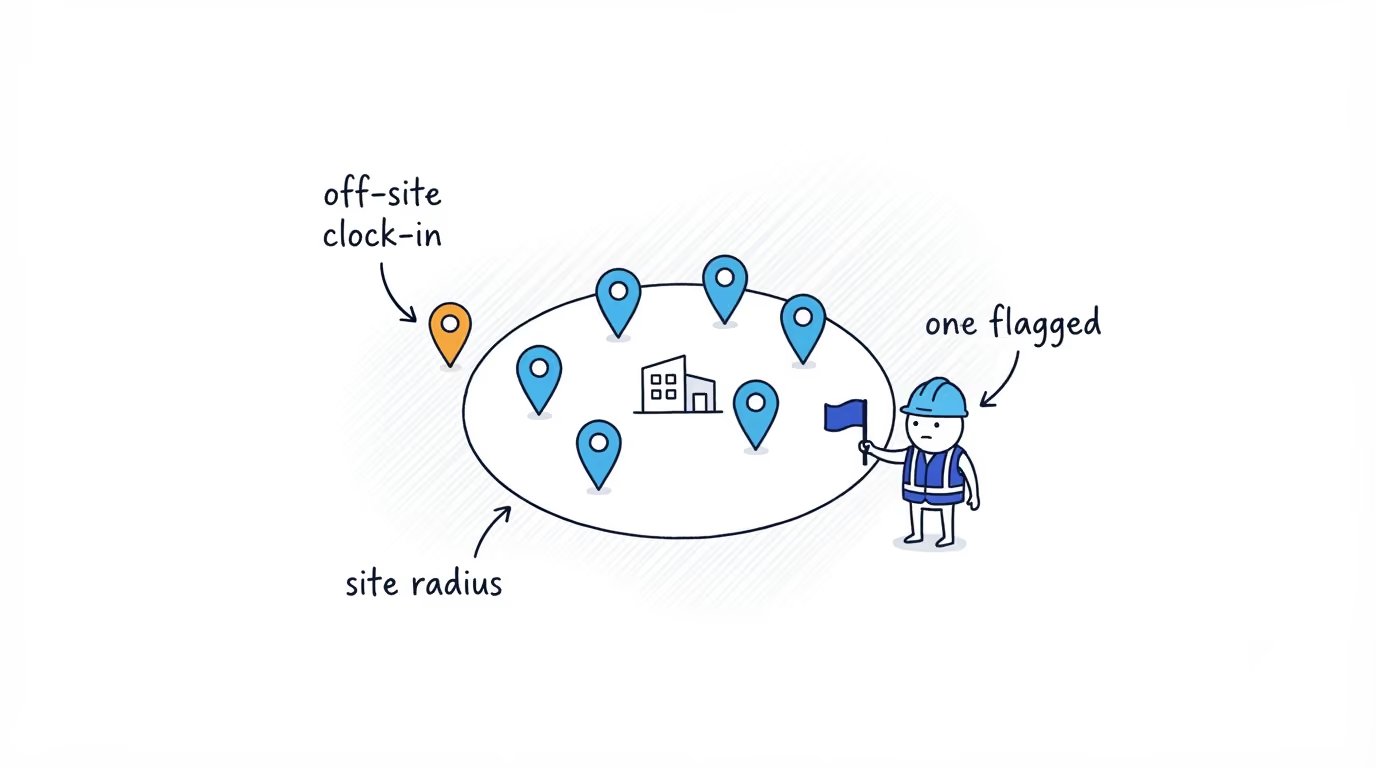
It is not usually fraud. It is the quiet, recurring stuff. A crew that drifts ten minutes past eight hours every day is overtime nobody decided to authorize. A long shift with no unpaid meal break is a compliance exposure that shows up as a claim months later, not on Friday. A clock-in logged a mile from the site is either a real problem or a phone that could not get GPS, and you cannot tell which from a spreadsheet. A worker whose hours in the time system do not match what your payroll provider is set to pay is a check that is wrong before it is cut.
None of these announce themselves. Each one is small. Added across a year and a crew, they are the difference between a job that made money and one that quietly did not.
Why this is suddenly doable
The reason owners scroll and hope is not laziness. It is that timesheet data has historically been messy: raw punches, breaks as separate rows, rounding rules applied somewhere you cannot see, hours that do not tie out to anything. You cannot hand a mess to an automated check and trust the result. Garbage in stays garbage, just faster.
This is where ShiftFlow’s data layer earns its place, and it is the part that makes the rest possible. ShiftFlow does not just store punches. It reconciles them. By the time an entry is complete, the clock-in and clock-out are rounded to your account’s rules, the unpaid breaks are already subtracted, time is split by job code, and the clock-in location is tied to the work site it was selected or matched against. ShiftFlow’s Axiom API exposes exactly that reconciled record, read-only, so an AI tool can read the finished number instead of trying to rebuild it.
That is the unlock. The check is not doing fragile math on raw events and hoping it matches payroll. It is reading the same reconciled hours you would, just reading all of them, every time, in seconds. You do not build this or write code for it. The point of clean, AI-readable data is that the analysis stops being a person’s job.
What the check actually does
It is triage, not approval. It runs the checks you already care about over every completed entry, attaches the evidence to anything that looks off, and routes only those to you. The rest never needs your attention.
| What it looks at | The question it answers | Why it matters |
|---|---|---|
| Worked hours vs threshold | Did this person cross daily or weekly overtime | Overtime nobody authorized adds up |
| Long shift, no break | Did a shift long enough to need an unpaid meal break log one | A missed break is a future claim |
| Clock-in location | Was the punch recorded away from the work site | A real issue, or just a bad GPS read |
| Hours vs payroll | Do the hours match what payroll is set to pay | A mismatch is a wrong check |
Each flag is one item, and the item carries its own evidence: the person, the period, the hours, the threshold it crossed, the dollar size of the gap. The one-line read a careful reviewer would have written by hand — “this crew, three weeks running, same drift” versus “first time, small, probably a bad GPS fix” — comes attached, so the call takes seconds instead of an investigation.
You still approve, not the software
This part has to be non-negotiable, because it is exactly where automated payroll tools go wrong. Every flag is a prompt to look, not an action taken.
A clock-in with no GPS is not proof of anything. It is usually a dead phone three hours into a shift. Overtime may have been authorized verbally by a manager who never logged it. An edited entry may have been a correct fix to a clock-out someone forgot to hit. The check does not know any of that, which is precisely why it surfaces and you decide. Nothing is auto-approved and nobody is auto-docked. The reviewer now works six items with the receipts attached instead of rubber-stamping eighty blind. The accountability did not move. The volume did.
This is also the honest answer to “do I need to hire someone for this.” The judgment still needs a person, and that person is usually you. What you no longer need is a person whose job is the reading pass.
Where this stops
Worth being straight about the edges. The check only sees completed entries, so an unfinished shift or an unapproved edit is handled in your normal approval flow, not here. It works on hours and segments, not pay rates and dollars — it will tell you the hours are off by four; your payroll system still owns the rate math. And a check is only as good as the thresholds you set it; tell it the overtime line is in the wrong place and it will confidently flag the wrong things. This reduces the reading, not the responsibility. A control you actually use beats a thorough one you bypass every period because it is too slow.
Where this goes next
The reading pass is the first thing to take off your plate, not the last. The same clean data feed is what lets you reconcile payroll hours before they export and see which jobs are quietly losing money on labor. If your crew’s hours are still living in a spreadsheet you skim and hope through, the place to start is the one that captures them clean in the first place — see how ShiftFlow time tracking handles the reconciliation everything above depends on, or talk to our team about what this looks like for your crew.
- ai-timesheet-review
- payroll-accuracy
- time-theft
- workforce-analytics
- small-business