Can AI Actually Manage an Hourly Team or Is It Just a Buzzword
Every tool says AI now. If you run a field crew, the honest question is narrower: what can it actually do with your hours, what does it need to work, and where does it stop. Here is the straight answer.
The honest version of the question
Every tool you look at says AI now. The time clock says AI. The scheduler says AI. If you run a field crew, you have learned to read past that word, because most of the time it is a chatbot bolted to a help page. So ask the narrower question, the one that actually matters: can AI do anything real with your hourly team’s time, what does it need to do it, and where does it stop pretending.
This is the straight answer, not the brochure one. It is useful because the honest version is genuinely good news, and the dishonest version is why you stopped believing the word.
AI does not manage your team
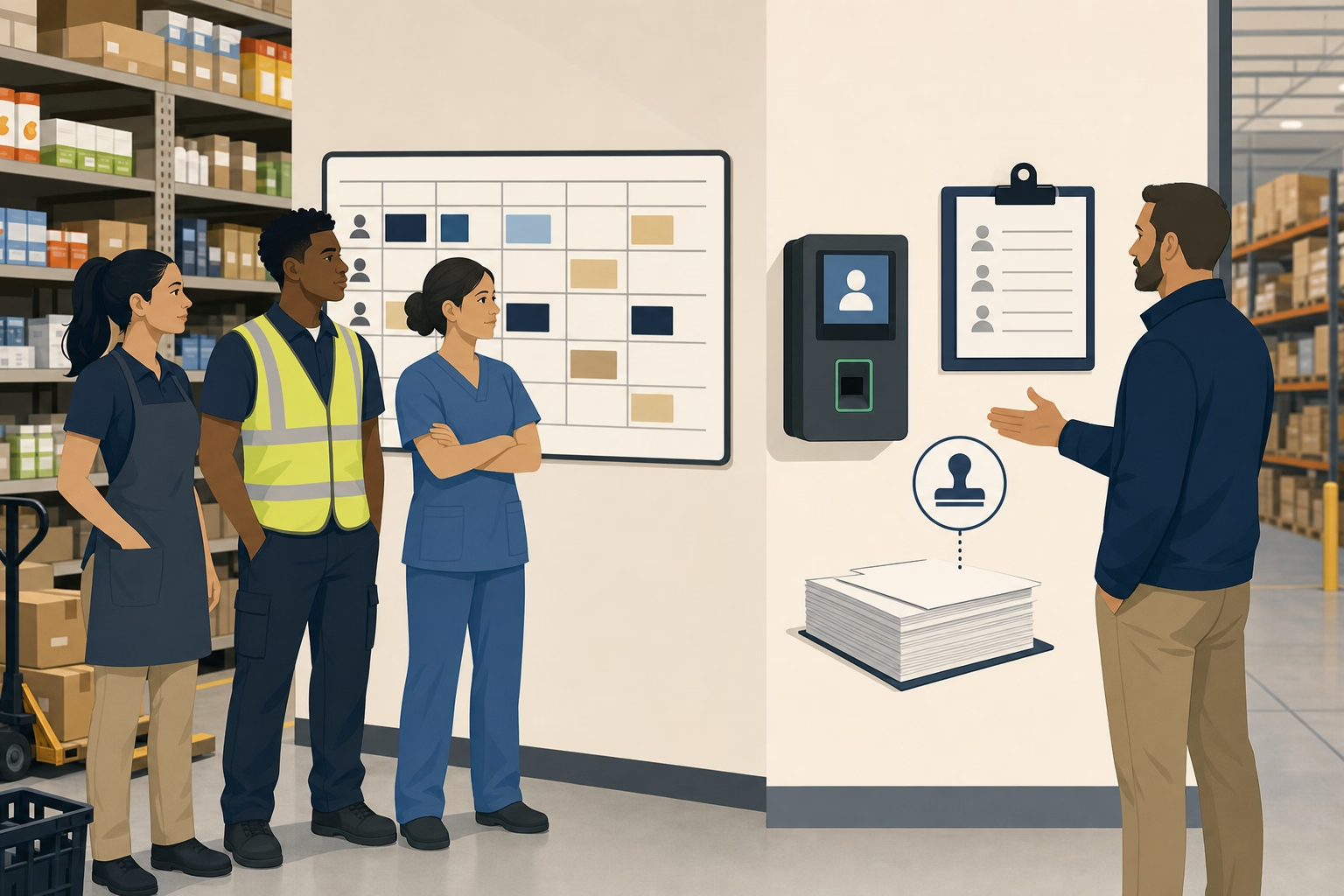
Start here, because it clears out the buzzword. AI does not manage people. It does not have the conversation with the tech who is padding his hours. It does not decide that overtime was authorized, or that a job is worth running over on. Management is judgment about people and money, and that stays with the person who is accountable for it. Anyone selling you “AI manages your workforce” is selling the part that does not exist.
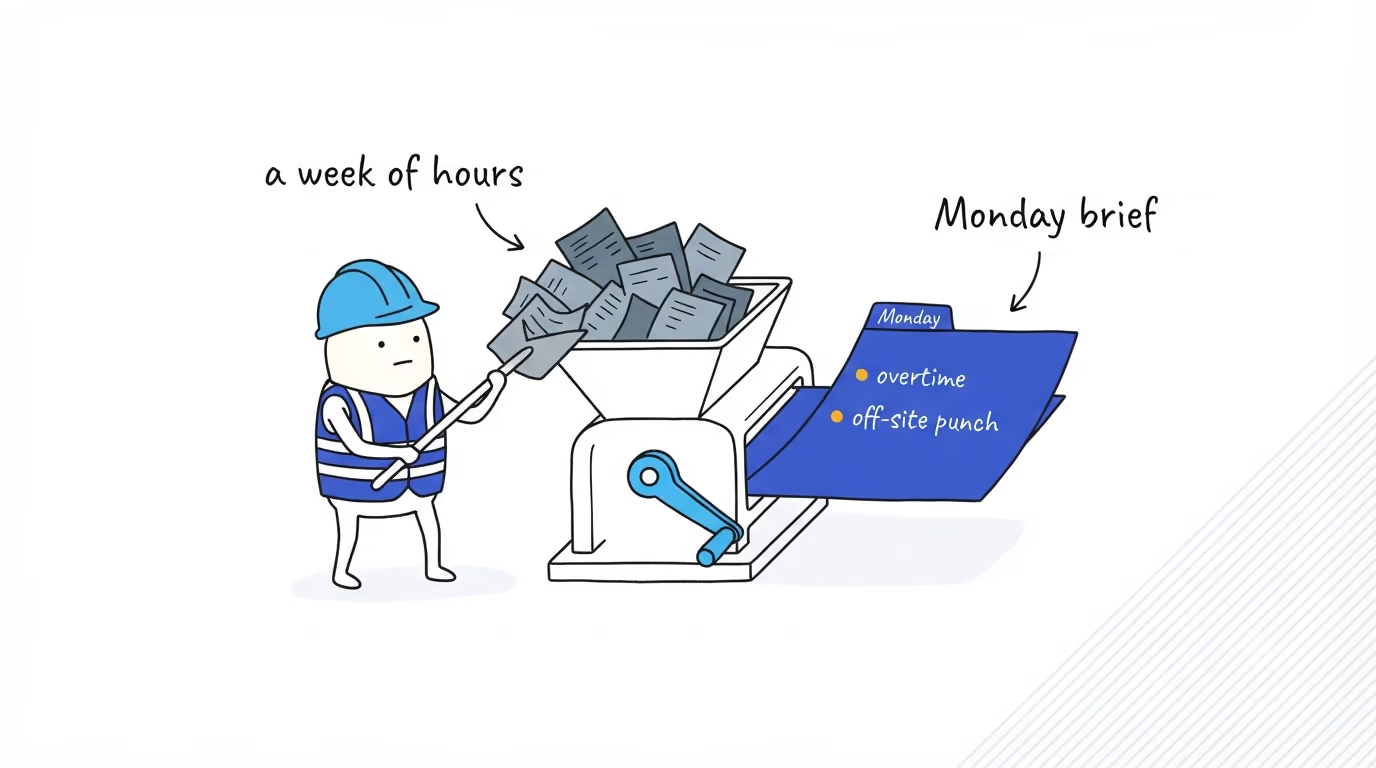
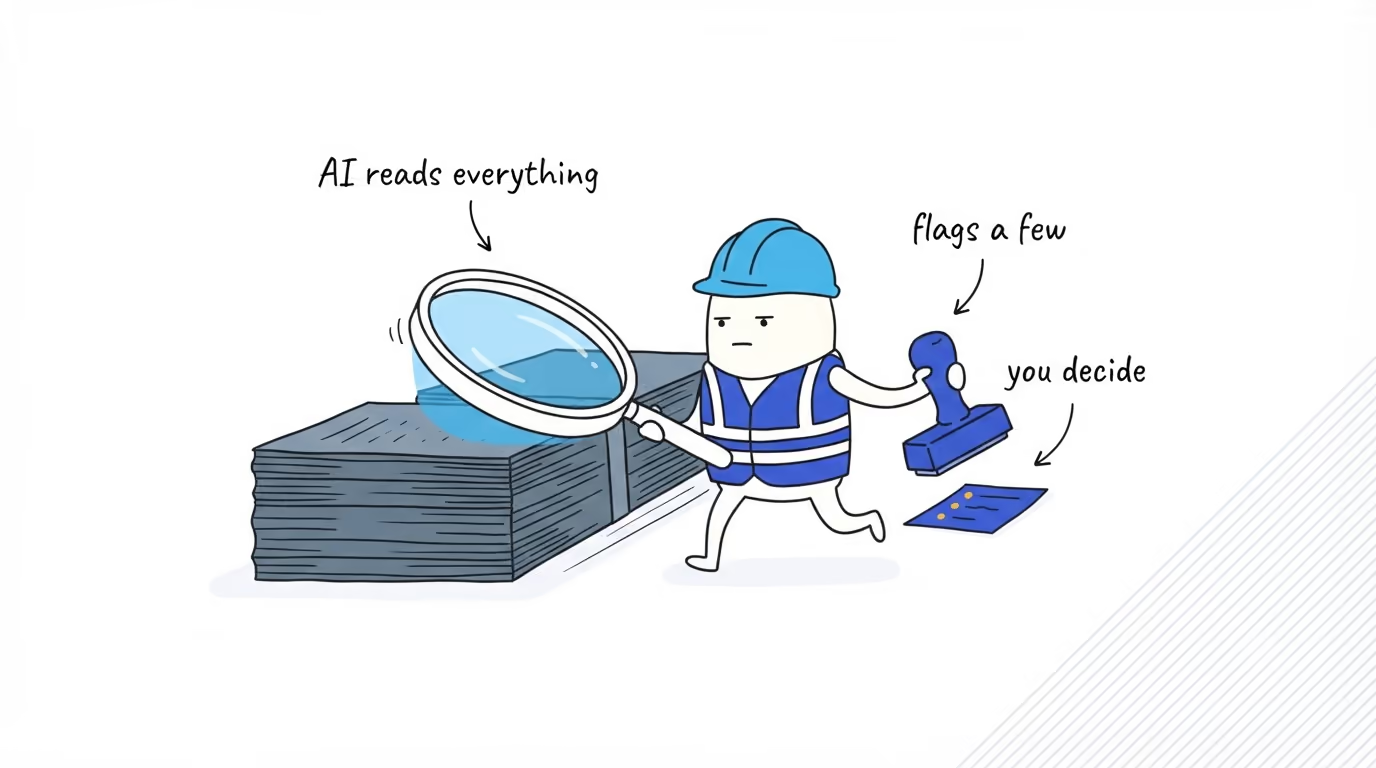
What AI actually does is narrower and more useful: it reads. Every timesheet, every punch, every job-code split, across the whole crew, every period, without getting tired or bored at the thirtieth one. The reason that matters is that the reading is exactly the part you cannot do. Not because it is hard, but because there is too much of it and you have a business to run. The bottleneck on a small field crew was never the judgment. It was that nobody has time to look at everything, so the few that are wrong sail through with the many that are fine. AI removes the volume problem and hands the judgment back to you, smaller and with the evidence attached.
The one thing that decides whether any of it works
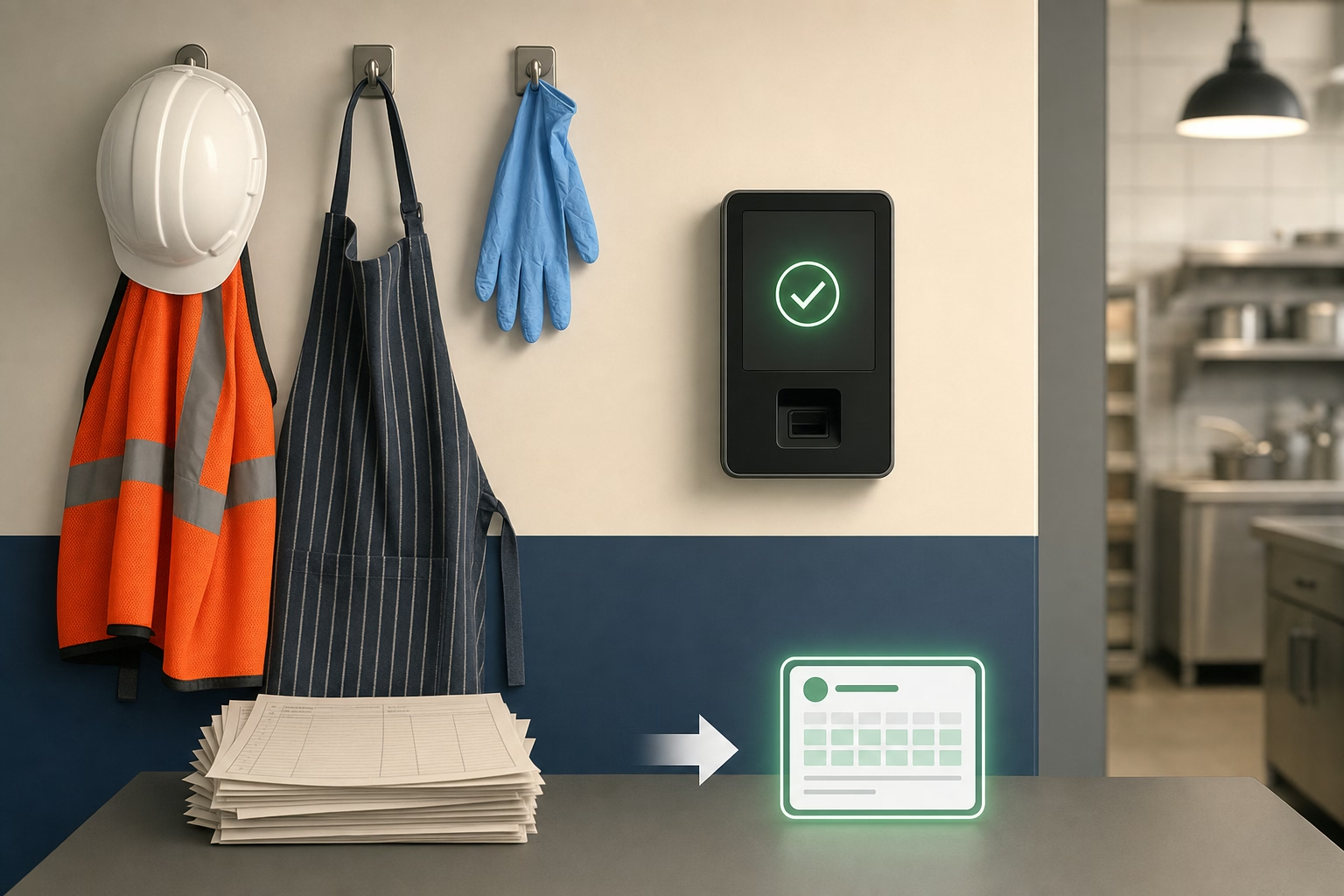
Here is the part the marketing skips. AI is only as good as the data you hand it, and most time data is not good enough to hand to anything automatically. Raw punches, breaks as loose rows, rounding applied somewhere you cannot see, hours that do not tie to payroll: point an AI at that and you get confident nonsense, faster.
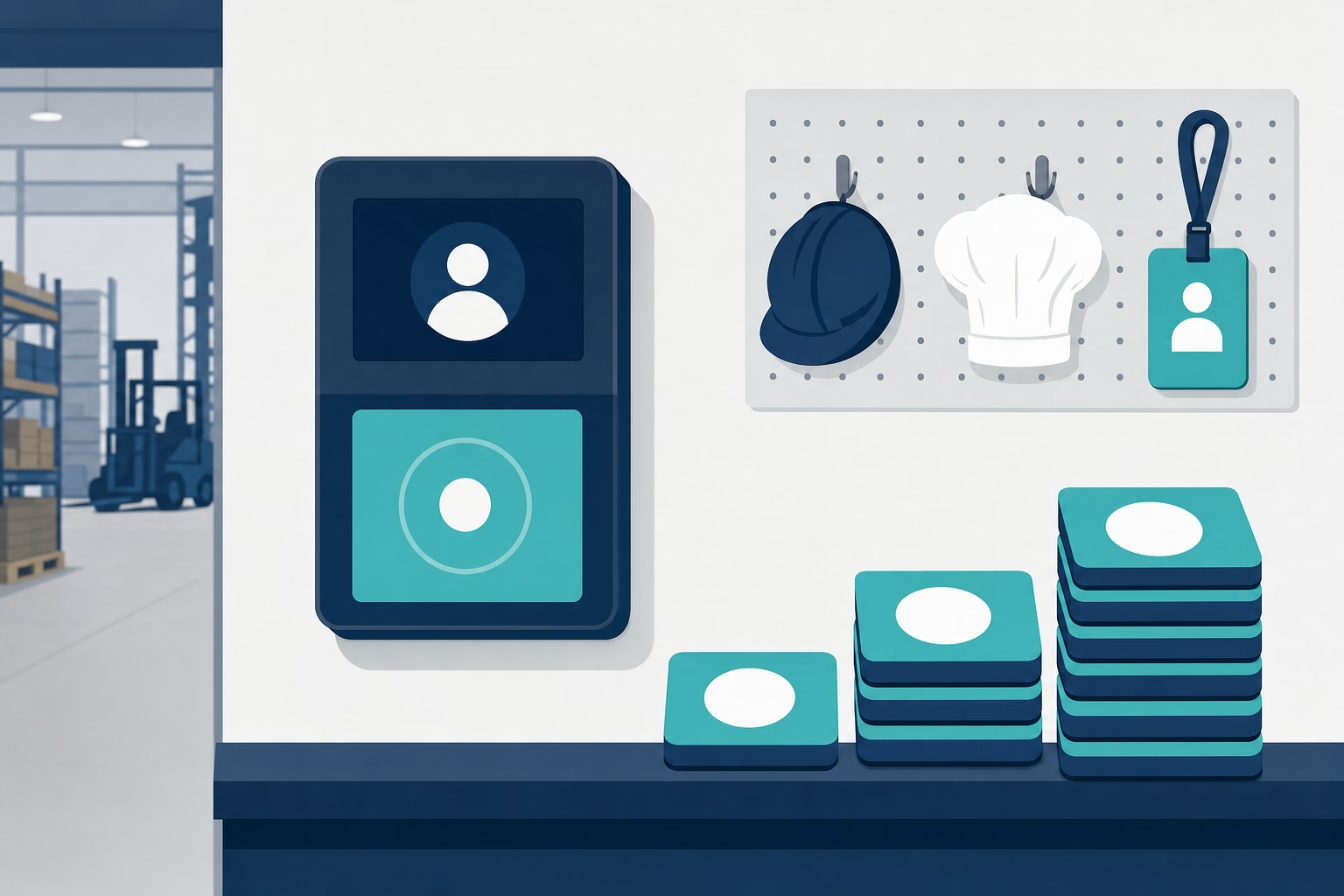
“AI-ready” is not a feature you switch on. It is a property of the data. Time data is AI-ready when it is reconciled to your rules, attributed to the right person and job, location-stamped, and available through a stable feed a machine can actually read. ShiftFlow does that reconciliation before the data ever leaves: complete entries have unpaid breaks removed, time split by job code, the clock-in tied to the work site it was selected or matched against, and that record is exposed read-only through the Axiom data feed. That feed is the unglamorous reason the rest is possible. Not a smarter model. Clean, readable hours. When a tool is honestly AI-ready, this is what it means, and when it is not, no amount of the word fixes it.
A read-only feed is also the right amount of access for this, not a limitation. AI reading your data and surfacing decisions is safe in a way AI changing your payroll is not. The boundary is the point.
What it actually does for you today
Concretely, on a real field crew, with the data above. None of this is speculative; each one is a reading pass you can run now.
| The job nobody has time for | What AI does with it |
|---|---|
| Reading every timesheet pre-payroll | Flags the few with overtime, missed breaks, or payroll drift |
| Watching where people clock in | Surfaces off-site punches, ranked by how repeated they are |
| Knowing which jobs are losing money | Ranks jobs by labor hours over plan while they are still open |
| Cross-checking hours against payroll | Lines up the two sources and flags every gap before the run |
| Reading the whole week | Writes the one-page Monday read of what actually happened |
That is not a roadmap. It is checking timesheets before payroll, catching time theft, seeing which jobs make money, reconciling payroll hours, and the weekly crew brief — each one a thing a person used to do by hand or not at all, now a read you get for free off data that was already clean.
Where it honestly stops
A straight answer has to include the edges, because overpromising this is why the word lost meaning.
It reports hours and patterns, not money: cost and margin need the rates and revenue in your systems. It sees only what was captured, so a missing GPS point or an open shift is not evidence, it is a gap. Every flag is a prompt, not a proof: the judgment about whether it is nothing, a fix, or a conversation is yours, and it should be. It does not manage, schedule the crew for you, or replace the person who is accountable. What it removes is the impossible reading job. What it leaves with you is the part that was always yours anyway, just smaller and better lit.
Where to go next
If you want the concrete version rather than the category answer, start with the one that matches your most expensive problem: timesheets wrong at payroll, hours you cannot verify, jobs quietly losing money, or the Monday read on the whole week. They all depend on one thing being true first: hours clean enough for AI to read. That is what ShiftFlow time tracking is for — talk to our team about what AI-ready looks like for your crew.
- ai-workforce-analytics
- ai-workforce-management
- hourly-workforce
- time-tracking
- small-business