

How to Price a Plumbing Job
Plumbing pricing breaks on the quick job — a small part, a short visit, and a number that forgets the truck, the drive, and the diagnosis. Here is how to price from your real costs, starting with a service call fee.
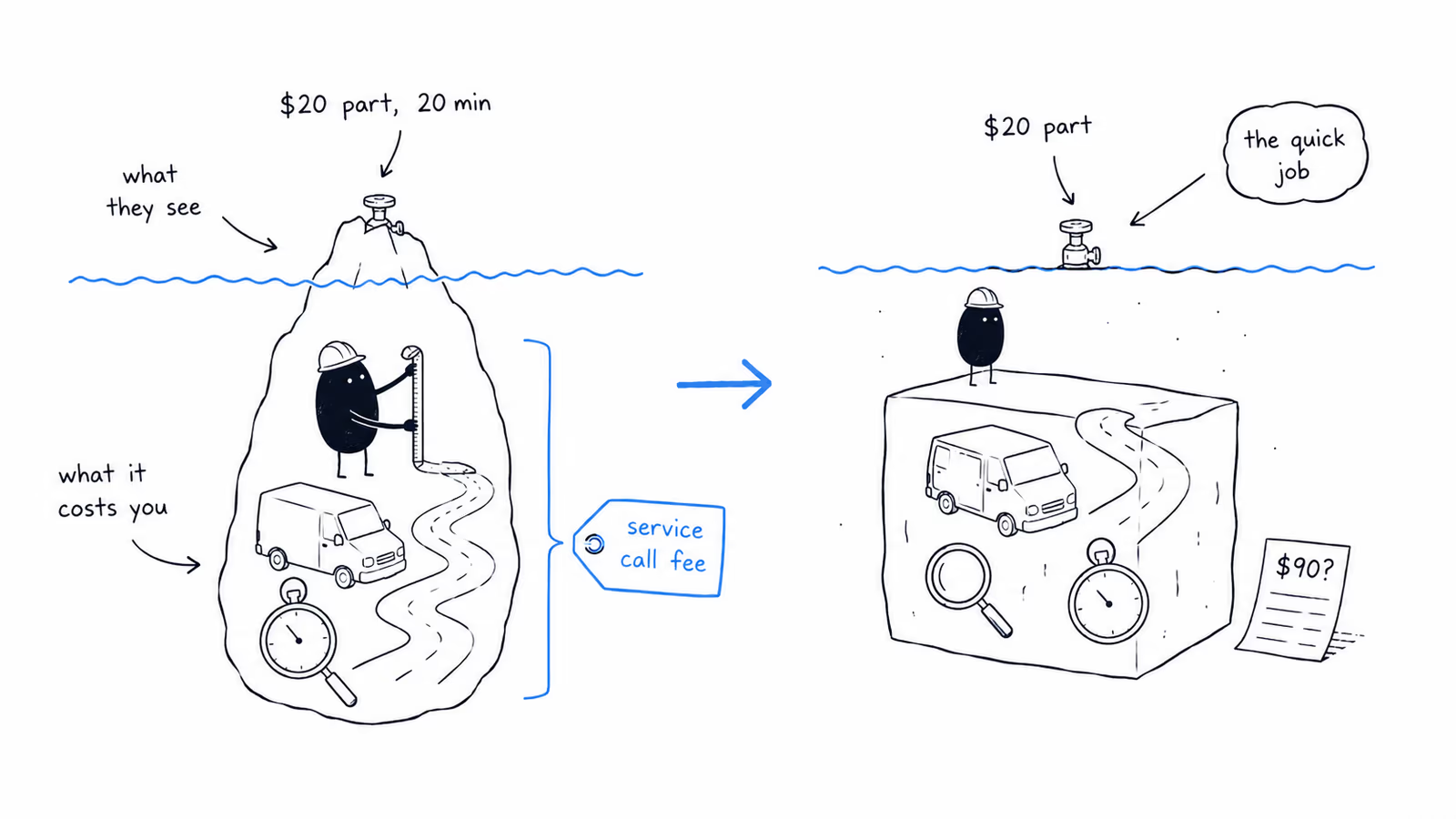
Plumbing pricing goes wrong in one specific place: the quick job. A $20 part, twenty minutes of work, and the owner writes $90 on the invoice — forgetting the truck, the drive, the diagnosis, and the two hours of the day that call really cost. Price from what a job actually costs you, starting with a service call fee, and the small jobs stop costing you money to answer.
What to charge for a plumbing service call
Many service jobs start with a disclosed service-call or diagnostic fee — a flat charge that covers the truck, the drive, and an initial diagnosis before repair work begins. Calculate it from your actual visit cost, tell the customer what it includes before dispatch, and state whether it is separate or credited toward approved work.
How to calculate your true labor cost
Your labor cost is not your hourly wage. Start with wages plus employer payroll taxes, workers’ comp, benefits, and other payroll costs from your records. Then divide the total paid labor cost by the hours you can actually bill, rather than by every paid hour.
For example, a $35 wage with an illustrative 30% payroll burden costs $45.50 per paid hour. If half of the paid time is billable, the labor cost is $45.50 ÷ 0.50 = $91 per billable hour before truck and general overhead. Use your payroll records and tracked billable hours; do not copy either percentage from this example.
Flat-rate vs. hourly plumbing pricing
Two models, and the job decides which one fits.
Flat-rate — one price for a defined task, set from your price book — gives the customer a clear number and lets you keep the efficiency gain on repeatable work such as water heaters, drain cleaning, and fixture swaps.
Time and materials — your hourly rate plus marked-up parts — fits open-ended jobs where you can’t see the end: repipes, slab leaks, troubleshooting behind a wall.
Many shops use both models: flat-rate the catalog and use time and materials for genuine unknowns. The hourly-versus-flat-rate guide explains how predictability determines the choice, while the unknown-scope pricing guide covers caps, ranges, and diagnostic fees. Mark up parts either way, but calculate the markup from your purchasing, handling, stock, warranty, overhead, and profit requirements rather than copying one universal range.
A simple plumbing price formula
Price = service call fee + (billable hours × burdened rate) + (parts × markup) + overhead + profit
You set the service call and burdened rate above. Overhead is your monthly fixed cost spread across jobs; profit is what’s left for the business once every direct cost and overhead expense is paid. Set the required gross margin from your own overhead and net-profit target instead of relying on a national benchmark.
How to price a water heater replacement
A standard 40-gallon replacement, about 3.5 hours on site. Labor at your burdened rate runs $240, the heater and fittings marked up land at $360, the service call is $90, and overhead adds $70 — $760 in cost. For an 18% target margin, divide $760 by 0.82: the calculated price is about $927, which you might round to $930. Your rates and parts will differ; build the number the same way.
Change your burdened rate, parts markup, or target margin and that price moves with them — which is the whole reason you build it up instead of matching the shop down the road.
Set a minimum job price and emergency rates
A short job still carries truck and drive cost, so set a minimum from the full visit cost and your target margin. Use the minimum service fee calculation rather than copying another plumber’s floor. For nights, weekends, and emergencies, calculate a premium that covers the actual on-call labor, overtime, dispatch, and capacity cost, then disclose it before the truck rolls.
How your rates compare to other plumbers
Check comparable local scopes once you have your own number, as a gut check rather than the starting point. There is no reliable national hourly rate for every plumbing business, and a quoted flat-rate job cannot be compared cleanly with an hourly figure. If your price differs sharply, compare scope, labor assumptions, service-call treatment, warranty, and overhead before changing it. Do not cut below your own cost simply to match another shop.
Pricing right only helps if local customers can find the business when they search for a plumber. We help service businesses improve their visibility on Google Maps.
Frequently asked questions
What is a plumbing service call fee?
A flat charge that covers the truck, travel, and initial diagnosis before repair work starts. Calculate it from your actual visit cost and tell the customer before dispatch whether it is separate or credited toward approved work.
Should plumbers charge a flat rate or hourly?
Use flat-rate pricing for repeatable work you can scope reliably; it gives the customer a set price and lets you keep the efficiency gain. Use time and materials for genuinely open-ended work you cannot estimate up front. A business can use both models for different job types.
How much do plumbers charge per hour?
There is no reliable national hourly rate for every plumbing business. Build yours from paid labor and employer costs divided by realistic billable hours, then add overhead and the profit your business needs.
- pricing
- plumbing
- plumbing-business
- service-call-fee
- small-business



